
Note
Cold Chain for Peptides Shipped in Argentina
A lyophilised peptide ships at room temperature in Argentina; the cold chain only starts once it's reconstituted into a solution.
A peptide that ships within Argentina as lyophilised powder doesn't need a cold chain during transit: dry powder is stable at room temperature for weeks, so the package carries no coolant, no gel pack, no dry ice and no temperature logger. What it does carry is a sealed vial with desiccant, protected from light. The cold chain starts afterward, once that person reconstitutes the powder with a diluent and moves to working with a liquid solution.
That distinction answers the question, and it's worth understanding before going further: there are two physical states of the material, and only one of them needs cold.
Why lyophilised powder doesn't need cold during transport
Lyophilisation removes water from the peptide by sublimation, not by heating it off, and what's left is a dry powder or cake inside the vial. Without water, there's no medium for hydrolysis or most of the degradation reactions that ruin a peptide in solution. That's why a well-sealed lyophilised vial tolerates ambient temperatures — the kind found in a truck, a warehouse, or a domestic carrier within Argentina — for the duration of a shipment without losing integrity.
This is what keeps a domestic shipment from depending on a cold chain that can break, which is exactly the most fragile point of any refrigerated logistics setup: a power outage at a warehouse, a delay at an internal customs checkpoint, or a truck stuck in the sun are the typical failures that ruin a refrigerated shipment. Lyophilised powder has no such breaking point, because it doesn't depend on staying cold to remain the same compound.
What protects the vial during transit isn't temperature, but three separate things:
- The vial's seal, which keeps ambient moisture out.
- The desiccant, which absorbs residual moisture if the seal is even slightly compromised.
- Protection from light, because several peptides are sensitive to prolonged light exposure even in a dry state.
What happens next: that's when the cold chain starts
Once the vial arrives and the person reconstitutes the powder with a diluent, the peptide moves into solution. At that point the picture changes entirely: an aqueous peptide solution is temperature-sensitive, because water enables the degradation reactions that the lyophilised state prevented. That's why published literature and laboratory technical sheets recommend storing reconstituted solution refrigerated between 2 and 8 °C, and using it within a window of weeks, not months.
This means a peptide's cold chain isn't a transport problem — it's a domestic storage problem, downstream of reconstitution. A shipment can travel perfectly at ambient temperature and the peptide can still degrade afterward if the solution sits outside the refrigerator for several days. Responsibility shifts from the carrier to wherever the vial is kept once it's opened.
Some compounds, like the bac water used to reconstitute, also keep better refrigerated once opened, even though their pre-opening stability differs from that of the lyophilised peptide itself.
How a shipment within Argentina actually travels
PeptoClinic ships material as lyophilised powder in a sealed vial, without a cold chain, because that's the state in which the compound tolerates domestic transit without depending on refrigerated logistics that could fail along the way. The packaging is built to keep the vial from breaking or being exposed to light, not to keep it cold.
This applies the same way to compounds that tend to raise more questions because of a "delicate" reputation, like BPC-157 or retatrutide: while they travel lyophilised, the storage criteria are identical — room temperature, protected from light, in a sealed vial — and that doesn't change from one compound to another across the catalogue.
To see the full status of an order and the rest of the domestic shipping conditions, it's worth checking the shipping page and the full catalogue before placing a specific order.
What to check when the package arrives
There are concrete signs that let someone check whether the vial arrived in good condition, without needing any instrument:
- The vial's seal, which shouldn't be broken or have a lifted cap.
- The look of the powder, which should appear dry, without caking or visible moisture.
- The desiccant, if the format includes a visible one, which shouldn't look saturated or discolored.
- The outer packaging, which should have protected the vial from impact and direct light during transit.
None of these signs have anything to do with the package's temperature on arrival: a lyophilised vial that arrived warm from traveling in summer isn't, by itself, compromised. What does compromise the material is a broken seal or moisture getting in.
Regulatory status of these compounds
None of the compounds in PeptoClinic's catalogue are approved by ANMAT or the FDA. Retatrutide, for example, is in phase 3 of clinical development according to published literature; other compounds in the catalogue sit at earlier research stages. That doesn't change depending on how the material is transported: it's the compound's own regulatory status, independent of logistics.
Frequently asked questions
Does a lyophilised peptide get ruined if the shipment gets hot along the way?
Not necessarily. Lyophilised powder tolerates room temperature, including moderate heat spikes during transport, because it doesn't depend on cold to stay stable. What does compromise it is the vial losing its seal or moisture getting in — not the temperature of the trip.
Then why do some products ship with a cold chain?
Because they travel already in liquid solution, not as dry powder. A product reconstituted before shipping needs constant cold because water enables peptide degradation. PeptoClinic doesn't ship material that's already reconstituted, which is why the shipment doesn't require that logistics.
From what point do I need to keep the vial refrigerated?
Only after reconstituting the powder with the diluent. While the vial stays sealed and in its lyophilised state, it's kept at room temperature. The storage regime changes at the moment of reconstitution, not before.
Does the desiccant inside the vial do anything, or is it just for shipping?
The desiccant absorbs residual moisture that may remain inside the vial, both during transport and during storage afterward while the vial stays closed. It has no function once the powder has been reconstituted.
Does a shipment that takes several days within Argentina put the peptide at risk?
Time in transit isn't, by itself, the risk factor as long as the vial stays sealed and protected from light. The risk appears if the seal is compromised along the way, not from how many days the trip takes.
Can I find out if the batch I received was tested by a laboratory?
Yes: the way to check is to review the [quality](/en/quality/) page, where published laboratory reports show the purity percentage found for each analysed batch.
Are all the compounds in the catalogue shipped lyophilised?
PeptoClinic's full catalogue is in vial format, lyophilised powder; the pen format has been announced but isn't orderable yet, only on a waitlist. The storage criteria during shipping described in this post applies to the format that's actually in stock.
Where do I check prices for the compounds mentioned?
Prices published by market are on the [pricing](/en/pricing/) page; anything not listed there is asked about directly.
Compounds mentioned
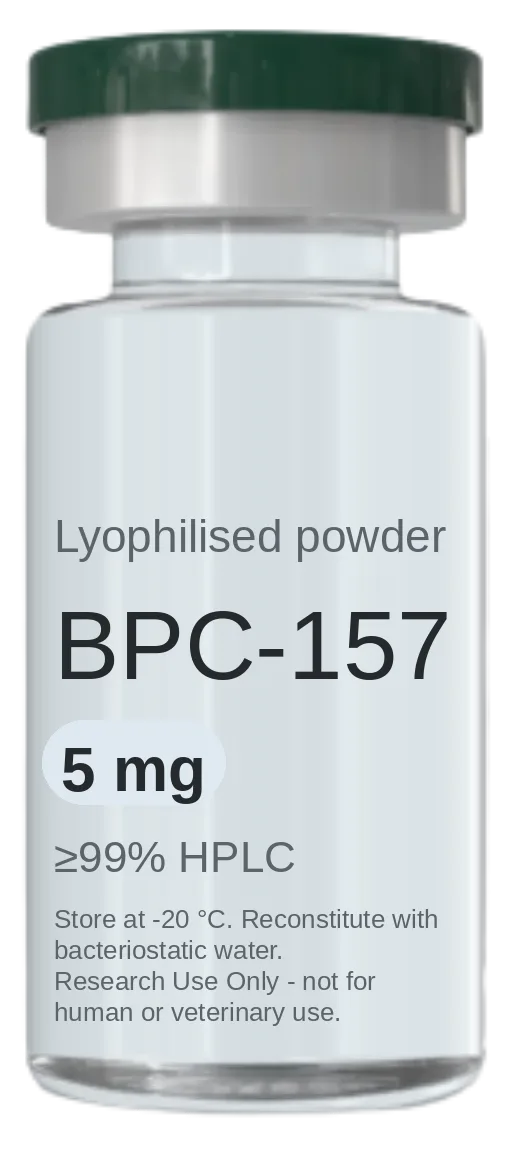
BPC-157 + TB-500
BPC-157 and TB-500 in a single vial — the pairing most studied together in tissue-repair research.
- Purity:
- ≥99% HPLC
- Sizes available:
- 5 mg + 5 mg
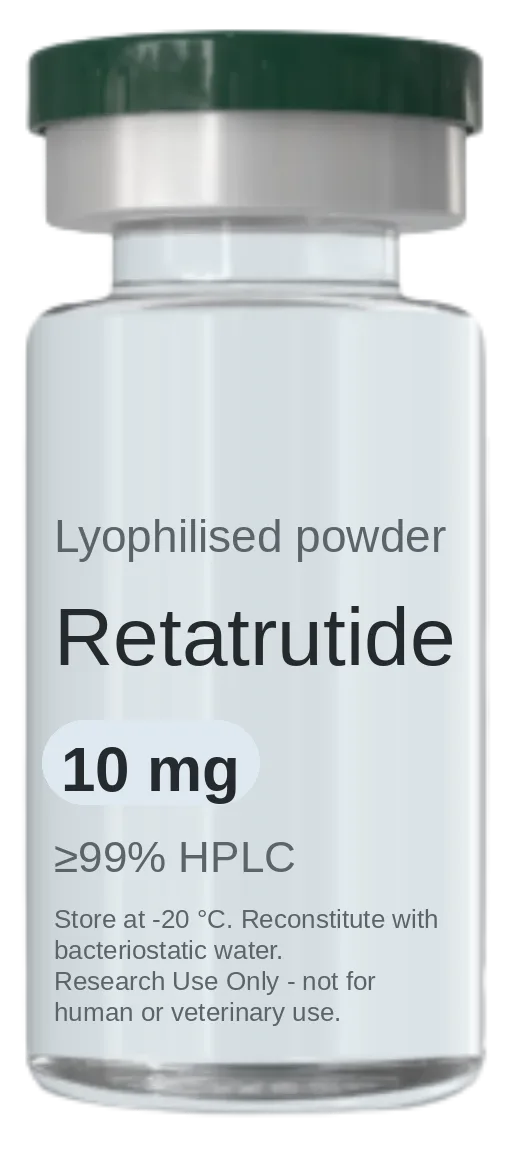
Retatrutide
Triple-agonist metabolic research peptide targeting GLP-1, GIP and glucagon receptors.
- Purity:
- ≥99% HPLC
- Sizes available:
- 10 mg
The consultation
One intake that settles goals, history and contraindications alongside compound, quantity, documentation and route — reviewed by a physician before anything ships.
More notes
-
How to Tell If Retatrutide Is Original
The only real proof is the batch's certificate of analysis. What to check, what proves nothing, and how PeptoClinic documents it.
-
Retatrutide: Pills or Injectable Only?
Retatrutide exists only as an injectable — no pill form appears in published clinical trials or in PeptoClinic's catalog.
-
Storing Retatrutide Before and After Mixing
How lyophilized retatrutide is stored before reconstitution, and what changes once it's dissolved in solution.