
Note
Storing Retatrutide Before and After Mixing
How lyophilized retatrutide is stored before reconstitution, and what changes once it's dissolved in solution.
Lyophilized retatrutide is stored at room temperature, away from light, until the moment it is reconstituted; once reconstituted with bacteriostatic water, it needs constant refrigeration (2–8 °C) and has a limited usable window. These are two different materials with two different rules, and mixing them up is the most common mistake researchers make when a lot arrives.
Why the powder doesn't need refrigeration
A vial of retatrutide ships as lyophilized material: dry powder, sealed, with desiccant inside and protected from light. The laboratory report on the analyzed lot, issued by Janoshik Analytical, found a purity of 99.893% against a 10 mg label (11.96 mg of actual content) — a figure documented in the certificate of analysis (COA) that accompanies the lot.
A peptide in lyophilized form is stable at room temperature for weeks because there is no water in the system. Hydrolytic degradation — the main pathway by which a peptide loses structure — needs a solvent to proceed. That's why the shipment doesn't travel in a cold chain: no gel packs, no dry ice, no temperature logger. What protects the material in transit is the sealed vial and the absence of direct light, not refrigeration.
This also means the powder tolerates reasonable swings in ambient temperature without compromising the peptide's integrity. What does degrade it, even in lyophilized form, is prolonged exposure to direct heat (leaving the vial in the sun or near a heat source) or to humidity if the vial's seal is broken.
What changes once it's reconstituted
Reconstitution means adding a diluent — typically bacteriostatic water, USP grade — to the lyophilized powder to turn it into a solution. From that point on, the material is no longer stable at room temperature: the solution has to be kept refrigerated, between 2 and 8 °C, and used within a window of roughly 30 to 60 days according to the available literature on peptide stability in solution.
The reason is the same one that explains why the dry powder lasts longer: in solution, the peptide is constantly exposed to water and to ambient temperature, and both variables accelerate degradation processes — hydrolysis, oxidation, aggregation. Refrigeration doesn't stop those processes; it slows them down.
Reconstituted material is the only phase of the product that requires an unbroken cold chain. The lyophilized vial, before that step, does not.
Quick comparison: before and after reconstitution
| Aspect | Lyophilized (before) | Reconstituted (after) |
|---|---|---|
| Storage temperature | Room temperature, protected from light | Refrigerated, 2–8 °C |
| Typical stability reported in the literature | Weeks at room temperature | 30 to 60 days refrigerated |
| Requires a cold chain in transit | No | Not applicable — reconstitution happens at destination, material is not shipped already dissolved |
| Main degradation pathway | Minimal (no solvent present) | Hydrolysis, oxidation, aggregation in solution |
| Associated documentation | Certificate of analysis (COA) for the lot | None additional — purity was already established in the COA for the powder |
What documentation ships with the lot
Every lot distributed by PeptoClinic arrives with its corresponding certificate of analysis, issued by an independent laboratory. For retatrutide, the report filed under task 136921 by Janoshik Analytical is the reference document: it states the method (HPLC), the purity result, and the actual content of the vial against the declared label. That purity figure corresponds to the material in its lyophilized state — the document does not measure post-reconstitution stability, because that depends on how the solution is handled afterward, not on the lot itself.
For anyone comparing suppliers, the detail of which laboratory signed the report and which method it used is on the quality page, alongside the rest of the published certificates for the catalogue.
What breaks the material's integrity
The most frequent mistake isn't about temperature, it's about sequence: treating the lyophilized vial as if it already needed refrigeration — exposing it to condensation by moving it in and out of the fridge repeatedly, for instance — or, the other way around, leaving the reconstituted solution out of the fridge by mistake, assuming it's still in the stable powder phase.
Other points that affect material already in solution: shaking rather than gently rolling the vial to mix it (vigorous shaking can put physical stress on the peptide's structure), prolonged exposure to direct light, and repeated freeze–thaw cycles of the solution, which the protein-stability literature identifies as a factor driving degradation through aggregation.
What this covers, and what it doesn't
Everything described here applies to research material supplied strictly for laboratory use (Research Use Only). It is not approved for human or veterinary consumption, it is not a drug or a supplement, and none of its properties have been evaluated by the FDA, ANMAT, or an equivalent regulatory authority. This note is not a dosing, administration, or usage protocol guide: it describes only how the material is stored as a research input, before and after it transitions to the liquid phase.
Frequently asked questions
Does a lyophilized retatrutide vial need refrigeration before reconstitution?
No. Lyophilized powder is stored at room temperature, protected from direct light, and doesn't require refrigeration as long as it stays sealed in that state.
Why doesn't the shipment arrive with dry ice or a gel pack?
Because the material travels in lyophilized form, not reconstituted. A dry peptide doesn't have the hydrolytic degradation pathway active that appears once it's in solution, so it doesn't need a cold chain for transport.
How long does retatrutide stay stable once reconstituted?
The available literature on peptide stability in solution describes typical windows of 30 to 60 days under constant refrigeration at 2–8 °C, though the exact figure depends on the diluent used and how the solution is handled afterward.
Does the certificate of analysis measure stability after reconstitution?
No. The certificate of analysis documents the purity and content of the lot in its lyophilized state, as verified by the laboratory at the time of analysis. It doesn't include a measurement of post-reconstitution stability, because that variable depends on how the solution is stored afterward, not on the lot itself.
What happens if the lyophilized vial is exposed to direct heat?
The powder tolerates reasonable swings in ambient temperature, but prolonged exposure to direct heat or heat sources accelerates degradation even in dry form. Protecting it from light and direct heat is part of its normal storage.
Can the reconstituted solution be refrozen if it isn't all used?
Repeated freeze–thaw cycles of a peptide solution are identified in the protein-stability literature as a factor that favors aggregation. The general recommendation in that literature is to avoid those cycles, not as a usage protocol but as a principle for handling material in the liquid phase.
What diluent is used to reconstitute retatrutide?
Typically bacteriostatic water, USP grade, which is the diluent supplied as a complementary item in the catalogue. The diluent itself contains no peptide — its function is to move the lyophilized powder into the liquid phase.
Does this information serve as usage guidance?
No. This note describes only the storage conditions of the research material, before and after its reconstitution. It is not a dosing, administration, or protocol guide, and the material is intended strictly for laboratory research, not for human or veterinary use.
Compounds mentioned
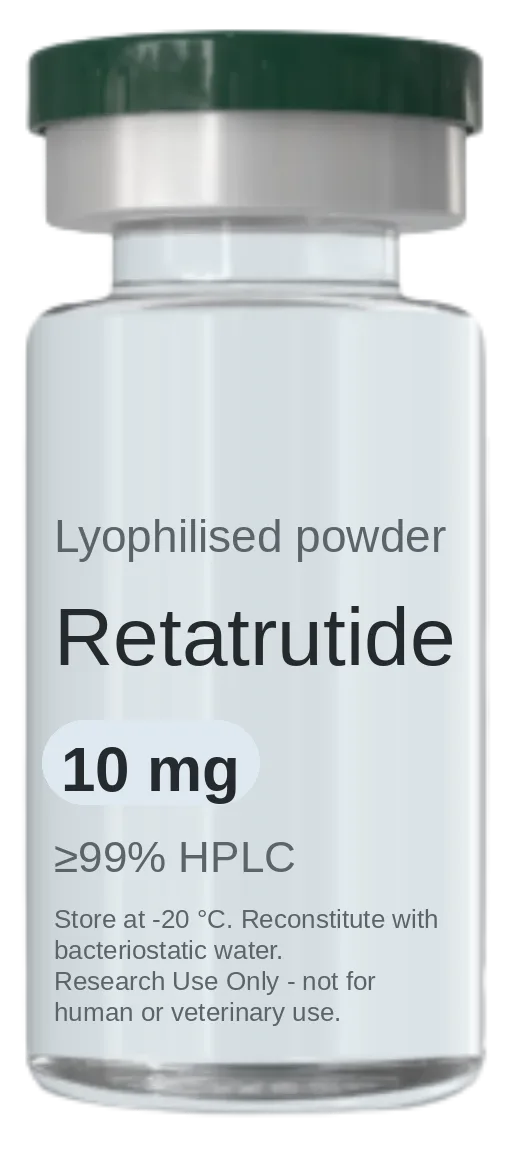
Retatrutide
Triple-agonist metabolic research peptide targeting GLP-1, GIP and glucagon receptors.
- Purity:
- ≥99% HPLC
- Sizes available:
- 10 mg
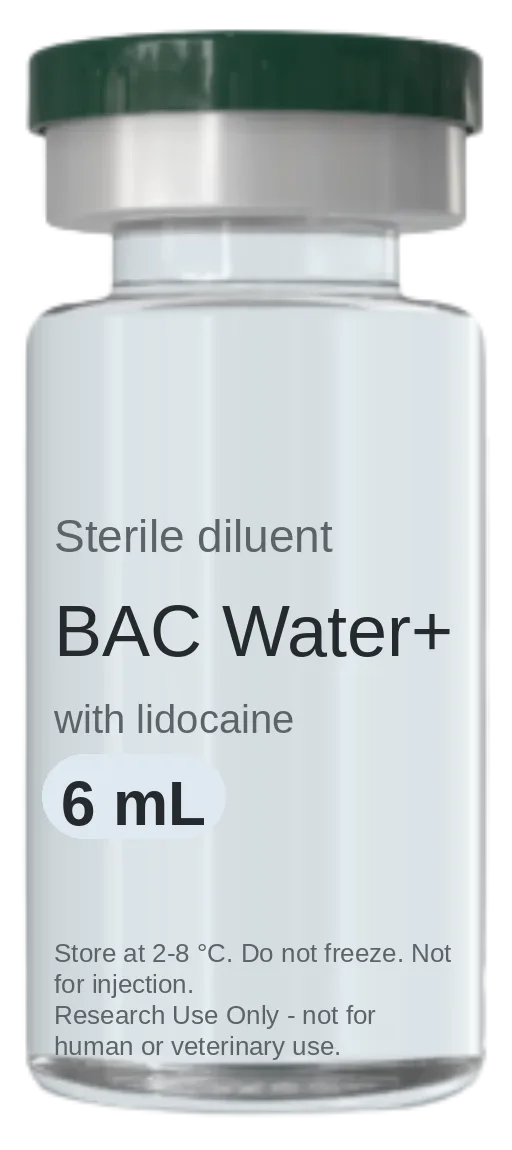
BAC Water+ (6mL con Lidocaína)
Bacteriostatic water with lidocaine, 6 mL, for laboratory reconstitution.
- Purity:
- USP grade
- Sizes available:
- 6 mL
The consultation
One intake that settles goals, history and contraindications alongside compound, quantity, documentation and route — reviewed by a physician before anything ships.
More notes
-
Retatrutide: Pills or Injectable Only?
Retatrutide ships only as an injectable research compound — no pill form exists in published trials or any research catalog.
-
Retatrutide or Semaglutide: Key Differences
Retatrutide is a triple GLP-1/GIP/glucagon agonist; semaglutide activates only GLP-1. How the research literature compares them.
-
Peptide Consigned to a Company in Argentina
What changes at Argentine customs when a research peptide is consigned to a company instead of an individual, and what paperwork ships with it.