
Note
How to Tell If Retatrutide Is Original
The only real proof is the batch's certificate of analysis. What to check, what proves nothing, and how PeptoClinic documents it.
The way to confirm a retatrutide batch is original is to ask for that specific batch's certificate of analysis (COA), check that it was issued by an identifiable laboratory, and compare the figures in the report against what the vial's label states. Without a COA that names a batch number, a date, and an analytical method, there is no way to know what is actually in that vial. Everything else — seals, "purity guaranteed" badges, screenshots — is decoration.
What a certificate of analysis is, and why it's the only proof that counts
A certificate of analysis is the report an independent laboratory issues after testing a sample from a specific batch. It isn't written by the seller. It's written by the laboratory, under its own name, with its own methodology, and in serious cases, with a task number that can be checked.
The central figure on a peptide COA is purity measured by HPLC (high-performance liquid chromatography), which separates and identifies every component in a sample, including the ones that shouldn't be there. A serious COA also reports the vial's actual content in milligrams, which almost never matches the label exactly — and that small mismatch is itself one of the signals that the analysis is real rather than copied.
If a supplier answers "it's 99% pure" without producing the document, that sentence isn't information. It's an unsupported claim, no more valid than anything else typed into a chat window.
What to check specifically on the COA
Before accepting a COA as proof, these points are worth reviewing in order:
- The laboratory's name. It has to be a real, searchable entity with its own website. Janoshik Analytical is one of the laboratories that tests research peptides independently and publishes its methods.
- Batch number and test date. A COA with no date and no batch number could belong to any production run, including one that no longer exists.
- The method used. HPLC for purity, and where the report includes it, mass spectrometry to confirm identity — that the molecule is what it claims to be, not just that it's "clean."
- Actual content versus label. A vial labeled 10 mg that the laboratory measures at 11.96 mg isn't an error. It's the normal variability of lyophilization, and it's exactly the kind of detail a falsified COA rarely reproduces convincingly.
- Whether the report carries a verifiable task number. Some laboratories let a buyer confirm that a specific report is in their records, not just that the PDF exists.
How PeptoClinic documents it for retatrutide
The retatrutide that PeptoClinic supplies as research material carries a Janoshik Analytical report dated April 13, 2026, under task number 136921. That report measures purity at 99.893% on a sample labeled 10 mg, with actual content of 11.96 mg. That's the kind of data point a technical buyer can request and check against: laboratory, date, task number, method, and result, all on one sheet.
The logic doesn't change by compound. On the retatrutide product page and across the rest of the catalog, the standard is the same: every batch ships with its documentation, not with a generic sentence about purity.
Signs something doesn't add up
A few patterns, in practice, tend to flag a problem before it's confirmed:
- There's no COA, or the seller promises one "after purchase." The document has to be available to request beforehand, not after.
- The COA is a low-resolution image with no selectable text. A real report is a PDF generated by laboratory software. A photo of a photo is easier to reuse batch after batch.
- Purity comes out as a perfectly round number, like "100%" or "99.9% guaranteed." HPLC measurements almost never land on exact figures — instrument noise and synthesis variability produce numbers like 99.669% or 99.893%, not marketing figures.
- The same COA shows up pasted onto different products. If the batch number doesn't change across purchases made months apart, nothing is actually being retested.
- The laboratory doesn't exist, or has no website of its own. A name that returns no searchable results is, in practice, the same as having no laboratory at all.
What proves nothing, however convincing it looks
A green seal, a padlock icon, or the word "certified" with no further context prove nothing on their own — anyone can draw them. Neither do other buyers' reviews, a WhatsApp screenshot of "effects," or how long a seller has been operating. Those speak to perceived reputation, not to chemical composition. Composition is what a laboratory measures, and the result ends up written in a document with a name and a date attached to it.
Comparing across compounds helps make the pattern concrete: the MOTS-c page or the catalog show the same type of report — laboratory, batch, method — because verification doesn't depend on the specific peptide. It depends on whether the document exists.
Verifying directly with the laboratory
When a COA includes a task number, the next step is trying to confirm it against the laboratory that issued it, not against the seller. This isn't always possible: some online verifiers fail or are down at the moment of checking, so a verifier's lack of response on a given day is not, by itself, proof of anything in either direction. What counts as evidence is the combination: an identifiable laboratory, a stated method, a batch number, and a purity figure that falls in the range that same laboratory reports for that compound across other similar batches.
For anyone looking into the compound's mechanism itself — retatrutide is a triple agonist at the GLP-1, GIP, and glucagon receptors, studied in preclinical and clinical research — PubMed gathers the published literature, which is a better starting point than any social media summary.
What this material is for
Everything above describes how to read a laboratory document, not how to use a product. Retatrutide and the rest of the compounds PeptoClinic documents are supplied strictly as research material (Research Use Only): for laboratory use, not approved and not intended for human or veterinary consumption, diagnosis, or treatment. No COA, however complete, turns a research compound into a product for use in people.
Anyone who wants to understand how PeptoClinic documents every batch in general can review the quality page, which lays out the criteria applied before any report gets published.
Frequently asked questions
Does an old certificate of analysis work for a new batch?
No. A COA corresponds to a specific batch tested on a specific date. If the batch changed, the previous report says nothing about the contents of the new vial, even if the compound is the same.
Is it enough for a seller to say they test "every batch"?
No, not without showing the document. The claim is free to make. The report with a task number, a laboratory name, and a date is what can actually be checked.
Why is purity almost never a round number?
Because HPLC measures with the noise inherent to the instrument and the synthesis process. Figures like 99.669% or 99.893% are typical of a real measurement; a "100% pure" claim with no decimal points usually reflects marketing, not a laboratory result.
What does it mean when the actual content doesn't exactly match the label?
That the vial contains, for example, 11.96 mg instead of the stated 10 mg. That's normal variation in the lyophilization process, and the fact that a COA reports it with precision is part of what separates a real analysis from a copied one.
Does a "certified" seal or icon on a page replace the COA?
No. An icon doesn't carry a method, a date, or a batch number behind it. It's a graphic element, not a laboratory document.
Is it useful to compare the COA against other buyers' reviews?
Reviews describe perceived reputation, not composition. Only an independent laboratory can confirm what's actually in a vial.
Which laboratory tests the batches PeptoClinic documents?
Janoshik Analytical. The retatrutide batch report corresponds to task 136921, tested April 13, 2026, with purity measured at 99.893%.
Is this material approved for human use?
No. It is supplied strictly as research material (RUO), for laboratory research. It is not approved for human or veterinary consumption, diagnosis, or treatment, and no regulatory authority has evaluated these statements.
Compounds mentioned
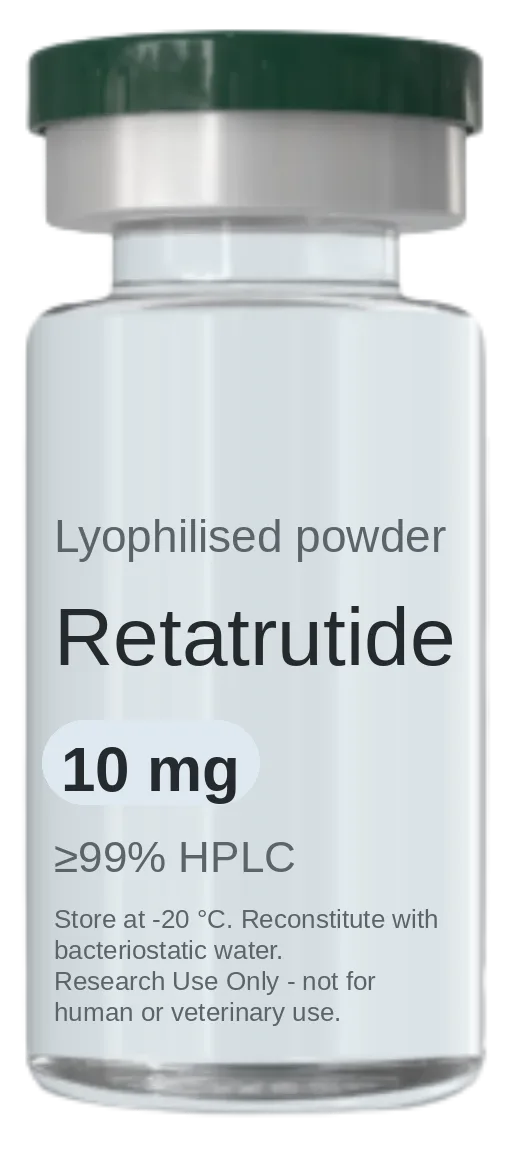
Retatrutide
Triple-agonist metabolic research peptide targeting GLP-1, GIP and glucagon receptors.
- Purity:
- ≥99% HPLC
- Sizes available:
- 10 mg
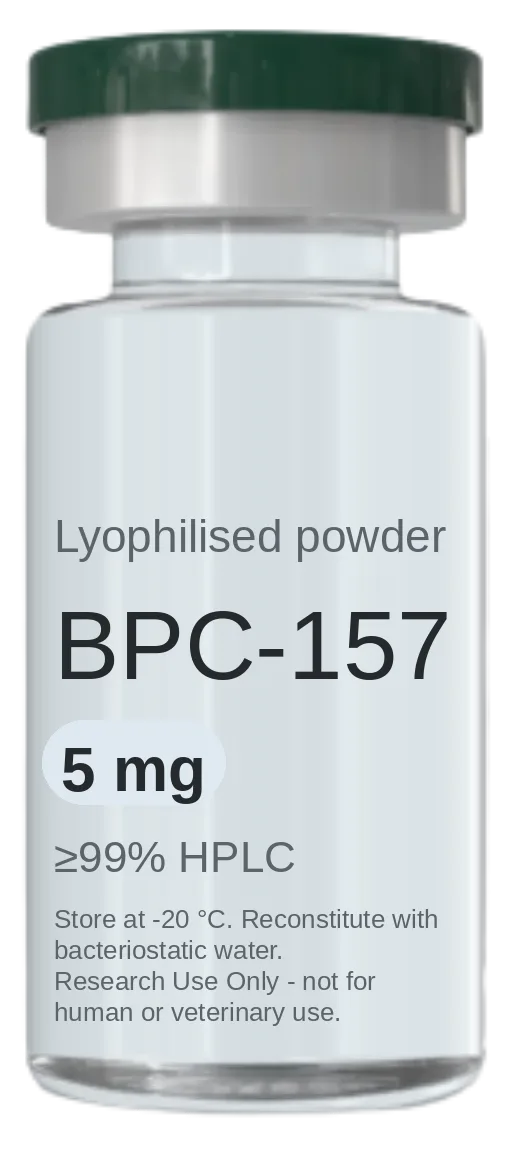
BPC-157 + TB-500
BPC-157 and TB-500 in a single vial — the pairing most studied together in tissue-repair research.
- Purity:
- ≥99% HPLC
- Sizes available:
- 5 mg + 5 mg
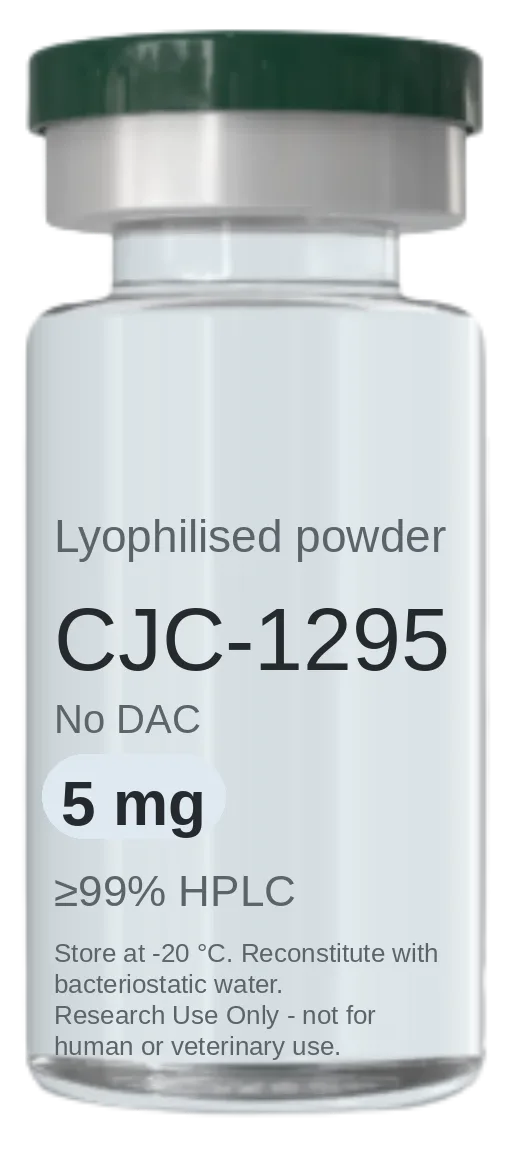
CJC-1295 (sin DAC)
Modified GRF(1-29) tetrasubstituted analogue without drug affinity complex.
- Purity:
- ≥99% HPLC
- Sizes available:
- 5 mg – 20 mg
The consultation
One intake that settles goals, history and contraindications alongside compound, quantity, documentation and route — reviewed by a physician before anything ships.
More notes
-
Retatrutide: Pills or Injectable Only?
Retatrutide ships only as an injectable research compound — no pill form exists in published trials or any research catalog.
-
Storing Retatrutide Before and After Mixing
How lyophilized retatrutide is stored before reconstitution, and what changes once it's dissolved in solution.
-
KPV vs MOTS-c: What's the Difference
KPV and MOTS-c are different peptides in origin and mechanism — we compare structure, pathway, and published lab evidence.