
Note
Customs Holds a Peptide Shipment: What Now?
What an Argentine customs intervention means for a research peptide shipment, and which documents actually resolve it.
When Argentine customs flags a shipment for "previa intervention," the package is not lost and it is not automatically rejected: it stays held until a competent authority reviews the documentation attached to the cargo and decides whether entry is warranted under the declared tariff classification. For a research peptide, that review almost always turns on one point: whether the paperwork traveling with the shipment clearly describes laboratory reference material, rather than a product intended for human or veterinary use.
What an intervention hold actually is
In the Argentine customs system, certain categories of goods do not clear simply because the applicable duties have been paid. Before that can happen, a government body has to sign off on that specific tariff position — a health authority, a foreign-trade authority, or a technical one, depending on what the cargo is. Until that body issues its determination, the shipment sits in "pending intervention" status and does not move to the release channel.
This is not a penalty and it is not a signal that something was declared incorrectly. It is an administrative step that applies to a broad range of chemical, biological, and research-grade products, and it is triggered by how the merchandise is classified in the tariff schedule, not by the intent of the person who ordered it.
Why a research peptide can get flagged
Peptides sit in a grey zone of the tariff nomenclature: they are chemical substances, and many of the tariff positions that cover them also include products with pharmaceutical or cosmetic applications. The system does not automatically distinguish between a vial labeled as laboratory reference material and an active ingredient intended for consumption. That distinction is made by the documentation attached to the shipment, and that is exactly where the reviewing authority looks.
A shipment without a clear invoice, without a technical data sheet, or with an ambiguous description of the contents has a higher chance of generating a query. One where the commercial invoice, the packing note, and the product data sheet all say the same thing — research material, not for human or veterinary consumption, laboratory use only — gives the reviewing authority something concrete to rule on.
What documentation is usually requested
When a file goes into intervention, the customs broker typically receives a request for additional information before the authority issues its determination. In practice, this tends to include:
- The commercial invoice with an exact description of the contents and their declared use.
- The technical data sheet or certificate of analysis for the batch, identifying the compound, its concentration, and who analyzed it.
- A note or declaration clarifying that the material is intended for laboratory research and not for consumption.
The certificate of analysis carries the most weight at this stage, because it is a document produced by a third party — the laboratory that ran the assay — rather than a claim made by the seller about its own product. A batch without a certificate, or with a certificate that cannot be checked against the laboratory that issued it, is exactly the kind of file a reviewing authority cannot resolve quickly: there is nothing to confirm against what it is looking at.
What this means for the material — not for the paperwork
One thing worth separating out, because it gets mixed up often: a customs intervention is an administrative step governing entry of merchandise into the country. It is not a health certification, not an approval for use, and not a determination about what the compound is for. A shipment that went through review and was released does not become a product suitable for human or veterinary consumption, and it does not acquire any regulatory status it did not have before.
Everything PeptoClinic provides is research material — Research Use Only (RUO) — intended exclusively for in vitro and laboratory studies. None of the compounds in the catalog is a medicine, a supplement, or a food; none is approved or evaluated by ANMAT, the FDA, or any equivalent authority for use in people or animals, and no dosing, administration, or protocol guidance is provided, because that belongs to a clinical context this operation does not cover.
How a shipment is prepared so this step isn't a surprise
The way to reduce friction with this process is not to avoid it — whether an authority decides to intervene on a given tariff position is not something either the buyer or the seller controls — but to arrive at it with a complete file from the start. When a shipment is quoted for an Argentine destination, the customs file is prepared to declare entry as laboratory reference material, with documentation backing that description from the invoice through to the batch data sheet.
That includes requesting, before dispatch, the report for the specific batch that will travel. PeptoClinic publishes Janoshik Analytical certificates for analyzed batches, with the task number and the purity found, so that document can be checked against the laboratory that signed it rather than standing as an unsupported claim. It's the same logic a customs authority applies when it asks for a "technical data sheet": something verifiable against a third party, not a label.
Which compounds tend to show up in these shipments
Among the requests reaching Argentina, the compounds most frequently quoted are retatrutide, BPC-157, GHK-Cu, and MOTS-c, among the nineteen compounds that make up the catalog. Each has its own page with published lot and research information, and all of them are handled the same way as far as import documentation goes: dispatched as laboratory reference material, with the corresponding certificate of analysis attached to the request.
For anyone putting together a request and trying to understand how a shipment is organized end to end — from quote to destination — the Argentina page describes the full route, and the shipping page details the destinations served and how each dispatch is structured.
The buyer doesn't manage the intervention
One point worth being clear about: a customs intervention is an exchange between the customs broker, customs, and the relevant authority. Whoever is receiving the material does not directly handle that process and has no way to speed it up from the outside; what they can control is making sure the documentation accompanying the request is complete and internally consistent before the shipment goes out. That's the part of the process that gets resolved ahead of time, and it's where having a verifiable certificate of analysis makes the difference between a file that closes quickly and one that needs several rounds of back-and-forth.
Laboratory use only
All the material described in this article and in PeptoClinic's catalog is provided strictly for research (Research Use Only). It is not suitable for and is not intended for human or veterinary consumption, diagnosis, or treatment of any condition. It is not a medicine, a dietary supplement, or a cosmetic product, and none of the claims about these compounds has been evaluated by ANMAT, the FDA, or any equivalent regulatory body.
Frequently asked questions
Does a customs intervention mean the shipment is held indefinitely?
No. It means the relevant authority has not yet issued a determination on that specific tariff position. How long it takes depends on that authority's workload and on whether the attached documentation is enough to resolve the query without requesting more information; it is not a rejection and not a final status.
Why does one peptide shipment get flagged and a similar one doesn't?
Because the review criteria don't depend only on the product but on how the merchandise is classified and described in each individual filing. Two shipments with similar contents can have different descriptions on the invoice or packing note, and that changes whether the system flags them for review.
Is a certificate of analysis enough to resolve the intervention?
It's the document that carries the most weight because it's issued by a third party — the laboratory that ran the assay — and it can be checked against that source. It doesn't replace the invoice or the technical data sheet, but it's the piece that lets a reviewing authority confirm most quickly what it's looking at.
What happens if the invoice doesn't specify that it's research material?
An ambiguous description is exactly what tends to trigger a request for clarification from the reviewing authority, because without that information it can't distinguish between a substance intended for pharmaceutical use and a laboratory reference compound.
Does the buyer or the customs broker handle this process?
It's an exchange between the customs broker, customs, and the relevant authority. Whoever receives the shipment doesn't directly take part in that process; what they can control is making sure the documentation accompanying the request is complete before the shipment is dispatched.
Does clearing an intervention change a compound's regulatory status?
No. A customs intervention resolves entry of the merchandise into the country, not a health or use-related status. The material remains, once released, exactly what it was before: research material (RUO), with no approval for human or veterinary consumption.
Do all the compounds in the catalog go through the same kind of review?
Tariff classification criteria apply by position, so it can vary depending on how each compound is described. What stays constant across all requests to Argentine destinations is that the customs file is prepared as laboratory reference material, with the corresponding supporting documentation.
Where can I see the certificate of analysis before requesting a batch?
Published laboratory reports, with the Janoshik Analytical task number and the purity found in each analysis, are available on the [quality page](/en/quality/), along with the verification link where the laboratory has one enabled.
Compounds mentioned
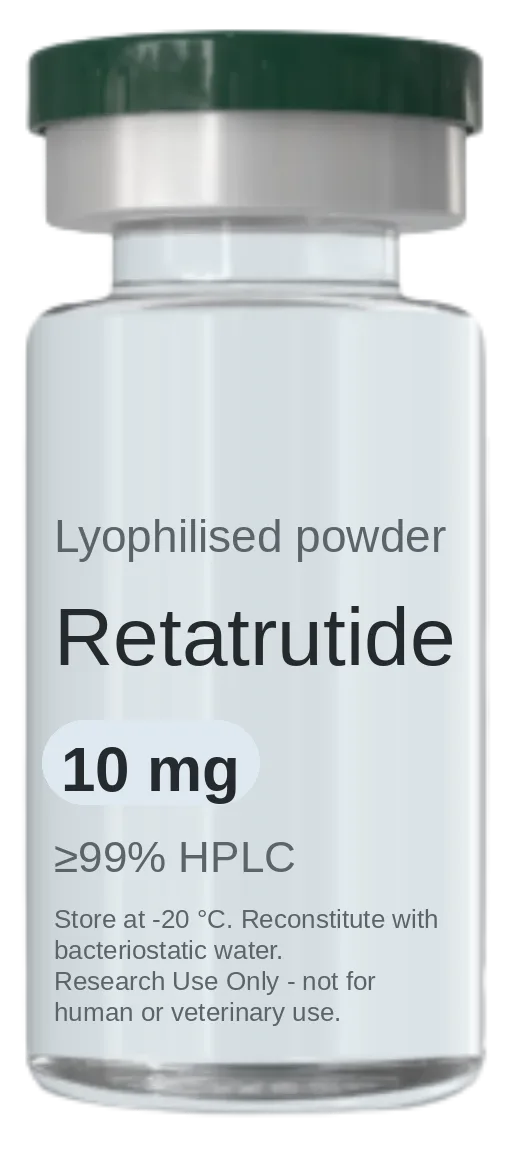
Retatrutide
Triple-agonist metabolic research peptide targeting GLP-1, GIP and glucagon receptors.
- Purity:
- ≥99% HPLC
- Sizes available:
- 10 mg
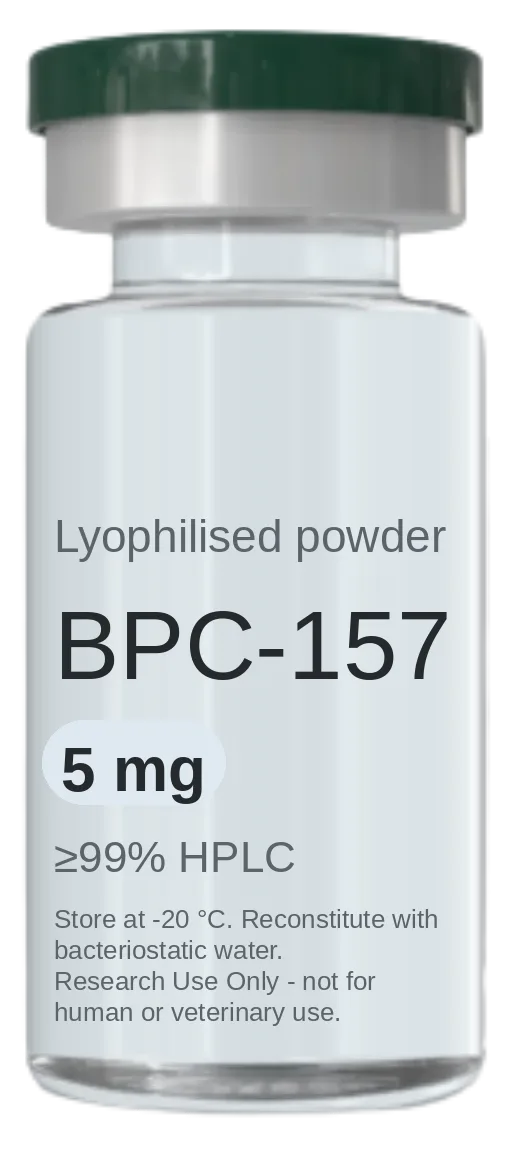
BPC-157 + TB-500
BPC-157 and TB-500 in a single vial — the pairing most studied together in tissue-repair research.
- Purity:
- ≥99% HPLC
- Sizes available:
- 5 mg + 5 mg
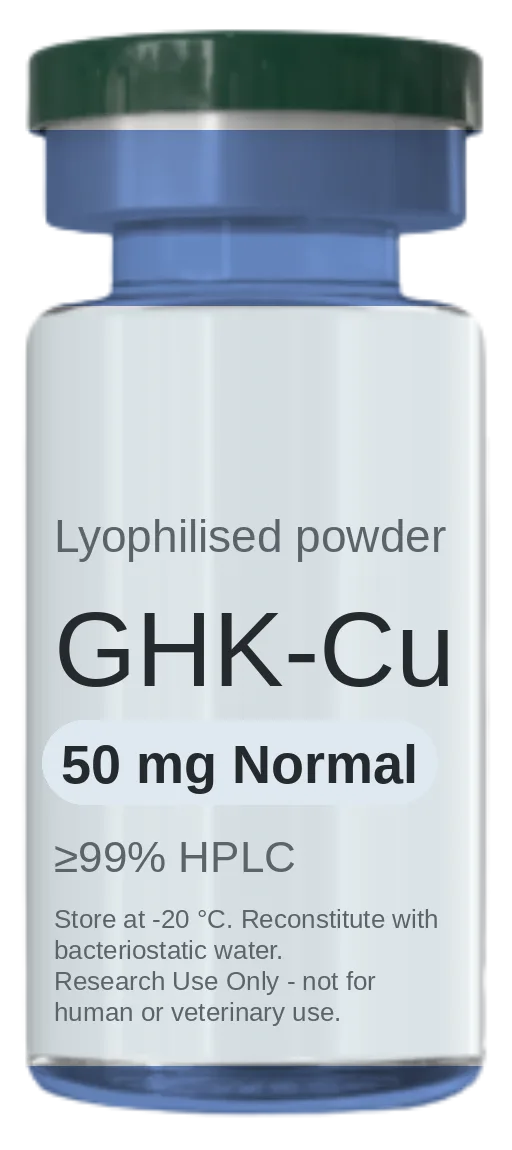
GHK-Cu (Copper Peptide)
Copper-binding tripeptide studied in extracellular matrix and dermal research models.
- Purity:
- ≥99% HPLC
- Sizes available:
- 50 mg Normal – 50 mg Plus
The consultation
One intake that settles goals, history and contraindications alongside compound, quantity, documentation and route — reviewed by a physician before anything ships.
More notes
-
Tesamorelin vs Sermorelin: The Difference
Tesamorelin and sermorelin are both GHRH analogs, but not the same molecule. Here's the structural difference and what the studies on each measure.
-
Peptide Supplier vs. Reseller: What Differs
The real difference is whether someone can name the lab that tested a batch and show the report — or only promise it's pure.
-
MOTS-c or NAD+: What's the Difference
MOTS-c and NAD+ are studied through different mitochondrial pathways; here's what each line of research actually measures.