
Note
Argentine customs holds a research reagent
What happens when Argentine customs holds a research reagent, how the AFIP process works, and which documents resolve most holds.
When Argentine customs holds a research reagent, the shipment enters an administrative process governed by Argentine Customs Code (Law 22.415), with defined deadlines that can close in a few business days or stretch into weeks depending on the documentation that accompanied the shipment. A hold is not a refusal.
What a customs hold actually means
Customs holds a shipment while verifying that the declared tariff classification, transaction value, and supporting documentation are consistent with one another. The mechanism is called a formal review notice (*vista aduanera*): a written notification describing exactly what needs to be verified and setting a deadline for the importer to respond, counted in business days.
That deadline is fixed in the notification itself. It can be extended with documented justification, but the extension must be requested before the original deadline expires. Working with a licensed customs broker from the moment the notification arrives is the only practical way to respond without unnecessary delay.
Argentine law requires that legal entities — laboratories, universities, companies — act through a licensed customs broker in import proceedings. The broker is the only person authorized to file documentation, respond to review notices, and manage the clearance. A company representative or individual researcher cannot act directly in that capacity.
Why research reagents get held
Three causes account for the large majority of holds on research material:
- Incorrect or ambiguous tariff classification. Biological reagents used in research can fall under several headings of the MERCOSUR Common Nomenclature (NCM). Chapter 29 (organic chemical compounds), Chapter 30 (pharmaceutical products), and their subheadings carry different duty rates and activate different regulatory bodies. An incorrect heading generates an immediate review.
- Incomplete manufacturer documentation. Customs may request a detailed commercial invoice, packing list, batch certificate of analysis, and a signed end-use declaration stating explicitly that the material is for laboratory research. A shipment without those documents is missing what the reviewer will ask for.
- Value discrepancy. If the declared value differs from the reference value AFIP holds for that category of material, the system automatically flags the file for review.
What happens to the material during a hold
The shipment sits in a primary customs zone or a bonded warehouse and does not reach the laboratory until the administrative process closes.
For temperature-sensitive reagents, this is a direct problem. General bonded warehouses do not guarantee controlled temperature conditions. Every day of a hold is a day the material may be outside its specified storage range.
That is the practical reason why documentation completeness before shipping matters more than the ability to resolve a hold quickly after it occurs. A shipment that arrives with the full documentation package gives the customs reviewer less to ask for. Less to ask for means fewer days in the warehouse.
Documents that resolve most holds
The set of documents that most consistently releases a held reagent:
- Batch certificate of analysis (CoA). Issued by an independent laboratory, the CoA specifies the compound, lot number, analytical method, purity result, and the analyst's signature. A CoA with a verifiable task number that can be checked online gives the customs reviewer a document they can authenticate without intermediaries. The reports PeptoClinic publishes, issued by Janoshik Analytical, follow that format: task number, HPLC result, and analysis date.
- End-use declaration. A signed document from the importer stating that the material is destined exclusively for laboratory research and not for human or animal consumption.
- Safety data sheet (SDS/MSDS). Required for compounds with hazard properties under their tariff classification.
- Detailed commercial invoice. The invoice must include the technical description of the compound, its CAS number, concentration, quantity, and unit value. A one-line invoice that reads "research chemicals" triggers an automatic review.
A supplier that includes this complete set with every shipment substantially reduces the probability that the customs reviewer will need to request anything further.
The NCM number defines the process
The NCM heading determines the applicable duty and which regulatory bodies have jurisdiction. For peptide reagents imported as laboratory reference material, the correct classification is the one that corresponds to diagnostic or research-use reagents within Chapter 30, not the heading that covers registered pharmaceutical products.
The distinction matters significantly. Certain Chapter 30 headings activate ANMAT jurisdiction and the material is treated as a drug product, which requires prior registration. A research reagent imported under a heading ANMAT classifies as a pharmaceutical product enters a completely different process — one with pre-registration requirements that do not apply to laboratory research use.
A supplier that knows the Argentine customs environment declares the correct heading from origin. When that does not happen, correcting the classification requires an amended declaration, which is slower and more expensive than responding to a documentation hold.
For material PeptoClinic ships to Argentine destinations — including retatrutide and BPC-157 — the customs file is prepared as laboratory reference material with lot documentation and the classification appropriate to the declared research use.
What happens if you do not respond in time
Three outcomes are possible if the importer does not respond within the review period:
Abandonment. If there is no response and no retrieval, customs can declare the goods abandoned and transfer them to the Argentine state. The Customs Code sets procedural timelines for this, but once abandonment is declared, recovering the material is not possible.
Destruction. For biological materials that present a sanitary risk, or that the bonded warehouse cannot store adequately, customs can order destruction.
Formal infractions. Depending on the nature of the non-compliance, formal administrative penalties can be added to the original problem.
The correct sequence is: receive the notification, contact the broker immediately, gather supplier documentation, file within the deadline.
Reducing risk from the source
Customs holds on research reagents depend more on what the supplier ships than on anything the importer can do after arrival. A shipment that arrives with a traceable CoA from an independent laboratory, an SDS, a detailed invoice, a signed end-use declaration, and the correct NCM heading has few grounds for a hold.
A shipment that arrives with a one-line invoice and no technical documentation will generate a review almost automatically.
Before importing a reagent, ask the supplier two questions: what documentation they include with each lot, and what NCM heading they typically declare for shipments to Argentina. If the supplier cannot give a concrete answer to either question, the risk of a hold is high.
The shipping and documentation page describes the file format PeptoClinic prepares for lots shipped to Argentine destinations.
For laboratory research only
All materials supplied by PeptoClinic are strictly for laboratory research use (Research Use Only, RUO): in vitro research and controlled laboratory conditions.
None of these materials is a medicine, a supplement, or a food. None is approved or intended for human or veterinary consumption, diagnosis, or treatment. No statements on this page have been evaluated by ANMAT, the FDA, or any equivalent regulatory authority. PeptoClinic is not a pharmacy, a clinic, or a source of dosing or administration guidance. Requests for information about human-use protocols are declined.
Frequently asked questions
How long do I have to respond to a customs review notice?
The deadline is set in the notification itself and is counted in business days. It can be extended with documented justification, but the extension request must be filed before the original deadline expires. The broker managing the clearance can advise on the specific timeline and whether grounds for extension exist.
Do I need a licensed customs broker to resolve the hold?
Yes. Argentine law requires legal entities — laboratories, universities, and companies — to act through a licensed customs broker in import proceedings. The broker is the only person authorized to file documentation, respond to formal review notices, and manage the clearance. A company representative cannot fulfill that role directly.
What happens if the reagent requires refrigeration and the warehouse does not have it?
Customs does not guarantee controlled temperature conditions in general bonded warehouses. For temperature-sensitive materials, every day of a hold is a day outside the specified storage range. This is the practical argument for ensuring documentation is complete before shipping rather than relying on quick resolution after a hold occurs.
Does ANMAT get involved in the import of research reagents?
It depends on the NCM heading declared at origin. Certain Chapter 30 headings activate ANMAT jurisdiction and the material is treated as a drug product, requiring prior registration. Under headings specific to laboratory reagents, that intervention does not apply in the same way. The classification the supplier declares determines which process activates.
Can the material be destroyed if I do not respond in time?
Yes. The Argentine Customs Code provides for the destruction of goods that are abandoned or present a sanitary risk. Once a shipment enters abandonment status, recovery is not possible.
What is a CoA and why does customs ask for it?
A certificate of analysis (CoA) is the report issued by the laboratory that analyzed the lot. It specifies the compound, lot number, analytical method, purity result, and the analyst's signature. Customs requests it because it allows the reviewer to verify that what is declared on the invoice matches what the package contains. A CoA from an independent laboratory with a verifiable task number can be authenticated without intermediaries, which makes it the document most likely to close a hold quickly.
Is importing research peptides legal in Argentina?
Importing reagents for laboratory research use has a legal pathway in Argentina. The material enters as laboratory reference material, not as a drug product. Consistent documentation — where the supplier's technical paperwork, the declared NCM heading, and the stated end use align — keeps the process within that pathway. Importing under a pharmaceutical product heading requires prior ANMAT registration and a completely different procedure.
How long does a hold typically take to resolve when documentation is complete?
When the documentation responds to exactly what the review notice requested, resolution can fall within five to fifteen business days. If corrections or additional filings are required, the timeline extends. The deadlines set by the Customs Code govern the importer's responses, not the speed at which customs issues its decision.
Compounds mentioned
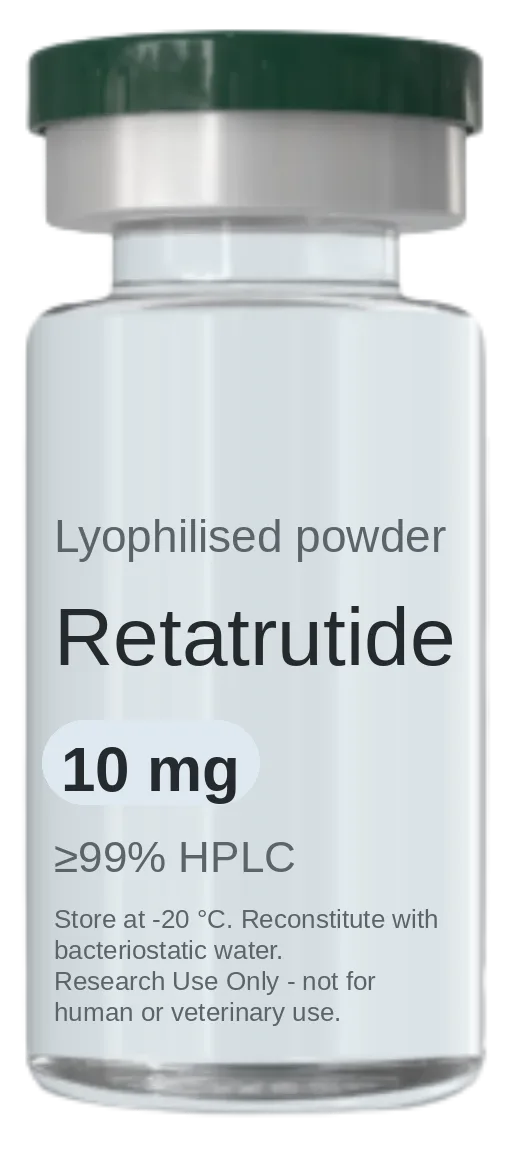
Retatrutide
Triple-agonist metabolic research peptide targeting GLP-1, GIP and glucagon receptors.
- Purity:
- ≥99% HPLC
- Sizes available:
- 10 mg
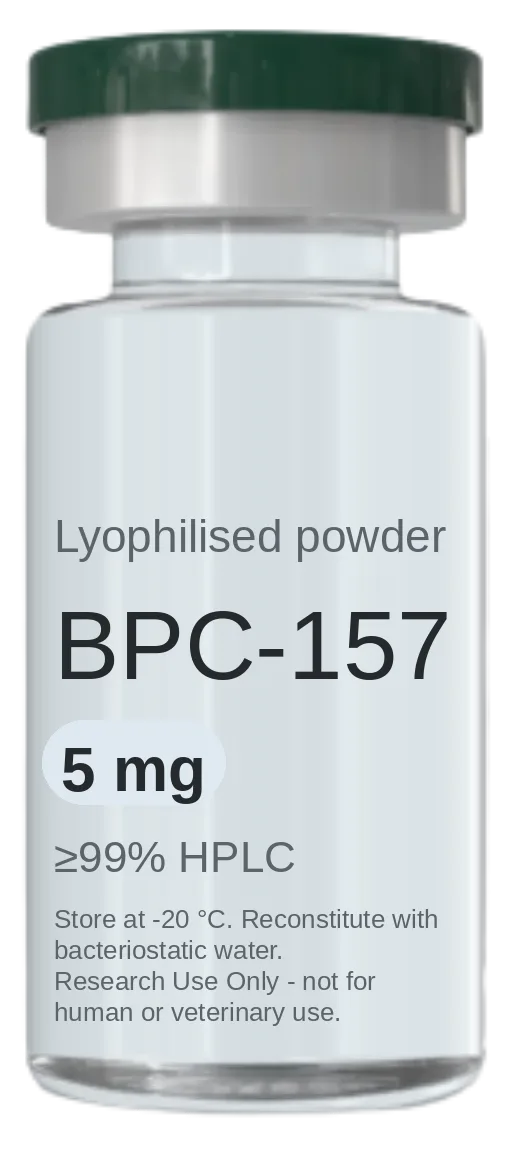
BPC-157 + TB-500
BPC-157 and TB-500 in a single vial — the pairing most studied together in tissue-repair research.
- Purity:
- ≥99% HPLC
- Sizes available:
- 5 mg + 5 mg
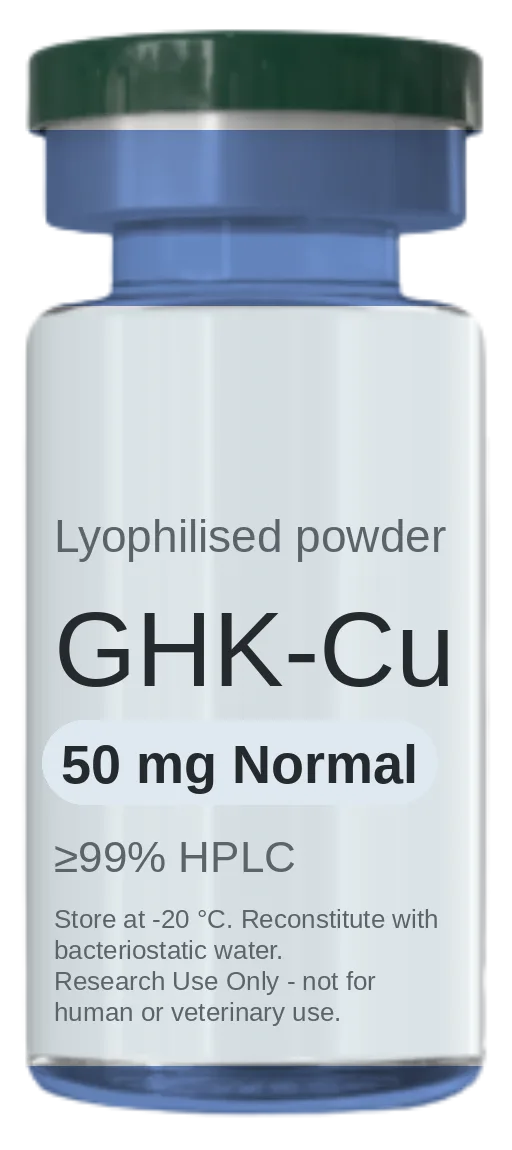
GHK-Cu (Copper Peptide)
Copper-binding tripeptide studied in extracellular matrix and dermal research models.
- Purity:
- ≥99% HPLC
- Sizes available:
- 50 mg Normal – 50 mg Plus
The consultation
One intake that settles goals, history and contraindications alongside compound, quantity, documentation and route — reviewed by a physician before anything ships.
More notes
-
Tesamorelin vs Sermorelin: The Difference
Tesamorelin and sermorelin are both GHRH analogs, but not the same molecule. Here's the structural difference and what the studies on each measure.
-
Peptide Supplier vs. Reseller: What Differs
The real difference is whether someone can name the lab that tested a batch and show the report — or only promise it's pure.
-
MOTS-c or NAD+: What's the Difference
MOTS-c and NAD+ are studied through different mitochondrial pathways; here's what each line of research actually measures.