
Note
Cyclic vs Linear Peptides: Key Differences
Structural differences, proteolytic stability, and research applications of cyclic and linear peptides explained with precision.
A linear peptide has a free amino terminus (N) and a free carboxyl terminus (C); a cyclic peptide has those termini joined to each other — or two internal residues linked together — forming a ring. That single structural fact determines everything downstream: resistance to enzymes, the conformation the molecule holds in solution, and the behavior researchers observe when they run assays.
What each type is, precisely
In a linear peptide, amino acids are chained through peptide bonds (CO–NH) from one end to the other. The N-terminus carries a free amino group and the C-terminus carries a free carboxyl group. That openness is what distinguishes linear peptides functionally.
A cyclic peptide closes that chain. There are several ways to do it:
- Head-to-tail cyclization (homodetic): the N-terminus is joined to the C-terminus through an additional peptide bond. This is the most common form.
- Disulfide bridge: two cysteine residues form an S–S bond, creating a loop within the chain. The N and C termini remain free, but the internal ring restricts conformation and shields the enclosed region from enzymatic attack.
- Side-chain to backbone cyclization: a side-chain residue is joined to one of the termini via a lactam bridge.
- Side-chain to side-chain cyclization: two side chains bond to each other, forming an internal ring without involving the termini.
Each cyclization type produces a distinct geometry and, as a result, distinct properties. There is no generic cyclic peptide: the ring architecture matters as much as the amino acid sequence.
Why cyclization changes stability
The most consequential fact for research is this: linear peptides are vulnerable to proteases, especially exopeptidases — aminopeptidases and carboxypeptidases — that degrade the chain by attacking from the free termini. Closing the ring eliminates those termini and blocks that degradation pathway.
Endopeptidases can still cleave cyclic peptides, but they first need to open the ring, which raises the energetic threshold for the reaction. Published studies on the proteolytic stability of cyclic peptides document this across multiple biological media: the half-life of cyclic peptides in plasma or in protease-containing buffer is consistently longer than that of linear analogs with identical sequences.
The experimental implication is direct. When working with linear peptides, the degradation rate is a variable that must be tracked and factored into results from longer assays. With a cyclic equivalent, that variable is reduced — though not eliminated.
Conformation: flexibility vs. rigidity
A linear peptide is more flexible. The chain can rotate freely around its bonds and sample many conformations in solution. That property is useful when studying how a peptide adapts to a receptor, or when mapping the full conformational space available to a given sequence.
Cyclization constrains that freedom. The ring forces the chain to hold a more defined geometry. This can increase affinity for a specific molecular target — the peptide arrives already shaped correctly, without needing to reorganize — but it also reduces adaptability to alternative targets.
This conformational rigidity is a tool in experimental design: it allows researchers to run assays where conformational variability is better controlled. It is also the basis for the higher selectivity that several cyclic peptides show compared to their linear homologs, as reported in the pharmacology literature.
Membrane permeability
One active area in the research literature concerns cellular permeability. Several cyclic peptides show greater ability to cross lipid membranes than linear peptides of similar molecular weight. The mechanism most studied in the bibliography involves transient configurations where internal NH groups form intramolecular hydrogen bonds rather than bonding with the solvent, reducing the effective hydrophilicity of the molecule.
The most cited case in experimental pharmacology is cyclosporin A, a cyclic undecapeptide with notable permeability in preclinical studies. That observation opened a research direction — still active — oriented toward using cyclic peptides as tools to reach intracellular targets. The field continues to investigate which structural features drive permeability and which limit it.
What changes in synthesis
Solid-phase peptide synthesis (SPPS) of linear peptides is a mature, well-documented process. Cyclization adds a step — the bond that closes the ring — which requires specific conditions to prevent oligomerization and other side products. The shorter the chain, the higher the risk of dimer or multimer formation instead of the desired cyclic monomer.
Producing high-purity cyclic peptides is more demanding than producing their linear counterparts. Analysis of the final product must confirm not just the sequence but also the cyclization pattern. In a certificate of analysis for a well-characterized cyclic peptide, that characterization should appear alongside the measured molecular weight — which in a head-to-tail cyclization is 18 Da lower than the linear equivalent, because closing the bond releases one water molecule.
Linear peptides in the research catalogue
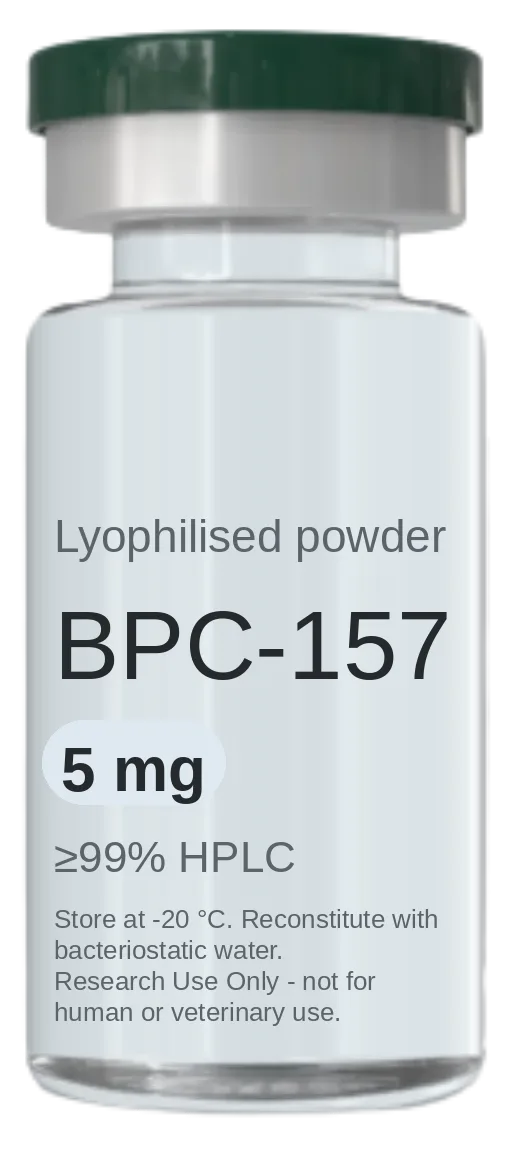
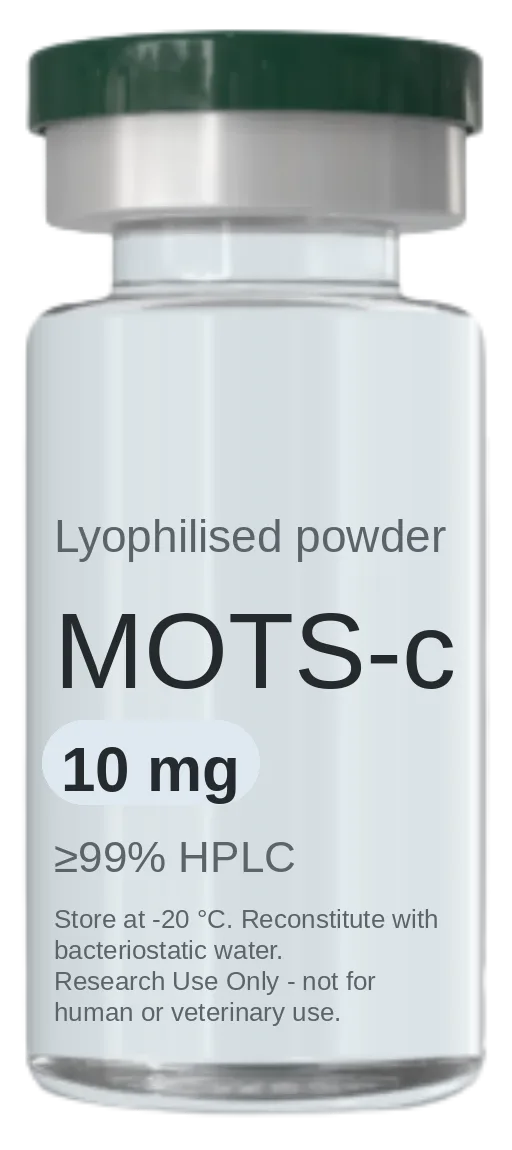
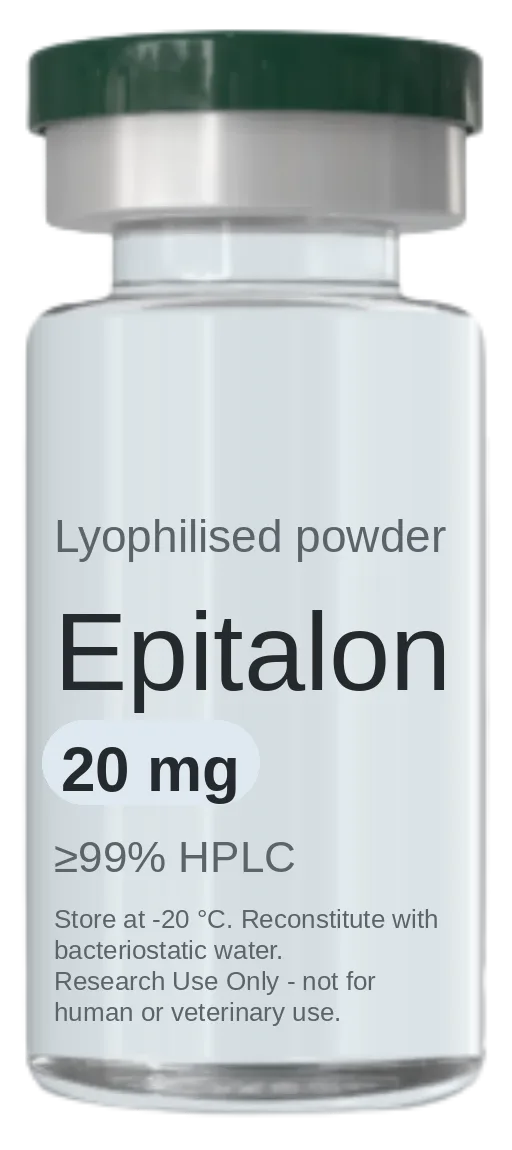
Many of the most studied research peptides are linear. BPC-157 is an open-chain pentadecapeptide derived from gastric binding protein. MOTS-c is a linear mitochondrial peptide of 16 amino acids. Epitalon is a linear tetrapeptide (Ala-Glu-Asp-Gly). GHK-Cu is a linear tripeptide that forms a complex with copper.
This does not mean linear peptides are inferior to cyclic ones. Each format addresses different experimental questions. The choice between a linear and a cyclic analog depends on the model, the target of interest, and the conditions of the assay. PeptoClinic Research Supply provides compounds in lyophilized format with an accompanying purity report; complete structural specifications are included with each written quote.
For laboratory research only
All material supplied by PeptoClinic Research Supply is intended exclusively for laboratory research — in vitro and preclinical — and is not approved or intended for human or veterinary consumption. No compound in the catalogue has been evaluated by ANMAT, the FDA, or any equivalent regulatory authority as a drug, supplement, or food. The properties described in this article are drawn from published scientific literature and are presented in that context. PeptoClinic does not provide dosing protocols, administration guidance, or clinical advice of any kind.
Frequently asked questions
Is a cyclic peptide always more stable than a linear peptide with the same sequence?
In most experimental models, yes: cyclization removes the free termini that exopeptidases use as entry points, which extends half-life in protease-containing media. That does not mean absolute stability — endopeptidases remain active — nor that all cyclic peptides are equally resistant to each other. The type of cyclization and the specific sequence both contribute to the degree of stability observed.
Does a disulfide bridge make a peptide cyclic?
Technically it is not a complete cyclization, because the N and C termini remain free. But the S–S bond between two cysteine residues creates a loop that restricts conformation and shields the internal region from certain enzymatic attacks. Many authors group disulfide-bridged peptides alongside cyclic ones because of this stabilizing and conformational effect, though the nomenclature is not uniform across the literature.
What does "homodetic" mean when applied to a cyclic peptide?
Homodetic means the ring is formed exclusively by standard amide peptide bonds. A heterodetic peptide includes at least one non-amide bond — ester, disulfide, or lactam — in the ring closure. The distinction matters because the type of bond that closes the ring affects the chemical stability of the entire ring structure, not only that single linkage.
Does cyclization always increase selectivity for a receptor?
Not necessarily. Conformational rigidity can increase affinity for a specific target if the ring geometry matches the active shape of the peptide, but that same rigidity can reduce activity if the forced conformation is not suited to that target. This is an experimental variable, not a general rule applicable to all cyclic structures.
How can you verify whether a peptide is cyclic or linear from its documentation?
The certificate of analysis should include the molecular weight measured by mass spectrometry. In a head-to-tail cyclization, that value is 18.015 Da lower than the linear equivalent, because closing the bond releases one water molecule. That difference is detectable with sufficient precision to confirm the cyclization pattern. High-resolution mass spectrometry is the standard method for this confirmation and should be present in any complete analytical report.
Is synthesizing a cyclic peptide more expensive than a linear one?
The process is more demanding: it requires an additional cyclization step, controlled dilution conditions to minimize oligomerization, and additional analysis to confirm the cyclization pattern and rule out multimer formation. That generally reflects in the synthesis cost, though the magnitude of the difference varies with chain length and the type of cyclization employed.
Do linear peptides have any research advantages over cyclic ones?
Linear peptides have concrete advantages in certain experimental contexts. They are easier to synthesize and to modify chemically, which makes them more versatile starting points for structure-activity relationship studies. Their flexibility also allows researchers to investigate how a peptide interacts with multiple targets without the conformational constraint a ring imposes. The appropriate format depends on the experimental design, not on a hierarchy between structural classes.
Are all compounds in the PeptoClinic catalogue linear?
Most of the most extensively studied research peptides have linear structures, and the catalogue reflects that. Some compounds contain disulfide bridges or partial cyclic motifs within their structure. The structural specifications for each compound are detailed in the accompanying datasheet and in the certificate of analysis that ships with each batch.
Compounds mentioned
BPC-157 + TB-500
BPC-157 and TB-500 in a single vial — the pairing most studied together in tissue-repair research.
- Purity:
- ≥99% HPLC
- Sizes available:
- 5 mg + 5 mg
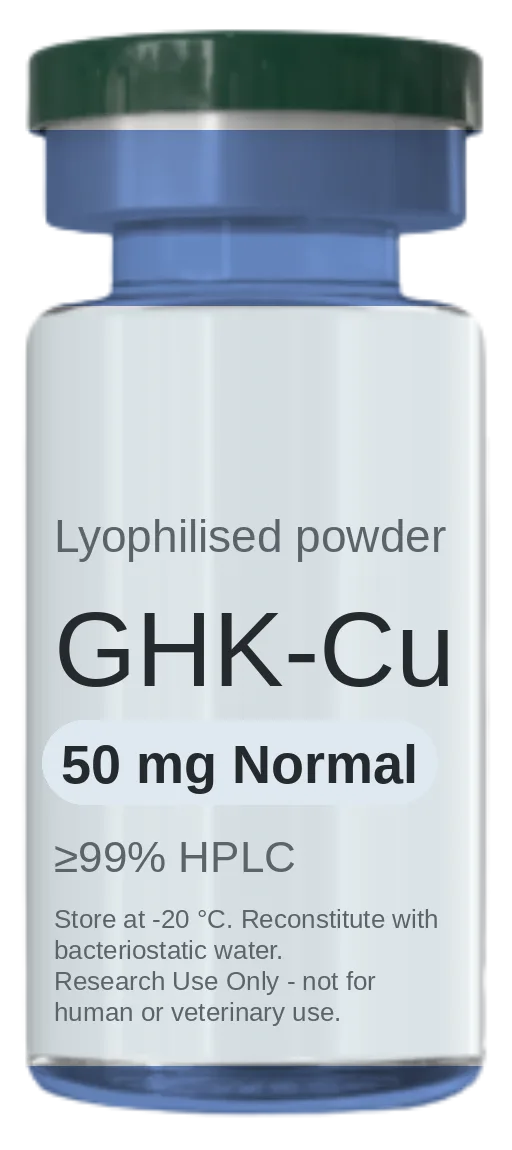
GHK-Cu (Copper Peptide)
Copper-binding tripeptide studied in extracellular matrix and dermal research models.
- Purity:
- ≥99% HPLC
- Sizes available:
- 50 mg Normal – 50 mg Plus
The consultation
One intake that settles goals, history and contraindications alongside compound, quantity, documentation and route — reviewed by a physician before anything ships.
More notes
-
GHK-Cu vs Epithalon: What's the Difference
GHK-Cu and Epithalon are distinct research peptides in structure and in what the literature studies on each. Here's the difference.
-
Freight Forwarder vs Courier to Argentina
Can a freight forwarder replace a courier to import research peptides into Argentina? What changes, and what the practical answer is.
-
No One Home for Your Argentina Shipment?
What happens when a research peptide shipment to Argentina arrives at an address with no one there to sign for it.