
Note
Freight Forwarder vs Courier to Argentina
Can a freight forwarder replace a courier to import research peptides into Argentina? What changes, and what the practical answer is.
Yes, a freight forwarder can technically be used instead of a courier to bring research peptides into Argentina, but doing so switches the entire customs regime that applies to the shipment: it moves the transaction from a simplified international parcel process into a formal import, with a customs broker, importer registration, and administrative overhead built for commercial volume, not a handful of laboratory vials.
What each one actually does
A courier (DHL, FedEx, UPS, international post) moves packages door to door under the postal or express-shipment regime. The courier company itself files the simplified customs paperwork on the recipient's behalf, and the package arrives without the recipient having to manage anything beyond receiving it and, where applicable, paying the corresponding charges.
A freight forwarder coordinates international cargo transport — by sea, air, or land — and hands the goods to a customs broker to process the import under the general regime. That regime exists for commercial operations: it requires the importer to be registered with a tax ID in the corresponding registry, and it typically involves more documentary steps than a courier shipment.
The difference is not one of transport "quality." It is a difference in applicable legal regime. A freight forwarder is not safer or faster for a shipment of vials — it is simply the path designed for a different kind of volume.
When a freight forwarder actually makes sense
A freight forwarder starts to make sense once a shipment stops being a one-off and becomes a commercial operation of real volume: a lab importing on a recurring basis for resale, a university centralizing purchases for several research groups, or any case where the importer is already constituted as such before customs and prefers to manage its own clearances.
For someone sourcing research material in laboratory quantities — one or a few vials, not pallets — the courier regime is usually the more direct route, because it is already built to move packages door to door without the recipient having to register as an importer or hire a broker of their own. Switching to a freight forwarder for that volume adds an administrative structure that solves no real problem with the shipment itself: it just makes it slower and more expensive without changing what travels inside the box.
What documentation travels with the shipment
What determines whether a shipment clears without issues is not the carrier that moves it, but the documentation that accompanies it and how it is declared. For research material, that includes:
- the commercial invoice or document describing the contents precisely,
- a declaration that the material is for laboratory research use only (RUO, *Research Use Only*), not for human or veterinary consumption,
- and, where relevant, the certificate of analysis for the batch, which is what lets anyone verify exactly what arrived. For how to read that document and what to look for in it, there is a full breakdown on the quality page.
That documentation has to be consistent regardless of which carrier is used. A freight forwarder does not improve or worsen the clarity of a declaration: what changes is the administrative process around that same paperwork.
How the material actually ships to Argentina
PeptoClinic quotes research peptides to Argentina, and does so by courier, with the customs file prepared so the entry is declared for what it is: laboratory reference material. The material travels as lyophilised powder in a sealed vial, with no cold chain — dry powder stays stable at room temperature for weeks, so the box carries no coolant, no gel pack, and no dry ice, only the vial protected from light with its desiccant. Cold only becomes relevant after the material is reconstituted in the laboratory, not during transport.
Compounds like retatrutide, BPC-157, or MOTS-c are quoted and dispatched through that same route. If what's needed is a supplier that manages its own freight forwarder for recurring commercial volumes, that's a different conversation from quoting material for a single research programme, which is the service this technical consultancy provides.
What to check before choosing the shipping route
Before choosing between courier and freight forwarder, it helps to be clear on the actual quantity being imported and how often. For a research order — a few vials, once or twice — forcing the general import regime with a dedicated broker adds steps that aren't offset by any gain in speed or safety: they just add administrative time. The practical rule is: laboratory volume, courier regime; recurring commercial volume, general regime with freight forwarder and broker.
Anyone wanting to check which compounds are available and under what purity specification first can do so in the full catalog, and anyone who needs the detail on packaging, transit, and storage once the material arrives can review it on the shipping page.
The material is for laboratory research only
Everything quoted through PeptoClinic is supplied strictly for research use (RUO): in vitro and laboratory research. Nothing in this catalog is a medicine, a supplement, or a food, and nothing is approved or intended for human or veterinary consumption, diagnosis, or treatment. None of these statements have been evaluated by ANMAT, the FDA, or any equivalent authority. No guidance on administration, dosing, or use protocols in people is provided, and requests seeking that kind of guidance are declined.
Frequently asked questions
Is a freight forwarder safer than a courier for this kind of shipment?
There is no safety difference between the two: both move goods declared under a valid customs regime. The difference is administrative — which process applies and who is registered as the importer — not a difference in physical risk to the shipment.
Do I need to be registered as an importer to receive a courier shipment?
The courier regime exists precisely so the recipient doesn't have to manage an importer registration: the courier company files the simplified paperwork on behalf of whoever receives the package. That changes under the general regime with a freight forwarder, which does require the importer to be formally constituted as such.
Does the freight forwarder check the quality of the material it transports?
No. The freight forwarder and the customs broker manage transport and the import process, not quality control of the contents. Traceability of purity and batch depends on the certificate of analysis issued by the laboratory that tested the product, not on the carrier.
Does the customs paperwork change depending on which carrier is chosen?
The nature of the documentation — invoice, description of contents, declaration of use — is essentially the same either way. What changes is the form and the administrative circuit: the courier regime uses a simplified process, while the general regime requires a customs broker to intervene.
Why does PeptoClinic ship by courier instead of by freight forwarder?
Because the volume quoted is laboratory scale — vials for a research programme, not recurring commercial cargo — and the courier regime is the one that fits that volume without adding unnecessary administrative structure.
Does lyophilised powder need a cold chain during transport?
No. Lyophilised powder stays stable at room temperature for weeks, so the shipment carries no coolant, no dry ice, and no temperature logger. Cold chain becomes relevant only after the material is reconstituted in the laboratory.
Does a larger volume always justify switching to a freight forwarder?
Generally yes: once a shipment stops being a one-off laboratory order and becomes a recurring commercial operation, the general regime with a freight forwarder and broker is usually the appropriate route. Where exactly that line sits depends on the actual frequency and volume of each research programme.
Where can I check which compounds are available to quote for Argentina?
The full list of available research compounds is in the [catalog](/en/catalog/), and information specific to shipping to Argentina is centralized on the [Argentina page](/en/argentina/).
Compounds mentioned
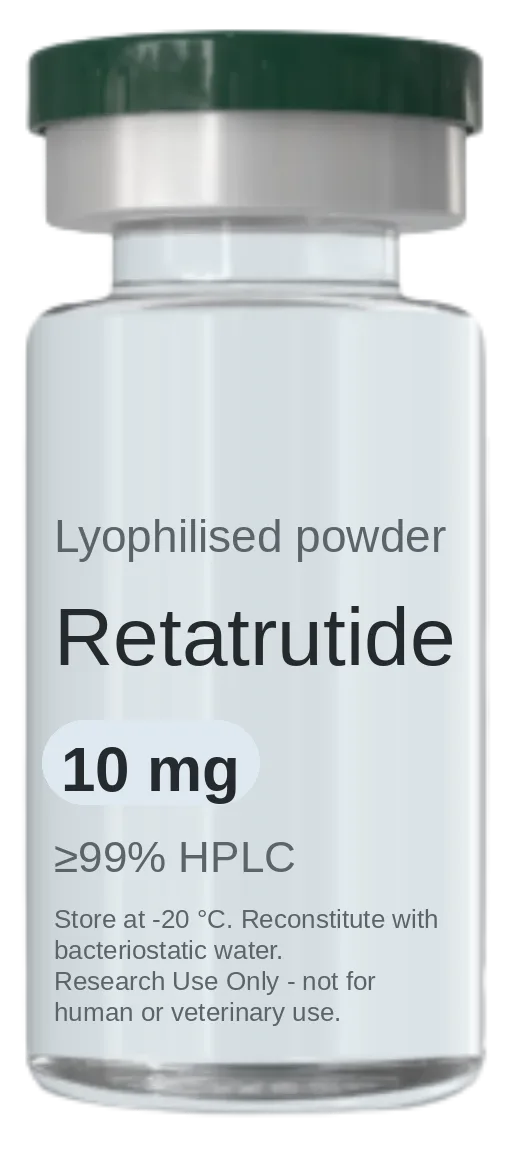
Retatrutide
Triple-agonist metabolic research peptide targeting GLP-1, GIP and glucagon receptors.
- Purity:
- ≥99% HPLC
- Sizes available:
- 10 mg
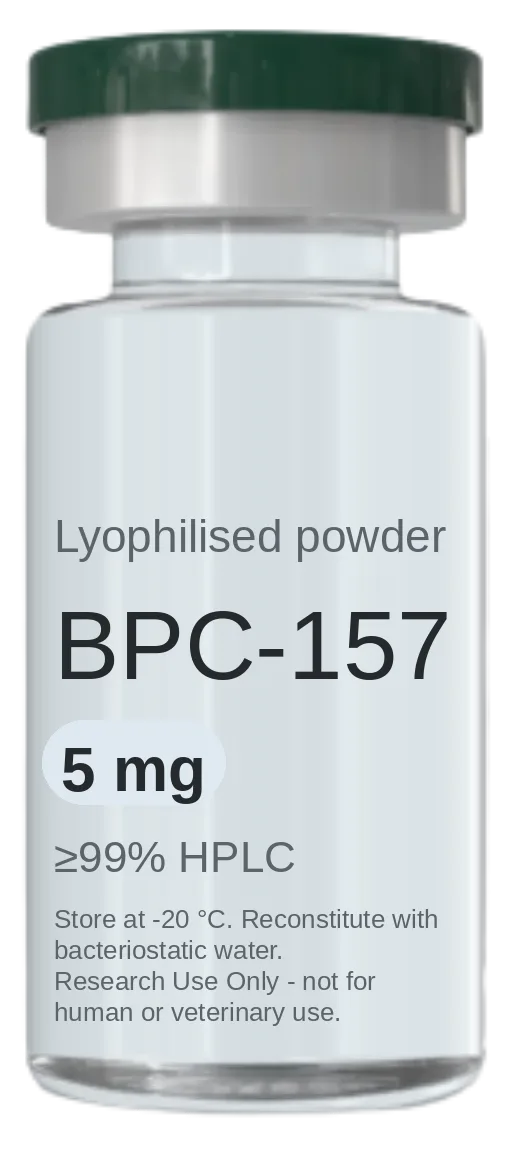
BPC-157 + TB-500
BPC-157 and TB-500 in a single vial — the pairing most studied together in tissue-repair research.
- Purity:
- ≥99% HPLC
- Sizes available:
- 5 mg + 5 mg
The consultation
One intake that settles goals, history and contraindications alongside compound, quantity, documentation and route — reviewed by a physician before anything ships.
More notes
-
GHK-Cu vs Epithalon: What's the Difference
GHK-Cu and Epithalon are distinct research peptides in structure and in what the literature studies on each. Here's the difference.
-
No One Home for Your Argentina Shipment?
What happens when a research peptide shipment to Argentina arrives at an address with no one there to sign for it.
-
Retatrutide vs. Ipamorelin: Key Differences
Retatrutide and ipamorelin belong to different peptide families entirely. Here's how they differ as laboratory research material.