
Note
GHK-Cu vs Epithalon: What's the Difference
GHK-Cu and Epithalon are distinct research peptides in structure and in what the literature studies on each. Here's the difference.
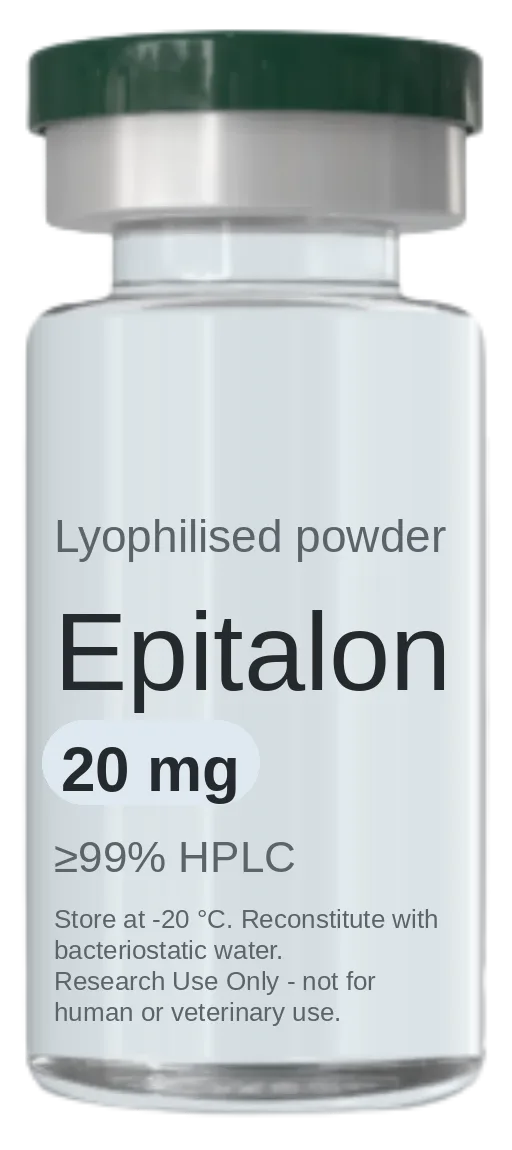
GHK-Cu and Epithalon (also written Epitalon) are two research peptides that differ in structure, in origin, and in what the scientific literature studies on each: GHK-Cu is a naturally occurring copper-binding tripeptide investigated in skin and connective tissue models, while Epithalon is a synthetic tetrapeptide derived from a pineal gland protein, studied mainly in relation to telomerase activity and circadian rhythms. They share a catalogue page because both are supplied strictly for laboratory research use, but they are not interchangeable and they do not study the same thing.
What GHK-Cu is
GHK-Cu is the copper form of the tripeptide glycine-histidine-lysine (Gly-His-Lys), a peptide originally identified in human plasma that has a natural affinity for copper. In the research literature it appears in connection with cell-signaling models in skin and connective tissue, and it is one of the most extensively studied peptides in that line, with publications going back to the 1970s.
If you're looking at this compound specifically for Argentina, the GHK-Cu Argentina page covers what documentation travels with the batch and how shipping to the country is quoted.
What Epithalon is
Epithalon (Epitalon in the transliteration more common in Spanish) is a synthetic tetrapeptide: Ala-Glu-Asp-Gly. It was developed from a protein isolated from the pineal gland, and the research line around it concentrates on two axes: its relationship to telomerase activity in cellular models, and its role in studies on circadian rhythms and melatonin production. It is a de novo synthetic molecule, not a variant of a protein that circulates naturally in the body the way copper does with GHK.
The core difference: structure and family
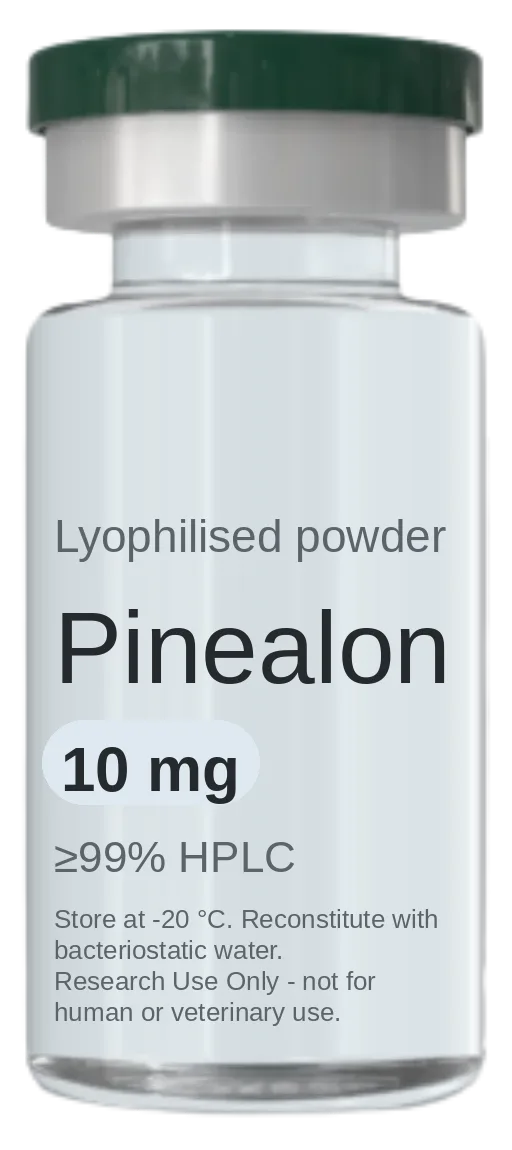
The first difference is chemical. GHK-Cu is a tripeptide (three amino acids) with a coordinated copper atom in its structure. Epithalon is a tetrapeptide (four amino acids) with no associated metal. That difference in size and composition already places them in different families within the peptide literature: GHK-Cu groups with peptides related to extracellular matrix and skin signaling, while Epithalon groups with pineal-gland-related peptides, alongside compounds such as Pinealon, which shares that same line of origin but with a different sequence.
The difference in what the literature studies
The second difference, and the one that matters most to anyone choosing what to request for a research project, is the object of study:
- GHK-Cu appears in papers on tissue repair models, fibroblasts, and gene expression related to collagen and elastin in cell culture.
- Epithalon appears in papers on telomerase, cellular senescence in in vitro models, and melatonin regulation in circadian-rhythm studies in animal models.
These are not overlapping research lines. A lab working on cellular longevity and telomeres will have an interest in Epithalon; a lab working on skin models or cellular wound-healing will have an interest in GHK-Cu. The confusion between the two usually comes from both being promoted in biohacking circles under the same generic "anti-aging peptides" label, but that label doesn't correspond to any approved use or to any research pathway the two actually share: the mechanisms and the models are different.
How each one is supplied
Both are supplied in the same format: a vial of lyophilized powder, with no cold chain during transport because the powder is stable at room temperature. Cold storage (2–8 °C) only becomes relevant after reconstitution at the receiving lab, not during shipping. That detail is the same for both, and for the rest of the catalogue.
What certificate accompanies each batch
The correct way to compare any pair of peptides isn't by name or by reputation — it's by the certificate of analysis (CoA) for the specific batch. PeptoClinic publishes third-party laboratory reports for the batches it quotes, and the quality page explains how to read one of those certificates: what the HPLC purity percentage means, what the declared content in milligrams means against the label claim, and how to verify the report directly on the laboratory's own site. That verification is the only thing that actually matters when deciding — not the peptide's name, but the report for the batch that will actually be shipped.
Research material, not for human or veterinary use
GHK-Cu and Epithalon are supplied strictly for laboratory research (Research Use Only). Neither is a medicine, a supplement, or a food, and neither is approved for consumption, diagnosis, or treatment in humans or animals. None of the statements in this article have been evaluated by the FDA, ANMAT, or any equivalent authority. PeptoClinic is not a pharmacy, a clinic, or a telehealth provider, does not issue usage protocols, and does not answer questions about administration in people.
Frequently asked questions
¿Se puede comparar GHK-Cu y Epithalon por pureza?
Solo tiene sentido compararlos si cada uno cuenta con su propio certificado de análisis para el lote específico que se va a cotizar: la pureza es una propiedad del lote fabricado, no una propiedad fija del nombre del péptido, así que comparar "GHK-Cu" contra "Epithalon" en abstracto no dice nada sin mirar los reportes concretos.
¿Pertenecen a la misma familia química?
No. GHK-Cu es un tripéptido que lleva un átomo de cobre coordinado en su estructura; Epithalon es un tetrapéptido sintético sin metal asociado. Tienen distinto tamaño, distinta composición de aminoácidos y distinto origen: GHK-Cu deriva de una secuencia encontrada en plasma humano, Epithalon se sintetizó a partir de una proteína de la glándula pineal.
¿Por qué aparecen juntos en la misma categoría de búsqueda?
Porque los dos circulan en comunidades de biohacking bajo la etiqueta genérica de "péptidos para el envejecimiento", pero esa etiqueta agrupa mecanismos de estudio distintos: en la literatura científica no comparten vía ni modelo de investigación.
¿Cuál de los dos tiene más publicaciones científicas?
GHK-Cu tiene una base de publicaciones más extensa y antigua, con estudios desde la década del 70 sobre su rol en modelos de señalización celular en piel. Epithalon tiene una línea de investigación más acotada, concentrada en telomerasa y ritmos circadianos.
¿Se presentan en el mismo formato?
Sí. Ambos se suministran como vial de polvo liofilizado, que es el único formato disponible hoy en el catálogo. El formato en lapicera está anunciado pero todavía no se puede cotizar, solo hay lista de espera.
¿Hace falta cadena de frío para enviarlos?
No durante el transporte: el polvo liofilizado es estable a temperatura ambiente, así que el envío no lleva refrigerante ni hielo seco. El frío se vuelve necesario recién después de la reconstitución, en el laboratorio que recibe el material.
¿Cómo sé si el lote que me cotizan coincide con el certificado?
El certificado de análisis de un laboratorio externo debería incluir un número de lote y, cuando está disponible, un enlace de verificación directo al sitio del laboratorio que lo firmó. La página de calidad explica ese proceso paso a paso para cualquier compuesto del catálogo.
¿Existe alguna combinación entre GHK-Cu y Epithalon que estudie la literatura?
No existe una línea de investigación publicada que combine específicamente estos dos péptidos como protocolo conjunto; cada uno se estudia dentro de su propio modelo (señalización en tejido conectivo para GHK-Cu, telomerasa y ritmos circadianos para Epithalon), y así es como aparecen documentados en la bibliografía disponible.
Compounds mentioned
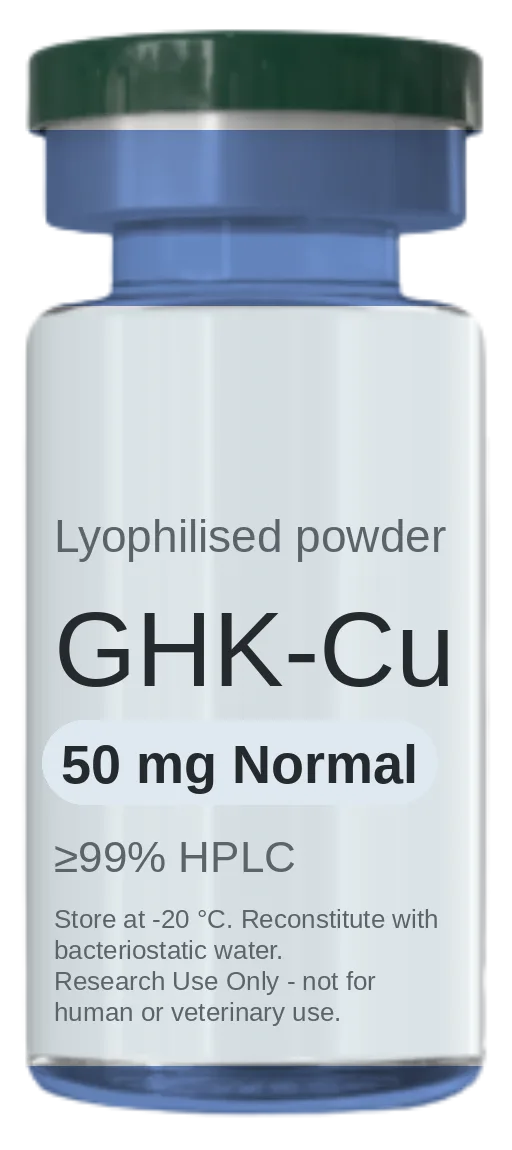
GHK-Cu (Copper Peptide)
Copper-binding tripeptide studied in extracellular matrix and dermal research models.
- Purity:
- ≥99% HPLC
- Sizes available:
- 50 mg Normal – 50 mg Plus
The consultation
One intake that settles goals, history and contraindications alongside compound, quantity, documentation and route — reviewed by a physician before anything ships.
More notes
-
Freight Forwarder vs Courier to Argentina
Can a freight forwarder replace a courier to import research peptides into Argentina? What changes, and what the practical answer is.
-
No One Home for Your Argentina Shipment?
What happens when a research peptide shipment to Argentina arrives at an address with no one there to sign for it.
-
Retatrutide vs. Ipamorelin: Key Differences
Retatrutide and ipamorelin belong to different peptide families entirely. Here's how they differ as laboratory research material.