
Note
No One Home for Your Argentina Shipment?
What happens when a research peptide shipment to Argentina arrives at an address with no one there to sign for it.
If no one is at the declared address, the courier does not leave the box on the doorstep. It gets held — either at the carrier's local depot or in customs bonded storage — while the carrier notifies the recipient to arrange pickup or a second delivery attempt. The shipment is not lost. It is delayed, and if nobody answers the notification within the carrier's holding window, the package can end up routed back to the point of origin.
What the carrier does when no one is there
Any international shipment into Argentina clears customs (Aduana/AFIP) first and then enters the carrier's local delivery network. When the driver reaches the declared address and finds no one available to sign for it, the standard sequence is:
- A delivery notice is left, either physical or by message, with instructions to reschedule.
- The package returns to the nearest depot instead of being left unattended.
- A window opens to arrange a second attempt or pickup at a branch office.
None of this is specific to a research peptide shipment. It is the standard procedure for any internationally shipped parcel that requires a signature on delivery. What makes a research shipment different is the paperwork that travels with it, not the street address itself.
How long it sits before something happens
Every carrier sets its own holding period, and it varies depending on whether the package is sitting in the carrier's private depot or has been moved into customs bonded storage. As a general rule in the industry: the longer a shipment sits unclaimed, the higher the chance that storage fees start accruing or that the package gets flagged for return. That is the practical reason to act on the first notice rather than wait for the clock to run out.
What happens if no one claims it in time
If the holding period expires without a response or a rescheduled delivery, the result is typically one of three outcomes:
- Return to sender, with the cost of the return freight charged to whoever requested it.
- A re-delivery attempt with an added fee for the second try or for the extra time in storage.
- Formal abandonment, which in a customs context can mean the package becomes subject to disposal by the authorities.
None of these outcomes mean the contents disappear without explanation. A record stays in the carrier's tracking system and in the customs file, so it is always possible to find out what happened to a specific shipment by contacting the carrier with the tracking number.
Why the declared address matters more for this kind of shipment
PeptoClinic quotes research material to Argentine destinations with the customs file prepared as laboratory reference material, not as general consumer goods. That classification means the package goes through a more detailed documentary review than a generic parcel, and any mismatch between what is declared and what can be verified at the destination — including an address no one can access — adds one more point of review before the carrier even attempts delivery.
That is why the address given at the quoting stage needs to be a location where someone is actually present during the carrier's normal delivery window, not just a correct address on a map. A warehouse that closes at midday, an office with no dedicated reception, or a home where everyone works during delivery hours all produce the same result: a failed delivery attempt, exactly as if the address had been written down wrong.
How to keep a shipment from getting stuck
Reducing the risk of a failed delivery is fairly simple, and it has nothing to do with customs or the carrier's policies:
- Declare an address where someone is physically present during the normal delivery window for that area, whether morning or afternoon.
- Leave an active phone number that gets checked. Most carriers send a WhatsApp message or SMS before attempting delivery, not only a physical notice.
- If a home address is not reliable on that front, declare a workplace with a reception desk instead, or arrange branch pickup with the carrier from the start.
- Respond to the first failed-delivery notice instead of waiting for a second attempt. Every day without a response moves the package closer to the end of the holding period.
These details get worked out at the quoting stage, before the order ships. Whoever is handling the shipment can adjust the address or the contact information if anything here raises a question.
While it waits in storage, the contents are not at risk from the cold
A related question that comes up often is whether the material spoils after several days sitting in storage without refrigeration. It does not: the material travels as lyophilized powder in a sealed vial, not through a cold chain. A lyophilized vial with desiccant stays stable at room temperature for weeks, so the extra days a package might spend in a courier depot or customs bonded storage do not compromise the contents. Cold becomes relevant only after the vial is opened and the material is reconstituted into solution for laboratory use — that is the point at which refrigeration matters. The details of how each shipment travels are on the shipping page.
What documentation travels with the shipment
Every order is quoted with the import documentation prepared for entry as laboratory reference material, and the laboratory that analyzes each batch — Janoshik Analytical — issues a purity report that can be checked independently. That documentation does not prevent a failed delivery attempt if no one is at the address, but it is what allows any customs question to be resolved without the package getting held for reasons unrelated to the address itself. The approach to reading those reports is explained on the quality and certificates of analysis page.
This material is for laboratory research only
Everything PeptoClinic quotes is supplied strictly as Research Use Only (RUO): material for in vitro and laboratory research. None of it is a medicine, a supplement, or a food. It is not approved for human or veterinary consumption, and no claim on this site has been evaluated by ANMAT, the FDA, or any equivalent authority. Neither the delivery address nor the customs logistics changes that status — the file that travels with the shipment identifies the contents as laboratory reference material throughout the transport chain. The full catalog carries the same framing across every compound.
Frequently asked questions
Is the shipment lost if no one receives it the first time?
No. The carrier takes it back and holds it in storage, leaving a notice to arrange a second delivery or branch pickup. The package stays identified by a tracking number, so it can be traced at any point.
Who pays if the package has to go back to the point of origin?
The cost of the return freight is charged to whoever requested the return, according to each carrier's policy. It is worth coordinating with the carrier before it reaches that point.
Can the delivery address be changed after the shipment has already been quoted?
Yes, as long as it is reported before the package ships or while it is still in transit and the carrier allows the change. It is best to flag the issue as soon as it comes up rather than waiting for a failed delivery attempt.
Does the content spoil if it sits in storage for several days without refrigeration?
No, because it travels as lyophilized powder in a sealed vial, which is stable at room temperature. Refrigeration only becomes necessary once the material has been reconstituted into solution for laboratory use.
What if the address is correct but no one is ever there during that window?
The result is the same as with a wrong address: the carrier cannot complete delivery and the package goes back to storage. What solves this is declaring an address with someone available during the normal delivery window, not just a correct address.
Can customs hold the package because of an address problem?
Customs clearance and the courier's delivery attempt are two separate stages. An address problem affects the delivery stage; by itself it is not grounds for a customs hold, though a package already under documentary review can face added delays if delivery also fails.
How do I know if my package ended up in storage?
The assigned carrier notifies the failed attempt, usually by text message, WhatsApp, or email, with instructions to arrange next steps. If that notification never arrives, it is worth reaching out with the tracking number to confirm the shipment's status.
Is it better to declare a workplace address instead of home?
If no one is usually home during the delivery window and the workplace has a reception desk, yes — it meaningfully lowers the risk of a failed delivery compared to declaring a home address that sits empty during the day.
Compounds mentioned
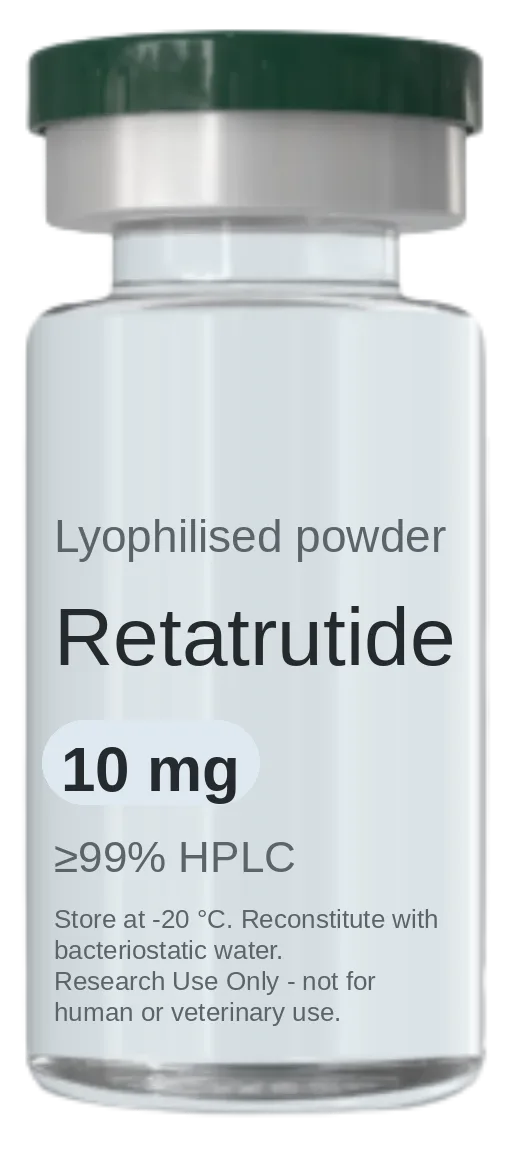
Retatrutide
Triple-agonist metabolic research peptide targeting GLP-1, GIP and glucagon receptors.
- Purity:
- ≥99% HPLC
- Sizes available:
- 10 mg
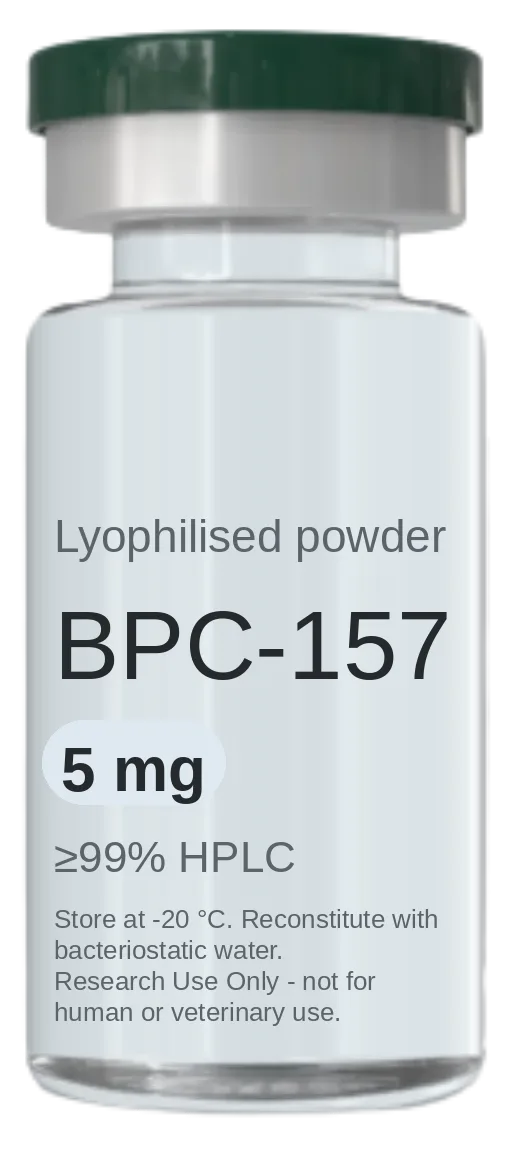
BPC-157 + TB-500
BPC-157 and TB-500 in a single vial — the pairing most studied together in tissue-repair research.
- Purity:
- ≥99% HPLC
- Sizes available:
- 5 mg + 5 mg
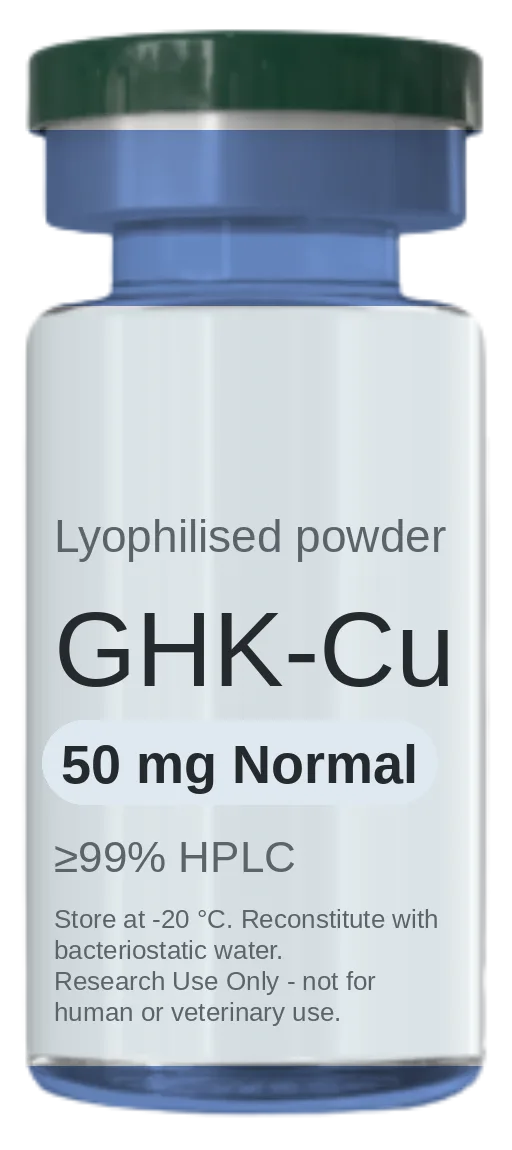
GHK-Cu (Copper Peptide)
Copper-binding tripeptide studied in extracellular matrix and dermal research models.
- Purity:
- ≥99% HPLC
- Sizes available:
- 50 mg Normal – 50 mg Plus
The consultation
One intake that settles goals, history and contraindications alongside compound, quantity, documentation and route — reviewed by a physician before anything ships.
More notes
-
GHK-Cu vs Epithalon: What's the Difference
GHK-Cu and Epithalon are distinct research peptides in structure and in what the literature studies on each. Here's the difference.
-
Freight Forwarder vs Courier to Argentina
Can a freight forwarder replace a courier to import research peptides into Argentina? What changes, and what the practical answer is.
-
Retatrutide vs. Ipamorelin: Key Differences
Retatrutide and ipamorelin belong to different peptide families entirely. Here's how they differ as laboratory research material.