
Note
Prescription Needed for Peptides in Argentina?
In Argentina, research peptides are quoted without a prescription because they're RUO lab material, not medicines.
Research peptides don't require a prescription in Argentina because they aren't medicines: they're lab reference material, classified as RUO (Research Use Only), and a prescription is a pharmacy instrument for dispensing an approved drug, not a document for scientific documentation destined for in vitro and laboratory studies.
Why a prescription doesn't enter the picture
A prescription is the document that authorizes a pharmacist to hand over an approved drug for human or veterinary use, under the supervision of a licensed clinician. That chain — prescribing, dispensing, clinical follow-up — exists because there's a patient, a diagnosis, and a treatment involved.
RUO material never enters that chain, because it was never built for it. PeptoClinic supplies research peptides to Argentina on the explicit condition that the material is for laboratory research: in vitro work, biochemical characterization, preclinical assays. There's no clinical indication, no diagnosis, no patient — and therefore nothing for a physician to prescribe.
What it means in practice for material to be RUO
RUO isn't a decorative label. It's a declared condition of use, stated in both the product documentation and the import paperwork. It means no peptide in the catalog is approved, evaluated, or intended for human or veterinary consumption, diagnosis, or treatment. There's no therapeutic claim to defend, because nothing is being sold to treat anything.
This also explains why the prescription question, reasonable as it is, starts from an assumption that doesn't apply here: it assumes a drug moving through a regulated dispensing channel. This isn't that. It's a laboratory reagent with a purity specification, a batch number, and a certificate of analysis — the same category of input any research lab uses for its reference materials.
What documentation does travel with every order
No prescription doesn't mean no paperwork. Every batch quoted for Argentine destinations carries the file prepared to clear customs as laboratory reference material, along with the certificate of analysis for that specific batch, issued by the laboratory that tested it.
Those certificates are published by Janoshik Analytical, an independent third-party laboratory. They're verifiable documents, not a self-issued claim — read how to interpret one on the quality page, which explains what each field in the report measures and what to check before trusting a batch. The lowest purity figure PeptoClinic has published so far is 99.669%, on a MOTS-c batch — that floor figure, not the best result on file, is the honest one to quote.
How the process works without a prescription or a storefront
The process isn't add-to-cart-and-pay. A researcher describes what their program needs — compound, purity specification, quantity — and PeptoClinic's technical team reviews that request against the batch documentation, the dispatch route, and the customs procedure for the destination. That review produces a written quote, normally within one business day.
That quote is the document that stands in, in this circuit, for the prescription-and-dispensing pair of the pharmacy world. It doesn't authorize a prescription, but it records what was requested, under what specification, and under what condition of use it ships.
Compounds most often asked about from Argentina
Among the research peptides most frequently queried for Argentine destinations are retatrutide, BPC-157, and MOTS-c, each with its own destination page listing the available batch documentation and in-stock format. If the compound you're asking about doesn't have a dedicated country page yet, it's still in the full catalog, which details what's available and in what format.
What this isn't
Worth saying plainly: none of this replaces a medical consultation, and it isn't a workaround for one. The material is supplied strictly for laboratory research — in vitro and preclinical — and isn't approved or intended for human or veterinary consumption, diagnosis, or treatment. None of its claims have been evaluated by ANMAT, the FDA, or any equivalent authority, and no prescription is issued, filled, or required, because this isn't a medicine.
No advice is given on dosing, administration routes, or usage protocols either. That's the territory of a healthcare professional treating a patient, and there's no patient here. A request framed as use in a person isn't processed as one.
What's worth asking before you commit
If you're evaluating a supplier for a research program, what's worth requesting isn't a prescription — it doesn't apply — but the certificate of analysis for the specific batch, with a task number and, when the laboratory offers one, a verification link you can open yourself. A supplier that can't produce this, or that only shows a generic seal with no batch attached, isn't giving you the same information as one that does.
It's also worth asking what import documentation ships with the batch for your specific destination, since Argentine customs procedure is a real part of the process even though it never touches a prescription-pharmacy circuit. More on how PeptoClinic handles destination logistics is on the Argentina hub, with the detail of what goes inside each shipment.
Frequently asked questions
Do I need to be a doctor or a registered researcher to request peptides?
The quoting process doesn't require a professional license or a formal research institution, because this isn't about dispensing a medicine. What does get reviewed on every request is whether it's framed as laboratory research material and not as an input for use in a person.
So can anyone order these peptides?
The material is quoted for laboratory research, and requests explicitly framed as human use aren't processed as such. The absence of a prescription doesn't mean the absence of a declared condition of use.
What happens at Argentine customs with a shipment of research peptides?
The batch travels with the file prepared to enter as laboratory reference material, which is the category under which this kind of input clears customs, distinct from a prescription-only medicine.
Does the certificate of analysis replace a prescription?
No, they serve different functions. A prescription authorizes dispensing a drug to a patient; a certificate of analysis documents the purity and composition of a laboratory material batch. They're two documents for two separate circuits.
Does this apply to every compound in the catalog?
Yes. The entire catalog is supplied under the same RUO condition, without a prescription and without a pharmacy dispensing circuit, because no compound in the catalog is approved for human or veterinary use.
Why do some pages mention a country and others don't?
Destination pages, like the one for [retatrutide in Argentina](/en/argentina/retatrutide/), exist for compounds with higher query volume from that specific destination, detailing the documentation and format available for that dispatch route.
Can I get advice on how to use a research peptide?
No. The service covers compound, purity specification, quantity, batch documentation, and dispatch logistics — not protocols or administration routes, because those questions belong to a clinical use this material isn't intended to cover.
What happens if my request is clearly about use in a person?
It's declined. The RUO standard isn't a formality: if a request is framed around human or veterinary administration, it isn't processed, regardless of whether a prescription is attached.
Compounds mentioned
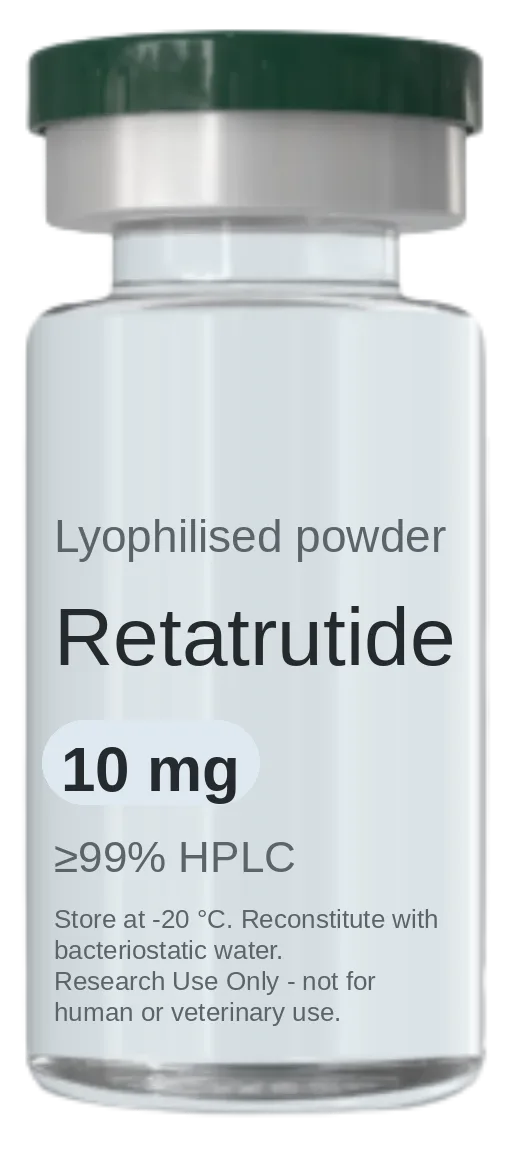
Retatrutide
Triple-agonist metabolic research peptide targeting GLP-1, GIP and glucagon receptors.
- Purity:
- ≥99% HPLC
- Sizes available:
- 10 mg
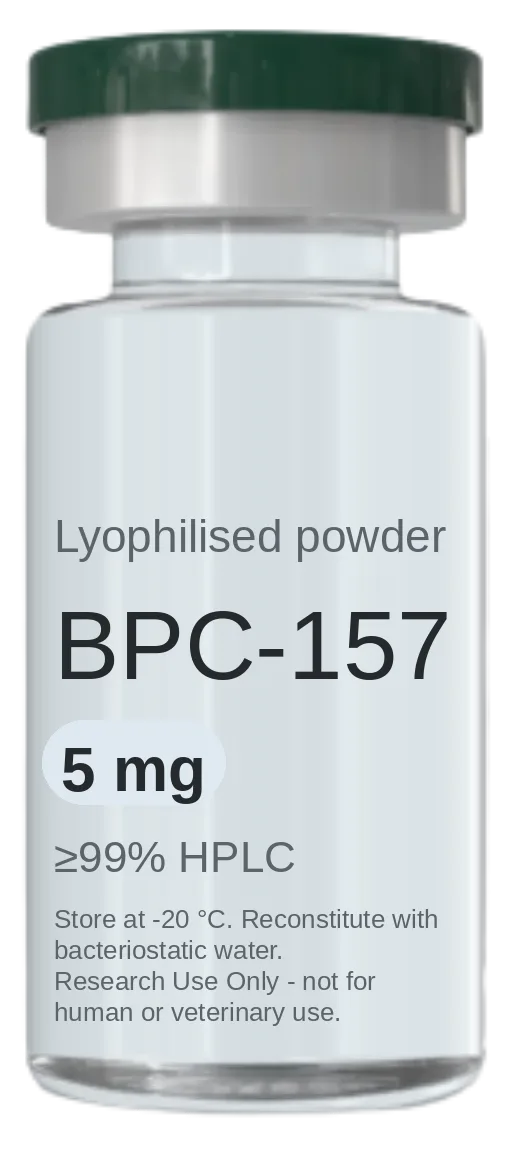
BPC-157 + TB-500
BPC-157 and TB-500 in a single vial — the pairing most studied together in tissue-repair research.
- Purity:
- ≥99% HPLC
- Sizes available:
- 5 mg + 5 mg
The consultation
One intake that settles goals, history and contraindications alongside compound, quantity, documentation and route — reviewed by a physician before anything ships.
More notes
-
Retatrutide: Pills or Injectable Only?
Retatrutide ships only as an injectable research compound — no pill form exists in published trials or any research catalog.
-
Storing Retatrutide Before and After Mixing
How lyophilized retatrutide is stored before reconstitution, and what changes once it's dissolved in solution.
-
Retatrutide or Semaglutide: Key Differences
Retatrutide is a triple GLP-1/GIP/glucagon agonist; semaglutide activates only GLP-1. How the research literature compares them.