
Note
Retatrutide or Semaglutide: Key Differences
Retatrutide is a triple GLP-1/GIP/glucagon agonist; semaglutide activates only GLP-1. How the research literature compares them.
The core difference between retatrutide and semaglutide is the number of receptors each molecule activates. Semaglutide is a single-receptor agonist, acting only on GLP-1. Retatrutide is a triple agonist: alongside GLP-1, it activates the GIP receptor and the glucagon receptor. That difference in mechanism of action is what explains almost everything else the research literature compares between the two.
Which receptor each molecule activates
Semaglutide belongs to the family of GLP-1 (glucagon-like peptide-1) receptor agonists, the same class that groups together several other molecules studied in metabolic research. Its structure is built to bind exclusively to that one receptor and resist enzymatic degradation, which gives it a long half-life in the published pharmacokinetic models.
Retatrutide is a structurally different molecule: it is a triple-agonist peptide that combines activity on the GLP-1 receptor, the GIP (glucose-dependent insulinotropic polypeptide) receptor, and the glucagon receptor in a single chain. The papers describing its synthesis classify it as a "triple agonist" precisely for that combination, distinguishing it from the dual agonists (GLP-1/GIP) and single agonists (GLP-1 only) that preceded it in the research pipeline.
Why receptor count matters for study design
A single agonist like semaglutide generates a metabolic signal concentrated on one pathway. A triple agonist like retatrutide adds the glucagon receptor's signal — associated with hepatic energy expenditure in published animal models — to the other two pathways. The research protocols comparing both molecules in preclinical models and early-phase clinical trials are designed specifically to isolate how much of the observed effect belongs to each receptor individually.
What the comparative literature studies
Published clinical trials on retatrutide, including phase 2 data released in peer-reviewed journals, measured metabolic variables in research cohorts over periods of several weeks, comparing results against placebo and against single-receptor agonists. Those same papers describe the biological rationale for adding the glucagon receptor: the working hypothesis is that triple activation produces a different metabolic signal than a single agonist does, and the data from those trials is what gets used to test that hypothesis.
No result from those studies is a promise about what will happen to a person using the compound outside a research protocol. These are controlled clinical trial data, with a defined population, predefined variables, and a review committee behind them. Carrying a paper's result over into an individual expectation is exactly the leap the scientific literature does not license.
Purity and traceability: what can actually be verified
Beyond mechanism, there's a practical difference between comparing two molecules in a paper and comparing two batches of material destined for a lab bench: lot traceability. The independent laboratory Janoshik Analytical analyzed a retatrutide lot labeled 10 mg and found a purity of 99.893%, with a measured content of 11.96 mg. That figure isn't a catalog number — it's the result of a dated laboratory report tied to a specific task number.
That's the question worth asking any supplier before comparing molecules: not "what purity percentage do you claim," but "what laboratory report backs that up." The quality page covers how to read a certificate of analysis and what to look for before accepting a number as valid.
Retatrutide is part of PeptoClinic's catalogue, which covers 19 research compounds. Semaglutide is not in that catalogue: it is a molecule widely studied in the GLP-1 agonist literature, but it is not one of the peptides PeptoClinic currently quotes as research material. Any comparison between the two molecules, then, is a comparison of mechanisms and published data — not a comparison of two products available from the same source.
Research material, not for human use
Everything PeptoClinic quotes is material supplied strictly for research use (Research Use Only). The retatrutide listed in the catalogue is not a drug, not a supplement, and is not approved for human or veterinary consumption, diagnosis, or treatment. No regulatory authority — not ANMAT, not the FDA, nor any equivalent body — has evaluated the claims on this site or in any paper comparing retatrutide to semaglutide. PeptoClinic is not a pharmacy, a clinic, or a telehealth provider, and it does not provide dosing or administration protocols; requests of that kind are declined outright.
When a researcher describes what their work program needs — compound, purity specification, quantity, batch documentation — PeptoClinic's technical team reviews that information and returns a written quote. There's no published price list or shopping cart: the model is technical supply consultancy, not retail sale.
How the material reaches Argentina
Argentina is one of the destinations PeptoClinic ships material to, alongside other countries in the region. The material travels as lyophilized powder in a sealed vial, stable at room temperature for weeks, with customs documentation prepared for entry as laboratory reference material. More on the scope of PeptoClinic's operation is on the about page.
Frequently asked questions
¿Retatrutide y semaglutida activan el mismo receptor?
No. Semaglutide activates a single receptor, GLP-1. Retatrutide activates three: GLP-1, GIP, and the glucagon receptor. That is the basic structural difference between the two molecules.
¿Por qué se la llama "triple agonista" a la retatrutide?
Because its molecular design lets it bind to and activate three distinct receptors in a single peptide chain, rather than one (single agonist) or two (dual agonist), which are the other two categories the literature uses to classify this type of compound.
¿Hay estudios que comparen directamente las dos moléculas?
Yes, there are clinical trials published in peer-reviewed journals comparing metabolic variables between single-receptor agonists and triple agonists, including retatrutide, within defined research cohorts under controlled protocols.
¿PeptoClinic vende semaglutida?
No. PeptoClinic's catalogue includes retatrutide, but semaglutide is not among the 19 compounds currently quoted.
¿Qué pureza tiene el lote de retatrutide analizado?
The independent laboratory Janoshik Analytical's report on a lot labeled 10 mg found a purity of 99.893%, with a measured content of 11.96 mg.
¿Este material está aprobado para uso humano?
No. All material supplied by PeptoClinic is strictly for laboratory research (RUO). It is not approved for human or veterinary consumption, diagnosis, or treatment, and no regulatory authority has evaluated these claims.
¿PeptoClinic da indicaciones de dosis o de uso?
No. PeptoClinic is not a clinic or a telehealth provider and does not provide dosing or administration protocols. Questions about human use are declined.
¿Cómo se verifica la pureza de un lote antes de cotizarlo?
By requesting the certificate of analysis from the laboratory that performed the measurement, with a date, a task number, and, when available, a direct verification link with that laboratory. Details on how to read that document are on the site's quality page.
Compounds mentioned
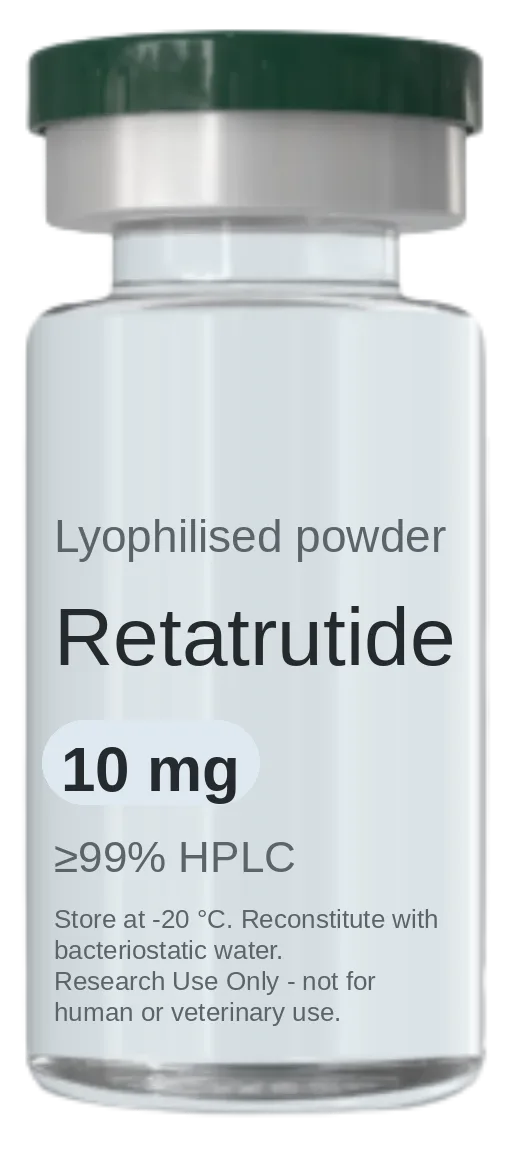
Retatrutide
Triple-agonist metabolic research peptide targeting GLP-1, GIP and glucagon receptors.
- Purity:
- ≥99% HPLC
- Sizes available:
- 10 mg
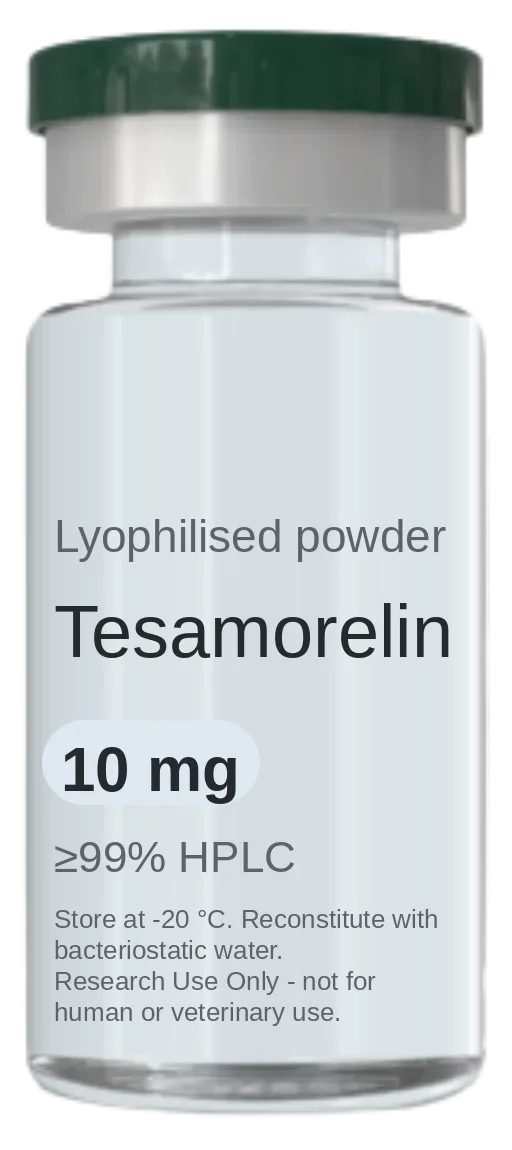
Tesamorelin
Stabilised GHRH(1-44) analogue studied in adipose tissue distribution research.
- Purity:
- ≥99% HPLC
- Sizes available:
- 10 mg – 20 mg
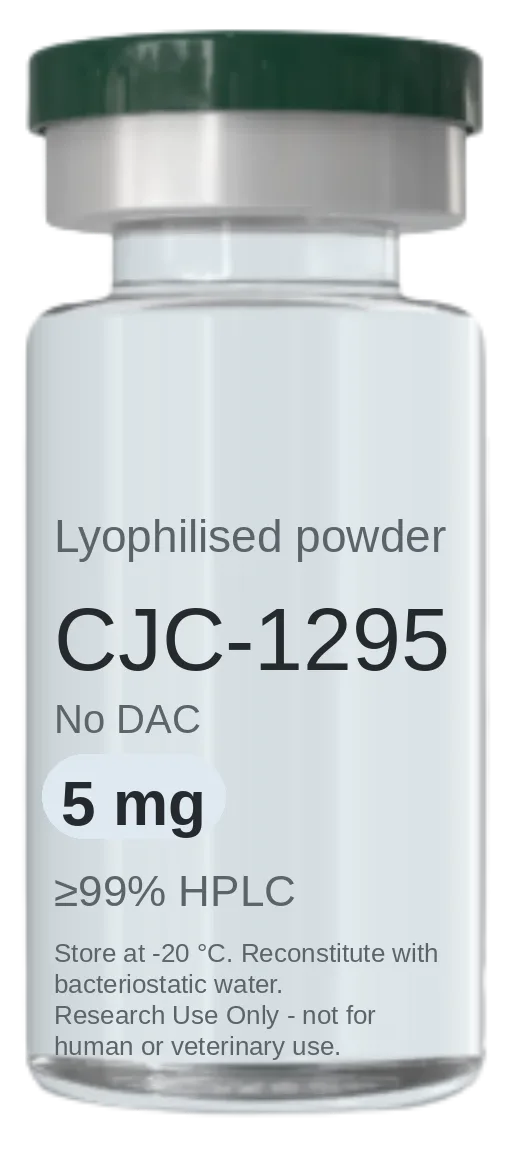
CJC-1295 (sin DAC)
Modified GRF(1-29) tetrasubstituted analogue without drug affinity complex.
- Purity:
- ≥99% HPLC
- Sizes available:
- 5 mg – 20 mg
The consultation
One intake that settles goals, history and contraindications alongside compound, quantity, documentation and route — reviewed by a physician before anything ships.
More notes
-
Peptide Consigned to a Company in Argentina
What changes at Argentine customs when a research peptide is consigned to a company instead of an individual, and what paperwork ships with it.
-
Retatrutide vs. Tirzepatide: Differences
Retatrutide adds a third receptor that tirzepatide doesn't activate — here's how the two differ in structure, mechanism, and published research.
-
NAD+ vs Selank: What's the Difference?
NAD+ is a cellular coenzyme; Selank is a synthetic peptide derived from tuftsin. Structure, mechanism, and what each one is studied for.