
Note
Retatrutide vs. Ipamorelin: Key Differences
Retatrutide and ipamorelin belong to different peptide families entirely. Here's how they differ as laboratory research material.
Retatrutide and ipamorelin share almost nothing except the vial they ship in. Retatrutide is a larger peptide, a triple agonist that engages three metabolic receptors — GLP-1, GIP and glucagon — and the literature studies it in the context of energy metabolism. Ipamorelin is a pentapeptide, far smaller, that acts on the ghrelin receptor and is studied as a growth hormone secretagogue. They don't compete in the same research category, and comparing their potency makes no sense, because they target entirely different receptor systems.
What the literature studies about retatrutide
Retatrutide is a triple agonist peptide: it binds the GLP-1 receptor, the GIP receptor and the glucagon receptor within a single compound. That triple-agonist architecture is what separates it from single-pathway peptides — exclusive GLP-1 agonists, for example — and it's why recent literature on metabolic receptor signaling uses retatrutide as a reference molecule for studying how all three pathways interact at once.
The retatrutide lot PeptoClinic has documentation for was analyzed by Janoshik Analytical on April 13, 2026 (report 136921): on a sample labeled 10 mg with an actual content of 11.96 mg, the laboratory found a purity of 99.893%. That figure isn't a marketing number — it's what the report says about one specific lot, and it's the kind of document a researcher can request before accepting any quote.
What the literature studies about ipamorelin
Ipamorelin is a pentapeptide — five amino acids — that acts as a selective agonist of the ghrelin receptor, the same receptor that responds to growth hormone-releasing peptides (GHRPs). Selectivity is the key word: unlike other peptides in that family, the literature describes ipamorelin as having lower cross-affinity for other pituitary receptors, which makes it a reference molecule when a study wants to isolate the ghrelin axis specifically, without interference from adjacent pathways.
Studies of pulsatile growth hormone secretion often combine ipamorelin with a long-acting GHRH analog such as CJC-1295 without DAC, to observe the combined effect of both pathways on hormone release. That combination appears in the literature as a subject of study, not as a usage recommendation: each peptide is still analyzed and documented separately.
The core differences, side by side
- Molecular family: retatrutide is a larger-molecular-weight peptide with a triple-agonist structure; ipamorelin is a simple pentapeptide.
- Receptor the literature studies: retatrutide acts on GLP-1, GIP and glucagon receptors; ipamorelin acts on the ghrelin receptor.
- Research line: retatrutide is studied in the context of energy metabolism and combined incretin signaling; ipamorelin is studied in the growth hormone secretion axis.
- Compounds it's paired with in the literature: retatrutide is compared against other single-pathway incretin agonists; ipamorelin appears alongside GHRH analogs such as CJC-1295 without DAC or sermorelin.
- Catalogue format: both are supplied as a lyophilized powder vial, not as a pen or ready-to-use solution.
How purity is verified for each lot
The purity standard PeptoClinic states for the research peptides in its catalogue is ≥99% by HPLC, but that figure alone says nothing without a laboratory report behind it confirming it lot by lot. For retatrutide, that backing exists and is public: Janoshik Analytical's report 136921, with the 99.893% purity cited above. The lowest purity figure published anywhere in PeptoClinic's catalogue — not retatrutide's, but another compound's — is 99.669%, and that's the number to use as a general purity floor rather than always citing the best figure on file.
Before accepting a quote for any peptide, the reasonable step is to request the certificate of analysis (COA) for the specific lot that will ship, not a generic report for the compound in general. The quality page explains what that document needs to contain to be trustworthy and how to read it.
Research material, not for human or veterinary use
Both retatrutide and ipamorelin are supplied strictly as research material — Research Use Only (RUO) — intended for laboratory and in vitro research. Neither is a drug, a supplement or a food. Neither is approved or intended for human or veterinary consumption, diagnosis or treatment of any condition, and no regulatory authority — not the FDA, not ANMAT, not an equivalent body — has evaluated these statements. PeptoClinic is not a pharmacy, a clinic or a telehealth provider, and it does not write or fill prescriptions: any request for a human-use protocol is declined.
Researchers who want to see the rest of the catalogue, review how shipments are handled, or understand who runs the operation can find that in the about page.
Frequently asked questions
Can retatrutide and ipamorelin be studied together in the same project?
They're molecules from different families acting on different receptors, so there's no structural reason that would prevent studying both in the same experimental design, but the literature treats them as separate research lines: retatrutide in the metabolic space and ipamorelin in the growth hormone axis. Each compound is documented and quoted separately.
Which one is "stronger"?
That question doesn't have an answer, because they aren't comparable in potency: they act on different receptors and are measured on different scales in the literature. Comparing retatrutide to ipamorelin is like comparing an incretin agonist to a growth hormone secretagogue — they're different categories of molecule entirely.
Do both come with a certificate of analysis?
Retatrutide has a public laboratory report from Janoshik Analytical (report 136921, 99.893% purity). Before accepting any quote, it's worth requesting the certificate of analysis for the specific lot being shipped, whichever compound it is.
What format are they supplied in?
Both are supplied as a lyophilized powder vial. There's no pen format available to order — it's been announced but isn't shipping yet.
Is ipamorelin always studied alongside CJC-1295?
Not always, but it's a frequent pairing in the literature on pulsatile growth hormone secretion, because CJC-1295 without DAC acts on the GHRH receptor and ipamorelin acts on the ghrelin receptor — two different pathways that converge on the same hormonal axis. Each peptide is still analyzed and quoted individually.
Are these peptides approved for human use?
No. Both are supplied exclusively as laboratory research material (RUO). Neither is approved for human or veterinary consumption, nor evaluated by the FDA, ANMAT or any equivalent regulatory authority.
Does PeptoClinic ship these peptides to Argentina?
Yes, Argentina is one of the destinations material is quoted to, with the customs documentation prepared as laboratory reference material. The [shipping page](/en/shipping/) covers the details of how that works.
How do you request a quote for either one?
The process doesn't involve a cart or a published price: a researcher describes what their program needs — compound, quantity, lot documentation — and the technical team responds with a written quote, normally within one business day.
Compounds mentioned
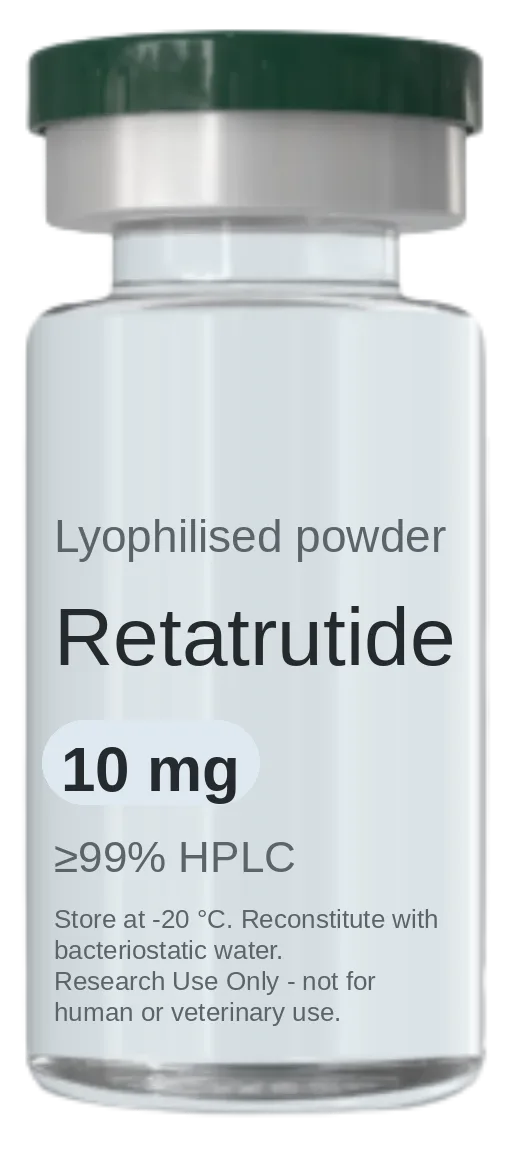
Retatrutide
Triple-agonist metabolic research peptide targeting GLP-1, GIP and glucagon receptors.
- Purity:
- ≥99% HPLC
- Sizes available:
- 10 mg
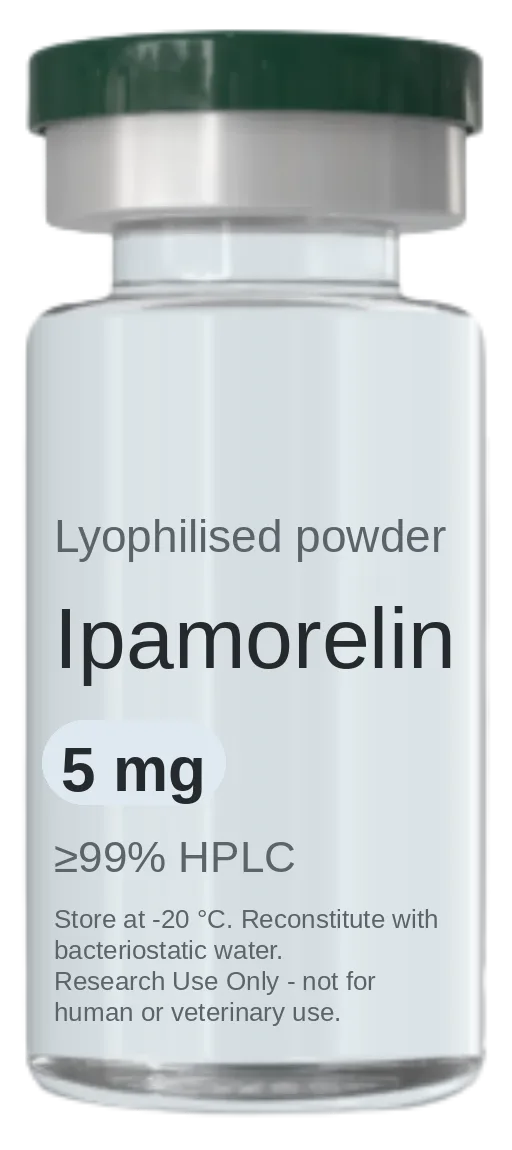
Ipamorelin
Selective ghrelin receptor (GHS-R1a) agonist pentapeptide.
- Purity:
- ≥99% HPLC
- Sizes available:
- 5 mg – 20 mg
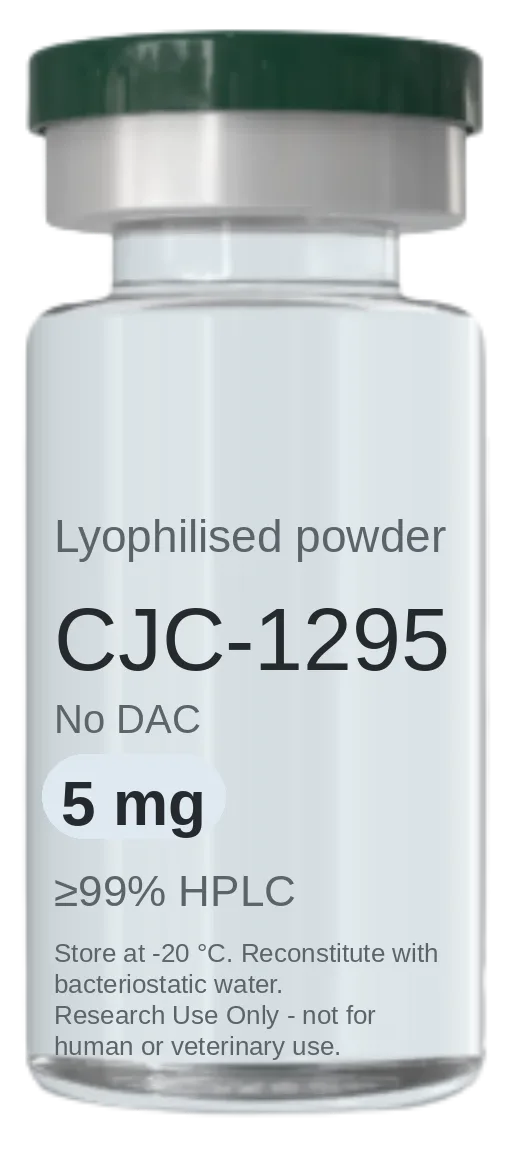
CJC-1295 (sin DAC)
Modified GRF(1-29) tetrasubstituted analogue without drug affinity complex.
- Purity:
- ≥99% HPLC
- Sizes available:
- 5 mg – 20 mg
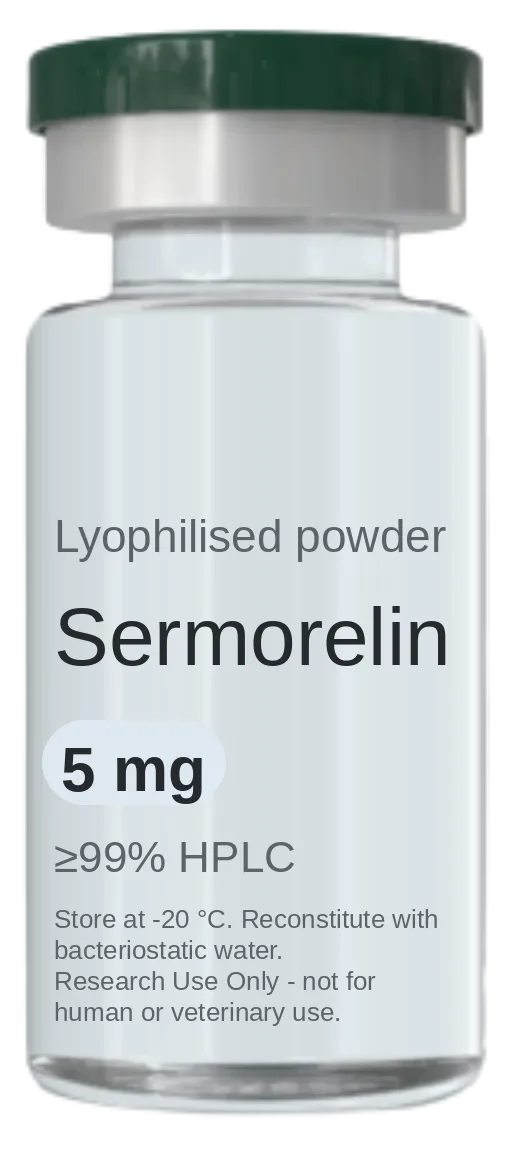
Sermorelin
Growth hormone-releasing hormone analogue used in endocrine signalling research.
- Purity:
- ≥99% HPLC
- Sizes available:
- 5 mg – 20 mg
The consultation
One intake that settles goals, history and contraindications alongside compound, quantity, documentation and route — reviewed by a physician before anything ships.
More notes
-
GHK-Cu vs Epithalon: What's the Difference
GHK-Cu and Epithalon are distinct research peptides in structure and in what the literature studies on each. Here's the difference.
-
Freight Forwarder vs Courier to Argentina
Can a freight forwarder replace a courier to import research peptides into Argentina? What changes, and what the practical answer is.
-
No One Home for Your Argentina Shipment?
What happens when a research peptide shipment to Argentina arrives at an address with no one there to sign for it.