
Note
GHK-Cu vs. Glow Peptide Blend: Compared
By the PeptoClinic editorial team · Medically reviewed by Dr. Emily Parker
GHK-Cu is one copper peptide studied on its own. Glow combines several peptides in one vial. Here's what separates them.
GHK-Cu vs. Glow blend, side by side
GHK-Cu is a single compound: a tripeptide, glycyl-histidyl-lysine, bound to a copper ion. Glow is a formulation that puts several research peptides, including GHK-Cu, into one vial. The difference that matters for a lab isn't marketing — it's what each vial lets you isolate versus combine. A researcher studying the GHK-Cu complex's own behavior needs the standalone compound. A researcher running a combined protocol across several peptides at once has a reason to use a blend instead of ordering, reconstituting, and tracking several vials separately.
| Aspect | GHK-Cu | Glow blend |
|---|---|---|
| What it is | Single tripeptide-copper complex (Gly-His-Lys bound to Cu²⁺) | A multi-peptide formulation combining GHK-Cu with other research peptides in one vial |
| Literature base | Direct studies on the GHK-Cu complex itself: Pickart & Margolina, Int J Mol Sci 2018, Pickart et al., Biomed Res Int 2015 | Published literature exists for each individual component, not for the combined formulation as a unit |
| Lab reporting | PeptoClinic publishes a Janoshik Analytical report on GHK-Cu lots | A blend's report, when available, covers the combined vial rather than reporting each peptide's concentration separately |
| Regulatory status, United States | Not approved by the FDA; injectable GHK-Cu is on the FDA's list of bulk drug substances compounders may not use (FDA) | Not approved by the FDA; the same bulk-substance restriction applies to the injectable peptide components it contains |
| Catalog format | Sold as a standalone vial | Sold as a combined vial |
| What it suits | Isolating the effect of GHK-Cu alone | Running a protocol that combines multiple peptides without sourcing each separately |
What GHK-Cu actually is
GHK-Cu occurs naturally in the body and its concentration declines with age. The copper-bound tripeptide has been studied for its role in skin and connective tissue biology for decades, and its structure is simple enough that the compound and the copper complex can be characterized as one defined molecule. Pickart and Margolina reviewed what genetic expression data show about GHK's activity on gene pathways tied to tissue remodeling, and Pickart et al. covered its role in skin regeneration research specifically. Both papers study GHK-Cu as a standalone complex — not as part of a combination product — which is exactly why a single-compound vial is the right choice when the research question is about GHK-Cu's own activity and nothing else is meant to confound the result.
That single-compound status is also what makes a lab report meaningful. A certificate of analysis for GHK-Cu states one purity figure for one molecule. PeptoClinic's catalog carries GHK-Cu as a standalone vial, and the published report on that lot is specific to the compound alone — not diluted across, or shared with, anything else in the vial.
What changes with a blend
A blend product like Glow is built differently: it combines GHK-Cu with other research peptides in one vial, under one label. That has two practical consequences a researcher should weigh before choosing between them.
- The literature doesn't combine the same way the vial does. Each peptide in a blend has its own published research, studied on its own, usually in its own model system and dose range. There is no published literature that studies the blend as a single formulation — the studies behind a blend are the sum of the studies behind its parts, not a study of the mixture itself. Anyone citing research to justify using a blend is really citing research on each ingredient separately.
- A combined report describes the vial, not each peptide's share of it. When a lab report exists for a blend, it typically verifies the combined product rather than isolating the concentration of each peptide inside it. That's a different kind of assurance than the single-compound report GHK-Cu carries, and it's worth knowing which kind of report you're actually reading before treating "a lab report exists" as equivalent across both products.
Neither of those points makes a blend worse for its purpose — they just mean the purpose is different. A blend answers "I want these several peptides in one vial for a combined protocol." A standalone compound answers "I want to isolate this one variable."
Purity and lab verification
PeptoClinic publishes third-party lab reports from Janoshik Analytical for the compounds in its catalog, including GHK-Cu. Reading a certificate of analysis is the only way to verify what's actually in a vial — a label states an intended content, a lab report states what was measured. When a report is available, checking it against the batch you receive is the right habit regardless of whether the product is a single compound or a blend; the difference is only in what, specifically, the number on the report is measuring.
Regulatory status in the United States
Neither GHK-Cu nor a multi-peptide blend like Glow is approved by the FDA, and no development-phase trial data moves either toward approval — they are research compounds, not drugs with an approval pathway in progress. Injectable GHK-Cu specifically appears on the FDA's list of bulk drug substances that compounding pharmacies may not use because of possible safety risks (FDA). That listing exists because a pharmacy cannot legally compound a human drug product containing it — it is not a statement about whether the substance itself is a controlled substance, and it isn't legal advice beyond what the FDA states on that page. The same restriction extends to the injectable peptide components found in combination formulations. This is separate from approved drugs built on other peptide platforms — GLP-1 receptor agonists like semaglutide and tirzepatide have brand-name products approved by the FDA for specific indications — but GHK-Cu and blend products sit in a different category entirely, with no approved drug built on the GHK-Cu complex.
Choosing between them
The decision comes down to the research question, not to which product sounds more complete. If the goal is to study GHK-Cu's own activity, with nothing else introduced into the sample, the standalone vial is the only way to keep that variable isolated. If the goal is to run a combined protocol across several peptides and a blend's formulation matches what's needed, ordering one vial instead of several is a logistics choice — reconstitution, storage, and tracking for one vial rather than many — not a substitute for reading the literature on each component separately. PeptoClinic's pricing page lists both the standalone GHK-Cu vial and the Glow blend by market, so the cost comparison is a separate question from the research design one.

Medical review
Dr. Emily Parker

Reviews every consultation as it comes in
Frequently asked questions
Is GHK-Cu the same thing as the Glow blend?
No. GHK-Cu is one defined molecule — a tripeptide bound to copper. Glow is a formulation that combines GHK-Cu with other research peptides in a single vial. Buying Glow means buying a combination product, not a higher-concentration version of GHK-Cu alone.
Does the published research on GHK-Cu apply to Glow?
Only to the GHK-Cu component. The studies on GHK-Cu, including [Pickart and Margolina](https://pubmed.ncbi.nlm.nih.gov/29986520/) and [Pickart et al.](https://pubmed.ncbi.nlm.nih.gov/26236730/), examined the compound by itself. There is no published study of Glow as a combined formulation, because the blend is a product, not a studied intervention in its own right.
Which one has a lab report?
PeptoClinic publishes a Janoshik Analytical report on GHK-Cu lots, which states the purity found for that compound specifically. A combined product's report, where one exists, generally verifies the vial as a whole rather than reporting a separate concentration for each peptide inside it.
Is GHK-Cu approved by the FDA?
No. GHK-Cu is not an approved drug, and the injectable form is listed by the FDA among bulk substances that compounding pharmacies may not use because of possible safety risks. That's a statement about compounding law, not a safety verdict beyond what the FDA states on that page.
Is a peptide blend legal to buy in the United States?
A blend like Glow is not a controlled substance, but it is also not an approved drug, and the FDA's restriction on compounding certain bulk substances applies to the relevant injectable peptide components it may contain. This isn't legal advice beyond what the FDA publishes; it's the honest answer to "is it approved" rather than "is it illegal."
Why would someone choose a blend over a single compound?
Mainly logistics: one vial instead of several, for a research protocol that already calls for multiple peptides together. It doesn't change what the individual components' literature says, and it doesn't substitute for understanding each ingredient on its own terms.
Does PeptoClinic sell both?
Yes — GHK-Cu as a standalone vial and Glow as a combined formulation are both listed in [PeptoClinic's catalog](/en/catalog/), with current pricing on the [pricing page](/en/pricing/).
Can I verify what's actually in the vial I receive?
The only reliable way is to check the lab report against the batch. PeptoClinic publishes third-party reports for the compounds it carries; reading what was actually measured, rather than assuming the label alone describes the content, is the habit worth keeping regardless of which product you order.
Compounds mentioned
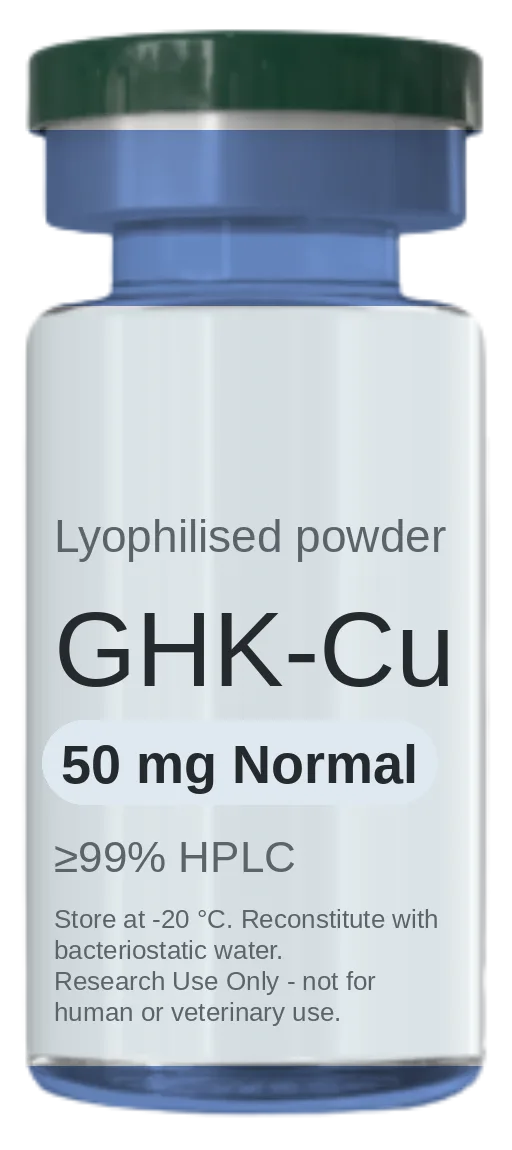
GHK-Cu (Copper Peptide)
Copper-binding tripeptide studied in extracellular matrix and dermal research models.
- Purity:
- ≥99% HPLC
- Sizes available:
- 50 mg Normal – 50 mg Plus
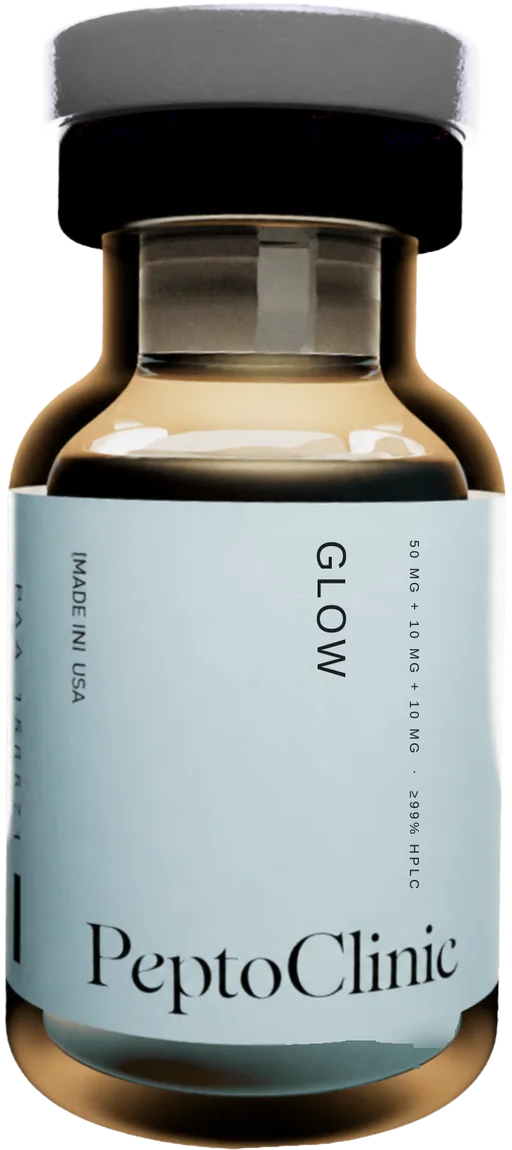
GLOW (GHK-Cu + TB-500 + BPC-157)
GHK-Cu, TB-500 and BPC-157 together in one vial.
- Purity:
- ≥99% HPLC
- Sizes available:
- 70 mg
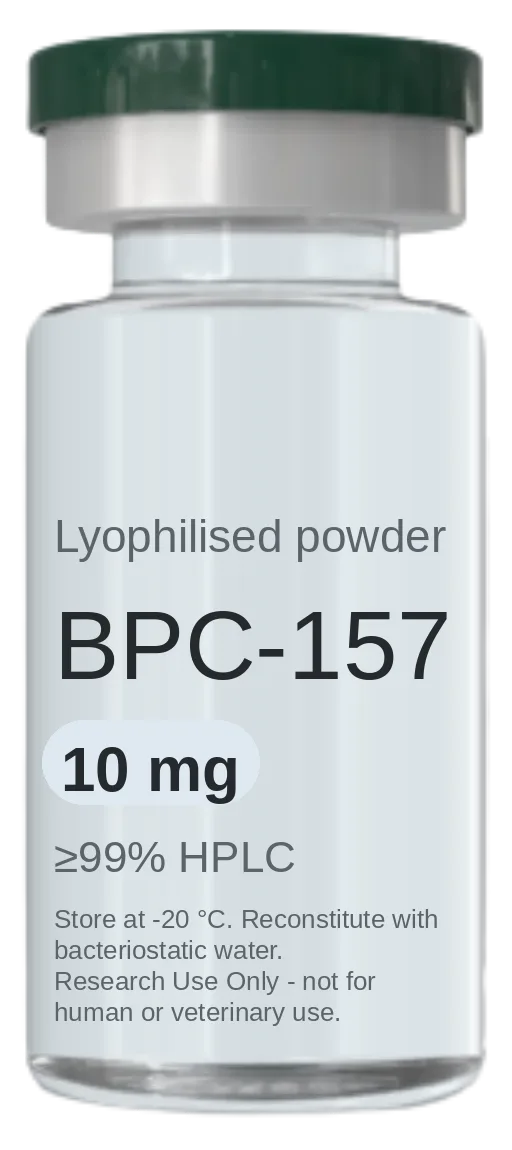
BPC-157 + TB-500
BPC-157 and TB-500 in a single vial — the pairing most studied together in tissue-repair research.
- Purity:
- ≥99% HPLC
- Sizes available:
- 10 mg
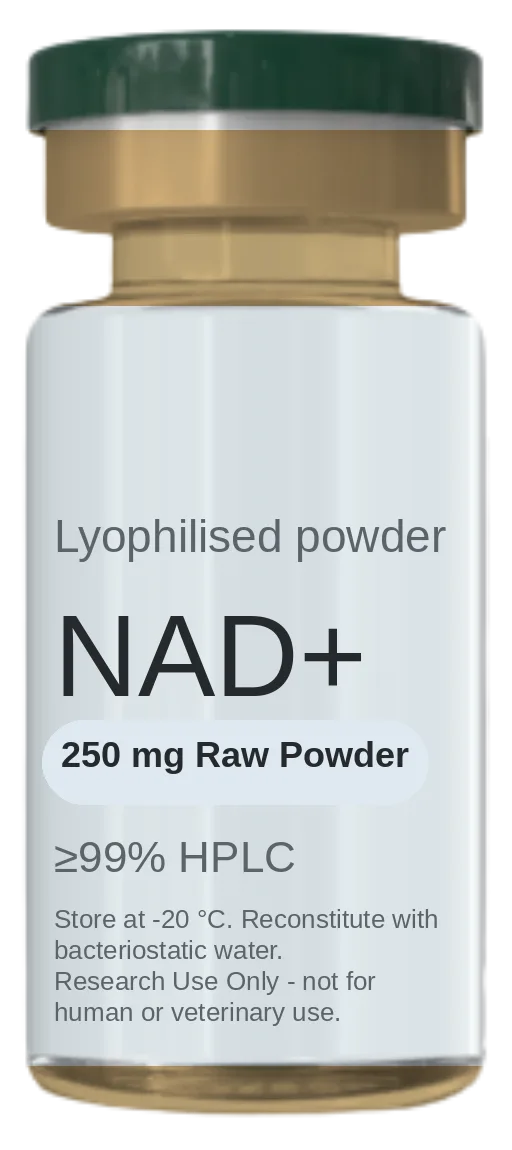
NAD+ (Nicotinamide Adenine Dinucleotide)
Essential redox cofactor central to cellular metabolism and sirtuin research.
- Purity:
- ≥99% HPLC
- Sizes available:
- 250 mg Raw Powder – 300 mg
The consultation
One intake that settles goals, history and contraindications alongside compound, quantity, documentation and route — reviewed by a physician before anything ships.
More notes
-
Is NAD+ a Peptide or Something Else?
NAD+ is not a peptide — it's a dinucleotide, a coenzyme. Here's the chemical difference and why the two get mixed up.
-
How to tell if a peptide is genuine
The four checks that separate a verified peptide from one that only claims to be, and why the supplier's own website is never the evidence.
-
Guarantees If a Peptide Batch Fails QC
What guarantees a peptide supplier gives when a batch fails quality control, and what document proves it.
-
Molar Extinction Coefficient of a Peptide
What the molar extinction coefficient is, how to calculate it for a peptide sequence, and why it matters for verifying lot concentration.
-
GHK-Cu vs KPV: What Sets Them Apart
GHK-Cu is a copper-binding peptide studied in skin research; KPV is a metal-free fragment of alpha-MSH studied in inflammation models.