
Note
How to tell if a peptide is genuine
The four checks that separate a verified peptide from one that only claims to be, and why the supplier's own website is never the evidence.
You cannot tell by looking at the vial. Lyophilised white powder looks identical whether it holds the sequence it claims or not, whether it is 99% or 60%, whether it is the right compound or a cheaper one with a similar name. That is why this market works the way it does: the product is indistinguishable by eye, so the only check available is a documentary one.
The good news is that the documentary check exists, costs almost nothing, and is used badly by nearly everybody. What follows are the four things a certificate of analysis settles, in the order worth reading them.
First: who signed the report
A certificate of analysis is issued by an analytical laboratory about a specific sample. The first question is not what it says but who is saying it.
If the document carries the letterhead of the supplier selling it to you, it is not a certificate of analysis — it is a sworn statement formatted as a PDF. A report's value comes from being issued by somebody who gains nothing from the result. An independent laboratory paid to measure gets paid the same whether the figure comes back good or bad.
In practice a handful of laboratories recur across this market. Janoshik Analytical is the one that analyses the lots published here. The name itself matters less than that it is a verifiable third party and that the report arrives on their letterhead rather than transcribed.
Second: which method was used, and what each one measures
This is where most conversations about purity fall apart, because "purity" gets discussed as though it were one thing.
- HPLC (high-performance liquid chromatography) separates the sample's components and measures what proportion belongs to the main peak. It answers *how much of this is a single substance*. 99.7% by HPLC means 99.7% of the detected material corresponds to one peak.
- Mass spectrometry measures molecular mass and answers a different question: *that majority substance — is it the one it claims to be?* A compound can return 99% purity by HPLC and be the wrong peptide. HPLC tells you there is one thing; mass tells you what that thing is.
A report carrying only HPLC is answering half the question. Both together are the standard, and both should travel with every lot.
There is a third measurement almost nobody reads and it matters: content. A vial labelled 10 mg may hold 10 mg, 8 mg or 12 mg of material. The Retatrutide report published here states 11.96 mg of content against a 10 mg label. Purity and content are different things, and a vial can be immaculate on one and wrong on the other.
Third: the task number, and whether it verifies
Every serious laboratory numbers its reports. That number is what turns a PDF into a citable document, because it lets you go to the laboratory and ask whether the report exists and says what the seller claims it says.
A certificate with no verifiable task number is a picture. And pictures get edited.
It is worth being specific here, because this is another place the trick lives. All four reports published on this site carry a verification link that works against the laboratory's own site, and each opens against its own task number. That is the bar: a link that does not open is worse than none, because it looks like verification and is not.
Fourth: whether the report belongs to *your* lot
This is the one most often skipped. A supplier can publish a real certificate, from a real laboratory, with a real number — for a lot analysed two years ago that has nothing to do with the vial about to be shipped.
A certificate is valid for the lot it analysed. The right question is not "do you have a certificate?" but "will you send me the certificate for the lot I am receiving?". If the answer is a generic PDF already on the website, the real answer is no.
The signals that something does not add up
After enough reports, the patterns repeat:
- Purity always lands on the same round number. Real lots return 99.669% and 99.893%, not 99.5% eleven times running. A tidy repeated figure is a written figure, not a measured one.
- The certificate is a screenshot cropped to the results table. The letterhead, the date and the signature are the argument; a crop to the results is the seller's summary wearing a document's clothes.
- The supplier publishes its best historical result as the standard. The floor is published here instead: the lowest figure in any of our reports is 99.669%, on MOTS-c. A headline built on the best lot breaks with the next one.
- There is a wall of green seals. GMP, ISO, FDA, "physician approved". All drawable in any graphics editor and linked to nothing. A seal anyone can draw is evidence that anyone drew one.
- Prices are published and suspiciously flat. Not proof of anything alone, but a complex compound costing the same as a trivial one suggests the synthesis is not being costed.
What a supplier's website cannot prove
No claim on a web page is evidence of what is in the vial. Not "99% purity guaranteed", not "third-party tested", not "pharmaceutical grade". Every one of those phrases costs the same to write true as false, which is exactly what makes them useless as a signal.
The one claim a supplier cannot cheaply fake is a document on somebody else's letterhead, with a number that can be looked up and a date. That is why the full reports are published, uncropped, exactly as the laboratory printed them, and why every lot dispatched travels with its own.
A note on what this material is
All of the above concerns verifying the identity and purity of a lot, which is a question about the material rather than about any person. The peptides PeptoClinic supplies are not approved medicines and not supplements, and they are released only after a physician reviews an intake. Doses and administration routes come out of that review and travel with the order; they are not published here.
A certificate of analysis states what a vial contains. It does not, and cannot, state that it is safe for a person.
Frequently asked questions
Is it enough that a supplier says they test every lot?
No. "We test every lot" is a claim about a document you have not seen. The document is what is enough: laboratory letterhead, task number, date, method and figure. If they cannot send it before you pay, the claim is unsupported.
What is the difference between HPLC and mass spectrometry?
HPLC measures what proportion of the sample is a single component — that is purity. Mass spectrometry measures molecular mass and confirms identity, meaning that the majority component really is the declared peptide. A lot can be 99% pure and the wrong compound; both are needed.
Is a peptide at 99% purity safe?
Purity is not a safety measure. It states what proportion of the material is a single substance, not what that substance does in an organism, and not whether it suits a particular person. That second question is what the physician's review of the intake is for, and no purity figure answers it.
Why can some certificates not be verified online?
Because not every laboratory runs a working verifier. All four reports published here link directly to the laboratory's own site, each against its own task number — which is what lets you check the document without taking our word for it.
How do I know the certificate matches the vial I will receive?
By asking explicitly and requesting the report for the lot, not the one on the page. A certificate is valid for the lot analysed. A generic PDF published on a site says nothing about the vial being dispatched.
What is content, and why is it listed separately from purity?
Content is how much material the vial actually holds, in milligrams, against what the label says. It is a separate measurement from purity: a vial can hold material that is 99.9% pure and contain 8 mg where it says 10. The Retatrutide report published here states 11.96 mg against a 10 mg label.
Is a certificate on the supplier's own letterhead worth anything?
As a commercial statement, yes; as independent verification, no. A report's value lies in being signed by somebody paid the same whether the result is good or bad. A document issued by the party selling you the product does not meet that condition.
Is a prescription needed to order?
You do not bring one. What releases an order is the physician's review of your consultation, and that review is part of the consultation itself — PeptoClinic does not ask for a prescription from elsewhere and cannot accept one in its place.
Compounds mentioned
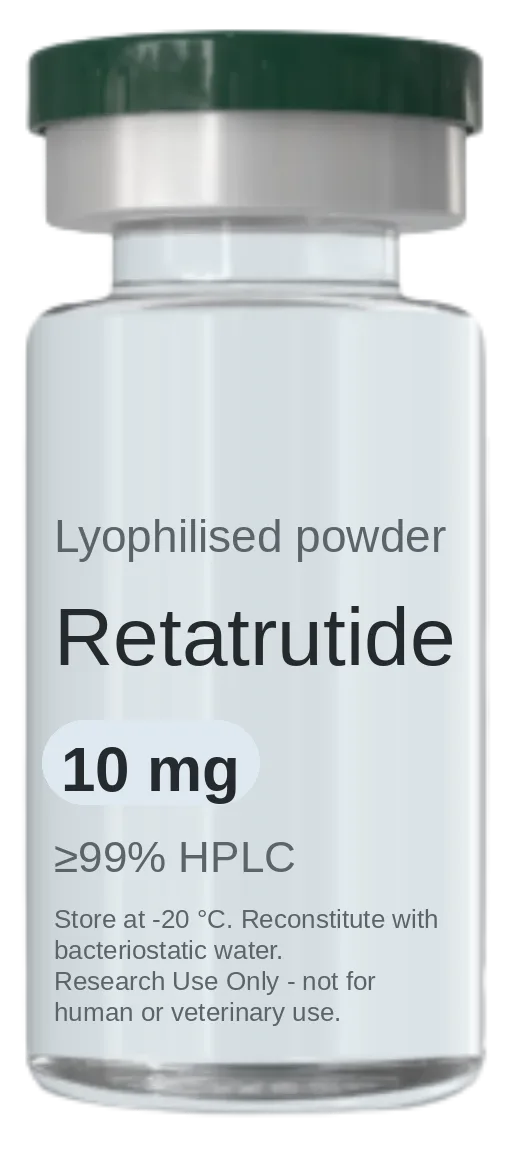
Retatrutide
Triple-agonist metabolic research peptide targeting GLP-1, GIP and glucagon receptors.
- Purity:
- ≥99% HPLC
- Sizes available:
- 10 mg
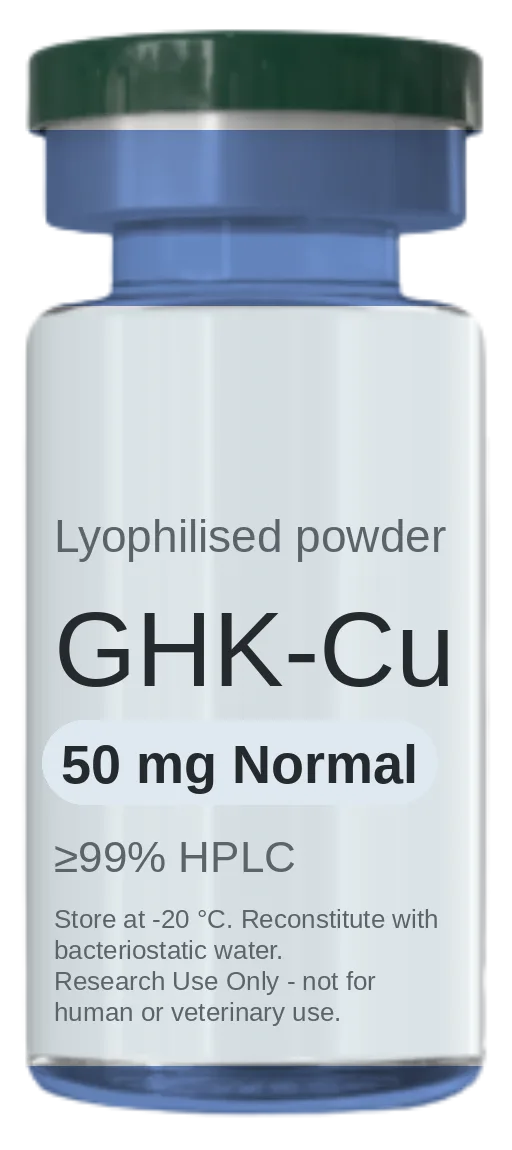
GHK-Cu (Copper Peptide)
Copper-binding tripeptide studied in extracellular matrix and dermal research models.
- Purity:
- ≥99% HPLC
- Sizes available:
- 50 mg Normal – 50 mg Plus
BPC-157 + TB-500
BPC-157 and TB-500 in a single vial — the pairing most studied together in tissue-repair research.
- Purity:
- ≥99% HPLC
- Sizes available:
- 5 mg + 5 mg
The consultation
One intake that settles goals, history and contraindications alongside compound, quantity, documentation and route — reviewed by a physician before anything ships.
More notes
-
Hexarelin vs GHRP-6: Key Differences
Hexarelin and GHRP-6 are both GHRP hexapeptides, but differ in receptor affinity, appetite effect, and cardiovascular research findings.
-
Do You Need a Customs Broker for Peptides?
Customs broker to import research peptides into Argentina: when one is required and when the courier already handles it.
-
Argentina Customs Penalty for Bad Declarations
What happens when a research peptide shipment is misdeclared to Argentine customs: fines, smuggling charges, and seizure.