Note
Is NAD+ a Peptide or Something Else?
NAD+ is not a peptide — it's a dinucleotide, a coenzyme. Here's the chemical difference and why the two get mixed up.
NAD+ is not a peptide. It's a dinucleotide — nicotinamide adenine dinucleotide, which is where the name comes from — and chemically it belongs to a completely different family of molecules. A peptide is a chain of amino acids joined by peptide bonds; NAD+ has no amino acids and no peptide bonds in its structure. The confusion happens because both get researched and quoted in the same research-supply catalogues, not because they're chemically related.
What exactly is NAD+?
NAD+ is a coenzyme present in every cell. Structurally it's two nucleotides joined at their phosphate groups: one carries an adenine base, the other a nicotinamide base. That nucleotide-to-nucleotide link is what earns it the name dinucleotide.
Its best-studied biological role is as an electron carrier in reduction-oxidation reactions: it switches between its oxidized form (NAD+) and its reduced form (NADH) inside central metabolic pathways, including glycolysis and the mitochondrial electron transport chain. It's also the substrate consumed by enzymes such as sirtuins and PARPs, which is why it shows up so often in the literature on cellular metabolism and aging.
What is a peptide, and how is it different?
A peptide is a short sequence of amino acids — typically between two and fifty — linked by peptide bonds, the same type of bond that holds proteins together, just in shorter chains. The amino acid sequence is what determines a peptide's shape and function.
That's the underlying difference from NAD+:
- A peptide is built from amino acids. NAD+ is built from nucleotides, the same basic units that make up DNA and RNA.
- A peptide has peptide bonds. NAD+ has phosphodiester bonds linking its two nucleotide halves.
- Molecular weight also varies by compound, but the chemical classification doesn't depend on weight — it depends on what kind of units form the molecule and how they're linked.
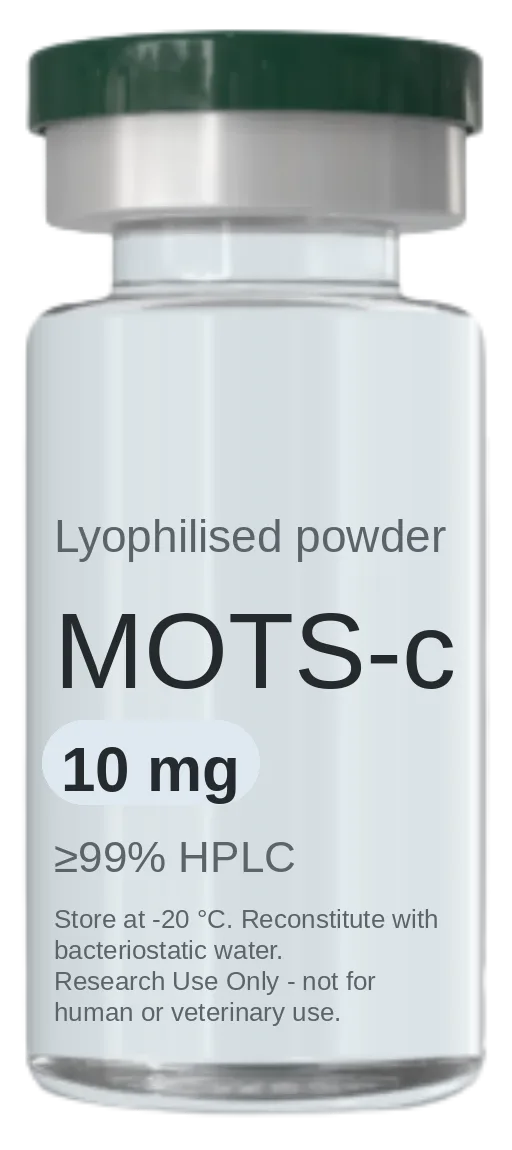
Compounds like MOTS-c are peptides in the strict sense: a sequence of amino acids encoded in mitochondrial DNA. NAD+, by contrast, isn't even synthesized as an amino acid chain — it's assembled from precursors like tryptophan or nicotinamide through a metabolic pathway entirely separate from peptide synthesis.
Why are they quoted in the same catalogue, then?
Because within laboratory research — cellular longevity, mitochondrial biology, metabolism — NAD+ and several research peptides get cited in the same papers and studied with the same experimental models. Research supplier catalogues tend to group together whatever a given lab might need for one line of work, without that implying the molecules share a chemical classification.
It's the same pattern you see across the catalog of research compounds: peptides, dinucleotides and other biomolecules sit side by side because they answer to the same research demand, not because they're chemically equivalent.
What does the scientific literature study about NAD+?
The literature on NAD+ concentrates on its role as a metabolic cofactor and on how cellular levels change with age and across different physiological states in laboratory models. PubMed collects much of that literature, centered on redox biology, sirtuin activation, and PARP-mediated DNA repair.
None of that research is directed at human consumption or supports a therapeutic use outside the laboratory. Each study works with cellular or animal models under controlled experimental protocols, and the conclusions don't transfer directly to a person.
How is the purity of a NAD+ batch documented?
As with the peptides in the catalog, each batch of research material should arrive with its own analytical documentation. PeptoClinic's quality page explains how to read a certificate of analysis (COA): which laboratory signed it, what method it used, and how to confirm the report corresponds to the actual batch rather than a generic one copied off the internet. Before accepting any material — whether a dinucleotide like NAD+ or a peptide like BPC-157 or GHK-Cu — it's worth requesting that document and checking it.
NAD+ for research in Argentina
PeptoClinic Research Supply quotes research material, NAD+ included, for shipment to Argentina as part of its list of served destinations. Each shipment is prepared with the customs file corresponding to laboratory reference material, not a consumer product. For a full walkthrough of how the import process works and what documentation accompanies a shipment, PeptoClinic in Argentina details the process step by step.
Laboratory research use only
All material PeptoClinic supplies — NAD+ included — is provided strictly for Research Use Only (RUO): in vitro and laboratory studies. None of these compounds is a drug, a supplement, or a food, and none is approved or intended for human or veterinary consumption, diagnosis, or treatment of any condition. None of these statements has been evaluated by ANMAT, the FDA, or any equivalent authority. Anyone looking for a usage guideline, a dose, or an administration protocol won't find one here, because this business doesn't provide one.
Frequently asked questions
Does NAD+ have amino acids in its structure?
No. NAD+ is made of two nucleotides joined at their phosphate groups, not amino acids. Nucleotides are the same units that also make up DNA and RNA, which places NAD+ in a chemical family entirely distinct from peptides.
Why is it sometimes called "NAD+ peptide" online?
Because informal forum and store jargon tends to lump any biomolecule studied in the same longevity or cellular-metabolism context under "peptides," without distinguishing the actual chemical classification. From a biochemical standpoint that label is incorrect: NAD+ is a dinucleotide, not a peptide.
What do NAD+ and peptides like MOTS-c have in common?
Both are cited in the literature on mitochondrial biology and cellular metabolism, and both are studied in laboratory models related to cellular energy production. That shared field of study doesn't change the fact that one is a dinucleotide and the other is an amino acid chain.
Is NAD+ synthesized the same way as a peptide?
No. A peptide is synthesized by joining amino acids through peptide bonds, either biologically (ribosomes) or through solid-phase chemical synthesis. NAD+ is assembled from precursors such as nicotinamide or tryptophan, through metabolic routes specific to nucleotide metabolism, with no ribosomes and no peptide bonds involved.
Is there a reduced form of NAD+?
Yes, it's called NADH, the reduced form of the same molecule. Research literature typically studies the balance between NAD+ and NADH as an indicator of a cell's redox state, rather than each form separately.
Does the NAD+ PeptoClinic quotes come with a certificate of analysis?
Every batch of research material should be accompanied by its corresponding documentation. How to verify a certificate of analysis, which laboratory issues it, and how to confirm it matches the actual batch is explained on the [quality page](/en/quality/).
Is NAD+ approved for human use in Argentina?
No. All material PeptoClinic supplies, NAD+ included, is exclusively for laboratory research (RUO). It is not approved or intended for human or veterinary consumption, and no regulatory authority — ANMAT included — has evaluated these statements.
Where can I see the rest of the research compound catalog?
The [full catalog](/en/catalog/) lists every compound available for quotation, along with its purity specification and the sourcing documentation for each line. You can also learn more about how the business operates on the [about page](/en/about/).
Compounds mentioned
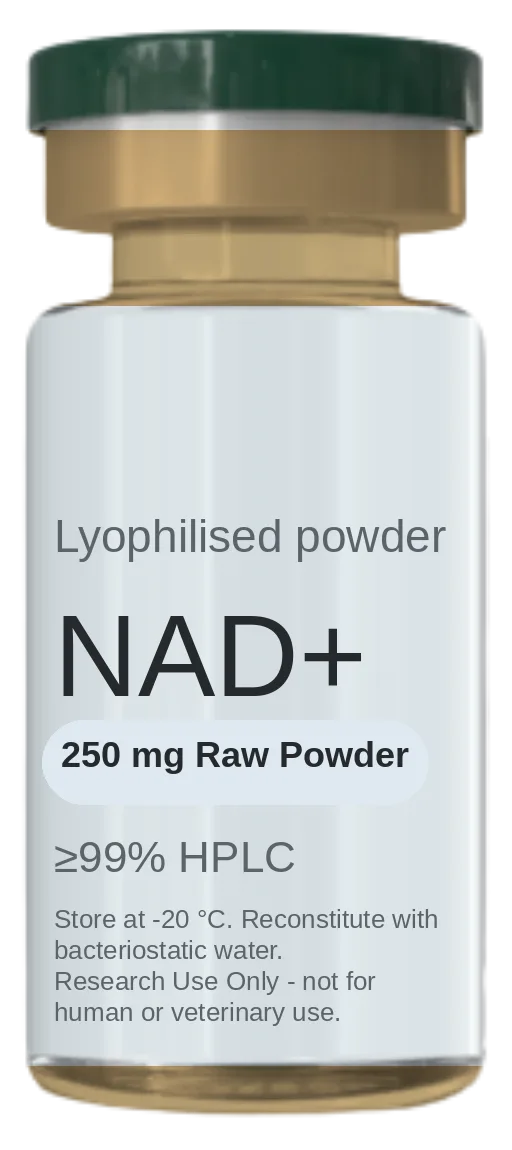
NAD+ (Nicotinamide Adenine Dinucleotide)
Essential redox cofactor central to cellular metabolism and sirtuin research.
- Purity:
- ≥99% HPLC
- Sizes available:
- 250 mg Raw Powder – 300 mg
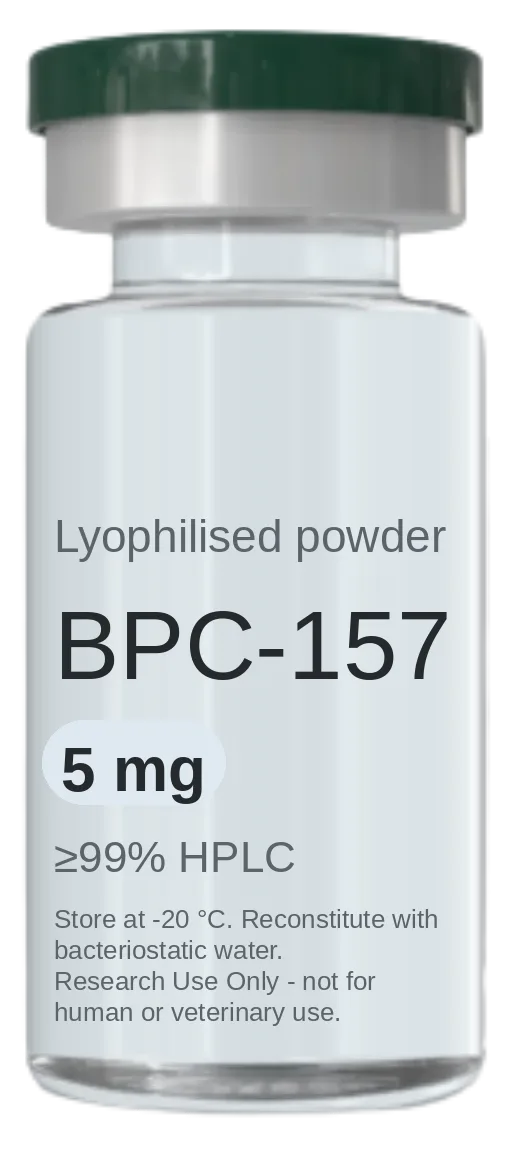
BPC-157 + TB-500
BPC-157 and TB-500 in a single vial — the pairing most studied together in tissue-repair research.
- Purity:
- ≥99% HPLC
- Sizes available:
- 5 mg + 5 mg
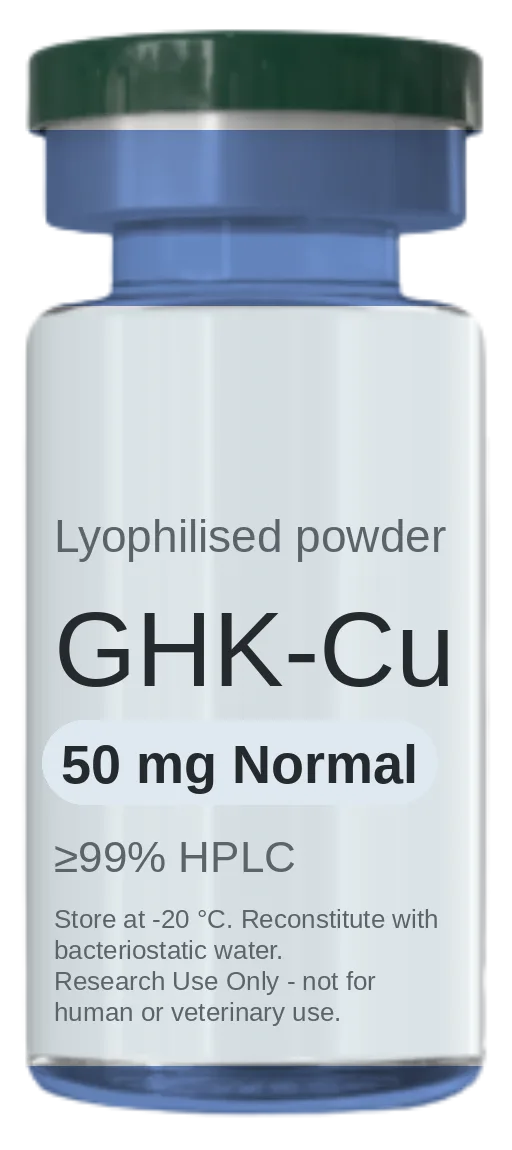
GHK-Cu (Copper Peptide)
Copper-binding tripeptide studied in extracellular matrix and dermal research models.
- Purity:
- ≥99% HPLC
- Sizes available:
- 50 mg Normal – 50 mg Plus
The consultation
One intake that settles goals, history and contraindications alongside compound, quantity, documentation and route — reviewed by a physician before anything ships.
More notes
-
Tesamorelin vs Sermorelin: The Difference
Tesamorelin and sermorelin are both GHRH analogs, but not the same molecule. Here's the structural difference and what the studies on each measure.
-
Peptide Supplier vs. Reseller: What Differs
The real difference is whether someone can name the lab that tested a batch and show the report — or only promise it's pure.
-
MOTS-c or NAD+: What's the Difference
MOTS-c and NAD+ are studied through different mitochondrial pathways; here's what each line of research actually measures.