
Note
GHK-Cu vs KPV: What Sets Them Apart
GHK-Cu is a copper-binding peptide studied in skin research; KPV is a metal-free fragment of alpha-MSH studied in inflammation models.
GHK-Cu and KPV are both tripeptides, but the resemblance stops there. GHK-Cu is a copper complex studied mainly in fibroblast and extracellular matrix research; KPV is a metal-free fragment derived from alpha-MSH, studied in inflammation models. They show up in the same searches — tripeptides, skin, "anti-aging" — because the category overlaps, but each one answers a different research question.
What GHK-Cu is
GHK-Cu is the sequence Gly-His-Lys bound to a copper ion. The metal-free sequence (GHK) was described first, as a fragment that occurs naturally in plasma; the copper-chelated form is the one that dominates laboratory work, because it is more stable in solution and it is the form used in most in vitro studies on fibroblasts.
Most of the published literature on GHK-Cu measures collagen synthesis, metalloproteinase activity, and fibroblast behavior in culture. Within a research peptide catalogue it is one of the compounds with the largest body of published literature on skin and connective tissue — the GHK-Cu page for Argentina has the laboratory report and the purity specification for reference.
What KPV is
KPV is the sequence Lys-Pro-Val, the C-terminal fragment of alpha-MSH (melanocyte-stimulating hormone). It carries no copper and no other metal in its structure: it is a linear tripeptide, smaller than the full hormone it derives from, and it lacks the segment that binds the melanocortin receptors responsible for pigmentation.
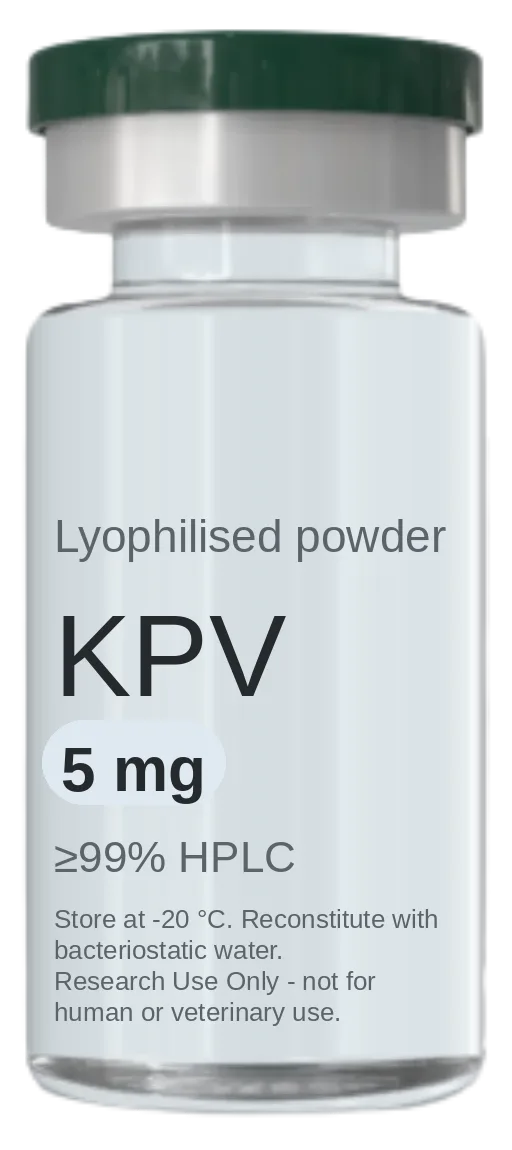
The literature on KPV concentrates on inflammation models, in particular experimental colitis research and cell cultures where NF-κB signaling is measured. It is treated in that literature as a fragment that retains anti-inflammatory activity without the pigmentary effect of full-length alpha-MSH, which is exactly what makes it a separate compound of study within that hormone family. The KPV product page has the shipped format.
The structural difference that explains the rest
The core difference between the two is not size, and it is not molecular origin in the abstract: it is that one carries a coordinated metal in its structure and the other does not.
- GHK-Cu: a tripeptide plus a copper ion. The metal is part of the molecule under study, not an additive, and its presence changes both the stability and the behavior observed in assays.
- KPV: a metal-free tripeptide, derived from a larger hormone (alpha-MSH) of which it retains only the terminal fragment.
That difference is what drives the two molecules into separate research lines: the copper complex is studied where extracellular matrix remodeling is the question, and the metal-free fragment is studied where the modulation of a specific inflammatory pathway is the question.
Which research line each one addresses
Neither compound substitutes for the other in an experimental design, because they measure different things.
Studies on GHK-Cu typically work with dermal fibroblast cultures and tissue-repair models, measuring gene expression, type I collagen production, and the activity of proteases associated with extracellular matrix remodeling. It is the compound that appears most often when the experimental design centers on skin or connective tissue.
Studies on KPV typically work with intestinal inflammation models — induced colitis in laboratory animals — and with cell lines where NF-κB signaling, central to the inflammatory response, is evaluated. It also appears in keratinocyte research, where it is compared against full-length alpha-MSH to isolate which part of the activity depends on the fragment and which depends on the rest of the hormone.
That is why a single laboratory can hold both molecules in the same protocol without any overlap: each one answers a distinct question within the experimental design. Something similar applies to other tissue-focused research peptides, such as BPC-157, on its page for Argentina, which is studied in tissue-repair models through a mechanism also distinct from either of these two.
Batch documentation: what to ask any supplier for
A tripeptide is not distinguished by structure when you look at the vial: it is distinguished by the document that accompanies the lot. The published purity standard for the research peptides in this catalogue is ≥99% by HPLC, and the lowest figure published so far in an in-house laboratory report — for a different catalogue compound, not GHK-Cu or KPV — is 99.669%. That is the number worth using as a baseline when reading any certificate, not the best figure a supplier chooses to display.
For GHK-Cu there is a laboratory report from Janoshik Analytical, with a verification link that can be opened and checked against the original report — it is linked from the compound page. It is the simplest way to check a lot: if a supplier cannot produce a report at that level of detail, there is no way to confirm the purity claimed.
Before requesting a quote for either compound, it is worth reviewing how to read a certificate of analysis on the quality page, and the rest of the specifications — format, diluent, documentation shipped with the order — in the research catalogue.
Laboratory research use only
GHK-Cu and KPV are supplied strictly for laboratory research (Research Use Only): in vitro studies and animal models. Neither is a medicine, a supplement, or a product intended for human or veterinary use, and none of the claims made about them have been evaluated by the FDA, ANMAT, or any equivalent regulatory body. No guidance is given on dosing, administration routes, or protocols framed for a person, and requests for that kind of guidance are not fulfilled.
Frequently asked questions
Can GHK-Cu and KPV be used in the same research protocol?
Structurally they are independent compounds — one carries copper and the other does not — so there is no inherent incompatibility. Whether to combine them in an experimental design depends on the specific research question of each laboratory, not on a general recommendation.
Which one has more published literature?
GHK-Cu carries a larger body of literature on skin, fibroblasts, and extracellular matrix. KPV has a smaller overall volume of published work, but it is well represented in the literature on experimental colitis models and NF-κB signaling.
Does KPV contain copper like GHK-Cu?
No. KPV is a tripeptide with no metal in its structure. Copper is a specific part of the GHK-Cu molecule and is not present in KPV.
Where does KPV come from?
It is the C-terminal fragment of alpha-MSH, the melanocyte-stimulating hormone. It retains the Lys-Pro-Val sequence from that molecule, without the rest of the chain.
How is the purity of a GHK-Cu lot verified?
Through the corresponding laboratory report, issued by Janoshik Analytical, which includes an open verification link to check the result against the original report. It is available on the compound's Argentina page.
Can a certificate of analysis be requested for a KPV lot?
Yes, it can be requested together with the quote for that lot. The documentation shipped with each order depends on the compound and the specific lot available at that time.
Are these compounds approved for human use?
No. They are supplied exclusively for laboratory research. Neither compound is approved by the FDA, ANMAT, or any regulatory body for human or veterinary use.
What format are GHK-Cu and KPV shipped in?
Both are shipped in a vial, as lyophilized powder. A pen applicator is listed in the catalogue but is not currently orderable — it can only be added to a waitlist.
Compounds mentioned
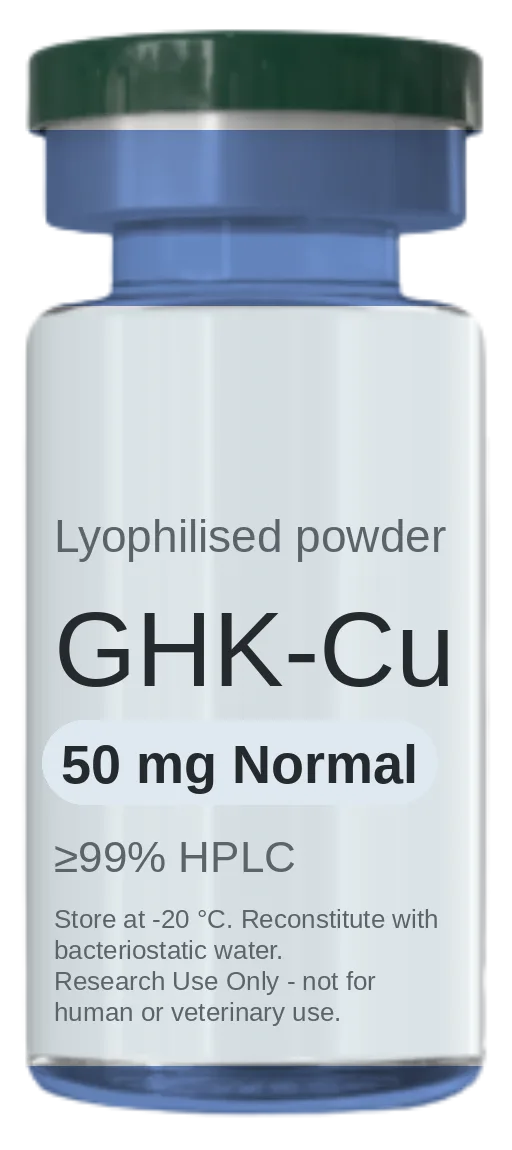
GHK-Cu (Copper Peptide)
Copper-binding tripeptide studied in extracellular matrix and dermal research models.
- Purity:
- ≥99% HPLC
- Sizes available:
- 50 mg Normal – 50 mg Plus
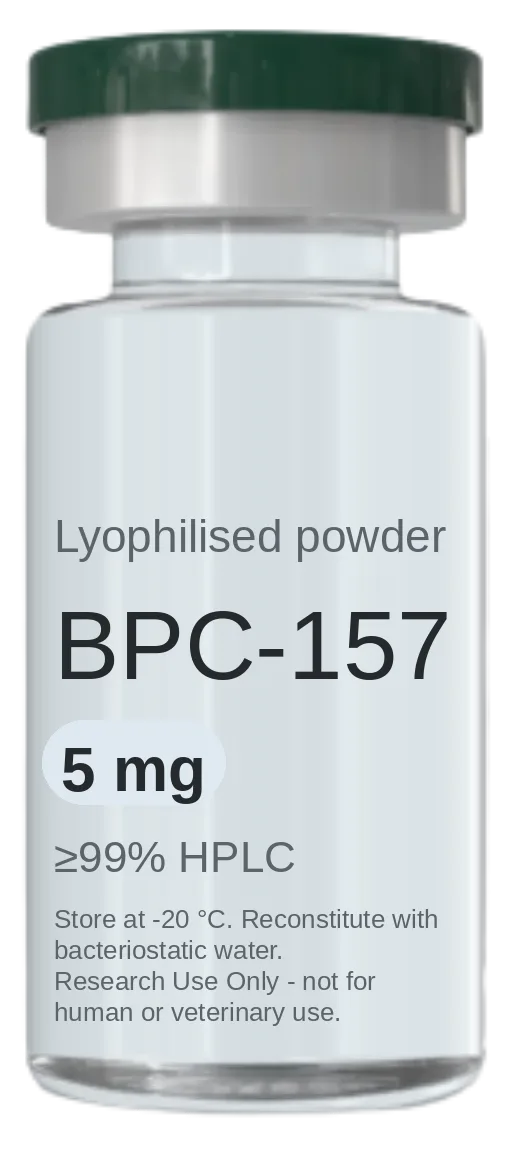
BPC-157 + TB-500
BPC-157 and TB-500 in a single vial — the pairing most studied together in tissue-repair research.
- Purity:
- ≥99% HPLC
- Sizes available:
- 5 mg + 5 mg
The consultation
One intake that settles goals, history and contraindications alongside compound, quantity, documentation and route — reviewed by a physician before anything ships.
More notes
-
Tesamorelin vs Sermorelin: The Difference
Tesamorelin and sermorelin are both GHRH analogs, but not the same molecule. Here's the structural difference and what the studies on each measure.
-
Peptide Supplier vs. Reseller: What Differs
The real difference is whether someone can name the lab that tested a batch and show the report — or only promise it's pure.
-
MOTS-c or NAD+: What's the Difference
MOTS-c and NAD+ are studied through different mitochondrial pathways; here's what each line of research actually measures.