
Note
Guarantees If a Peptide Batch Fails QC
What guarantees a research peptide supplier gives when a batch fails quality control, and what document proves it.
A serious supplier does not sell a batch that failed quality control: it holds it, documents the failure, and does not invoice it. The real guarantee is not a line on a website — it is that every batch that does ship comes with a certificate of analysis (COA) issued by an outside laboratory, carrying the batch number, the measured purity, and, when the lab supports it, a verification link. If that document does not exist, or does not match what arrived, that is where the guarantee lives: the buyer has something concrete to compare against and something concrete to dispute.
This is the question that separates a technical supplier from a reseller assembling packages with a label and an Instagram photo. What follows is what "failing a batch" actually means, what has to exist on paper before a batch ships, and what to ask before requesting a quote.
What it means for a batch to "fail" quality control
A research peptide batch is analyzed by HPLC (high-performance liquid chromatography) to measure two things: purity, and actual content against the labeled amount. A batch "fails" when the result comes in below the purity threshold the supplier holds itself to, or when the measured content departs meaningfully from what the label states.
This is not a judgment call about how the vial looks. It is a number that comes out of a laboratory report, checked against a specification written down beforehand. Without that prior specification, there is no way to say a batch "failed" — any result can be justified after the fact. That is why the first question worth asking a supplier is not "what guarantee do you give" but "what number does every batch get checked against."
The document that has to travel with every batch
The certificate of analysis is the only document that turns a promise into something verifiable. A real COA carries, at minimum: the compound, the batch number, the date of analysis, the laboratory that performed it, the method used, and the purity result expressed as a number, not an adjective.
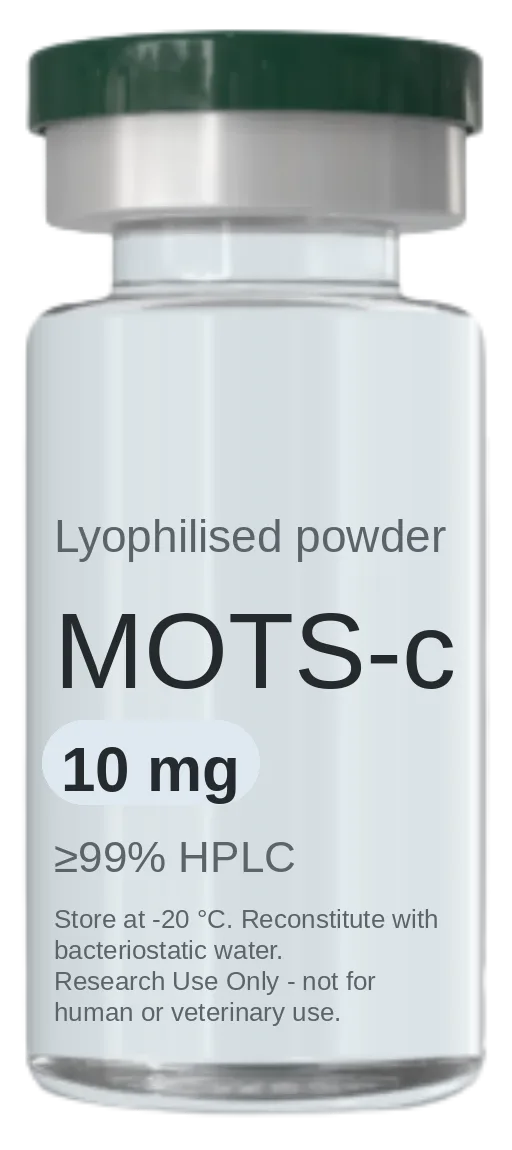
PeptoClinic publishes the Janoshik Analytical reports on the batches it has had analyzed, with the date and the result of each. The lowest of those results — not the best one, the lowest — is 99.669%, measured on a batch of MOTS-c. That is the figure worth citing when talking about a purity standard, because a headline built on the best result breaks the moment a worse batch gets published. The retatrutide batch analyzed the same day came back at 99.893%.
One thing worth checking with any supplier: if the COA carries a verification link to the laboratory's site, test it before ordering. A verification code that resolves to no page proves nothing — it is a printed number, not a verifiable document. That distinction is exactly what separates a real certificate from a decorative one.
What happens to a batch that doesn't meet spec
When a lab result comes in below the specification, there are three possible paths, and a technical supplier should be able to say which one it uses:
- The batch is not offered. It is held pending re-analysis or discarded outright. This is the expected outcome when the deviation is real and not a sampling error.
- It gets re-analyzed — sometimes with another sample from the same batch, sometimes by a different laboratory — before a decision is made to discard it.
- The buyer is informed if a batch already shipped turns out to be compromised, with the actual result attached, not a softened version of it.
What should not exist is a fourth path: shipping the batch anyway and saying nothing. A supplier that does not physically separate what passed from what didn't has no way to guarantee that this doesn't happen.
What a real guarantee looks like, as opposed to a promise
A guarantee with no document behind it is marketing copy. These are the concrete questions worth asking before requesting a quote on a batch:
- Is the COA issued by an outside laboratory, or is it the supplier's own internal analysis?
- Does the batch number on the certificate match the batch number printed on the vial that arrives?
- If the result on the certificate doesn't match what arrives, is there someone to raise it with, and is there anything backing that claim?
- Does the supplier publish the lowest result in its history, or only the best one?
A supplier that answers those four questions with a concrete document is giving a guarantee. One that answers with "we work to the highest standards" is giving nothing that can be checked afterward. On this — reading a certificate of analysis and understanding what each field measures — the quality control page is worth reading in full; it walks through a COA field by field.
What to ask before ordering (or requesting a quote on) a batch
For anyone approaching this from Argentina, there is an extra layer worth checking: quality documentation has to travel with import documentation. A COA that only exists as a screenshot in a WhatsApp conversation does not hold up at customs, and it does not serve as proof if something arrives wrong. Material is quoted with the file prepared to enter as laboratory reference material, and that file includes the same certificate backing the batch's purity. Which compounds are quoted into Argentina and with what documentation is covered on the Argentina page and in the full catalog.
Another point rarely asked, and worth asking: if the supplier changes analysis laboratories, do they disclose it? A change of laboratory is not necessarily a problem, but a supplier that hides it is also hiding the possibility that the new lab measures against a different criterion. Being transparent about who measured what is, in itself, part of the guarantee.
For laboratory research use only
Everything described here applies to peptides supplied strictly for laboratory research use (Research Use Only). These are not medicines, they are not approved for human or veterinary consumption, and they do not substitute for any regulatory approval process. The quality control described in this article measures the purity and content of a laboratory compound — it does not evaluate or certify any therapeutic use, and no health authority has evaluated the claims on this site.
Frequently asked questions
What's the difference between an internal analysis and a certificate from an outside laboratory?
An internal analysis is run by the supplier itself, with its own instruments and no outside oversight; a certificate from an outside laboratory is issued by a third party with no commercial interest in the result. Only the second one works as independent proof to a buyer or a customs office.
How do I know if the certificate I'm shown matches the batch I received?
The batch number printed on the vial's label has to match exactly the batch number on the certificate. If they don't match, the document proves nothing about what was received, even if it is an authentic certificate for a different batch.
What does it mean for a COA to have a "verification link"?
It's an address or a code that lets you check the result directly on the issuing laboratory's site, without relying on the image the seller sends. Before ordering, it's worth testing that link: if it resolves to no page, the certificate can't be verified independently.
What minimum purity is reasonable to require in a research peptide?
There's no universal number, but it's worth comparing against the lowest result a supplier has published, not the highest. The standard PeptoClinic reports on its analyzed batches is purity at or above 99% by HPLC, with the lowest published result at 99.669%.
If a batch fails quality control, does the supplier sell it anyway?
A technical supplier should not sell a batch that doesn't meet its own specification. The way to confirm this is to ask directly what happens to those batches: if the answer doesn't include a document or a concrete procedure, there's no real guarantee behind the statement.
Does quality documentation also work for importing into Argentina?
Yes, and it has to be the same document: the certificate of analysis backing the batch's purity is part of the file that travels with the shipment as laboratory reference material. A certificate that only exists as a screenshot doesn't serve that function.
Which laboratory runs the analyses PeptoClinic publishes?
Janoshik Analytical. The published reports correspond to analyses run on April 13, 2026, on batches of retatrutide, MOTS-c, GHK-Cu, and a BPC-157 with TB-500 combination.
Does this quality control certify that the product is fit for human use?
No. The certificate of analysis measures the purity and content of the compound as a laboratory research material. It is not a health authority approval and does not imply the product has been evaluated or authorized for human or veterinary consumption.
Compounds mentioned
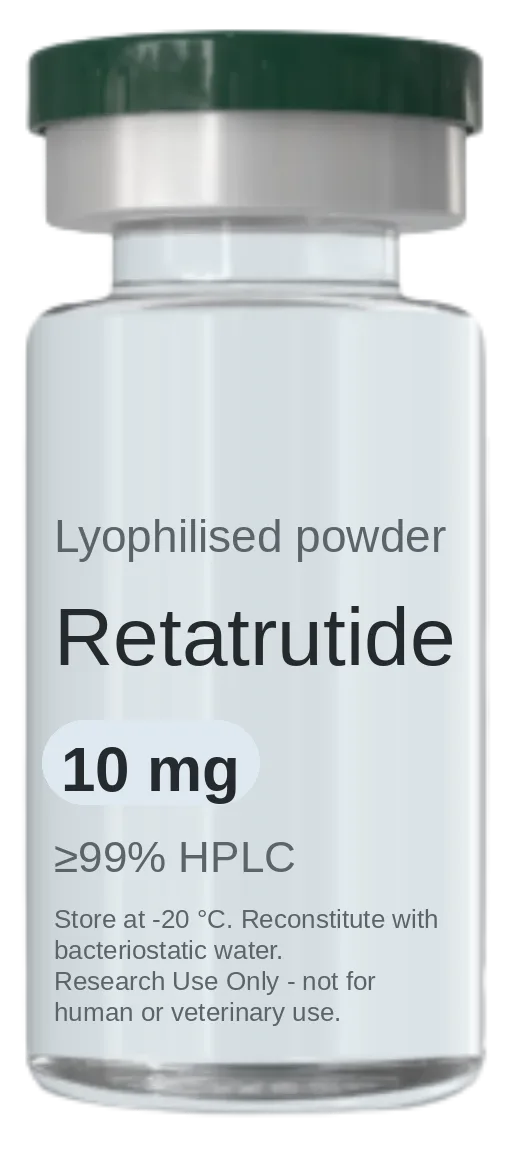
Retatrutide
Triple-agonist metabolic research peptide targeting GLP-1, GIP and glucagon receptors.
- Purity:
- ≥99% HPLC
- Sizes available:
- 10 mg
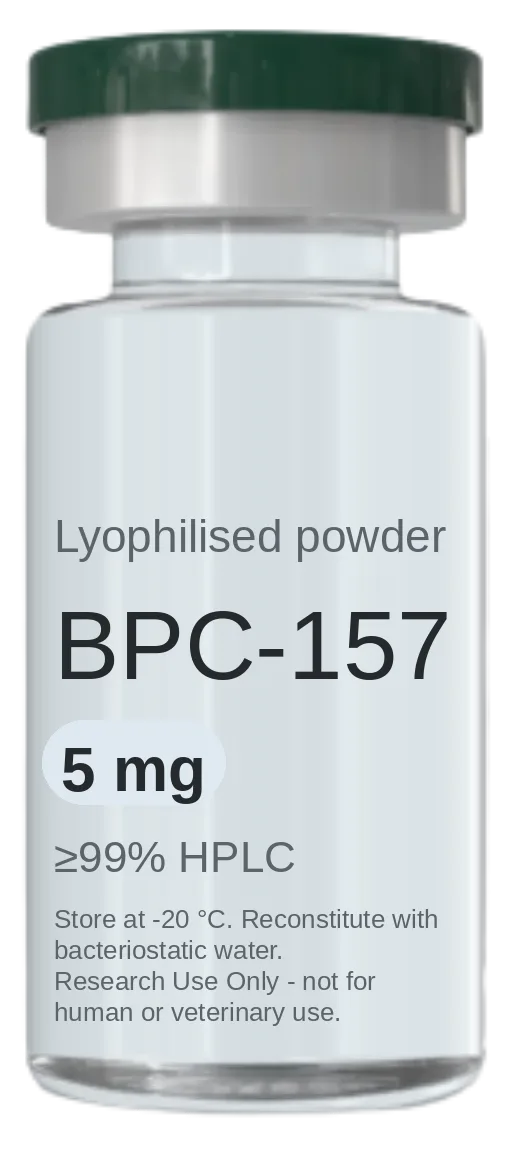
BPC-157 + TB-500
BPC-157 and TB-500 in a single vial — the pairing most studied together in tissue-repair research.
- Purity:
- ≥99% HPLC
- Sizes available:
- 5 mg + 5 mg
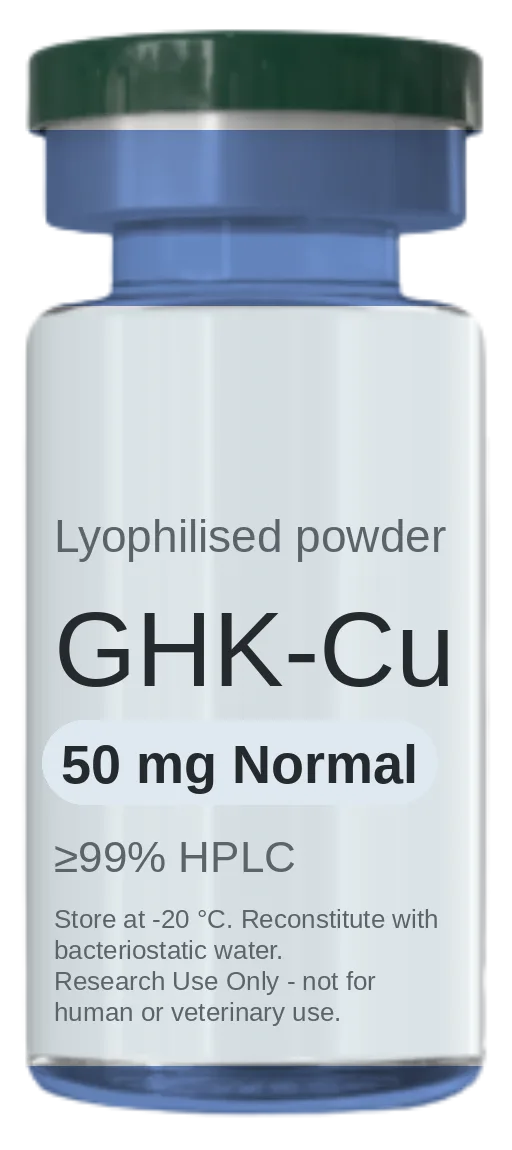
GHK-Cu (Copper Peptide)
Copper-binding tripeptide studied in extracellular matrix and dermal research models.
- Purity:
- ≥99% HPLC
- Sizes available:
- 50 mg Normal – 50 mg Plus
The consultation
One intake that settles goals, history and contraindications alongside compound, quantity, documentation and route — reviewed by a physician before anything ships.
More notes
-
Temporary Import Regime & Peptides
Temporary import covers goods that leave the country again; a research peptide shipment stays and gets used up.
-
Retatrutide vs GHK-Cu: What's the Difference
Retatrutide and GHK-Cu are different molecules studied for different reasons. Here's what each investigates and what documentation backs a batch.
-
Invoiced vs. Unbilled Peptide Suppliers
What changes when a research peptide supplier invoices the transaction versus one that takes payment and leaves no paper trail.