
Note
GHK-Cu vs MOTS-c: What Separates Them
GHK-Cu is a copper tripeptide studied in skin and tissue; MOTS-c is a mitochondrial peptide studied in metabolism. A technical comparison.
GHK-Cu and MOTS-c differ starting from their origin: GHK-Cu is a synthetic tripeptide that binds a copper ion and is studied mainly in models of skin, wound healing and connective tissue remodeling, while MOTS-c is a peptide encoded by mitochondrial DNA that is studied in energy metabolism, insulin resistance and exercise response. They do not compete for the same research territory — the confusion usually comes from both compounds showing up in the same research catalogues, not from any overlap in what they do.
What GHK-Cu is and what the literature studies it for
GHK-Cu is the copper-complexed form of the tripeptide glycine-histidine-lysine (Gly-His-Lys), a sequence originally isolated from human plasma that has a natural affinity for copper(II) ions. That binding to copper is not a cosmetic detail: most of the biological activity reported in the literature depends on the peptide being complexed, not free.
Studies indexed on PubMed associate it mainly with:
- Models of connective tissue repair and extracellular matrix activity.
- Research on dermal fibroblasts and collagen expression.
- Wound-healing models in skin.
- Studies on hair follicle remodeling.
It is one of the peptides with the longest publication history within the copper-binding peptide family, and it is also one of the few compounds in PeptoClinic's catalogue where the batch specification is open to direct verification: the laboratory report for this compound (a 50 mg batch) carries an online verification key, though the document itself does not state a purity percentage. You can see the full entry on the GHK-Cu Argentina page.
What MOTS-c is and why it's called a "mitochondrial peptide"
MOTS-c (Mitochondrial Open Reading Frame of the 12S rRNA type-c) is different in its biological nature from the ground up: it is not a fragment designed to mimic a hormone, but a 16-amino-acid sequence encoded inside human mitochondrial DNA itself, only discovered in 2015. That difference in origin is the first thing that separates it from GHK-Cu: one comes from a plasma-derived sequence, the other from a region of the mitochondrial genome that for decades had not been mapped as coding.
The published research studies it in a completely different field than GHK-Cu:
- Models of metabolic homeostasis and insulin sensitivity.
- Research on mitochondrial-to-nuclear communication (retrograde mitonuclear signaling).
- Models of adaptive response to metabolic stress, including exercise.
- Studies on AMPK regulation in muscle tissue.
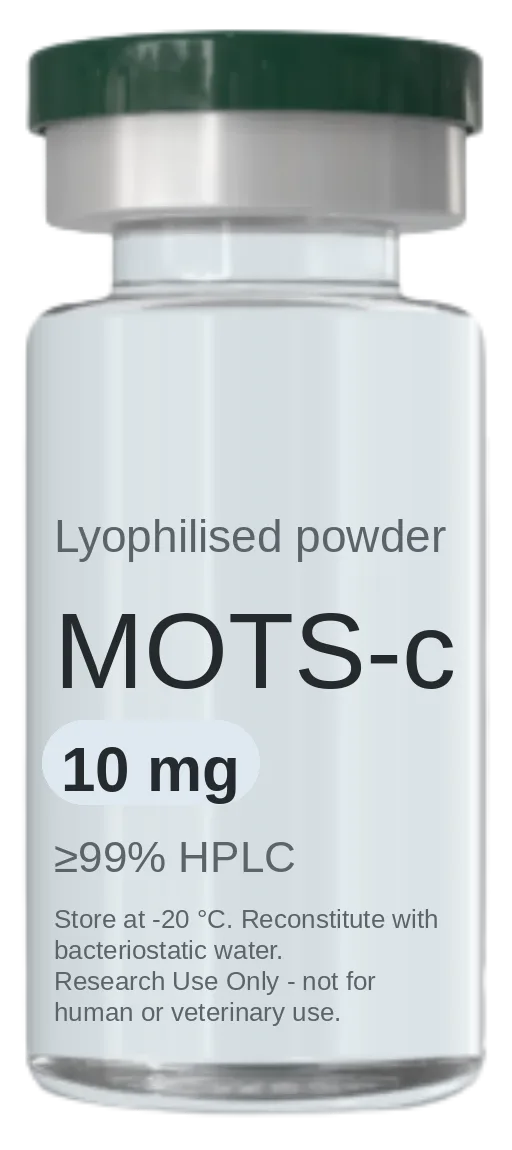
In the laboratory report PeptoClinic has published for this compound — analyzed by Janoshik Analytical on April 13, 2026, a batch with 11.31 mg of content — purity came in at 99.669%. Of the four reports published in the catalogue, that is the lowest figure on any of them, which is exactly why it's worth citing: it's the real floor, not the best case. You can see the detail on the MOTS-c Argentina page.
The difference that matters most: which biological system each one targets
If you had to reduce the difference to a single idea, it would be this: GHK-Cu is studied as an extracellular signaling molecule, tied to tissue matrix and skin; MOTS-c is studied as an intracellular signaling molecule, tied to the mitochondria and energy metabolism. Neither substitutes for the other in any research protocol, because they answer different questions.
That difference also shows up in how the two get grouped inside a research peptide catalogue. GHK-Cu tends to appear near compounds oriented toward tissue and regeneration, like BPC-157, while MOTS-c tends to be grouped with peptides oriented toward metabolic axis and body composition, like CJC-1295 without DAC. That grouping isn't arbitrary — it follows the literature, not the other way around.
The structural difference, in plain terms
GHK-Cu is a tripeptide: three amino acids (glycine, histidine, lysine) bound to a copper atom. It's a small molecule even within the universe of research peptides. MOTS-c is larger, at 16 amino acids, and carries no complexed metal — its biological activity depends on the amino acid sequence itself, not on a bound cofactor.
That difference in size and chemistry isn't just a curiosity. It shapes how each is handled, stored and analyzed in the laboratory, and it's part of why each one has its own specification sheet in the catalogue instead of sharing a generic one.
What documentation ships with each batch
Both compounds arrive as lyophilized powder in a sealed vial, with no cold chain, because in lyophilized form they are stable at room temperature for weeks. The difference between the two is in the analytical report that accompanies the batch:
- The MOTS-c report (task 136923) states 99.669% purity on 11.31 mg of content.
- The GHK-Cu report (task 204977) corresponds to a 50 mg batch and carries an online verification key, but the document does not state a purity figure.
Before comparing any batch from any supplier, it's worth knowing how to read that documentation critically: the page on evaluating peptide quality explains what to look for in a certificate of analysis beyond the big number on the first page.
What the literature does not study, for either compound
Neither GHK-Cu nor MOTS-c is studied, in the available literature, as a treatment for any human condition. What exists are laboratory models — cell lines, animal models, in vitro assays — exploring mechanisms. In neither case is there clinical evidence that would support talk of an established therapeutic use.
The material PeptoClinic supplies is strictly for laboratory research (Research Use Only). It is not approved for human or veterinary use, it is not a drug, a supplement or a cosmetic product, and none of its properties have been evaluated by the FDA, ANMAT or any equivalent authority.
Anyone looking for either of these two compounds with the intent of applying it to a person is asking a question this page does not answer, because it is not the question PeptoClinic is positioned to answer: the catalogue exists for research, and the documentation that ships with each batch — certificate of analysis, batch traceability, dispatch conditions — is built with that purpose in mind.
How each one is quoted
Neither compound has a published price: PeptoClinic operates as a technical consultancy, not a storefront. A researcher describes the specification they need — compound, quantity, batch — and the technical team responds with a written quote, normally within one business day. You can review the full catalogue to see which other compounds are available, or the Argentina shipping page to understand how import documentation is prepared for this material as laboratory reference material.
Frequently asked questions
Can GHK-Cu and MOTS-c be combined in the same study?
There is no published literature describing a combined protocol for these two compounds. Each is studied in its own research line — connective tissue in the case of GHK-Cu, mitochondrial metabolism in the case of MOTS-c — and no evidence supports a joint experimental design.
Which of the two has a longer history in the scientific literature?
GHK-Cu has the longer publication history: the sequence was identified in human plasma decades before MOTS-c was described, which was first reported in 2015 as the product of a coding region within mitochondrial DNA.
Why does GHK-Cu carry copper and MOTS-c does not?
Because they belong to different chemical families. GHK-Cu is a tripeptide whose reported biological activity depends on being complexed with a copper ion; MOTS-c is a 16-amino-acid sequence whose activity depends on its own structure, with no need for a metal cofactor.
Do both come with a laboratory analytical report?
Yes, both batches published in PeptoClinic's catalogue were analyzed by Janoshik Analytical on April 13, 2026. The MOTS-c report states 99.669% purity; the GHK-Cu report corresponds to a 50 mg batch with an online verification key, without a purity percentage stated in the document.
Does either one come in a pen format?
No. PeptoClinic's catalogue has both available only as a lyophilized powder vial. A pen format is announced but not yet orderable — there is only a waitlist.
Which one is relevant for a study on skin or tissue?
According to the published literature, GHK-Cu is the compound most studied in models of extracellular matrix, fibroblasts and wound healing. MOTS-c has no relevant bibliography in that research line.
Which one is relevant for a study on energy metabolism?
MOTS-c is the one with the literature on metabolic homeostasis, insulin sensitivity and exercise response at the mitochondrial level. GHK-Cu is not studied in that field.
Can both be requested in the same shipment to Argentina?
Yes, both are on the list of compounds PeptoClinic quotes for shipment to Argentina, each with its own batch documentation. A combined request is quoted the same way as any other: by describing the compound and quantity for each one.
Compounds mentioned
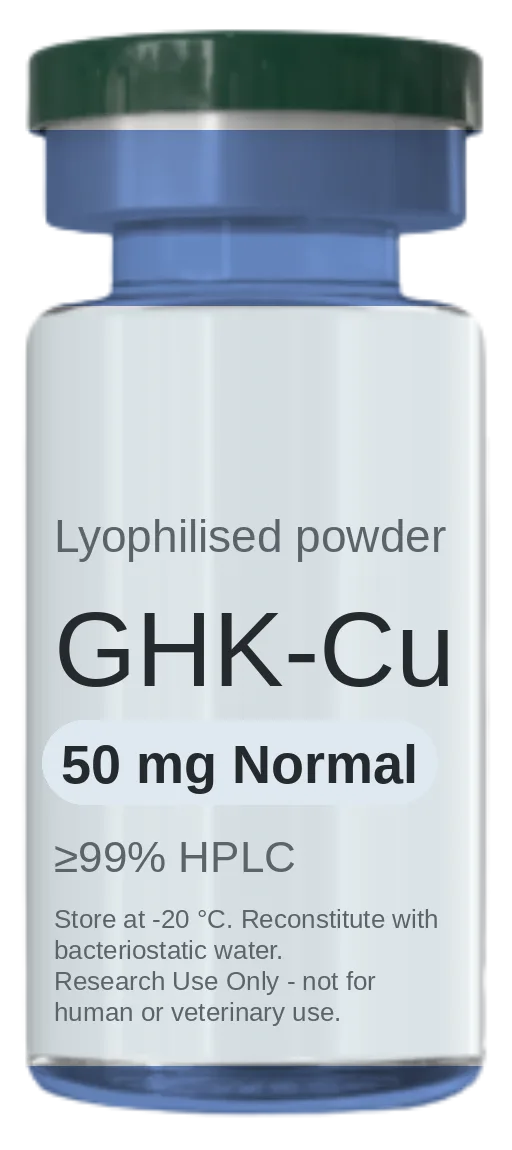
GHK-Cu (Copper Peptide)
Copper-binding tripeptide studied in extracellular matrix and dermal research models.
- Purity:
- ≥99% HPLC
- Sizes available:
- 50 mg Normal – 50 mg Plus
BPC-157 + TB-500
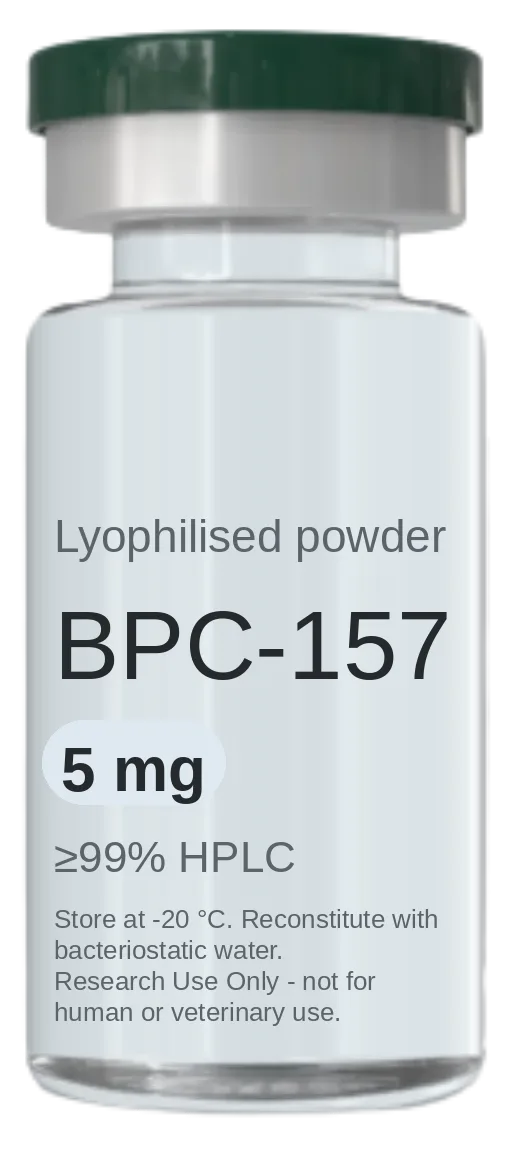
BPC-157 and TB-500 in a single vial — the pairing most studied together in tissue-repair research.
- Purity:
- ≥99% HPLC
- Sizes available:
- 5 mg + 5 mg
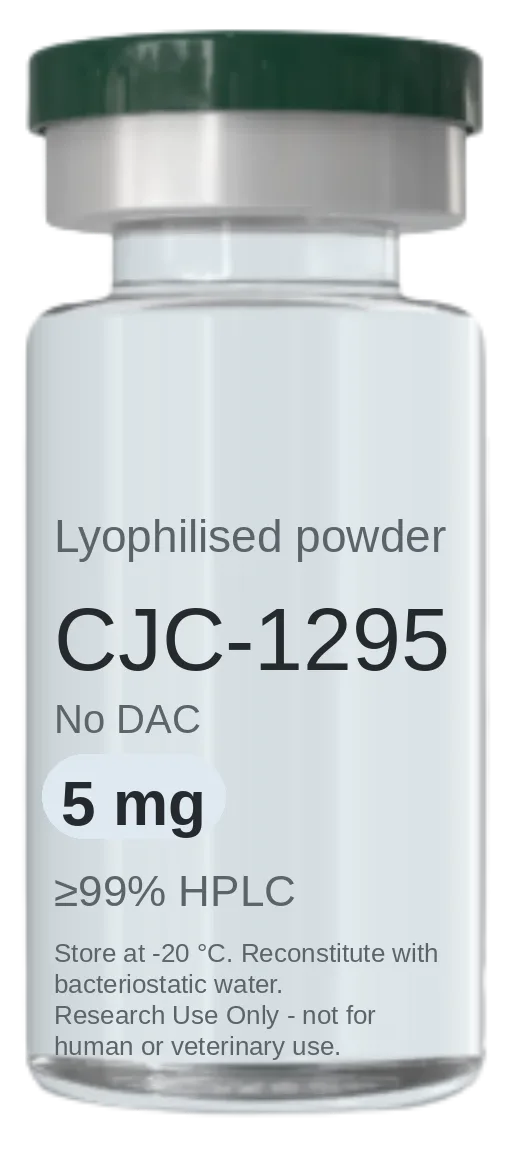
CJC-1295 (sin DAC)
Modified GRF(1-29) tetrasubstituted analogue without drug affinity complex.
- Purity:
- ≥99% HPLC
- Sizes available:
- 5 mg – 20 mg
The consultation
One intake that settles goals, history and contraindications alongside compound, quantity, documentation and route — reviewed by a physician before anything ships.
More notes
-
GHK-Cu vs Epithalon: What's the Difference
GHK-Cu and Epithalon are distinct research peptides in structure and in what the literature studies on each. Here's the difference.
-
Freight Forwarder vs Courier to Argentina
Can a freight forwarder replace a courier to import research peptides into Argentina? What changes, and what the practical answer is.
-
No One Home for Your Argentina Shipment?
What happens when a research peptide shipment to Argentina arrives at an address with no one there to sign for it.