
Note
GHRP-6 vs CJC-1295: How They Differ
GHRP-6 activates the ghrelin receptor and CJC-1295 the GHRH receptor — different mechanisms, same research target.
GHRP-6 and CJC-1295 act on two different receptors within the axis that regulates growth hormone: GHRP-6 is a ghrelin receptor (GHS-R1a) agonist, and CJC-1295 without DAC is a GHRH analog that acts on the growth hormone-releasing hormone receptor. Both are studied for their capacity to stimulate pulsatile GH release, but they do so through separate pharmacological pathways, and that difference is exactly why the literature so often studies them together.
What GHRP-6 is
GHRP-6 (Growth Hormone Releasing Peptide-6) is a synthetic hexapeptide belonging to the family of GH secretagogues. It functions as an agonist of the ghrelin receptor, the same receptor activated by the endogenous hormone that regulates appetite and pulsatile GH release from the pituitary.
The literature on GHRP-6 documents two principal effects in research models:
- Stimulation of pulsatile GH release, through direct action on the GHS-R1a receptor in the pituitary.
- An orexigenic effect (appetite stimulation), a consequence of the same ghrelin receptor pathway, described in the literature as one of the markers used to characterize the compound's activity in animal models.
That second point is usually the clearest way to distinguish GHRP-6 from CJC-1295 in any technical comparison: it is an effect tied to ghrelin receptor activation, not something shared by a GHRH analog.
What CJC-1295 (without DAC) is
CJC-1295 without DAC — also referenced in the literature as Mod GRF 1-29 — is a synthetic analog of the first 29 amino acids of human GHRH, carrying point modifications that give it greater stability against the enzymatic degradation native GHRH undergoes. It is the form carried in PeptoClinic's catalog: without the drug affinity complex (DAC) domain that, in other formulations, extends the compound's half-life.
Its mechanism is distinct from GHRP-6's: it acts on the GHRH receptor, and the literature describes it as a stimulus for the amplitude of the body's natural GH pulses, rather than as an independent trigger of secretion. In other words, it amplifies a signal the organism is already generating, rather than generating a new signal through a parallel pathway the way GHRP-6 does via the ghrelin receptor.
The key differences
Set side by side, the differences documented in the literature are:
- Receptor: GHRP-6 acts on GHS-R1a (ghrelin receptor); CJC-1295 without DAC acts on the GHRH receptor.
- Chemical nature: GHRP-6 is a hexapeptide; CJC-1295 without DAC is a 29-amino-acid GHRH analog.
- Effect on appetite: documented for GHRP-6 through its ghrelin receptor pathway; not described the same way for CJC-1295 without DAC, which acts through a GHRH pathway.
- Role in GH release: GHRP-6 is described as a trigger of pulsatile release; CJC-1295 without DAC is described as an amplifier of pulse amplitude.
- Half-life: the no-DAC form of CJC-1295 has a short half-life, unlike the DAC-bearing variant (not carried in this catalog), which is designed to extend exposure.
Why they show up together in the literature
A large share of GH secretagogue studies combine a GHRH analog with a ghrelin receptor agonist, precisely because they act on different receptors and complementary mechanisms: one amplifies pulse amplitude, the other triggers the frequency of release. That complementarity is the technical reason CJC-1295 without DAC and GHRP-family compounds — or related secretagogues such as ipamorelin — are studied together in preclinical research protocols on the somatotropic axis.
Worth being clear about: two compounds sharing billing in the same line of research does not make them equivalent. They are two molecules with completely distinct structure, receptor and literature profile, and choosing one or the other for an experimental design depends on which part of the GH-GHRH-ghrelin axis the research is targeting.
Documentation for every batch
Every compound quoted by PeptoClinic ships with documentation for its corresponding batch. The purity standard maintained across the catalog is 99% or higher by HPLC, and the lowest report published so far — MOTS-c, analyzed by Janoshik Analytical — came in at 99.669%. That is the real floor, not the best available figure, and it is the number worth requesting as a reference point when evaluating any batch. Details on how to read a certificate of analysis, and what needs to appear on one for it to be verifiable, are on the quality page.
Shipping to Argentina
Both compounds — GHRP-6 and CJC-1295 without DAC — are quoted as research material with customs documentation prepared for import as laboratory reference material. The material ships lyophilized, in a sealed vial with desiccant, with no cold chain: potency stays stable at room temperature for weeks in that state, and refrigeration only becomes necessary once the material is reconstituted at the destination laboratory. See the available compounds for shipment to Argentina on the Argentina page, or check the full catalog to compare with other secretagogues such as sermorelin or tesamorelin.
Research use only
Everything described in this article corresponds to research literature in in vitro and animal models. GHRP-6 and CJC-1295 are supplied strictly as research material (Research Use Only): they are not medicines, they are not approved for human or veterinary consumption, they carry no diagnostic or therapeutic indication, and none of their properties have been evaluated by the FDA, ANMAT or any equivalent regulatory authority. No dosing, administration route or usage protocol information is offered or provided; any inquiry oriented toward human use is declined.
Frequently asked questions
¿GHRP-6 y CJC-1295 son lo mismo?
No. Son dos péptidos distintos, con estructura química diferente, que actúan sobre receptores distintos del eje que regula la GH: el GHRP-6 sobre el receptor de grelina y el CJC-1295 sobre el receptor de GHRH.
¿Por qué se estudian juntos con tanta frecuencia?
Porque actúan sobre vías complementarias: un análogo de GHRH amplifica la amplitud del pulso de GH, y un agonista del receptor de grelina como el GHRP-6 actúa sobre la frecuencia de la liberación pulsátil. Esa complementariedad es lo que documenta la literatura preclínica sobre el eje somatotrófico.
¿Cuál de los dos tiene efecto sobre el apetito según la literatura?
El efecto orexígeno (de estímulo del apetito) está documentado para el GHRP-6, como consecuencia de su acción sobre el receptor de grelina. No se describe de la misma forma para el CJC-1295, que actúa por la vía del receptor de GHRH.
¿Qué diferencia hay entre CJC-1295 con DAC y sin DAC?
La diferencia está en la vida media: la forma con DAC incorpora un dominio de unión a albúmina que prolonga la exposición del compuesto, mientras que la forma sin DAC —la que integra el catálogo de PeptoClinic— tiene una vida media corta. Son dos formulaciones del mismo análogo de GHRH con perfiles farmacocinéticos distintos.
¿El catálogo de PeptoClinic incluye GHRP-6?
El catálogo actual incluye el CJC-1295 sin DAC y otros secretagogos de GH como la ipamorelina y el sermorelin. Para consultar disponibilidad de un compuesto puntual, la vía es cotizar directamente con el equipo técnico.
¿Con qué pureza llega documentado el CJC-1295 sin DAC?
El estándar sostenido en el catálogo es de 99 % o más por HPLC. El reporte más bajo publicado por Janoshik Analytical hasta la fecha —correspondiente a otro compuesto del catálogo, MOTS-c— dio 99,669 %, y es la cifra que conviene tomar como referencia de piso real al evaluar cualquier lote.
¿El material llega en cadena de frío?
No. Viaja liofilizado, en vial sellado con desecante, y se mantiene estable a temperatura ambiente durante semanas en ese estado. La cadena de frío pasa a ser necesaria recién después de la reconstitución, cuando el material se conserva entre 2 y 8 °C.
¿Se puede usar esta información para armar un protocolo de administración?
No. Todo lo publicado en esta nota describe lo que reporta la literatura de investigación en modelos in vitro y animales. PeptoClinic no provee dosis, vías de administración ni protocolos de uso, porque el material se suministra exclusivamente como referencia de laboratorio.
Compounds mentioned
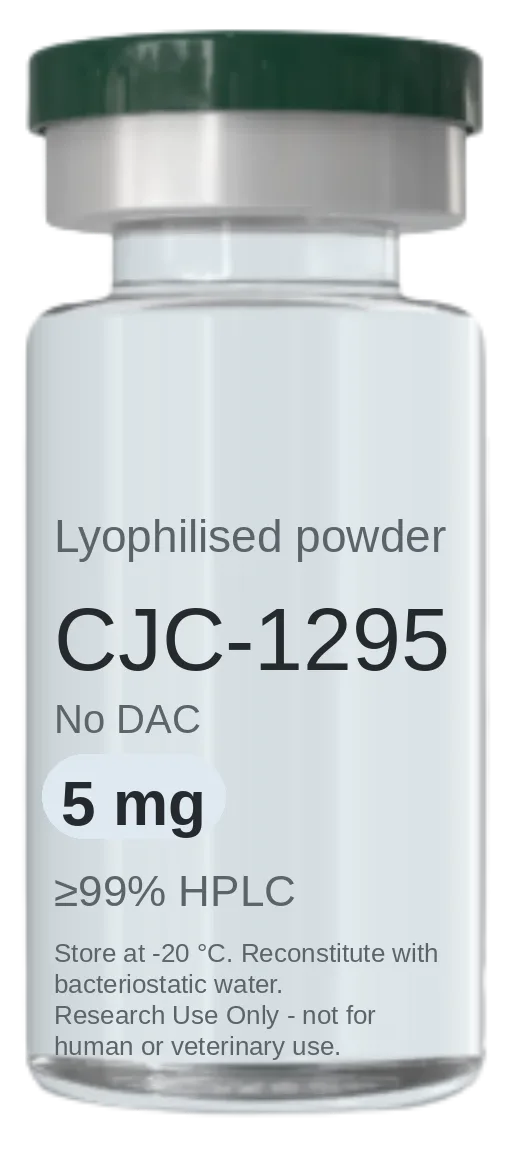
CJC-1295 (sin DAC)
Modified GRF(1-29) tetrasubstituted analogue without drug affinity complex.
- Purity:
- ≥99% HPLC
- Sizes available:
- 5 mg – 20 mg
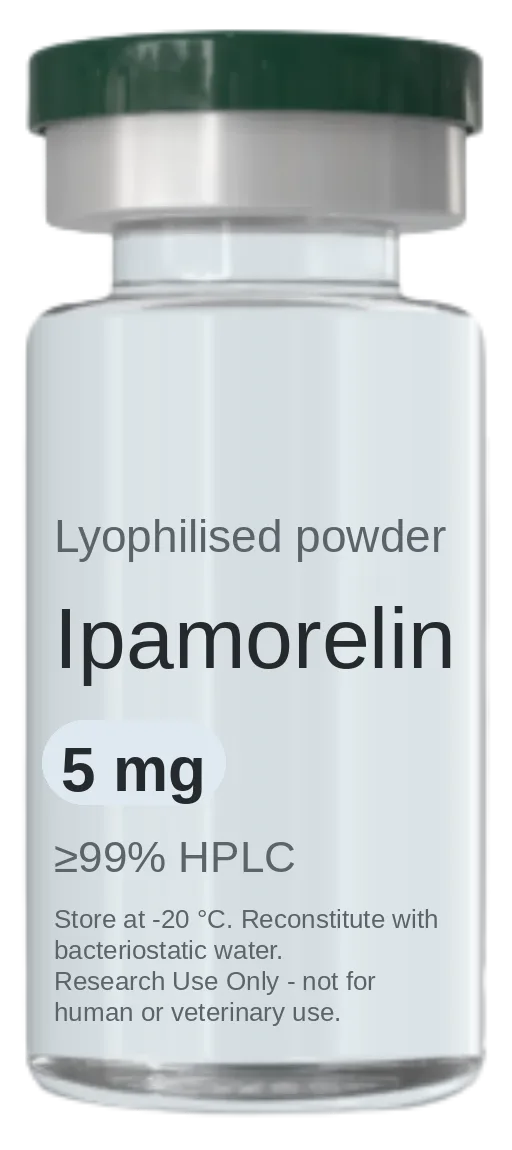
Ipamorelin
Selective ghrelin receptor (GHS-R1a) agonist pentapeptide.
- Purity:
- ≥99% HPLC
- Sizes available:
- 5 mg – 20 mg
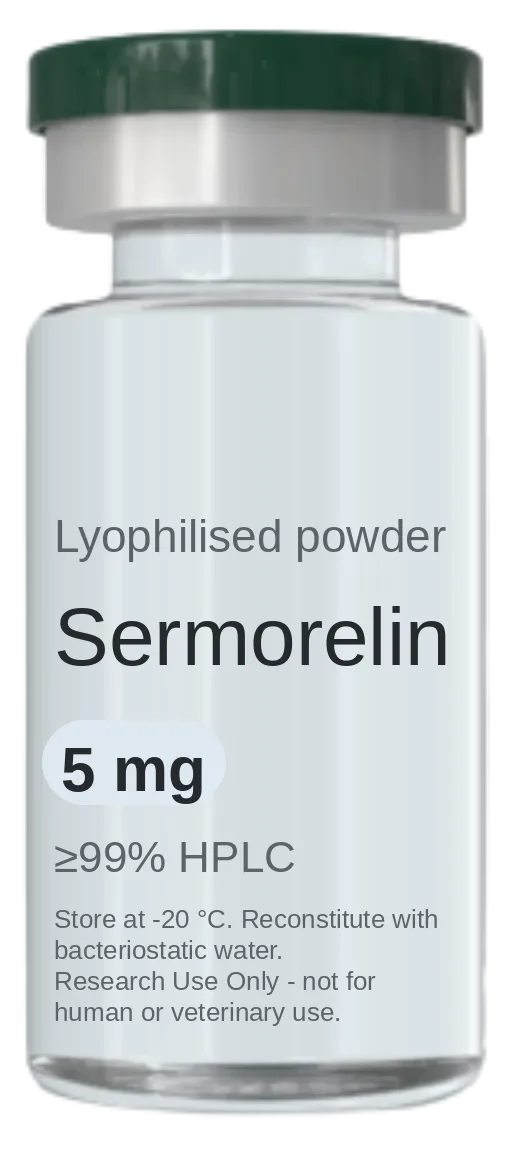
Sermorelin
Growth hormone-releasing hormone analogue used in endocrine signalling research.
- Purity:
- ≥99% HPLC
- Sizes available:
- 5 mg – 20 mg
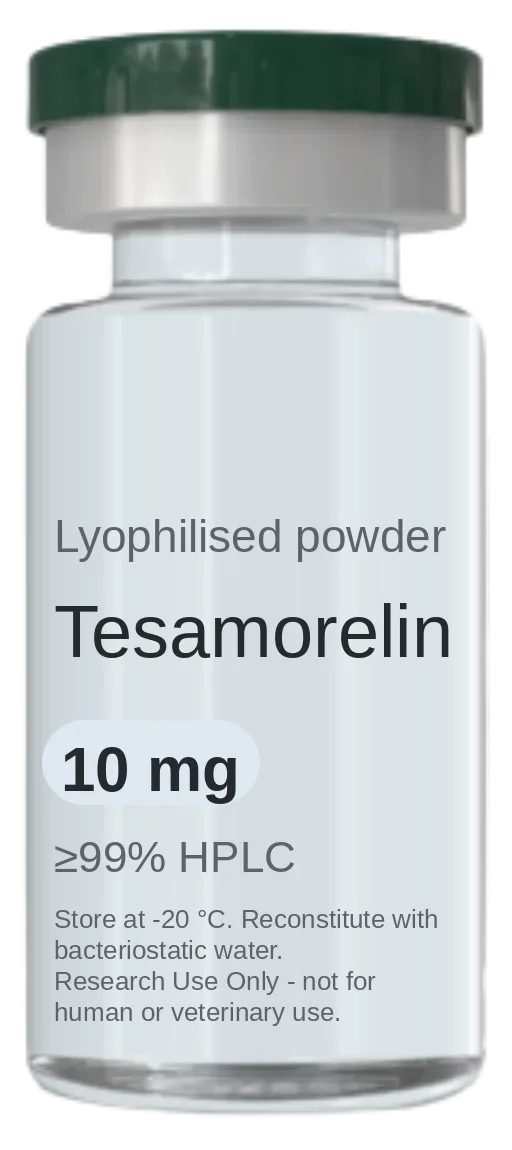
Tesamorelin
Stabilised GHRH(1-44) analogue studied in adipose tissue distribution research.
- Purity:
- ≥99% HPLC
- Sizes available:
- 10 mg – 20 mg
The consultation
One intake that settles goals, history and contraindications alongside compound, quantity, documentation and route — reviewed by a physician before anything ships.
More notes
-
Temporary Import Regime & Peptides
Temporary import covers goods that leave the country again; a research peptide shipment stays and gets used up.
-
Retatrutide vs GHK-Cu: What's the Difference
Retatrutide and GHK-Cu are different molecules studied for different reasons. Here's what each investigates and what documentation backs a batch.
-
Invoiced vs. Unbilled Peptide Suppliers
What changes when a research peptide supplier invoices the transaction versus one that takes payment and leaves no paper trail.