
Note
GHRP-6 vs Sermorelin: Key Differences
GHRP-6 and sermorelin trigger GH release through different receptors — a ghrelin mimetic versus a GHRH analog. Here's what the literature says.
GHRP-6 and sermorelin trigger growth hormone (GH) release through two different receptor pathways: GHRP-6 is a ghrelin-mimetic secretagogue acting on the GHS-R1a receptor, while sermorelin is an analog of the first 29 amino acids of endogenous GHRH acting on the GHRH receptor. They are not the same molecule and not the same mechanism, even though both converge on the same endpoint — the pituitary releasing GH.
That receptor-level difference is why the two almost always appear separately in the papers that study them, and why, when a research protocol combines them, it isn't redundancy — it's because they activate two pathways that reinforce each other.
What GHRP-6 is
GHRP-6 (Growth Hormone Releasing Peptide-6) is a synthetic hexapeptide in the GH secretagogue family. It binds the ghrelin receptor (GHS-R1a), the same receptor activated by endogenous ghrelin, the hormone associated with appetite in animal models. That's why the literature on GHRP-6 consistently describes an orexigenic effect — appetite stimulation — alongside the GH pulse, something that does not show up with GHRH analogs.
GHRP-6's mechanism doesn't depend on GHRH: it remains active even when the GHRH pathway is blocked, which is part of why researchers use it as a tool to separate the two pathways within a single experiment.
What sermorelin is
Sermorelin is a 29-amino-acid peptide, the biologically active portion of human GHRH (which has 44). It acts on the GHRH receptor in the anterior pituitary, the same pathway used by the GH-releasing hormone the hypothalamus produces. Unlike GHRP-6, sermorelin has no activity on the ghrelin receptor, and studies don't attribute the same appetite effect to it.
You can review the compound's specification on the sermorelin product page, where the purity spec quoted with the material is listed.
Mechanism: two receptors, one final hormone
The simplest way to state the difference: GHRP-6 mimics ghrelin, sermorelin mimics GHRH. Both end up at the same place — a GH pulse from the pituitary — but they get there through pathways that don't overlap:
- GHRP-6 acts on GHS-R1a, is independent of the natural GHRH cycle, and is associated with appetite stimulation in preclinical models.
- Sermorelin acts on the GHRH receptor, respects the natural pulsatile pattern of the hypothalamic-pituitary axis, and doesn't show the same orexigenic effect in the literature.
This receptor-level distinction is also the technical reason neither one replaces the other in an experimental design: if the goal of a study is to isolate the ghrelin pathway, GHRP-6 is the tool; if the goal is to isolate the GHRH pathway, sermorelin is.
Why they show up combined with other peptides in the literature
A common pattern in papers on GH secretagogues is that neither GHRP-6 nor sermorelin is studied alone: they're combined with a long-acting GHRH analog, such as CJC-1295 without DAC, to sustain the GH pulse over time rather than produce a single spike. The logic is the same one that separates GHRP-6 from sermorelin in the first place: a long-acting GHRH analog covers the sustained pathway, and the secretagogue covers the acute pulse through the ghrelin pathway.
You can review the CJC-1295 no DAC page for Argentina, the analog most frequently cited alongside secretagogues in this type of experimental design, and material is quoted to Argentine destinations for the same class of research programs — see the Argentina page for what else is quoted to the country.
How batch purity gets documented
Any comparison between two research peptides is meaningless if what's actually in the vial isn't known. The correct way to verify it is a certificate of analysis (CoA) issued by an independent laboratory, stating the method used — typically HPLC — and the purity result for that specific batch, not a generic catalog figure.
The quality page explains how to read a certificate of analysis and what to look for before accepting any purity figure as valid. Material quoted by PeptoClinic is specified at a minimum purity of 99% by HPLC; the rest of the research peptide catalog is on the catalog page.
Research use only
GHRP-6 and sermorelin, like every compound on this site, are supplied exclusively for laboratory research (Research Use Only). They are not approved for human or veterinary use, are not drugs or supplements, and none of the statements on this page have been evaluated by the FDA, ANMAT or any equivalent authority. Nothing here is dosing guidance, an administration route or a protocol: it's a description of mechanisms of action as they appear documented in the scientific literature.
Frequently asked questions
Do GHRP-6 and sermorelin do the same thing?
No. Both end in a GH pulse from the pituitary, but they get there through different receptors: GHRP-6 activates the ghrelin receptor (GHS-R1a) and sermorelin activates the GHRH receptor. They're complementary mechanisms, not interchangeable ones.
Why is GHRP-6 associated with appetite and sermorelin isn't?
Because GHRP-6 activates the same receptor used by endogenous ghrelin, the hormone that regulates appetite in animal models, in addition to stimulating GH. Sermorelin has no activity on that receptor, so the literature doesn't associate it with the same effect.
Why do papers combine them with CJC-1295?
Because a long-acting GHRH analog like CJC-1295 without DAC sustains the GH pulse over time, while the secretagogue contributes the acute spike through the ghrelin pathway. They're studied together precisely because they don't overlap.
Which of the two has higher purity?
That isn't defined by the peptide's name but by the certificate of analysis for each specific batch. Purity is verified batch by batch with a report from an independent laboratory, never with a generic catalog figure.
Is sermorelin the same as natural GHRH?
It's a synthetic analog of the active portion of human GHRH: the first 29 of its 44 amino acids. It retains the biological activity on the GHRH receptor described in the literature for the full hormone.
Does this material ship with documentation for import into Argentina?
Yes, material is quoted to Argentine destinations with import documentation prepared as laboratory reference material, not as a consumer product.
Can I request a certificate of analysis before shipping is quoted?
The quoting process includes review of the compound, purity specification and batch documentation before a shipment is confirmed. The quality page explains what information a certificate of analysis carries and how to read it.
Are GHRP-6 and sermorelin approved for human use?
No. All material in this catalog is supplied exclusively for laboratory research (RUO), without approval for human or veterinary use and without evaluation by the FDA, ANMAT or any equivalent regulatory authority.
Compounds mentioned
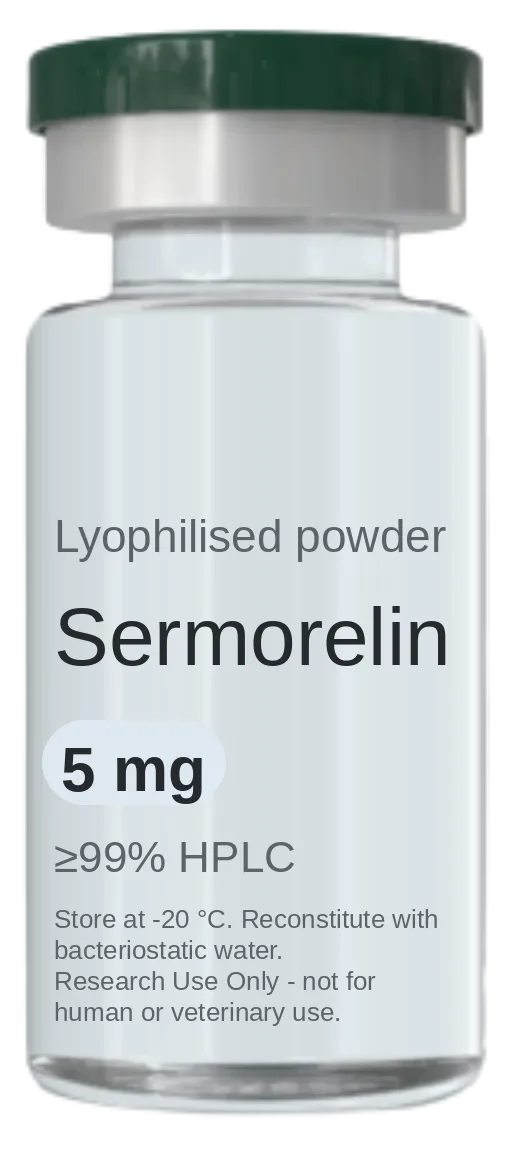
Sermorelin
Growth hormone-releasing hormone analogue used in endocrine signalling research.
- Purity:
- ≥99% HPLC
- Sizes available:
- 5 mg – 20 mg
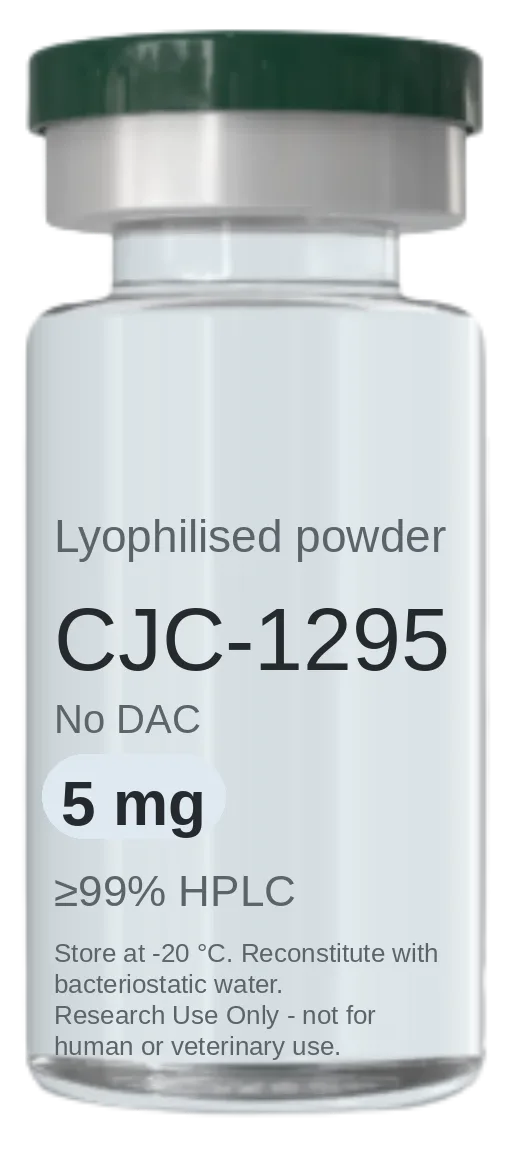
CJC-1295 (sin DAC)
Modified GRF(1-29) tetrasubstituted analogue without drug affinity complex.
- Purity:
- ≥99% HPLC
- Sizes available:
- 5 mg – 20 mg
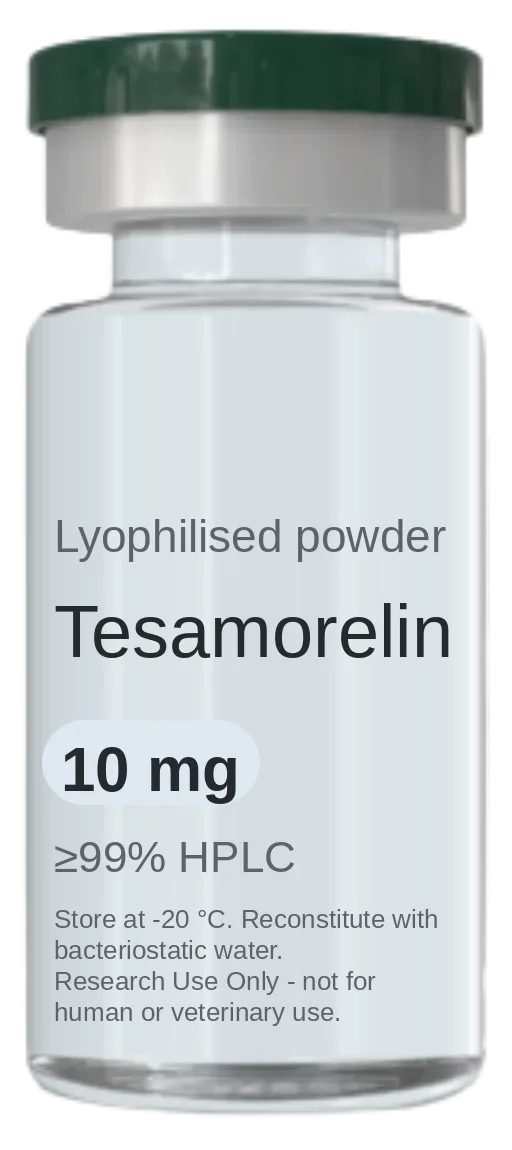
Tesamorelin
Stabilised GHRH(1-44) analogue studied in adipose tissue distribution research.
- Purity:
- ≥99% HPLC
- Sizes available:
- 10 mg – 20 mg
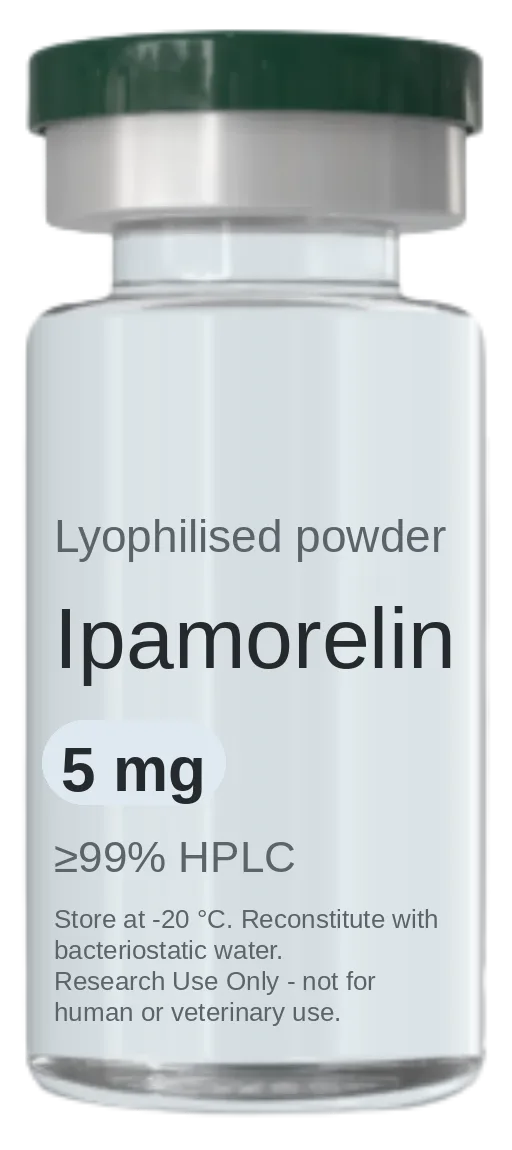
Ipamorelin
Selective ghrelin receptor (GHS-R1a) agonist pentapeptide.
- Purity:
- ≥99% HPLC
- Sizes available:
- 5 mg – 20 mg
The consultation
One intake that settles goals, history and contraindications alongside compound, quantity, documentation and route — reviewed by a physician before anything ships.
More notes
-
Temporary Import Regime & Peptides
Temporary import covers goods that leave the country again; a research peptide shipment stays and gets used up.
-
Retatrutide vs GHK-Cu: What's the Difference
Retatrutide and GHK-Cu are different molecules studied for different reasons. Here's what each investigates and what documentation backs a batch.
-
Invoiced vs. Unbilled Peptide Suppliers
What changes when a research peptide supplier invoices the transaction versus one that takes payment and leaves no paper trail.