
Note
GHRP-6: What It Is and How It Works
GHRP-6 is a synthetic hexapeptide that binds the GHS-R1a receptor and stimulates growth hormone release from the anterior pituitary.
GHRP-6 — Growth Hormone Releasing Peptide-6 — is a synthetic hexapeptide that binds the GHS-R1a receptor, also known as the ghrelin receptor, and stimulates the release of growth hormone from the anterior pituitary. Its six-amino-acid sequence is His-D-Trp-Ala-Trp-D-Phe-Lys-NH₂, molecular formula C₄₆H₅₆N₁₂O₆, molecular weight approximately 873 g/mol. Cyril Bowers's group synthesized it in the early 1980s, and it became one of the most studied peptide secretagogues in experimental endocrinology over the following four decades.
The chemical structure of GHRP-6
The numeral in the name is direct: the peptide has six amino acids. Two of those six residues are in the D-configuration — the mirror-image, non-natural form: D-Trp at position 2 and D-Phe at position 5. Incorporating D-amino acids into a synthetic peptide is a deliberate design choice rather than an artifact of the synthesis. Proteases — the enzymes responsible for breaking down peptide chains — degrade D-amino acids more slowly than their naturally occurring L-counterparts. That resistance extends the compound's half-life in experimental biological systems, making GHRP-6 a more tractable research tool than a peptide of equivalent length composed entirely of natural residues.
The carboxyl terminus carries an amide group (NH₂) rather than a free carboxylic acid. C-terminal amidation is a second stability-enhancing modification: it further reduces metabolic degradation in experimental models. Both the D-amino acid substitutions and the C-terminal amide are features of design, not incidental consequences of the synthesis route.
The GHS-R1a receptor
For years, researchers knew that synthetic secretagogues like GHRP-6 acted on a specific receptor, but its molecular identity remained unresolved. In 1996, Andrew Howard and colleagues at Merck cloned and identified GHS-R1a — Growth Hormone Secretagogue Receptor type 1a. The work was published in *Science* and established the molecular framework for understanding how synthetic secretagogues function (Howard AD et al., Science, 1996, PMID 8895091).
GHS-R1a is a G-protein-coupled receptor expressed primarily in two tissues: the somatotrophs of the anterior pituitary — the cells that produce and release GH — and in hypothalamic neurons. When GHRP-6 binds the receptor, it activates intracellular calcium mobilization and protein kinase C. Those signaling cascades drive exocytosis of GH-containing vesicles.
Three years after GHS-R1a was identified, Kojima and colleagues identified ghrelin — an acylated peptide produced predominantly in the stomach — as the endogenous natural ligand for that same receptor (Kojima M et al., Nature, 1999, PMID 10604470). That finding changed how the GHRP-6 literature was read: the synthetic peptide acts on the same receptor as the endogenous hormone that signals hunger and regulates energy balance.
How GHRP-6 stimulates growth hormone release
The published literature describes two complementary pathways for GHRP-6's action on the GH axis:
- Direct pituitary action: GHRP-6 binds GHS-R1a on somatotrophs and triggers GH secretion independently, without requiring concurrent hypothalamic input.
- Hypothalamic action: GHRP-6 increases GHRH release from the hypothalamus and simultaneously suppresses somatostatin, the endogenous inhibitor of GH secretion. Both effects together amplify the resulting GH pulse.
The combination of these two pathways produces GH pulses of greater amplitude than those observed with GHRH alone under equivalent experimental conditions. That characteristic led multiple research groups to investigate co-administration of GHRP-6 with GHRH analogues in animal models and in endocrine physiology studies in healthy volunteers, aiming to characterize the interaction between the two stimulatory pathways.
GHRP-6 and ghrelin: the same receptor, two molecules
GHRP-6 was developed more than fifteen years before ghrelin was discovered. The shared receptor — confirmed in 1999 — turned GHRP-6 into a reference tool for investigating the ghrelin/GHS-R1a axis, a system whose biology extends well beyond GH secretion.
Ghrelin regulates gastric emptying, modulates reward circuitry and energy homeostasis signaling, and has documented effects in cardiovascular stress models. Because GHRP-6 activates the same receptor, it has also been studied in the context of those secondary functions. Most work aimed at isolating those effects has used ghrelin itself or more selective analogues, since they separate the mechanisms more cleanly, but GHRP-6 remains the standard reference for GHS-R1a agonism in the broad sense.
One of the most consistently reproduced effects of GHRP-6 in animal models is appetite stimulation. Activation of GHS-R1a in those models produces a reliable increase in food intake — the same orexigenic response as endogenous ghrelin — confirming that both molecules engage the same downstream signaling system.
Comparison with other secretagogues and GHRH analogues
GHRP-6 is not the only research compound that acts on GHS-R1a. Ipamorelin is another secretagogue in the same family, with a different selectivity profile. Published studies show that ipamorelin stimulates GH secretion without the effects on cortisol, prolactin, and ACTH that are recorded with GHRP-6. Researchers designing experiments that aim to isolate the effect on GH tend to prefer ipamorelin for that purpose; GHRP-6 is used when the interest lies in GHS-R1a agonism more broadly.
Sermorelin and CJC-1295 without DAC belong to a different class: they are GHRH analogues and act through the GHRH receptor, not GHS-R1a. Research designs that seek a more pronounced stimulation of GH secretion frequently combine a GHRP with a GHRH analogue. The two pathways are synergistic — a GHRP amplifies the response to GHRH and vice versa — enabling researchers to study the interaction between the two stimulatory systems under controlled conditions.
Laboratory research use only
The GHRP-6 supplied by PeptoClinic is Research Use Only (RUO) material, intended for in vitro synthesis and laboratory research. It is not a medicine, not a dietary supplement, and has not been evaluated or approved by any regulatory authority — including the FDA, ANMAT, or any equivalent — for use in humans or animals.
PeptoClinic does not provide administration protocols, dosing guidance, or clinical use instructions. Requests that involve guidance for human use are declined.
Every lot ships with the certificate of analysis from the independent analytical laboratory that verified the compound's purity and identity. The purity specification for research peptides in the PeptoClinic catalogue is ≥99% by HPLC. Details of the documentation and verification process are on the quality page.
Requesting a quote for GHRP-6
PeptoClinic does not publish prices. The process begins when a researcher describes the compound, the required purity specification, the quantity, and the destination. The technical team reviews the logistics route and the available documentation and returns a written quote, normally within one business day. PeptoClinic ships to destinations across the Americas; dispatch routing and customs documentation details are on the shipping page.
Frequently asked questions
What does the number six in GHRP-6 mean?
The numeral indicates that the peptide is composed of six amino acids. The full sequence is His-D-Trp-Ala-Trp-D-Phe-Lys-NH₂. Other members of the same family carry similar designations — GHRP-2 also has six residues but a different sequence and a distinct activity profile in published models.
What is the difference between GHRP-6 and ipamorelin?
Both act on the GHS-R1a receptor and stimulate GH release. The difference is selectivity: ipamorelin does not produce the effects on cortisol, prolactin, and ACTH that are documented with GHRP-6. Researchers who need to isolate the effect on GH in an experimental design tend to prefer ipamorelin for that purpose.
Who identified the receptor that GHRP-6 acts on?
GHS-R1a was cloned and identified by Howard AD and colleagues in a paper published in *Science* in 1996 (PMID 8895091). Before that work, researchers knew synthetic secretagogues like GHRP-6 acted on a specific receptor, but its molecular identity had not been established.
Why does GHRP-6 stimulate appetite?
GHRP-6 acts on GHS-R1a, which is also the receptor for ghrelin — the endogenous hormone that signals hunger to the central nervous system. By activating that receptor, GHRP-6 reproduces part of the orexigenic effect of ghrelin. In animal models, increased food intake is one of the most consistently documented effects of GHS-R1a agonists.
How does GHRP-6 differ from sermorelin or CJC-1295 without DAC?
The mechanisms are entirely different. GHRP-6 acts on GHS-R1a. Sermorelin and CJC-1295 without DAC are GHRH analogues and act through the GHRH receptor. Both pathways stimulate GH secretion through separate routes, and research designs seeking a more pronounced stimulatory effect frequently combine them because the effects are synergistic.
Is GHRP-6 approved for use in humans?
No. GHRP-6 carries no approval from any regulatory authority for use in humans or animals. It is a research compound supplied by PeptoClinic exclusively as RUO material for laboratory use. It is not a medicine and is not available as one in any market.
What purity specification does PeptoClinic's GHRP-6 meet?
The purity specification for research peptides in the PeptoClinic catalogue is ≥99% by HPLC. An independent analytical laboratory performs the verification, and the results accompany each lot in the corresponding certificate of analysis.
How does a researcher request a quote for GHRP-6?
No price is published. The process is to send an inquiry to [email protected] describing the compound, the required purity specification, the quantity, and the destination. PeptoClinic's technical team reviews the logistics route and available documentation and returns a written quote, normally within one business day.
Compounds mentioned
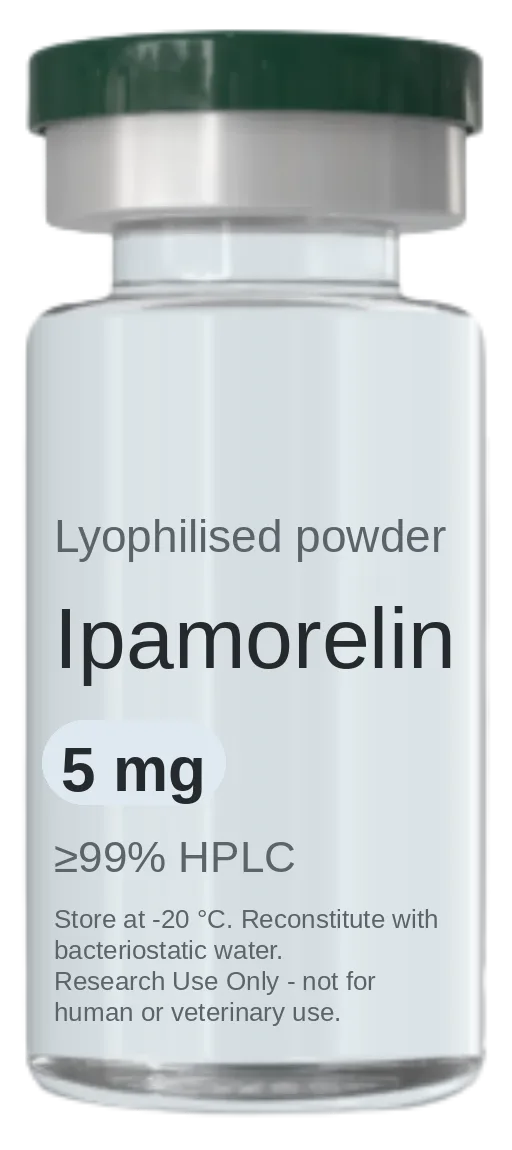
Ipamorelin
Selective ghrelin receptor (GHS-R1a) agonist pentapeptide.
- Purity:
- ≥99% HPLC
- Sizes available:
- 5 mg – 20 mg
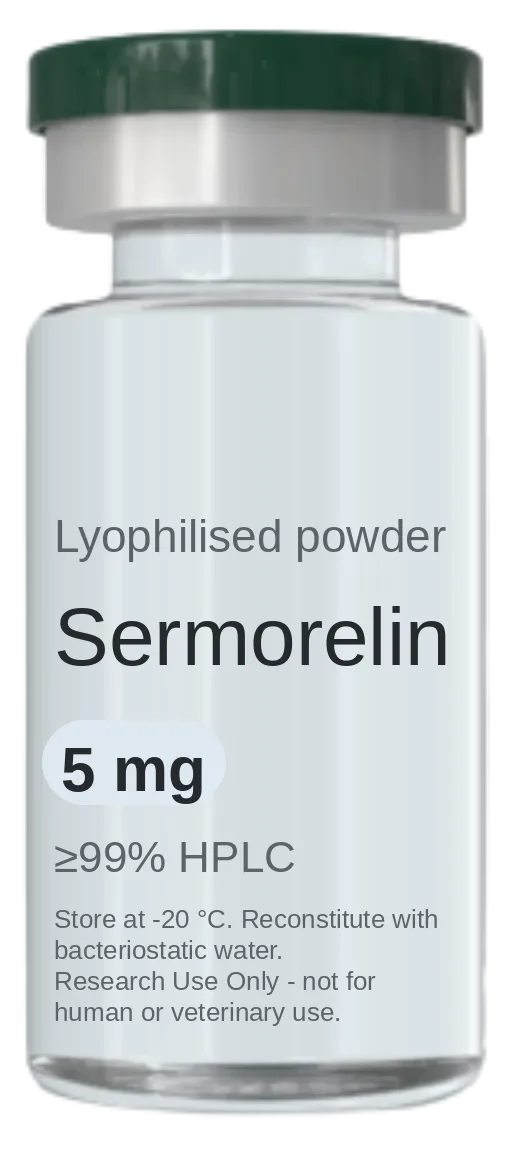
Sermorelin
Growth hormone-releasing hormone analogue used in endocrine signalling research.
- Purity:
- ≥99% HPLC
- Sizes available:
- 5 mg – 20 mg
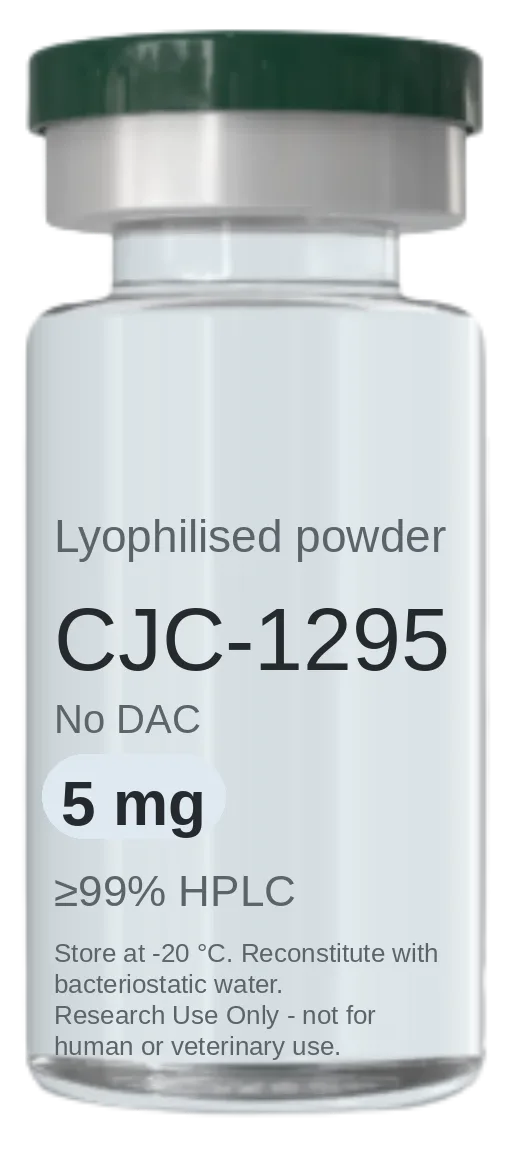
CJC-1295 (sin DAC)
Modified GRF(1-29) tetrasubstituted analogue without drug affinity complex.
- Purity:
- ≥99% HPLC
- Sizes available:
- 5 mg – 20 mg
The consultation
One intake that settles goals, history and contraindications alongside compound, quantity, documentation and route — reviewed by a physician before anything ships.
More notes
-
No Certificate of Analysis, No Peptides
What it means when a research peptide supplier can't produce the batch-specific certificate of analysis, and why that gap alone is disqualifying.
-
Bonded Warehouse Deadline Before Abandonment
Argentine customs gives importers roughly 90 days to clear research peptides from bonded storage before the lot is declared abandoned.
-
What Is Argentina's Statistics Fee?
Argentina's statistics fee adds to the cost of importing a research peptide: what it taxes, how it's calculated, and what paperwork matters.