
Note
Bonded Warehouse Deadline Before Abandonment
Argentine customs gives importers roughly 90 days to clear research peptides from bonded storage before the lot is declared abandoned.
Argentine customs generally allows 90 calendar days from the date a shipment enters a bonded warehouse (*depósito fiscal*) for the importer to request its final customs destination. That window can be extended by another 90 days if there is a justified reason and the extension is filed before the original deadline runs out. If nobody requests and completes that destination within those periods, the lot falls into *rezago* — the status Argentina's Customs Code (Ley 22.415) uses for abandoned goods — and it passes to the disposal of the Dirección General de Aduanas, which can auction it, destroy it, or donate it depending on the case.
That rule applies to a research peptide exactly as it applies to any other merchandise: the law has no special regime for laboratory material. What changes from product to product is the documentation needed to get customs to authorize the destination in time, and that is where most of the available days get lost.
What a bonded warehouse is and why a peptide passes through one
When a shipment arrives in Argentina by air or sea, it does not go straight to the importer. It first sits in temporary storage inside the customs primary zone — the airport or the port terminal — and from there moves to a bonded storage facility, a licensed site where the goods wait while their customs destination is processed. A bonded warehouse is not a red flag and not a sign something went wrong; it is the ordinary administrative step between "arrived in the country" and "in the importer's hands."
PeptoClinic prepares the import file for every quote shipped to Argentina as laboratory reference material for research use, not as a consumer product. That distinction matters because it determines which tariff classification and which supporting documents are used to request the destination, and that, in turn, determines how much of the 90-day window the paperwork actually consumes.
How much time there really is before a lot is declared abandoned
The general 90-calendar-day period starts running from the date the goods physically enter the bonded facility, not from the date the importer learns they arrived. That detail is where most of the surprises come from: if the arrival notice is slow to circulate, or if the customs broker only opens the file sixty days in, there may be only thirty real days of margin left, not ninety.
The additional 90-day extension is not automatic. It has to be requested before the original deadline expires, with a valid justification — for example, that a pending step with a regulatory agency has not yet been completed — and customs can reject it if the request is considered unfounded. Once the deadlines pass, with or without an extension, the goods fall into *rezago* without any further notice being required: the expiration of the period is itself what triggers the abandonment status.
What happens if the deadline passes and nobody retrieves the lot
Once goods are declared in *rezago*, they pass to the disposal of the Dirección General de Aduanas. In practice, customs publishes periodic listings of goods in that status and gives an additional window for the importer to retrieve them by paying the corresponding charges before the process moves forward. After that window closes, the outcome depends on the type of goods: public auction, destruction, or donation to a state agency, as set out in the Customs Code for each scenario.
For a lot of lyophilized research peptide in sealed vials, brokers generally see destruction rather than auction as the more likely outcome, since there is no formal secondary market to resell it through. That depends on the specific case, though, and is worth confirming with the broker handling the file rather than assuming either outcome in advance.
Is the deadline the same for a courier shipment as for a standard customs clearance?
Not necessarily. The 90-day bonded storage regime described above applies to standard import clearance. Shipments that arrive by international mail or courier — the channel most small laboratory-material orders use — are usually processed under a simplified postal and international shipment regime, which carries its own administrative deadlines, generally shorter than the 90 days of bonded warehouse storage, before the parcel becomes available for pickup or falls into the equivalent of abandonment.
The way to know which of the two regimes applies to a given shipment is to look at the airway bill and the entry channel the carrier used, not the type of merchandise inside it. For that reason PeptoClinic leaves that verification to the broker or courier handling each specific clearance rather than quoting a single deadline for every case.
What documentation speeds up release before the clock runs out
The destination request is delayed, almost always, by a missing document rather than by customs itself. For a research peptide, the documents a broker usually needs are the commercial invoice, the bill of lading or airway bill, and documentation confirming the material is intended exclusively for laboratory research use (RUO), not for human or veterinary consumption.
Every PeptoClinic quote includes the batch's certificate of analysis — the independent laboratory document backing the stated purity — alongside the invoice, so the broker has the complete file assembled from the day the lot enters storage, without having to chase paperwork mid-process. The quality page explains how to read those certificates from Janoshik Analytical, and the shipping page explains how each lot physically travels.
Compounds where this question comes up most often
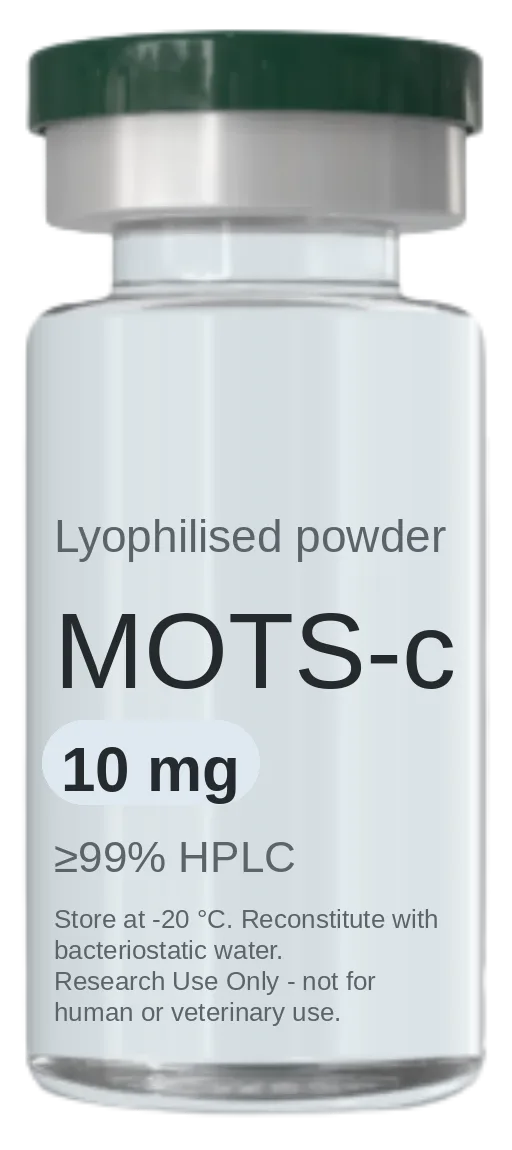
Bonded storage deadlines come up most frequently with higher-volume lots or with compounds that see the most import demand, such as Retatrutide, BPC-157, MOTS-c, and GHK-Cu. The questions are the same regardless of the compound: when did the lot enter storage, and is the paperwork complete before that date matters.
Laboratory research use only
All material PeptoClinic supplies is strictly for research use (Research Use Only — RUO): laboratory and in vitro use. None of the catalogue is a medicine, a supplement, or a food, and none of it is approved for human or veterinary consumption, diagnosis, or treatment. No statement on this site has been evaluated by ANMAT, the FDA, or any equivalent authority. Requests for human-use protocols are declined.
Frequently asked questions
From what date does the 90-day period start counting?
It starts counting from the date the goods physically enter the bonded storage facility, not from the date the importer receives an arrival notice, and not from the shipment date at origin.
Can I request the 90-day extension myself, or does a broker have to file it?
Argentina's Customs Code requires that customs destinations be processed through a licensed customs broker in most cases, so the extension request is also filed by the broker rather than directly by the importer.
If my lot falls into *rezago*, do I lose it automatically?
Not immediately. Customs usually gives an additional window to retrieve the goods by paying the corresponding charges before moving ahead with auction, destruction, or donation, but that window is not guaranteed by law to any fixed length, so it is worth acting as soon as the abandonment status is detected.
Does the certificate of analysis actually help with the customs process?
Yes. It is part of the documentation that supports the claim that the goods are reference material for research rather than a consumer product, which makes it easier for the broker to justify the requested destination within the deadline.
Do small courier shipments carry the same abandonment risk as a large clearance?
They carry an equivalent risk under a different regime, with administrative deadlines specific to postal and international shipments, generally shorter than the 90 days that apply to bonded warehouse storage.
What happens if the 90-day extension request gets rejected?
If customs rejects the extension, the original deadline keeps running, and once it expires without a completed destination request, the goods fall into *rezago* exactly as if the extension had never been requested.
Does PeptoClinic handle the customs clearance itself?
PeptoClinic prepares the documentation for each lot — invoice, certificate of analysis, and the research-use reference — so that whichever customs broker the importer chooses has the complete file ready from the first day the lot sits in storage.
Where can I confirm the exact deadline for my specific shipment?
The broker handling the file can confirm it by reviewing the shipment directly, since the applicable deadline depends on the entry channel — standard clearance or postal shipment regime — and on whether an extension has already run on that same file.
Compounds mentioned
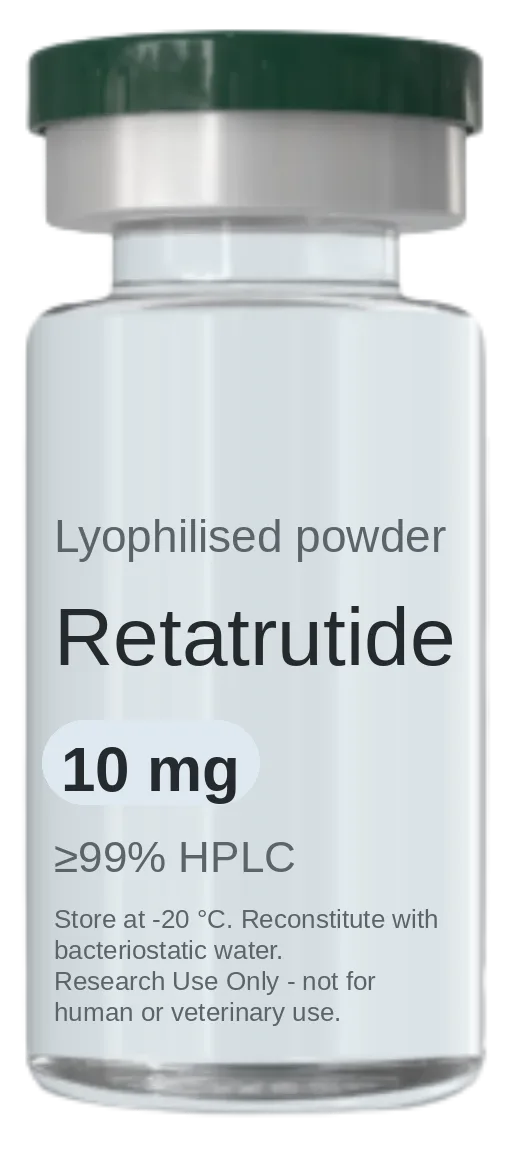
Retatrutide
Triple-agonist metabolic research peptide targeting GLP-1, GIP and glucagon receptors.
- Purity:
- ≥99% HPLC
- Sizes available:
- 10 mg
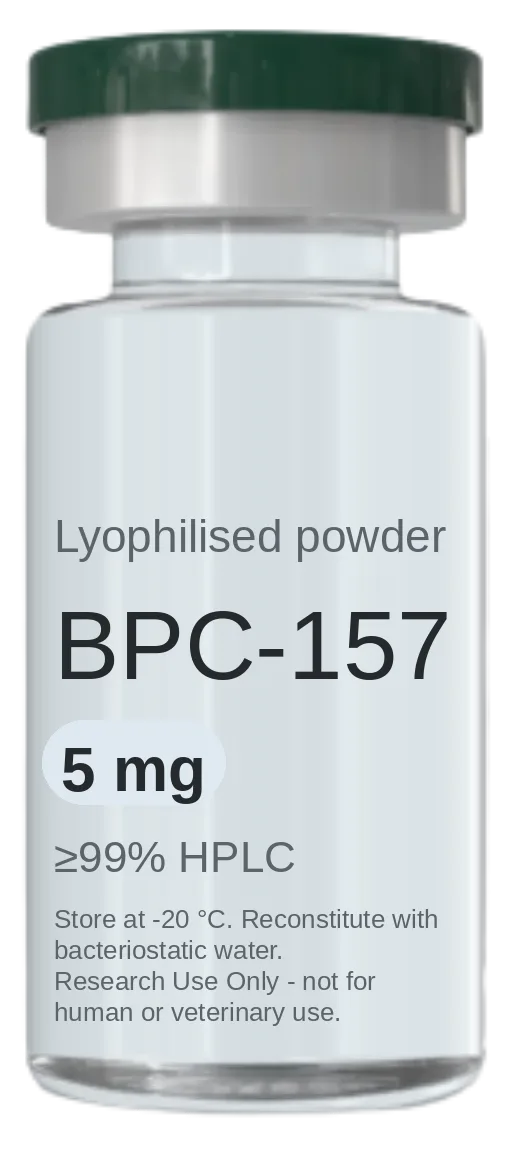
BPC-157 + TB-500
BPC-157 and TB-500 in a single vial — the pairing most studied together in tissue-repair research.
- Purity:
- ≥99% HPLC
- Sizes available:
- 5 mg + 5 mg
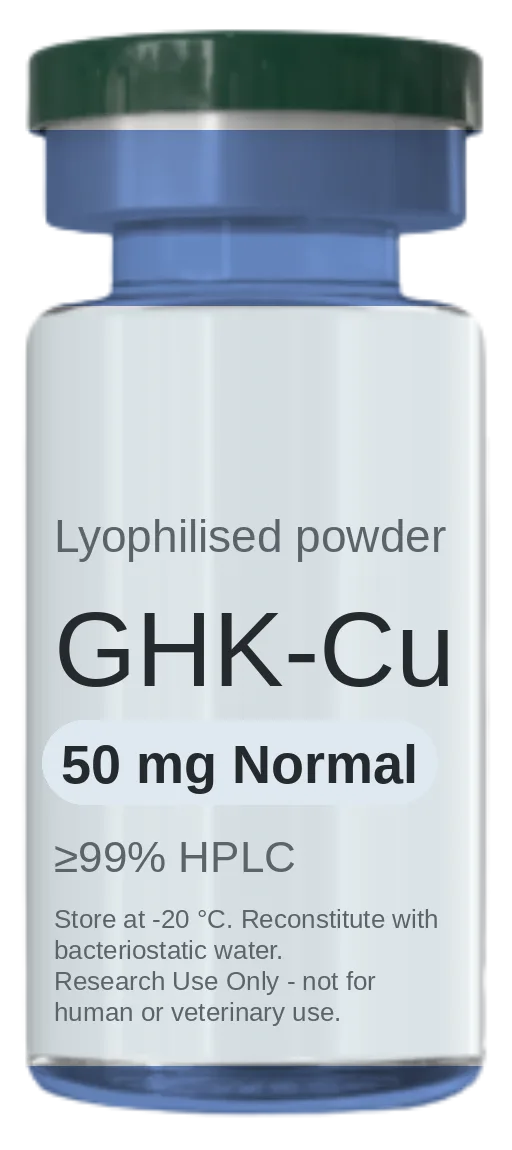
GHK-Cu (Copper Peptide)
Copper-binding tripeptide studied in extracellular matrix and dermal research models.
- Purity:
- ≥99% HPLC
- Sizes available:
- 50 mg Normal – 50 mg Plus
The consultation
One intake that settles goals, history and contraindications alongside compound, quantity, documentation and route — reviewed by a physician before anything ships.
More notes
-
What Is Argentina's Statistics Fee?
Argentina's statistics fee adds to the cost of importing a research peptide: what it taxes, how it's calculated, and what paperwork matters.
-
Thymosin Alpha 1 vs BPC-157: Differences
Thymosin Alpha 1 and BPC-157 study different pathways — immune modulation vs tissue repair. RUO material with a verifiable COA.
-
USD Limit for Simplified Courier to Argentina
Argentina's simplified courier regime covers shipments up to USD 3,000 FOB; above that, formal customs clearance is required.