
Note
What Is Argentina's Statistics Fee?
Argentina's statistics fee adds to the cost of importing a research peptide: what it taxes, how it's calculated, and what paperwork matters.
The statistics fee (tasa de estadística) is a customs charge that Argentina's customs authority applies to the customs value of imported goods, on top of import duties and VAT at the moment of clearance. It is not a tax on a specific kind of product — it does not care whether the shipment is a research peptide, a spare part or a book — it is a percentage charged against the declared value of the transaction, normally the CIF value (cost, insurance and freight). For anyone importing a research peptide into Argentina, this means the landed cost is never just the supplier's quoted price: it is that price plus what customs charges to process the entry.
What exactly does it tax?
The statistics fee pays for the statistical service Argentina's customs directorate performs when it registers an import or export operation. It has existed since Law 23,664 and has been revised by executive decree repeatedly over the last three decades: the rate has changed, operations have had dollar caps applied to them, and lists of exempt goods (capital goods, industrial inputs, and at various points IT and telecommunications products) have come and gone.
That history of change is the important fact for anyone pricing a shipment today: the rate and the exemptions are set by executive decree, and they have been revised more than once in recent years as part of shifting trade policy. It is not a fixed number worth memorizing and reusing a year later. The authoritative, current source is always Argentina's customs authority (formerly AFIP, now ARCA) and the text of the decree in force — never a blog, including this one.
What value is it calculated on?
On the customs value of the goods, which in most cases is the CIF value: what the product cost plus international insurance and freight to the Argentine border. It is not calculated on a catalogue list price, nor on whatever figure a buyer's card statement shows if that includes other items — it is calculated on the value declared in the import paperwork, which has to match the supplier's commercial invoice.
That has a direct consequence for any international shipment: if the declared value is wrong, the calculation of the fee — and of everything else charged alongside it — is also wrong, and that is the first thing a licensed customs broker, or customs itself, checks when verifying a shipment.
Does a research peptide pay the same as any other goods?
Yes, in the sense that the statistics fee does not distinguish by a product's declared use but by its tariff classification (the position in the Mercosur Common Nomenclature, NCM) and by the import regime used to bring it in. A lyophilised peptide for laboratory research enters under a tariff position like any other chemical reagent or lab input, and that position is what determines whether the fee applies, whether any exemption fits, and what other charges travel with the shipment.
That is why the paperwork accompanying each lot matters as much as the material itself: the correct tariff classification, a commercial invoice with the real value, and a description of the material for what it is — a research reagent, not a consumer product — are what a broker needs to clear the shipment without delays. PeptoClinic prepares that documentation for every quote, and each lot ships with the laboratory report that analyzed the batch's purity, which makes classification easier under any inspection.
Is it paid regardless of the shipping route?
It depends on the regime. A formal definitive import — the kind a licensed customs broker files under a sworn declaration, a DJAI or whatever the current equivalent regime is — pays the statistics fee, import duties where they apply, and VAT, all calculated on the customs value. A shipment that enters under the postal or courier regime has its own treatment, with its own minimum exempt thresholds (francos) and simplified procedures that customs updates by resolution — and those thresholds and rules have also changed several times in recent years, so this is not a number to memorize without checking the resolution in force at the time of shipping.
What does not change is the underlying principle: the higher the declared value of a shipment, the closer it moves to exiting the simplified regime and requiring a formal entry with a broker, and that is exactly where the statistics fee enters fully alongside the rest of the customs charges.
What other costs stack on top of the fee?
In a formal import, the statistics fee sits alongside:
- Import duties, when the product's tariff position carries them.
- VAT, which in Argentina is collected at the moment of clearance on a base that includes the CIF value plus the charges above.
- Customs broker fees, which are not a government charge but the professional service of the person filing the import.
- International freight and insurance, which are already baked into the CIF value the other charges are calculated on.
None of these line items has a fixed figure that can describe "the cost of importing" in the abstract: each depends on the product's exact tariff position, the declared value of the specific shipment, and the regulation in force on the day the entry is filed. Anyone who needs the real number for an actual operation gets it from a licensed customs broker or from customs itself, not from a general estimate.
How does this factor into a PeptoClinic quote?
PeptoClinic quotes every order by compound, quantity and destination. PeptoClinic supplies research peptides to South American destinations, including Argentina, and the paperwork for each lot is prepared with the import process appropriate to the material's status as a laboratory reference reagent in mind. That does not remove the statistics fee or any other Argentine customs charge — those are set and collected by the Argentine state, not by the supplier — but it does avoid the most common delay, which is a misclassified declaration or a filing missing the documentation a broker needs to clear the operation.
The material travels as a lyophilised powder in a sealed vial, protected from light, with no cold chain: that is part of how the shipment is described on the shipping page, and it is also information that simplifies customs classification compared to a product that, if it traveled reconstituted in solution, would require a different description and a different handling regime.
One concrete example: retatrutide is one of the compounds with a published laboratory report, and a quote for an Argentine destination is prepared with that report attached to the lot. The same applies to other catalogue compounds such as BPC-157 or MOTS-c: tariff classification depends on the compound and its form (lyophilised vial), and the supporting documentation follows the same logic across the board.
Laboratory use only
Everything described in this article concerns material supplied strictly for Research Use Only (RUO): laboratory and in vitro use. No compound in PeptoClinic's catalogue is a medicine, a supplement or a food, none is approved for human or veterinary consumption, and none of its properties has been evaluated by ANMAT, the FDA or an equivalent authority. This article covers customs procedure, not administration, dosing or human use.
Frequently asked questions
¿La tasa de estadística es un impuesto nacional o un cargo de la Aduana?
Es un cargo que cobra la Aduana (hoy dentro de ARCA) por el servicio estadístico de registrar la operación de comercio exterior; se fija por decreto del Poder Ejecutivo y se liquida junto con el resto de los conceptos del despacho de importación, no es un impuesto provincial ni municipal.
¿Cambia según el país de origen del envío?
No por el país de origen en sí, sino por el valor declarado de la operación y por la posición arancelaria del producto. El origen puede influir en otros conceptos, como acuerdos arancelarios preferenciales según el NCM, pero la tasa de estadística se calcula sobre el valor en aduana con independencia de si el envío sale de Estados Unidos, Europa o cualquier otro origen.
¿Existen exenciones para insumos de laboratorio?
Hubo, en distintos períodos, categorías exentas definidas por decreto —bienes de capital, ciertos insumos industriales—, y esas listas se modificaron más de una vez. Si una categoría de reactivos de laboratorio está exenta en un momento dado es algo que hay que verificar contra la normativa vigente al momento del despacho, no contra lo que valía un año o dos atrás.
¿Quién liquida la tasa de estadística en la práctica?
El despachante de aduana matriculado que tramita la destinación de importación es quien liquida todos los cargos del despacho —tasa de estadística, derechos cuando corresponden, IVA— ante la Aduana, a partir del valor declarado y la clasificación arancelaria del envío.
¿El valor declarado lo define el comprador o el vendedor?
Lo define la factura comercial de la operación, que tiene que reflejar el valor real transaccionado. Declarar un valor distinto al real para pagar menos cargos es una infracción aduanera, independientemente de cuál sea la alícuota vigente de la tasa de estadística en ese momento.
¿Un envío chico paga lo mismo que uno grande en proporción?
Al ser un porcentaje sobre el valor CIF, en principio escala proporcionalmente, pero distintos regímenes (postal/courier versus destinación formal) tienen tratamientos y topes distintos según el valor del envío, así que la proporción exacta no es uniforme entre un envío de bajo valor y uno de valor alto.
¿PeptoClinic cobra la tasa de estadística como parte de la cotización?
No. La tasa de estadística y el resto de los cargos aduaneros los cobra y los fija el Estado argentino al momento del despacho de importación; la cotización de PeptoClinic corresponde al material y a la documentación que lo acompaña, y el trámite aduanero en destino corre por la vía habitual de importación en la Argentina.
¿Dónde se confirma la alícuota vigente hoy?
En el texto del decreto que la regula y en las resoluciones de ARCA (ex AFIP/Aduana) publicadas en el Boletín Oficial, o consultando directamente con un despachante de aduana matriculado — son las únicas fuentes que reflejan la normativa vigente al día de una operación concreta.
Compounds mentioned
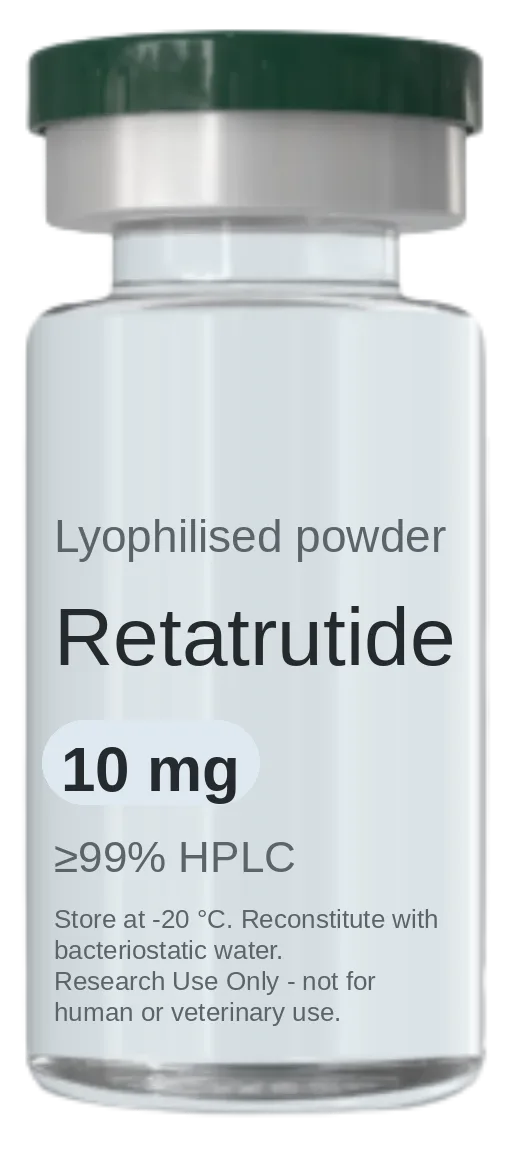
Retatrutide
Triple-agonist metabolic research peptide targeting GLP-1, GIP and glucagon receptors.
- Purity:
- ≥99% HPLC
- Sizes available:
- 10 mg
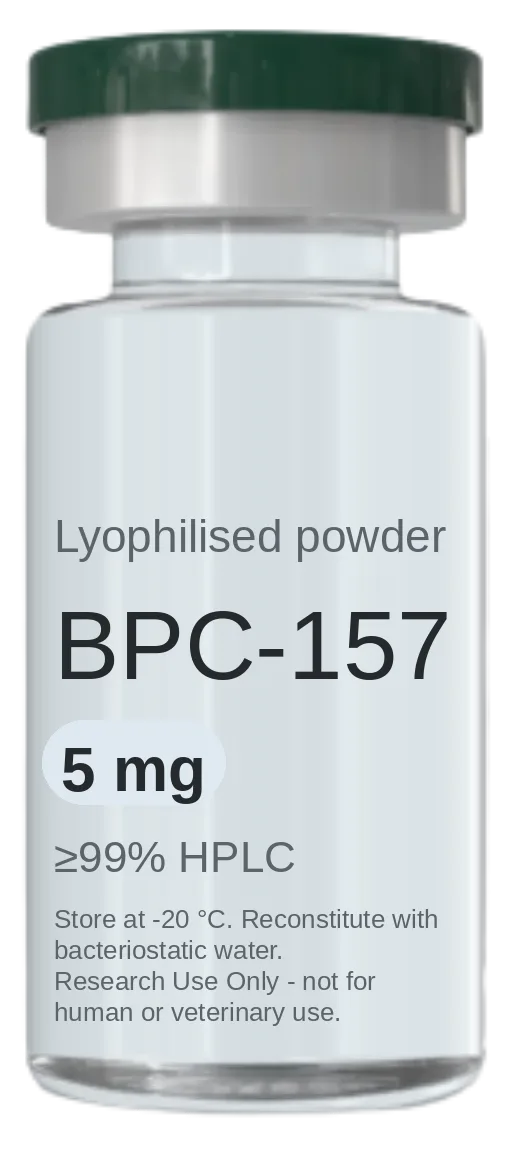
BPC-157 + TB-500
BPC-157 and TB-500 in a single vial — the pairing most studied together in tissue-repair research.
- Purity:
- ≥99% HPLC
- Sizes available:
- 5 mg + 5 mg
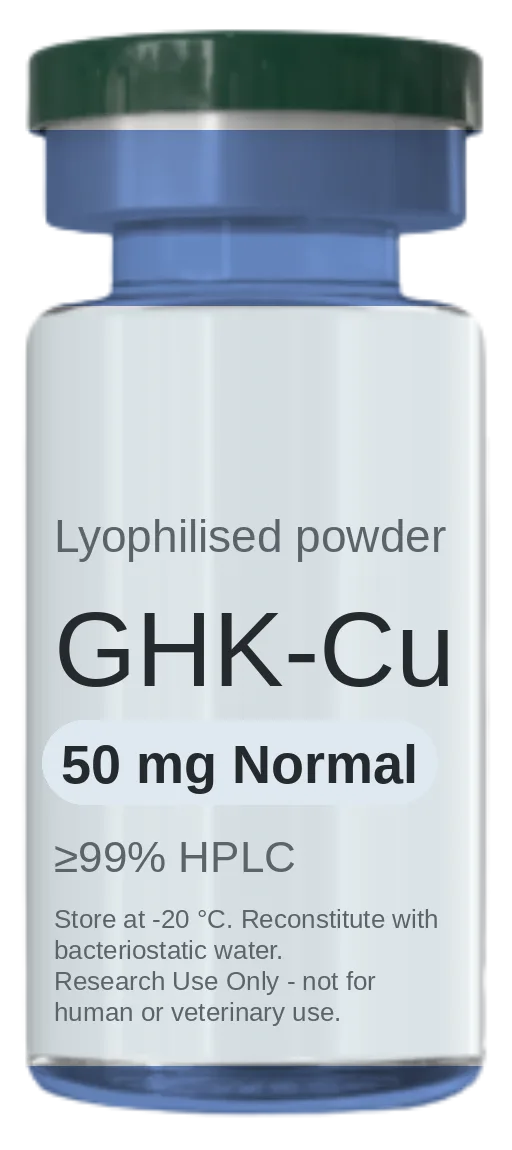
GHK-Cu (Copper Peptide)
Copper-binding tripeptide studied in extracellular matrix and dermal research models.
- Purity:
- ≥99% HPLC
- Sizes available:
- 50 mg Normal – 50 mg Plus
The consultation
One intake that settles goals, history and contraindications alongside compound, quantity, documentation and route — reviewed by a physician before anything ships.
More notes
-
Thymosin Alpha 1 vs BPC-157: Differences
Thymosin Alpha 1 and BPC-157 study different pathways — immune modulation vs tissue repair. RUO material with a verifiable COA.
-
USD Limit for Simplified Courier to Argentina
Argentina's simplified courier regime covers shipments up to USD 3,000 FOB; above that, formal customs clearance is required.
-
Peptide Shipments to Argentina: Annual Limit
What Argentina's postal shipment regime says about how many research peptide packages you can receive per year.