
Note
Hexarelin: What It Is and What Research Shows
Hexarelin is a synthetic hexapeptide that activates GHS-R1a and CD36. PeptoClinic reviews the mechanism and published endocrinology literature.
Hexarelin is a synthetic hexapeptide that acts as an agonist at the GHS-R1a receptor — the ghrelin receptor that governs growth hormone (GH) secretion — and stimulates GH release from the anterior pituitary. Its systematic name is examorelin. The sequence is His-D-2-MeTrp-Ala-Trp-D-Phe-Lys-NH2: six amino acids assembled specifically to probe the somatotropic axis in experimental models. Synthesized in the early 1990s, hexarelin generated one of the largest bodies of published data of any growth hormone-releasing peptide (GHRP) in the endocrinology literature of that decade.
Structure and Development
Hexarelin was characterized in the first half of the 1990s by researchers at the Institute of Endocrinology and Experimental Oncology of the CNR in Naples, working alongside groups at the University of Turin. The earliest papers appeared in the Journal of Clinical Endocrinology and Metabolism and in Life Sciences between 1993 and 1995 and established the framework for systematic study of the compound.
The name reflects the structure: hexa for the six amino acids, relin as a contraction of releasing, referencing growth hormone. The structural change that defines hexarelin relative to GHRP-6 — the reference GHRP of that era — is the substitution at position 2 with D-2-methyltryptophan. That modification improves metabolic stability and, according to published data, increases the potency of the GH secretion response in animal models compared to the parent compound.
Hexarelin belongs to the GHRP family alongside GHRP-2, GHRP-6, and ipamorelin. Each member differs in receptor selectivity, response potency, and the profile of documented effects in in vitro and in vivo models.
Mechanism of Action: GHS-R1a and CD36
GHS-R1a is the receptor for ghrelin, the gastric peptide that regulates appetite and GH secretion. Hexarelin activates that receptor as an agonist and triggers the downstream signaling cascade that culminates in GH release from the adenohypophysis.
Research from the 1990s documented a second activity that sets hexarelin apart from most secretagogues in its class: it also binds the CD36 receptor, a scavenger protein expressed in cardiac tissue, platelets, and macrophages. That activity is independent of the GHS-R1a axis and opened a separate line of investigation into cardiac mechanisms that did not depend on GH signaling at all.
This dual receptor activity distinguishes hexarelin from more selective peptides. Ipamorelin, for instance, shows no documented affinity for CD36. That difference has direct methodological consequences: in studies where the goal is to isolate GH-related effects, activity at a second receptor introduces confounding variables. In studies designed to probe CD36 in models of ischemia or lipid metabolism, hexarelin has no direct equivalent in the GHRP family.
What the Scientific Literature Reports
Growth Hormone and the Somatotropic Axis
The majority of published studies focus on the hypothalamic-pituitary-somatotropic axis. Trials in healthy volunteers and animal models throughout the 1990s documented GH responses consistently greater than those produced by GHRP-6 at equivalent amounts. In rat models, hexarelin generated higher GH peaks than any other GHRP studied during that period.
Receptor desensitization was a phenomenon the research analyzed in depth. Repeated administration produces a declining GH response: Torsello et al. published data in Endocrinology in 1996 on the mechanism of that attenuation in an animal model. Those findings influenced the design of later comparative studies and contributed to why ipamorelin — where desensitization proved smaller in several models — attracted sustained research interest as an alternative tool.
Hexarelin also raises IGF-1 as a secondary consequence of the GH increase, which made it useful in experimental models of somatotropic axis deficiency. The primary literature on those studies is indexed at PubMed for researchers who want to trace the original references.
Cardiovascular Research and the CD36 Receptor
Muccioli et al. reported in 2004 in the Proceedings of the National Academy of Sciences the binding of hexarelin to CD36 in rat cardiac tissue and its association with protective effects in ischemia models. The paper established that the activity was at least partly independent of the GH signal: it was documented in models where the somatotropic axis was pharmacologically blocked, which meant the cardiac signal could not be attributed solely to GH downstream effects.
The literature that followed explored the metabolic role of CD36 in fatty acid and triglyceride uptake. Hexarelin served as a selective laboratory tool to activate that receptor under controlled conditions. That body of work is published in journals including the Journal of Endocrinology and Endocrinology, accessible through PubMed.
Clinical Trials and Regulatory Status
Hexarelin was evaluated in Phase I and Phase II clinical trials primarily in Europe during the 1990s and early 2000s. Programs covered GH deficiency, aging, and ischemic cardiomyopathy. None of those trials resulted in a regulatory approval. Hexarelin is not approved by the FDA, ANMAT, or any equivalent authority for therapeutic use in humans or animals.
Comparison with Other Peptides in the Same Group
Hexarelin is the GHRP with the most potent acute GH response in the data published through the early 2000s. That potency carries a methodological cost: it elevates cortisol, prolactin, and ACTH in parallel with GH. Ipamorelin produces a GH signal with substantially less impact on those other hormonal axes, which is why it became the preferred option in studies where isolating the GH effect matters without interference from stress-axis hormones.
For studies that approach GH secretion through the GHRH pathway rather than the ghrelin receptor, CJC-1295 without DAC and sermorelin are the standard references. Both act on the GHRH receptor in the hypothalamus and carry no documented activity at CD36. The choice between a GHRP like hexarelin and a GHRH analogue depends on the research question and which variables need to be controlled.
PeptoClinic's research catalogue includes hexarelin, ipamorelin, CJC-1295 without DAC, and sermorelin as part of the secretagogue group available as research material.
For Laboratory Research Only
Hexarelin supplied by PeptoClinic to the United States, Argentina, and the other destinations on the shipping list is classified as Research Use Only (RUO): for exclusive use in in vitro or preclinical laboratory research. It is not approved by the FDA, ANMAT, or any equivalent regulatory authority for use in humans or animals. It is not a medicine, not a supplement, and must not be interpreted as either.
PeptoClinic does not write administration protocols for human use, does not advise on reconstitution for personal use, and does not respond to inquiries about clinical or veterinary application. Requests of that nature are declined.
Every lot ships with a certificate of analysis from an independent external laboratory verifying purity by HPLC. The documentation standards PeptoClinic requires for each lot are described on the quality page.
Frequently asked questions
What is hexarelin exactly?
Hexarelin is a synthetic hexapeptide in the growth hormone-releasing peptide family. Its sequence is His-D-2-MeTrp-Ala-Trp-D-Phe-Lys-NH2 and it acts as an agonist at the GHS-R1a receptor — the same receptor activated by endogenous ghrelin. Unlike most other GHRPs, hexarelin also shows documented activity at the CD36 receptor, independently of the GH axis.
What is hexarelin studied for in research?
The scientific literature examines it in two principal contexts: the somatotropic axis, where it stimulates GH and IGF-1 secretion in experimental models, and cardiovascular research mediated by the CD36 receptor. That dual receptor activity distinguishes it from more selective GHRPs and makes it a useful compound in studies designed to examine both pathways simultaneously or to compare their contributions.
How does hexarelin differ from ipamorelin?
Hexarelin produces the most potent acute GH response in published GHRP data, but it also elevates cortisol, prolactin, and ACTH. Ipamorelin has greater selectivity for GHS-R1a and generates a GH signal with less impact on those other axes. Both peptides act at GHS-R1a; only hexarelin shows documented activity at CD36.
Was hexarelin studied in human clinical trials?
Yes. It was evaluated in Phase I and Phase II trials in Europe during the 1990s and early 2000s, in populations that included GH-deficient patients, older adults, and individuals with ischemic cardiomyopathy. None of those trials led to a regulatory approval for therapeutic use in humans or animals.
What is CD36 and why is it relevant to hexarelin research?
CD36 is a scavenger receptor expressed in cardiac tissue, platelets, and macrophages. Hexarelin binds that receptor independently of the GH axis, which made it a useful tool for studying myocardial protection mechanisms and fatty acid metabolism in laboratory settings. Muccioli et al. described that binding in PNAS in 2004, and that paper remains the foundational reference for that line of investigation.
Is hexarelin approved for human use?
No. Hexarelin carries no approval from the FDA, ANMAT, or any other regulatory authority for therapeutic use in humans or animals. Its valid classification is Research Use Only, for in vitro and preclinical laboratory work under the conditions that classification requires.
What documentation ships with each hexarelin lot?
Every hexarelin lot from PeptoClinic includes a certificate of analysis issued by an independent external laboratory with HPLC purity results. What that document contains and how to verify it are explained on the quality page.
How can a research program request a hexarelin quote?
PeptoClinic quotes hexarelin as RUO material for destinations that include the United States, Argentina, and the rest of the countries on the shipping list. To receive a quote, contact [email protected] with the compound, quantity, and purity specification the program requires.
Compounds mentioned
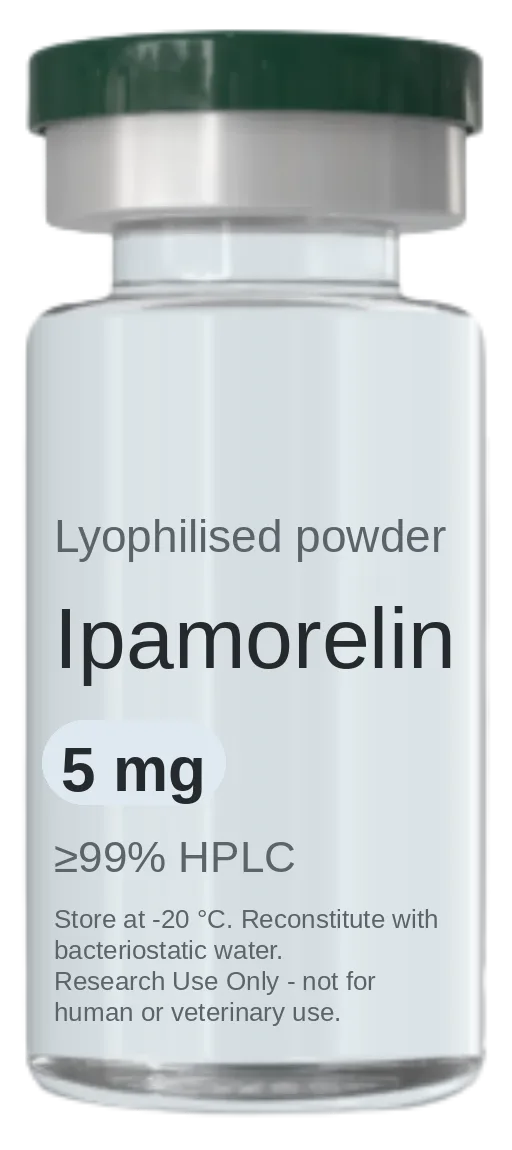
Ipamorelin
Selective ghrelin receptor (GHS-R1a) agonist pentapeptide.
- Purity:
- ≥99% HPLC
- Sizes available:
- 5 mg – 20 mg
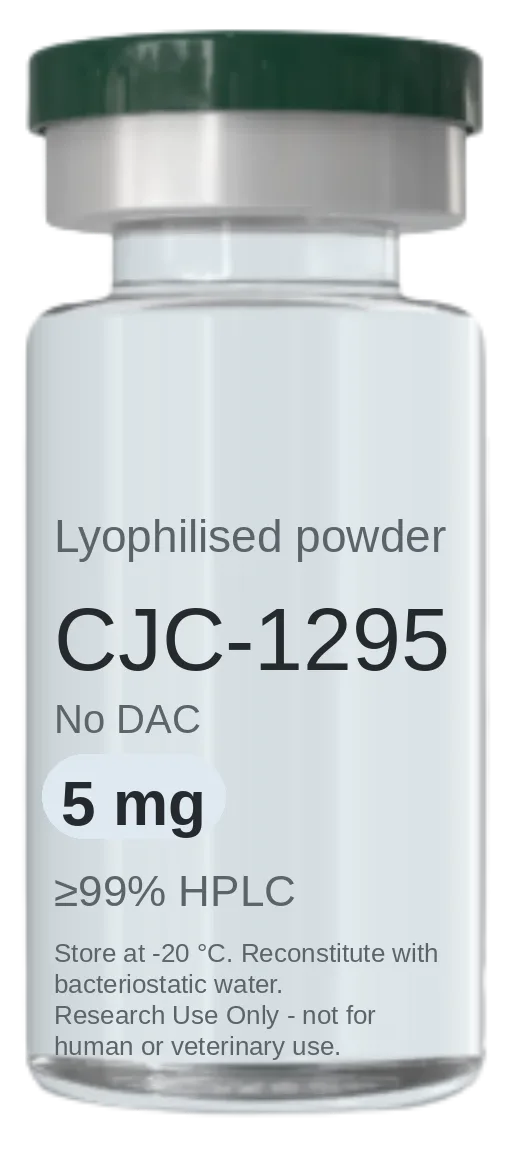
CJC-1295 (sin DAC)
Modified GRF(1-29) tetrasubstituted analogue without drug affinity complex.
- Purity:
- ≥99% HPLC
- Sizes available:
- 5 mg – 20 mg
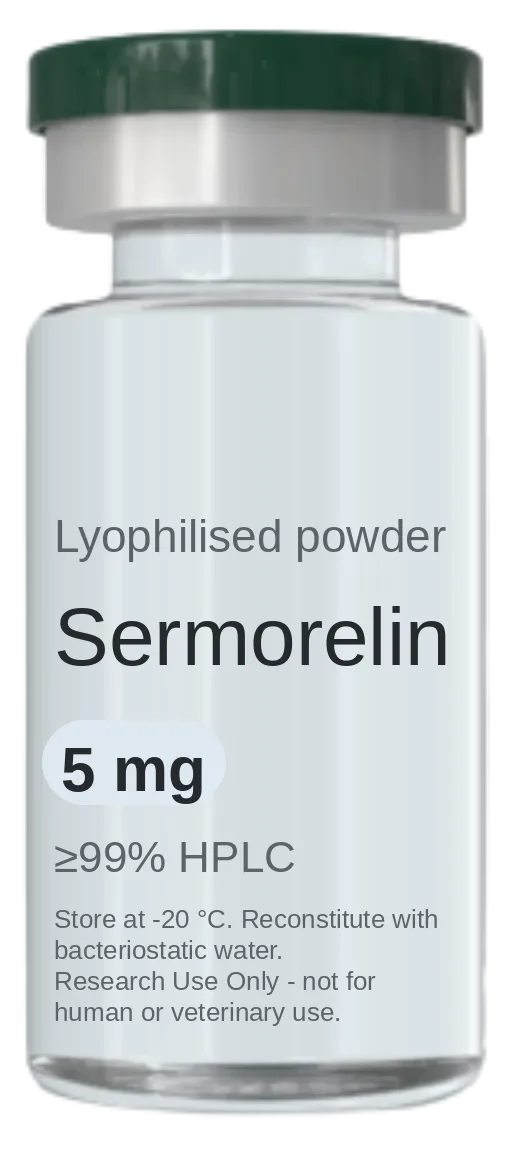
Sermorelin
Growth hormone-releasing hormone analogue used in endocrine signalling research.
- Purity:
- ≥99% HPLC
- Sizes available:
- 5 mg – 20 mg
The consultation
One intake that settles goals, history and contraindications alongside compound, quantity, documentation and route — reviewed by a physician before anything ships.
More notes
-
GHK-Cu vs Epithalon: What's the Difference
GHK-Cu and Epithalon are distinct research peptides in structure and in what the literature studies on each. Here's the difference.
-
Freight Forwarder vs Courier to Argentina
Can a freight forwarder replace a courier to import research peptides into Argentina? What changes, and what the practical answer is.
-
No One Home for Your Argentina Shipment?
What happens when a research peptide shipment to Argentina arrives at an address with no one there to sign for it.