
Note
How Long ANMAT Takes: Research Product Queries
ANMAT sets no deadline for informal queries; clinical trial protocols have a 60-business-day window, though full cycles run four to eight months.
For informal technical queries, ANMAT establishes no legal response deadline. The range reported by Argentine research institutions is thirty to ninety business days, and a significant share of informal queries receive no formal written reply at all. For formal clinical trial authorizations, Argentine regulations specify a sixty-business-day review period from the submission of a complete dossier; in practice, the full cycle runs four to eight months, because observation letters interrupt and restart that clock. The type of interaction determines everything about the expected timeline.
What ANMAT Means by a Query
Two very different types of communication arrive at ANMAT, and the distinction matters before estimating any timeline.
The first is an informal technical query: a researcher or institution writes to ask about a compound, a regulatory classification or a procedural pathway. These queries carry no statutory response deadline. ANMAT replies when operational capacity allows, and silence running several months is routine. Sending a query by email does not create a deadline obligation for the agency.
The second category covers formal procedures: clinical trial protocol authorizations, importation approvals for research materials, expanded access or compassionate use requests. These carry regulatory timelines. If ANMAT fails to respond within the statutory window, administrative remedies become available to the applicant.
When a response is needed by a known date, a formal procedure is the only path that carries an enforceable deadline.
Regulatory Timelines by Procedure Type
Clinical Trial Authorization
Argentine regulations require ANMAT to render a decision on a clinical trial protocol within sixty business days from the date of a complete submission. The practical cycle runs four to eight months for most protocols, because "complete submission" is rarely achieved on the first attempt. Each observation letter ANMAT issues suspends the clock; the clock restarts when the applicant responds. A protocol that generates two rounds of observations can translate the statutory sixty days into substantially more calendar time.
The submission channel for clinical trials in Argentina is SiGMAIC — the Sistema de Gestión y Monitoreo de Investigación Clínica — ANMAT's formal platform for that category of dossier. Attempting to manage a clinical trial authorization through informal email correspondence will not produce a binding decision.
Expanded Access and Compassionate Use
Expanded access, also called compassionate use, applies to individual patients with no available therapeutic alternative when the compound is under active investigation. With a complete individual dossier and documented urgency, the single-patient procedure can resolve in approximately twenty business days. Multi-patient expanded access programmes resemble a clinical trial in complexity and carry timelines closer to the formal trial path.
Importation for Research Purposes
Unregistered compounds may require a prior ANMAT authorization before importation, depending on how the material is classified and the declared use. When an authorized clinical trial protocol is already in place and the material is covered by it, the administrative processing can resolve in two to four weeks. Without a prior approved protocol, the same importation can take several months.
Why Many Research Materials Do Not Go Through ANMAT
ANMAT's registration process is built for medicines and therapeutic products: substances administered to patients in the context of diagnosis, treatment or prevention of disease. Law 16,463 and its regulations define that universe. Not every compound enters through that door.
Materials classified as RUO (Research Use Only) operate in a different category. They are laboratory inputs: used in in vitro studies, basic research and institutional protocols where the laboratory employs the compound as a reagent or starting material, not as a medicine administered to a patient. The pharmaceutical registration process ANMAT administers does not apply to that type of material.
That is not the same as no regulation. Any imported compound is subject to customs rules and export controls at origin. The receiving institution manages its own internal biosafety and handling protocols. But the medicine-registration pathway is a different process serving a different category of product.
The research peptides PeptoClinic Research Supply quotes for laboratory destinations in Argentina fall in this category: they are supplied as reference materials with complete technical documentation, outside the medicine-registration process.
What Documentation Accompanies a Research Material
When a laboratory receives a compound classified as RUO, what it verifies is not an ANMAT registration number. It verifies the Certificate of Analysis (CoA): the document that certifies the compound's identity, the analysed purity and the independent laboratory that performed the analysis.
PeptoClinic Research Supply's materials ship with reports from Janoshik Analytical, an independent analytical laboratory whose results are verifiable on the laboratory's own platform. Current published batches show a minimum purity of 99.669 % by HPLC.
Retatrutide available for Argentina, as one example, is covered by Janoshik task 136921, analysed on April 13, 2026, with a verified purity of 99.893 %. The complete documentation for active batches — compound, task number, purity found and the laboratory that signed the report — is collected on the PeptoClinic quality page.
For Laboratory Research Only
The materials described in this article are classified strictly as Research Use Only (RUO), intended for in vitro and laboratory research.
None of these compounds is approved or authorized by ANMAT, the FDA or any equivalent authority for human or veterinary use. PeptoClinic Research Supply is not a pharmacy, a clinic or a medicine supplier. No prescriptions are written, accepted or required. Requests for administration protocols or dosing guidance for persons are declined.
When ANMAT Interaction Is Necessary
If the objective is to incorporate a compound into a formal clinical trial involving human subjects in Argentina, the regulatory process begins well before material acquisition.
A clinical trial protocol is submitted through SiGMAIC. Required documentation includes the full protocol, the investigator's brochure, the informed consent template and the approval of the institutional ethics committee. Only with that authorization in place does it make sense to discuss material supply for the protocol.
The clinical trials section of ANMAT maintains current forms and requirements for initiating that type of application.
Reading ANMAT's Silence on an Informal Query
An email query sent to ANMAT may go unanswered for weeks or months. That silence does not mean the compound is prohibited or that the activity is irregular. ANMAT does not have the operational capacity to formally respond to all informal queries about research compounds, and administrative silence is not a prohibition.
The PeptoClinic catalogue lists materials available for laboratory research, with the analytical documentation for each compound.
Frequently asked questions
How long does ANMAT take to respond to an informal technical query?
There is no statutory deadline for informal queries. Research institutions in Argentina commonly report response times ranging from thirty to ninety business days for straightforward questions, and a significant share of informal queries receive no formal written response. Email communication to ANMAT does not create an obligation to reply within any defined period.
How long does ANMAT take to approve a clinical trial protocol?
Regulations set a sixty-business-day review window from the date of a complete submission. In practice, the full cycle runs four to eight months in most cases, because observation letters interrupt and restart the clock. A protocol that generates two rounds of observations will take substantially more calendar time than the statutory sixty days alone would suggest.
Do RUO materials require ANMAT registration?
No. Materials classified as Research Use Only are laboratory inputs, not medicines. ANMAT's pharmaceutical registration process applies to therapeutic products. A RUO material is not subject to that process and neither requires nor receives a medicine registration number.
Can an Argentine laboratory import research peptides without ANMAT registration?
It depends on the material's classification and declared use. RUO materials for basic in vitro research follow a different importation pathway than medicines. The importer handles the appropriate authorization based on the product's classification and the declared use. In some cases ANMAT is involved in that process; in others it is not.
What is the difference between compassionate use and a clinical trial before ANMAT?
Expanded access or compassionate use applies to individual patients with no available therapeutic alternative, with shorter timelines and a different documentation set than a full clinical trial. A clinical trial is a controlled scientific protocol with selected subjects, greater complexity and a longer regulatory cycle. Both require ANMAT authorization, but the process, documentation and timelines differ substantially.
What is a CoA and why does it matter more than an ANMAT number for research materials?
A Certificate of Analysis certifies the compound's identity, the purity found by analysis and the laboratory that performed the analysis. For RUO materials, the CoA from an independent analytical laboratory is the central technical document: it states what is in a specific batch's vial, something a medicine registration number does not do. For Janoshik reports, the task number allows direct verification on the laboratory's own platform.
Does PeptoClinic hold ANMAT authorization for its materials?
PeptoClinic Research Supply does not hold and does not seek pharmaceutical registration from ANMAT. The materials it supplies are research inputs classified as RUO, which are not subject to the medicine registration process. Each batch ships with the analytical report from the independent laboratory that analysed it, verifiable directly on that laboratory's platform.
Is silence from ANMAT on an informal query the same as a prohibition?
No. The absence of a formal response to an informal query does not constitute a regulatory prohibition. ANMAT does not have the capacity to formally respond to all informal queries about research compounds. A prohibition, where one exists, comes from a formal regulatory instrument, not from the absence of an email reply.
Compounds mentioned
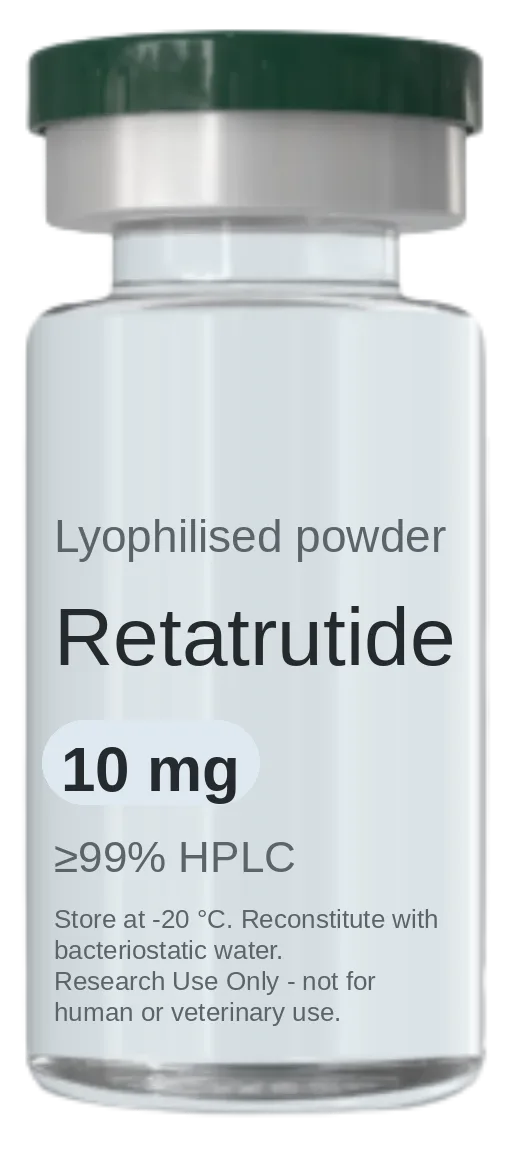
Retatrutide
Triple-agonist metabolic research peptide targeting GLP-1, GIP and glucagon receptors.
- Purity:
- ≥99% HPLC
- Sizes available:
- 10 mg
BPC-157 + TB-500
BPC-157 and TB-500 in a single vial — the pairing most studied together in tissue-repair research.
- Purity:
- ≥99% HPLC
- Sizes available:
- 5 mg + 5 mg
The consultation
One intake that settles goals, history and contraindications alongside compound, quantity, documentation and route — reviewed by a physician before anything ships.
More notes
-
Tesamorelin vs Sermorelin: The Difference
Tesamorelin and sermorelin are both GHRH analogs, but not the same molecule. Here's the structural difference and what the studies on each measure.
-
Peptide Supplier vs. Reseller: What Differs
The real difference is whether someone can name the lab that tested a batch and show the report — or only promise it's pure.
-
MOTS-c or NAD+: What's the Difference
MOTS-c and NAD+ are studied through different mitochondrial pathways; here's what each line of research actually measures.