
Note
How to Read a Peptide HPLC Analysis Report
What to look for in a chromatography report to confirm that a peptide's stated purity is backed by real data.
A peptide HPLC report states purity as the percentage of the main peak area over the total detected area. That number — area% — is the central figure. Everything else in the report exists to show that the number was produced by an identifiable laboratory, using a reproducible method, on a sample traceable to a specific lot.
PeptoClinic publishes four certificates of analysis in the quality section, each carrying the Janoshik Analytical task number.
The chromatogram: two axes and a main peak
A chromatogram is a plot of time against signal. The horizontal axis shows time in minutes — how long each compound took to travel through the chromatographic column. The vertical axis shows UV light absorption, expressed in milli-absorbance units (mAU).
When a compound exits the column and passes in front of the UV detector, it produces a peak. The peptide of interest produces the largest peak. Every additional peak represents a different compound: a synthesis by-product, a degradation fragment, or an impurity.
A high-purity peptide has one dominant peak and a nearly flat baseline outside of it. If several peaks of comparable height appear, the sample contains more than one relevant compound.
Why 220 nm
Peptide analysis is typically run at 220 nm because the peptide bond absorbs light at that wavelength. That makes the method sensitive to any peptide regardless of amino acid sequence. Some protocols add 280 nm for peptides with aromatic residues — phenylalanine, tyrosine, tryptophan — but 220 nm is the standard for reporting chromatographic purity.
How area% is calculated
The HPLC software integrates the area under each peak. Purity is the main peak area divided by the sum of all peak areas, multiplied by one hundred.
If a report states 99.7%, the remaining 0.3% is the combined area of every secondary peak the detector recorded. A trustworthy report shows the complete peak table — each peak with its retention time and its area% — and the figures sum to 100%.
A number without the table behind it is not verifiable.
What a valid report must include
A certificate of analysis from an independent laboratory includes these elements:
- Laboratory name and task number. The task number is the unique identifier for that run. Without it, there is no way to trace the analysis.
- Date of analysis. Not the date the PDF was printed — the date the sample was actually run.
- Compound name and lot number. This connects the report to the physical material.
- Method details. Column, mobile phases, wavelength, gradient. Without this, the method is not reproducible.
- The chromatogram. The image of the elution profile. A PDF that shows only a number, without the chromatogram, is not a certificate of analysis.
- Peak table. Retention time, area, and area% for every detected peak.
A report that meets those criteria can be evaluated. One that omits the chromatogram or the peak table does not contain enough information to confirm the number it claims.
The Janoshik Analytical certificates
The four certificates published by PeptoClinic correspond to analyses performed by Janoshik Analytical on April 13, 2026.
For Retatrutide, task 136921 recorded a purity of 99.893%. The vial carried a 10 mg label; the analysis found 11.96 mg of total content.
For MOTS-c, task 136923 recorded 99.669%. The measured content was 11.31 mg.
GHK-Cu (task 204977) and BPC-157 with TB-500 (task 204975) each have their certificates with the task number included. The lowest purity PeptoClinic has published is 99.669%. That figure — not the best lot, but the worst published — is the one that sets the floor.
All four certificates carry a working verification link on the Janoshik site, and each opens with its own task number.
Red flags in a questionable report
There are real differences between a genuine report and a fabricated PDF.
No task number, or a task number that does not exist in the laboratory's system. If the task number cannot be found in the declared laboratory's database, the report was not generated by that laboratory.
A chromatogram without scale. A chromatogram that lacks numbered tick marks on the time axis or values on the absorbance axis is a decorative image, not analytical data.
The peak table does not sum to 100%. Area% always totals 100. If the table omits peaks or uses rounding that does not close, information is being withheld.
The main peak has an unusually short retention time. Mid-length peptides elute within expected ranges for a given method. A main peak appearing at very short retention times may correspond to water, residual solvent, or a compound different from the one declared.
A supplier that cannot provide the task number of the laboratory that supposedly analyzed the lot has no way to demonstrate that the analysis took place. Requesting it before any decision is reasonable.
How this material is supplied
The peptides PeptoClinic supplies are released after an intake a physician reviews individually. They are not approved medicines and not supplements: no regulatory authority — not the FDA, not ANMAT, not any equivalent body — has evaluated or approved them for the use they are requested for. That is what the review is there for.
Administration guidance comes out of that review and travels with the order; it is not published here and this article is not a substitute for it. The HPLC analysis accompanying each lot documents the purity of the material, which is a separate question from whether it suits anybody. Quotations include the technical documentation for the lot. For availability inquiries, write to [email protected] or review the compound catalog.
Frequently asked questions
What does ≥99% HPLC purity mean?
It means the main peak area in the chromatography accounts for at least 99% of the total detected area. The remaining 1% or less is the combined area of every secondary peak the detector recorded. It is a specification of chromatographic purity: the analysis measures what fraction of the total corresponds to the main peak, not what compound that peak is.
Does an HPLC report confirm the identity of the peptide?
Only partially. The retention time of the main peak must be consistent with the declared compound under the method conditions. For definitive identity confirmation, mass spectrometry (MS) is required — it determines the exact molecular mass. A report combining HPLC and MS is more complete than one that includes chromatography alone.
Can I verify a Janoshik report using the task number?
Yes. Janoshik Analytical has an online verification system that accepts the task number from the report. PeptoClinic publishes task numbers alongside each certificate in the [quality section](/en/quality/), and all four open the original report in the laboratory's verifier.
What happens to purity over time?
Lyophilized peptides stored correctly — dry, dark, and cold — maintain purity for months to years. Degradation occurs mainly in the presence of moisture, heat, or prolonged light exposure. Cold-chain handling and packaging affect purity at the point of use as much as the original analysis figure does.
Why might the report show more mass than the label states?
Lyophilization and dispensing carry tolerances. A vial labeled 10 mg may contain 11.96 mg if the process was generous within the manufacturer's margins. That is not an error — it is the actual measured content. What matters for evaluating purity is the chromatographic area%, independent of the vial's total weight.
What is the difference between area% and absolute quantification?
Area% measures purity: what fraction of the total detected corresponds to the compound of interest. Absolute quantification measures how many milligrams of that compound are present in the sample, using a reference standard of known concentration. A report showing both is more informative: the first states how pure the material is; the second states how much is in the vial.
Why do some suppliers not publish the chromatogram?
A chromatogram with scale, secondary peaks, and an integration table cannot easily be fabricated without actually running the analysis. A number in a PDF can be. The absence of a chromatogram does not prove the number is false, but it removes the buyer's ability to evaluate the quality of the data. A supplier that publishes the complete chromatogram with a verifiable task number accepts a level of scrutiny that is only sustainable if the analysis occurred.
Can I request the HPLC analysis for the specific lot I will receive?
Yes. The process at PeptoClinic is to describe what your research program requires and receive a quotation that includes the technical documentation for the lot, with the HPLC analysis. Inquiries go to [email protected].
Compounds mentioned
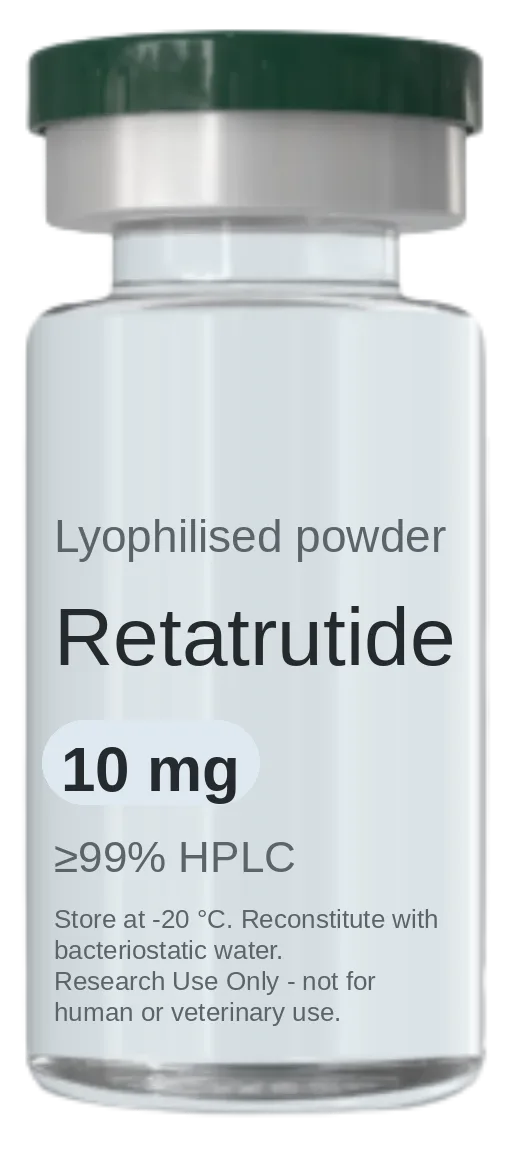
Retatrutide
Triple-agonist metabolic research peptide targeting GLP-1, GIP and glucagon receptors.
- Purity:
- ≥99% HPLC
- Sizes available:
- 10 mg
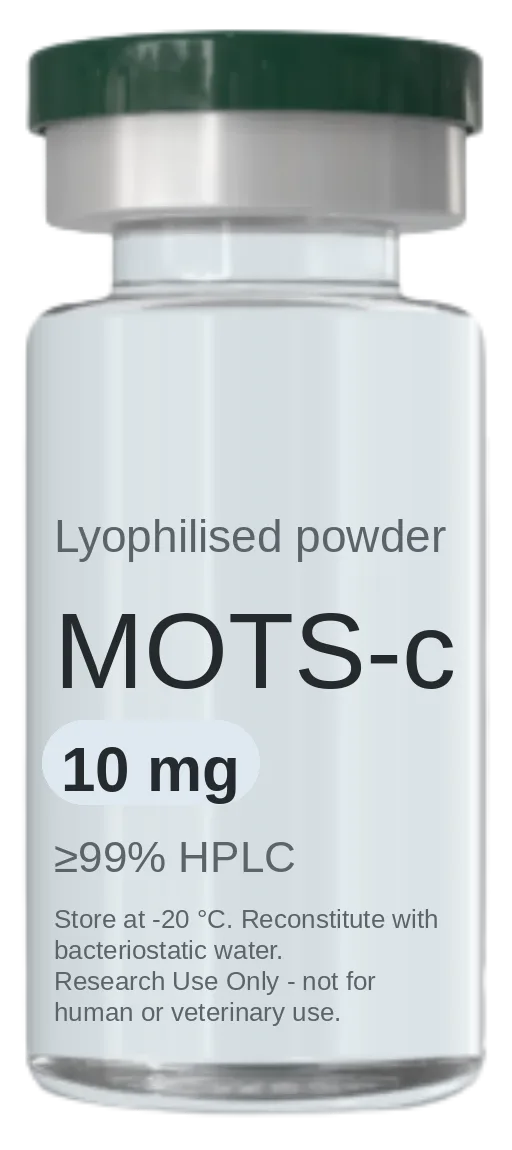
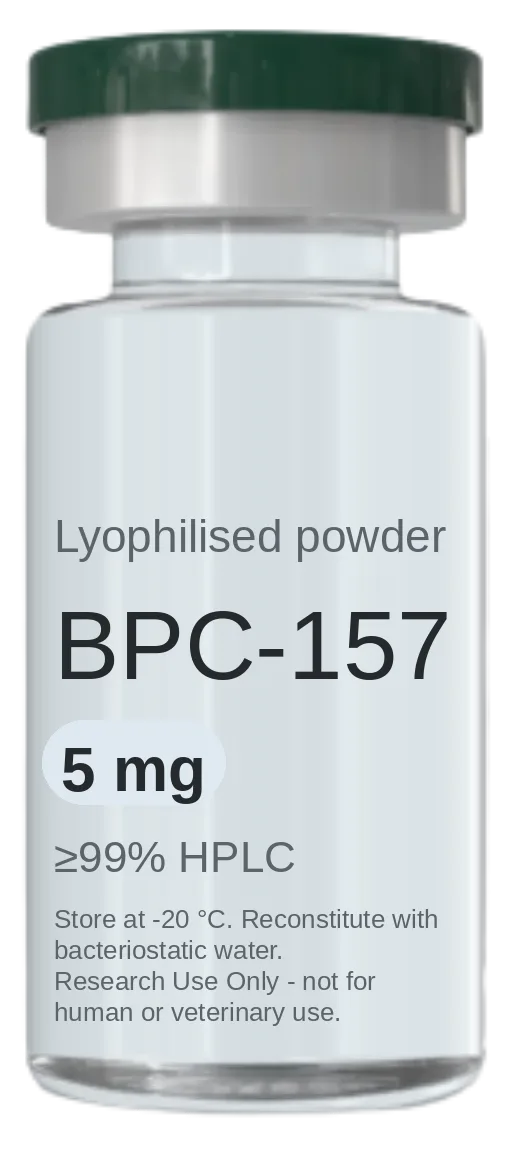
BPC-157 + TB-500
BPC-157 and TB-500 in a single vial — the pairing most studied together in tissue-repair research.
- Purity:
- ≥99% HPLC
- Sizes available:
- 5 mg + 5 mg
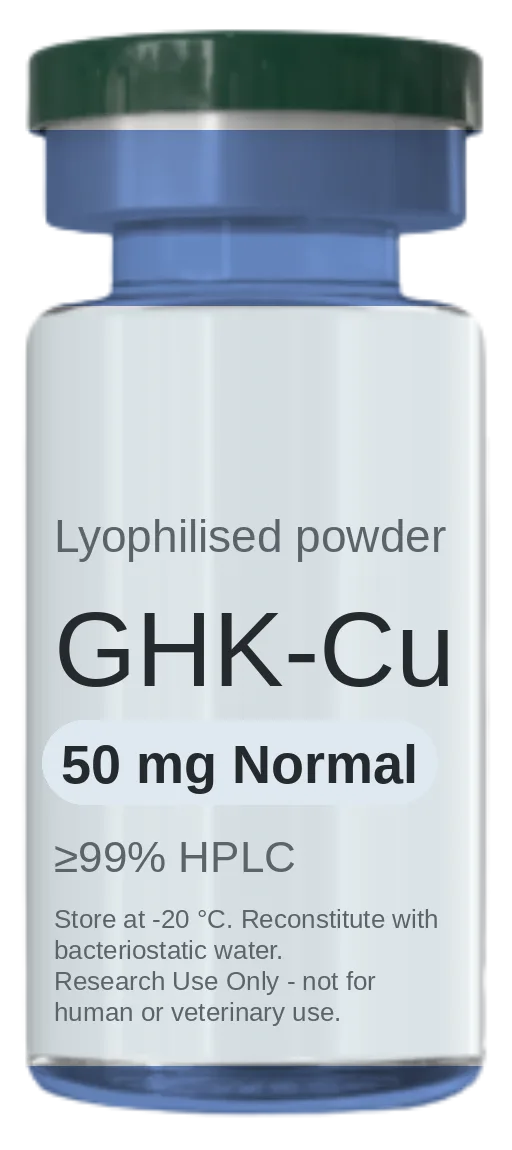
GHK-Cu (Copper Peptide)
Copper-binding tripeptide studied in extracellular matrix and dermal research models.
- Purity:
- ≥99% HPLC
- Sizes available:
- 50 mg Normal – 50 mg Plus
The consultation
One intake that settles goals, history and contraindications alongside compound, quantity, documentation and route — reviewed by a physician before anything ships.
More notes
-
If Argentine Customs Rejects Your Shipment
What happens after Argentine customs permanently rejects a research peptide shipment, and what documentation lowers the risk on the next one.
-
CJC-1295 or Tesamorelin: what each shows
What published research shows on CJC-1295 and tesamorelin: mechanism, differences, and which compound has more clinical data.
-
Hexarelin vs GHRP-6: Key Differences
Hexarelin and GHRP-6 are both GHRP hexapeptides, but differ in receptor affinity, appetite effect, and cardiovascular research findings.