
Note
KPV vs MOTS-c: What's the Difference
KPV and MOTS-c are different peptides in origin and mechanism — we compare structure, pathway, and published lab evidence.
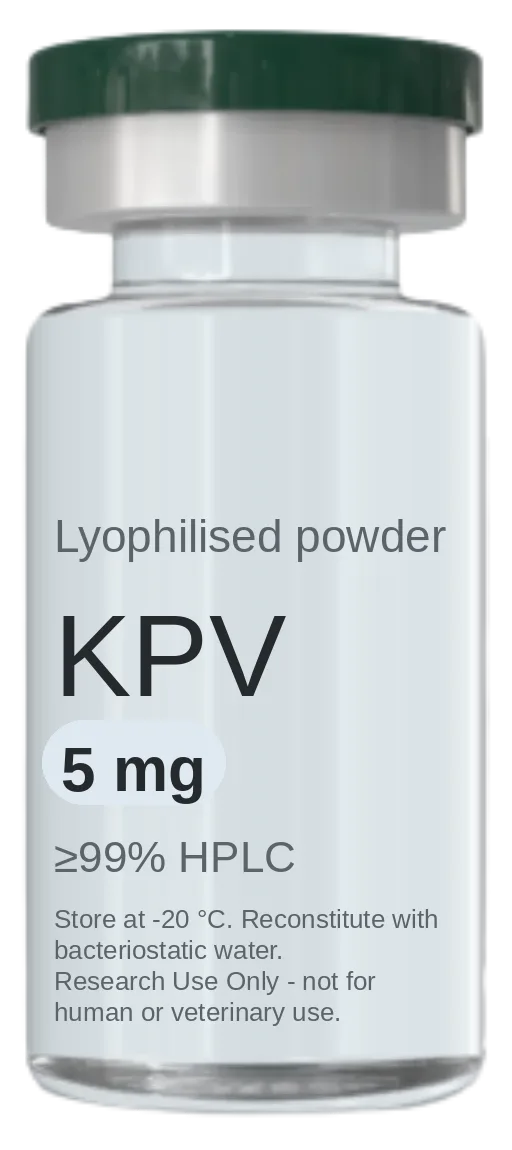
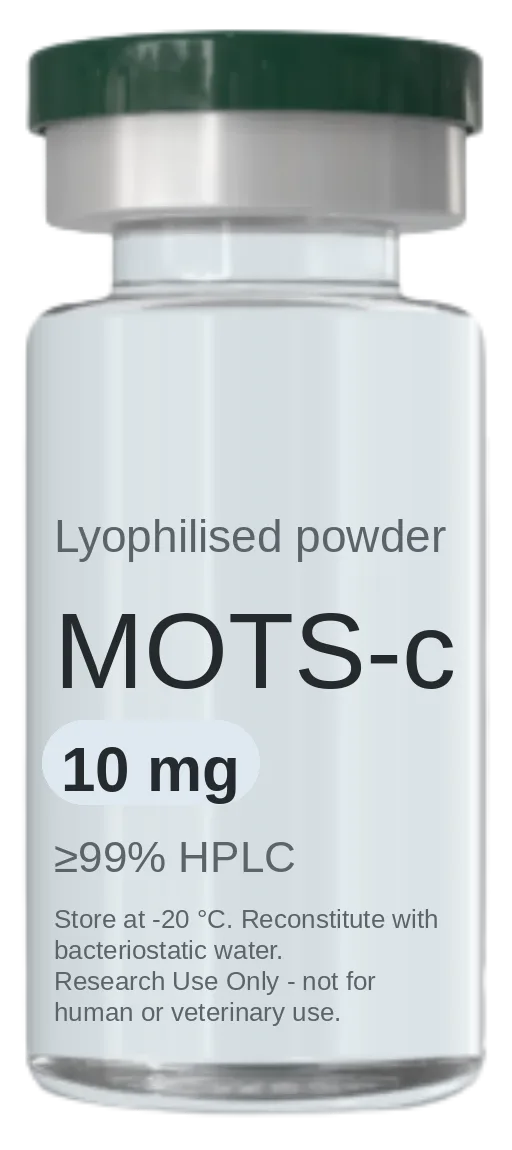
KPV and MOTS-c are two research peptides with almost nothing in common beyond sharing a catalogue: KPV is a tripeptide derived from alpha-MSH that the literature studies for its interaction with the NF-κB pathway in inflammation models, while MOTS-c is a 16-amino-acid peptide encoded in mitochondrial DNA, studied for its role in AMPK activation and metabolic regulation. They are not interchangeable and do not belong to the same structural family. They get compared because they sit next to each other in the same research catalogue, not because they investigate the same thing.
Direct comparison
| Aspect | KPV | MOTS-c |
|---|---|---|
| Structural origin | Tripeptide (Lysine-Proline-Valine), C-terminal fragment of alpha-MSH | 16-amino-acid peptide encoded in the 12S rRNA region of mitochondrial DNA |
| Family | Melanocortin-derived | Mitochondrial-derived peptide (MDP) |
| Mechanism studied in the literature | Interaction with melanocortin receptors and modulation of the NF-κB pathway | Activation of AMPK (AMP-activated protein kinase) and regulation of cellular metabolic homeostasis |
| Predominant preclinical model | Intestinal inflammation and colitis models | Insulin resistance, metabolic stress, and cellular aging |
| Chain length | 3 amino acids | 16 amino acids |
| Reported lab purity | No published Janoshik Analytical report in the current catalogue | 99.669% (Janoshik Analytical, task 136923) |
What KPV is and what the literature investigates about it
KPV is one of the smallest research peptides in the catalogue: three amino acids, Lysine-Proline-Valine, corresponding to the C-terminal end of alpha-MSH (alpha-melanocyte-stimulating hormone). That origin is the key to understanding it: it is not a "designed" peptide, it is a fragment of a molecule the body already produces on its own.
The literature on KPV concentrates on two lines of research. One studies its interaction with melanocortin receptors, the same receptors activated by full-length alpha-MSH. The other, more frequently cited in preclinical studies, investigates a receptor-independent mechanism: the effect of KPV on the NF-κB pathway, a central regulator of the cellular inflammatory response. The most commonly used models are intestinal inflammation models, where researchers evaluate how the peptide modulates the expression of pro-inflammatory cytokines in colon tissue.
It is worth reading those studies for what they are: research in cell and animal models, not evidence of an effect in people. The KPV listing in the catalogue is classified as research material, not as a clinical-use input.
What MOTS-c is and why its mechanism is so different
MOTS-c belongs to a family discovered much more recently: mitochondrial-derived peptides (MDPs). Unlike most research peptides, which are encoded in nuclear DNA, MOTS-c is encoded in a region of mitochondrial DNA, within the 12S rRNA gene. It is a 16-amino-acid chain, more than five times longer than KPV.
The mechanism the literature investigates for MOTS-c is metabolic: researchers study its capacity to activate AMPK, a protein kinase that functions as the cell's energy sensor and regulates how the cell uses glucose and fatty acids. The most-cited preclinical models evaluate insulin resistance, diet-induced metabolic stress, and markers of cellular aging. This is a completely separate line of research from KPV's: there is no overlap in receptor, pathway, or experimental model between the two peptides.
The purity report published for this peptide — task 136923 from Janoshik Analytical, analyzed on April 13, 2026 — found 99.669% purity on an 11.31 mg content. Of the four reports published in the catalogue, it is the lowest purity figure, which is exactly why it is the number worth citing when discussing MOTS-c, rather than the best lot's result. Anyone who wants to verify the figure can check the certificate of analysis directly.
Why they show up together in searches
KPV and MOTS-c do not share a mechanism, but they do turn up together in the same kind of search because both entered the research catalogue around the same time and both ship in the same format: a lyophilized powder vial. That generates the "what's the difference" question even though the accurate answer is, strictly speaking, "almost everything except the format."
The comparison makes sense for someone building a research catalogue who needs to decide which compound corresponds to which experimental line: inflammation (KPV) or mitochondrial metabolism (MOTS-c). It does not make sense as a "which one is better" comparison, because they do not investigate the same phenomenon.
Documentation and format for both
Both peptides ship as a lyophilized powder vial, with USP-grade diluents available separately. The material does not travel in a cold chain: lyophilized powder stays stable at room temperature for weeks, so the box carries no coolant and no gel pack. Cold only matters after reconstitution, when the solution is kept between 2 and 8 °C.
The entire PeptoClinic catalogue is quoted under the same standard: a minimum declared purity of 99% by HPLC, with batch documentation available for anyone who requests it at the time of inquiry.
The material is for research, not for human or veterinary use
Both KPV and MOTS-c are supplied strictly for research use (Research Use Only, RUO): in vitro and laboratory studies. Neither is a medicine, a supplement, or a food; neither is approved for human or veterinary consumption, diagnosis, or treatment; and none of their properties have been evaluated by ANMAT, the FDA, or any equivalent authority. No dosing, administration, or protocol guidance is offered, and any inquiry about use in people is answered by pointing back to this same limitation.
Frequently asked questions
Can KPV and MOTS-c be compared in terms of potency?
No, because they investigate different mechanisms and there is no common metric between modulating the NF-κB pathway (KPV) and activating AMPK (MOTS-c). Comparing "potency" between two peptides that share neither receptor nor pathway is a question without a valid answer in the literature.
Which of the two has more published studies?
Each has its own line of preclinical literature, limited to its own mechanism: KPV in intestinal inflammation models, MOTS-c in metabolism and cellular aging models. Neither has the volume of human clinical studies that more established compounds have.
Is KPV also a mitochondrial peptide like MOTS-c?
No. KPV is a fragment of alpha-MSH, encoded in nuclear DNA like any conventional peptide hormone. MOTS-c is the one with mitochondrial origin, encoded in a specific region of mitochondrial DNA.
Is there a certificate of analysis for KPV the way there is for MOTS-c?
The current catalogue has four published Janoshik Analytical reports, and the MOTS-c one is among them. There is no published report for KPV at this time; anyone who needs that documentation can request it directly at the time of quoting.
Why is MOTS-c's purity cited as 99.669% and not a higher figure?
Because that was the purity of the lot analyzed by Janoshik Analytical on April 13, 2026, and it is the lowest figure among the four published reports in the catalogue. Citing the floor rather than the best result is more representative of what can be found in any given lot.
Do both come in the same packaging format?
Yes, both ship as a lyophilized powder vial, with no cold chain during transport. The difference is in the molecule and in what the literature investigates about each, not in how they are shipped.
Can KPV and MOTS-c be combined in the same study?
That decision depends on the experimental design of the researcher. What can be said from the documentation is that they are independent compounds with non-overlapping mechanisms, and each is quoted and documented separately.
Is MOTS-c available for Argentina destinations?
Yes, MOTS-c is among the compounds with a [dedicated Argentina page](/en/argentina/mots-c/), with the customs file prepared for import as laboratory reference material.
Compounds mentioned
BPC-157 + TB-500
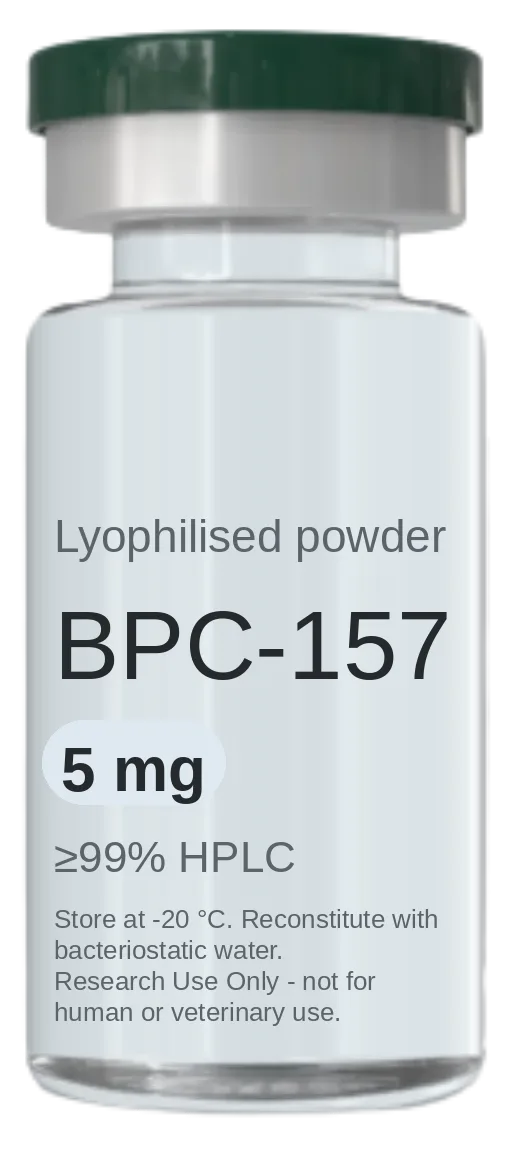
BPC-157 and TB-500 in a single vial — the pairing most studied together in tissue-repair research.
- Purity:
- ≥99% HPLC
- Sizes available:
- 5 mg + 5 mg
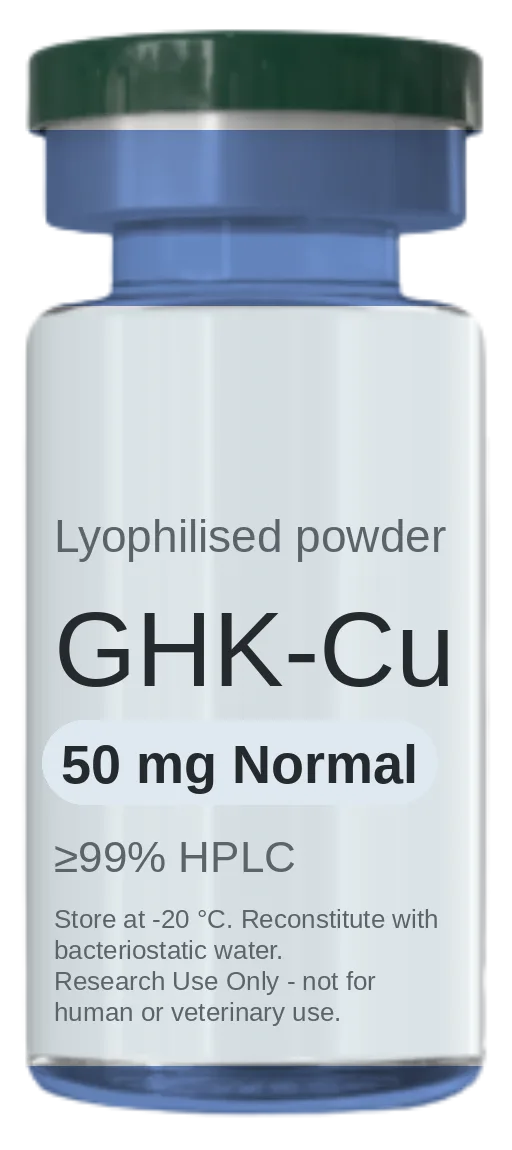
GHK-Cu (Copper Peptide)
Copper-binding tripeptide studied in extracellular matrix and dermal research models.
- Purity:
- ≥99% HPLC
- Sizes available:
- 50 mg Normal – 50 mg Plus
The consultation
One intake that settles goals, history and contraindications alongside compound, quantity, documentation and route — reviewed by a physician before anything ships.
More notes
-
Retatrutide: Pills or Injectable Only?
Retatrutide ships only as an injectable research compound — no pill form exists in published trials or any research catalog.
-
Storing Retatrutide Before and After Mixing
How lyophilized retatrutide is stored before reconstitution, and what changes once it's dissolved in solution.
-
Prescription Needed for Peptides in Argentina?
In Argentina, research peptides are quoted without a prescription because they're RUO lab material, not medicines.