
Note
How to Verify a GHK-Cu Lot in Argentina
What a GHK-Cu certificate of analysis must contain and how to confirm the laboratory report is genuine before accepting a lot.
To verify a GHK-Cu lot shipped to Argentina you need two things: a certificate of analysis issued by an independent laboratory, and the task number that lets you confirm that certificate directly on the laboratory's website. Without both, any claim about purity is a claim without documentation.
What a certificate of analysis actually is
A certificate of analysis (CoA) is the technical document a laboratory issues after analyzing a sample of the compound. It carries the analyst's name, the analysis date, the methods used, the numerical results, and a unique task number.
That task number is what separates a verifiable certificate from a document designed to look like one. If a supplier cannot give you that number, the certificate cannot be confirmed by a third party.
Green shields, checkmarks and statements like "maximum guaranteed purity" are not documents. A technically literate buyer ignores them and looks for the PDF with the task number.
What a GHK-Cu certificate of analysis must include
GHK-Cu is a copper-chelated tripeptide. A proper analysis report for this compound should confirm:
- Compound identity. The most common methods are mass spectrometry (MS) or HPLC with a reference standard. The compound name must appear in the report itself, not only on the vial label.
- Purity by HPLC. The purity percentage in the report is what the laboratory measured in that sample — not what the supplier declared. These are different data points.
- Actual content versus label. A thorough report compares the nominal mass stated on the vial with the mass the analysis found. A significant gap between the two numbers is relevant information.
- Analysis date. A CoA from five years ago for a lot that "just arrived" does not make logistical sense.
- Laboratory name and task number. Without a named laboratory and a unique task number, there is no verifiable certificate.
How to verify the report is genuine
The process has three steps.
Step one: locate the task number. The CoA PDF must contain a unique laboratory identifier. Janoshik Analytical, a European laboratory that specializes in research peptides and maintains an online verification portal, assigns one of these identifiers to every analysis it performs.
Step two: enter that number in the laboratory's portal. Some laboratories allow anyone — without registration or a password — to enter a task number and retrieve the original report. If the laboratory your supplier names does not offer that functionality, the only way to confirm is to contact the laboratory directly.
Step three: compare the PDF you received with what the portal returns. If the two documents match on compound name, date, numerical results and task number, the report is genuine. Any discrepancy between them is a reason to ask questions before accepting the lot.
PeptoClinic publishes Janoshik Analytical reports for the compounds in its catalogue. The GHK-Cu report carries task number 204977, analyzed on April 13, 2026, on a 50 mg nominal sample. The full set of reports is available in the quality section of the site.
Which laboratories analyze research peptides
The laboratories that analyze research peptides and publish verifiable reports are few. The ones that appear most consistently in the reference market:
- Janoshik Analytical — a European laboratory specializing in peptides, with an online verification portal. PeptoClinic uses Janoshik Analytical for the lots published in its catalogue.
- Kovera Labs — another laboratory with a presence in the reference market. PeptoClinic also publishes Kovera Labs reports for some compounds in its catalogue.
When a supplier names a laboratory that has no website, no verification portal and no published results outside that supplier's own materials, there is no way to confirm the certificate independently.
Red flags to watch for
Several patterns appear repeatedly in documents that are not what they claim to be.
No task number. If the PDF does not carry a unique laboratory identifier, it is likely a generic document. Nothing can be verified without that number.
Generic laboratory name. "International Certified Laboratory" or "European Quality Lab" without a website or a verifiable address are not meaningful references.
Purity declared but not explained. A number like "99.9% purity" that is not accompanied by the analytical method (HPLC, MS, NMR), the analyst's name and the analysis date does not correspond to any documented measurement.
Inconsistent date. If the CoA is dated this month but the lot has been circulating for years, something does not add up.
The supplier cannot name the laboratory. If you ask directly and get no concrete answer, that is the answer.
Identical values across different lots. Some suppliers reuse the same PDF with an updated date. If you compare two different lots and the numerical results are identical to the decimal place, there is a documentation problem.
The GHK-Cu report available for Argentina
Janoshik Analytical task number 204977 covers GHK-Cu analyzed in April 2026 on a 50 mg nominal sample. The report is verifiable online using that task number. When PeptoClinic supplies GHK-Cu to destinations in Argentina, the lot ships with the certificate corresponding to the specific batch being sent.
The full catalogue lists the compounds with published reports. Across all compounds PeptoClinic has had analyzed to date, the lowest purity result published is 99.669%, recorded for a different compound in the catalogue. The reports are available for review before any quotation is issued.
Published research on GHK-Cu in the scientific literature — searchable on PubMed — provides context on the compound's physicochemical properties and the conditions under which it has been studied in laboratory settings.
For laboratory research only
GHK-Cu and all other compounds in the PeptoClinic catalogue are research materials supplied strictly for in vitro and laboratory research use (Research Use Only, RUO). They are not approved or suitable for human or veterinary use, diagnosis or treatment.
No material in this catalogue is a medicine, a supplement or a food. No statement on this site has been evaluated by ANMAT, the FDA or any equivalent authority. PeptoClinic is not a pharmacy, a clinic or a source of medical or dosing guidance.
Frequently asked questions
What is a Janoshik Analytical task number?
It is the unique identifier Janoshik Analytical assigns to each analysis. It appears in the report and allows anyone to retrieve the original document from the laboratory's portal. Without that number, the report cannot be confirmed by an external party.
Can anyone verify a GHK-Cu CoA without being in the industry?
Yes. The Janoshik verification portal is public. Anyone with the task number can access the original report and compare it with the document their supplier provided.
Does a GHK-Cu certificate of analysis need to use HPLC?
HPLC is the standard method for confirming purity in peptides. A report that does not specify the analytical method does not document how it arrived at the purity figure it shows. Laboratories conducting serious analyses always detail the method used.
What is the difference between vial content and purity?
Purity indicates the percentage of the target compound in the sample, as measured by the analysis. Vial content is the total mass present in the container. A vial can contain less mass than the label states but show high purity, or the reverse. A thorough CoA reports both figures separately.
Does a certificate written in Spanish mean it was issued in Argentina?
No. The language of the document does not determine its origin or validity. What validates a certificate is the laboratory that issued it, the ability to verify the task number in that laboratory's portal, and the consistency between the PDF data and what the portal returns.
What happens if a supplier cannot provide a CoA for the lot they are supplying?
Without a certificate of analysis there is no way to know the purity or confirm the identity of the compound. In the research materials market, a supplier who cannot present the CoA for the lot they are supplying does not meet the minimum standards of technical documentation.
How long after analysis does a CoA remain representative?
The analysis describes the state of the compound on the date shown in the report. How long that remains representative depends on storage conditions and the specific compound. A recent CoA on a correctly stored lot is the expected combination. A CoA from years ago on a "new" lot raises reasonable questions.
If the task number I was given does not appear in the laboratory portal, what does that mean?
It means the report cannot be confirmed externally. If the number does appear in the portal but the document returned differs from the PDF you received, there is a problem with that PDF. Both situations warrant asking the supplier for a direct explanation before accepting the lot.
Compounds mentioned
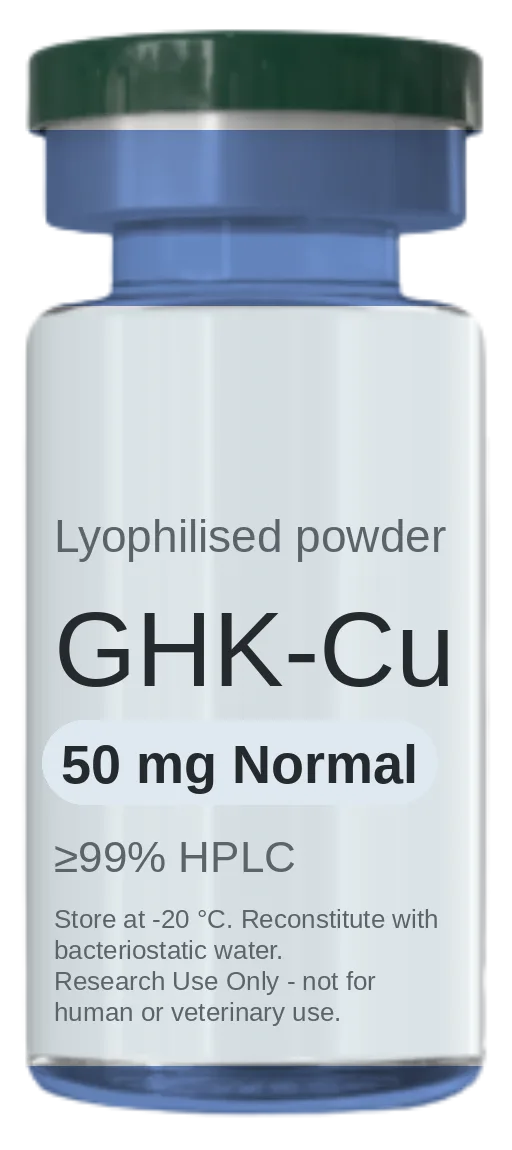
GHK-Cu (Copper Peptide)
Copper-binding tripeptide studied in extracellular matrix and dermal research models.
- Purity:
- ≥99% HPLC
- Sizes available:
- 50 mg Normal – 50 mg Plus
BPC-157 + TB-500
BPC-157 and TB-500 in a single vial — the pairing most studied together in tissue-repair research.
- Purity:
- ≥99% HPLC
- Sizes available:
- 5 mg + 5 mg
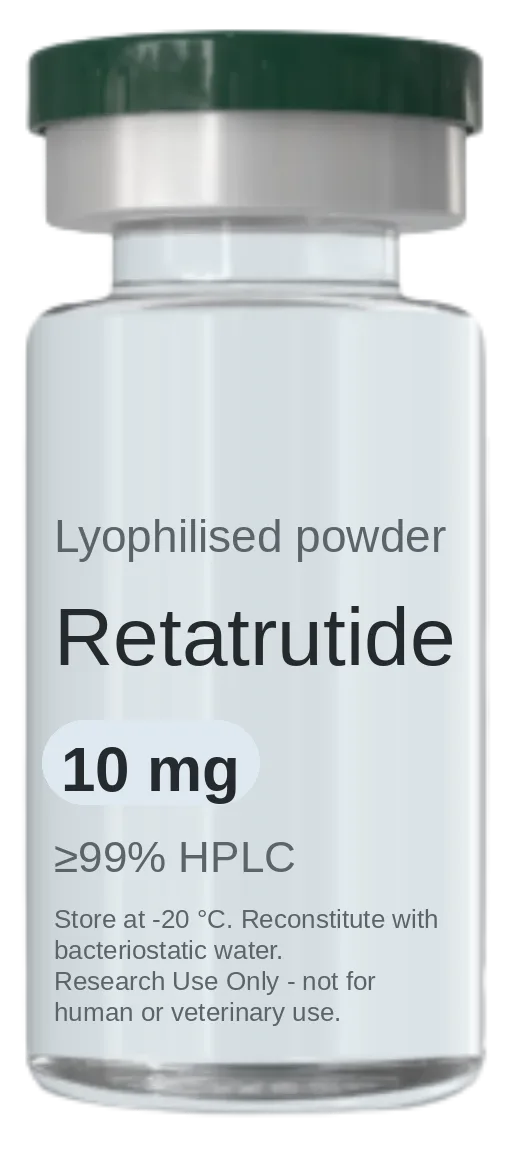
Retatrutide
Triple-agonist metabolic research peptide targeting GLP-1, GIP and glucagon receptors.
- Purity:
- ≥99% HPLC
- Sizes available:
- 10 mg
The consultation
One intake that settles goals, history and contraindications alongside compound, quantity, documentation and route — reviewed by a physician before anything ships.
More notes
-
Tesamorelin vs Sermorelin: The Difference
Tesamorelin and sermorelin are both GHRH analogs, but not the same molecule. Here's the structural difference and what the studies on each measure.
-
Peptide Supplier vs. Reseller: What Differs
The real difference is whether someone can name the lab that tested a batch and show the report — or only promise it's pure.
-
MOTS-c or NAD+: What's the Difference
MOTS-c and NAD+ are studied through different mitochondrial pathways; here's what each line of research actually measures.