
Note
Humanin: the mitochondrial DNA peptide
Humanin is a 21-amino-acid peptide encoded in mitochondrial DNA, investigated for neuroprotection, metabolism, and aging biology.
Humanin is a 21-amino-acid peptide encoded in human mitochondrial DNA, specifically within the 16S ribosomal RNA region. It was first described in 2001 by Ikuo Nishimoto's laboratory in Tokyo, in a paper published in *Proceedings of the National Academy of Sciences*: the team identified a molecule that blocked neuronal death induced by genes linked to familial Alzheimer's disease and by the amyloid beta peptide (Aβ). Unlike most molecules studied in cell biology, humanin is transcribed not from nuclear DNA but from the mitochondrial genome, making it the first member of what is now called the mitochondria-derived peptide (MDP) family.
A peptide from the mitochondria
The mitochondrion carries its own genome: circular, roughly 16,500 base pairs, maternally inherited. Most of its genes encode components of the respiratory chain. The finding that a fragment of the 16S ribosomal RNA could produce a secreted peptide was unexpected when first published, and it prompted debate about whether translation occurs inside the mitochondrion, in the cytoplasm, or in both compartments.
What the published literature established is that humanin can be released by cells into the extracellular space and act on surface receptors in other cells, behaving as an endocrine or paracrine signal. Receptors identified in the research literature include CXCR4, the gp130/IL-6ST complex — the same receptor that mediates interleukin-6 signaling — and formyl peptide receptor 2 (FPR2). That three distinct receptor systems recognize the same molecule suggests humanin's signaling is integrated across multiple cellular pathways in parallel, rather than through a single linear cascade.
What the scientific literature investigates
Neuroprotection and Alzheimer's disease
The foundational paper by Hashimoto and colleagues (PMID 11344269) showed that humanin protected neurons from cell death induced by seven distinct presenilin 1 mutations, the amyloid precursor protein gene, and the Aβ1-43 peptide in cell cultures. The effect was selective: it did not affect the viability of non-neural cells under the same conditions.
Later experiments extended the finding to mouse models with Alzheimer-like pathology and examined underlying mechanisms. Those with the most accumulated evidence include inhibition of BAX-mediated apoptosis, activation of cell survival pathways through the JAK2/STAT3 and MAPK cascades, and reduction of reactive oxygen species in neurons under oxidative stress. Each mechanism was documented in culture systems or specific animal models; none has clinical validation in humans to date.
Metabolism and pancreatic function
A 2013 review by Lee, Yen, and Cohen in *Trends in Endocrinology & Metabolism* (PMID 23206320) summarized the evidence on humanin in metabolic contexts. Studies reviewed documented effects on insulin sensitivity in animal models of induced resistance, protection of pancreatic beta cells against cytotoxic agents such as streptozotocin, and modulation of hepatic lipid metabolism. The authors framed humanin within a system of mitochondria-to-body communication that was in early stages in 2013 and is now an active research area with multiple groups working in parallel.
Inflammation and oxidative stress
Research in macrophages and endothelial cells documented that humanin reduces the expression of pro-inflammatory mediators including TNF-α and IL-6 under conditions of oxidative stress. Signaling through formyl peptide receptor FPR2 has been proposed as one mediator of that effect, though the complete picture of humanin's anti-inflammatory signaling remains under discussion in the literature.
Aging and longevity
Pinchas Cohen's group at the University of Southern California reported that circulating humanin levels in humans tend to decrease with age, and that offspring of centenarians show significantly higher plasma concentrations than age-matched controls without family histories of exceptional longevity. Those observations are correlational: they measure an association and do not establish whether humanin is a cause, consequence, or marker of that aging profile. The distinction matters, and the literature makes it.
The MDP family: humanin is not alone
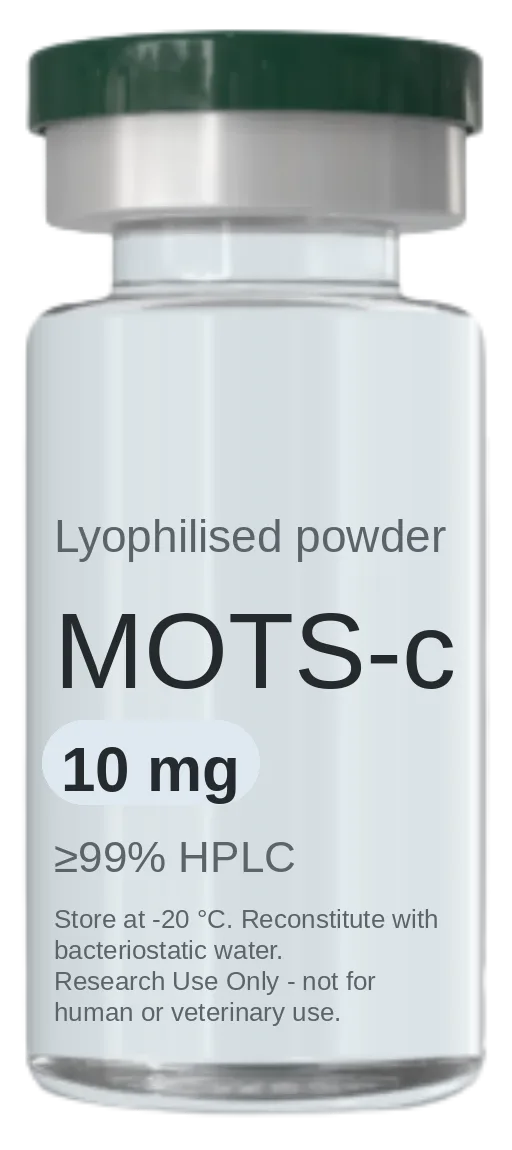
Humanin was the first mitochondria-derived peptide identified, but bioinformatic searches of the mitochondrial genome led the same laboratory to describe several additional peptides in the same category. The most studied after humanin is MOTS-c, encoded in the 12S mitochondrial ribosomal RNA. MOTS-c research concentrates on glucose metabolism regulation in skeletal muscle and intracellular signaling under energy restriction, distinguishing it from humanin both in its coding location and in the biological contexts most examined.
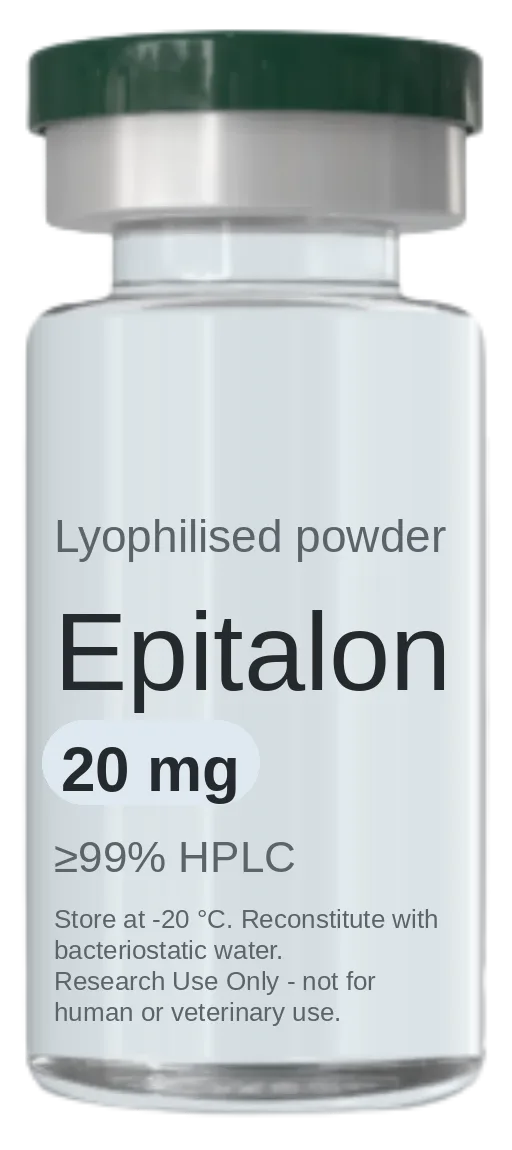
The existence of this family reshaped how researchers think about the mitochondrion's role in cell biology. The mitochondrion is not only an ATP factory: it is also a source of peptide signals that communicate mitochondrial energy status to the nucleus, cytoplasm, and other cells. That retrograde mitochondrial signaling organizes much of current research in aging biology and metabolism, and humanin was the first experimental evidence that such a system exists. Other compounds investigated in adjacent areas of the longevity and aging literature — including epitalon and NAD+ — are available through the PeptoClinic catalogue.
Current state of research
Most published studies on humanin are in cellular and animal models. Human studies are few and preliminary: some measured plasma humanin levels in specific populations — centenarians, people with type 2 diabetes, individuals with polycystic ovary syndrome — but without controlled clinical trials evaluating humanin intervention in humans. PubMed indexes several hundred publications mentioning humanin since 2001, which reflects sustained scientific interest but does not equal clinical consensus or established translational evidence.
Research use only
PeptoClinic supplies research peptides to laboratories and scientific teams in the United States, Argentina, and other destinations listed on the shipping page. All material is supplied strictly as Research Use Only (RUO): for in vitro and laboratory research exclusively.
Humanin is not a medicine. It is not approved for human or veterinary use by any regulatory authority. PeptoClinic does not prescribe protocols, does not advise on administration, and does not respond to questions about doses or routes of application. Material is accompanied by analytical documentation including the laboratory report and purity specification. The quality page describes what is verified in each lot before dispatch.
Frequently asked questions
What is humanin?
Humanin is a 21-amino-acid peptide encoded in human mitochondrial DNA, within the 16S ribosomal RNA region. It was identified in 2001 and is the first described member of the mitochondria-derived peptide (MDP) family. It can be secreted by cells and act on surface receptors in other cells, functioning as an extracellular signal.
What does the scientific literature investigate humanin for?
Published research examines humanin primarily in models of neuroprotection in contexts related to Alzheimer's disease, in glucose and lipid metabolism, in inflammation, and in aging biology. The majority of the evidence is preclinical; human studies are observational and preliminary.
Are humanin and MOTS-c the same peptide?
No. Both are peptides derived from mitochondrial DNA, but they are distinct molecules: humanin has 21 amino acids and is encoded in the 16S ribosomal RNA; MOTS-c has 16 amino acids and is encoded in the 12S. Their signaling profiles also differ — humanin has more published research in neuroprotection, while MOTS-c research concentrates on skeletal muscle metabolism.
Do humanin levels change with age?
Observational studies in humans reported that plasma humanin levels tend to decrease with aging, and that offspring of centenarians show higher levels than age-matched controls without exceptional longevity in their family history. Those observations are correlational and do not establish causality.
Is humanin approved for human use?
No. Humanin is research material with no regulatory approval for human or veterinary use in any jurisdiction. It is not a medicine, it is not prescribed, and it does not replace any medical treatment.
Does PeptoClinic have humanin available?
For inquiries about the availability of specific compounds and to request a quote, write to [email protected] or consult the [catalogue page](/en/catalog/). The technical team can advise on the analytical documentation available for the batch in question.
Where can I read the original humanin research?
The foundational paper is Hashimoto and colleagues, 2001, available on [PubMed (PMID 11344269)](https://pubmed.ncbi.nlm.nih.gov/11344269/). A broad review of the field and the MDP family was published by Lee, Yen, and Cohen in 2013 in *Trends in Endocrinology & Metabolism* ([PMID 23206320](https://pubmed.ncbi.nlm.nih.gov/23206320/)).
How does humanin relate to aging biology?
The relationship proposed in the literature is that humanin functions as a signal communicating mitochondrial state to the rest of the organism. Its decrease with age, and its association with exceptional longevity profiles, led several research groups to study it as a marker of cellular aging. None of that has yet been translated into interventions with clinical validation.
Compounds mentioned
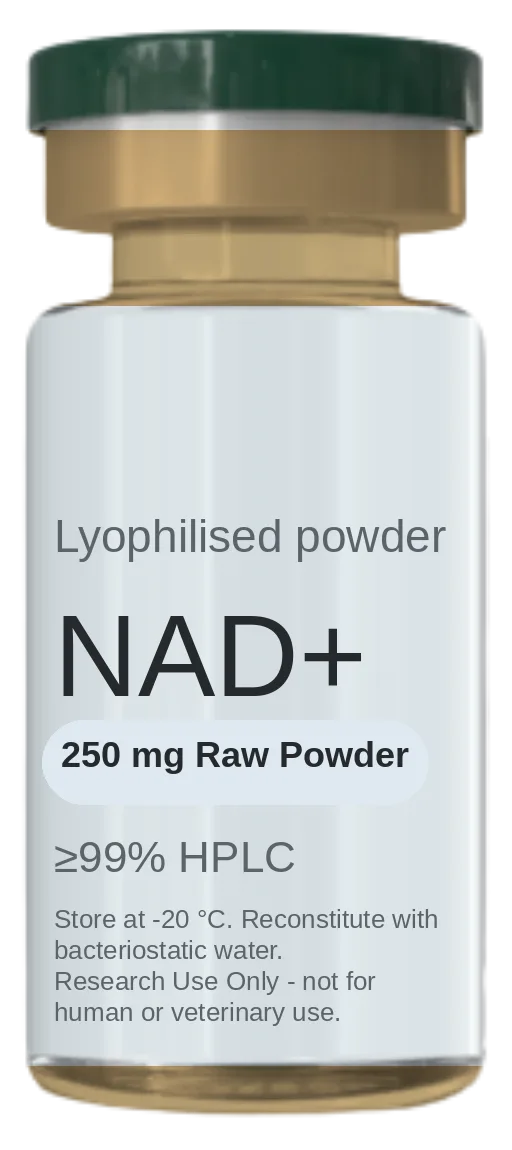
NAD+ (Nicotinamide Adenine Dinucleotide)
Essential redox cofactor central to cellular metabolism and sirtuin research.
- Purity:
- ≥99% HPLC
- Sizes available:
- 250 mg Raw Powder – 300 mg
The consultation
One intake that settles goals, history and contraindications alongside compound, quantity, documentation and route — reviewed by a physician before anything ships.
More notes
-
Retatrutide vs. Tirzepatide: Differences
Retatrutide adds a third receptor that tirzepatide doesn't activate — here's how the two differ in structure, mechanism, and published research.
-
NAD+ vs Selank: What's the Difference?
NAD+ is a cellular coenzyme; Selank is a synthetic peptide derived from tuftsin. Structure, mechanism, and what each one is studied for.
-
Peptide Customs Clearance Cost in Argentina
What determines customs clearance cost for a research peptide shipment to Argentina, and what documentation PeptoClinic prepares for it.