
Note
Semax vs LL-37: What's the Difference
Semax is a synthetic heptapeptide; LL-37 is a human cathelicidin. Different origin, structure and research field, side by side.
Semax and LL-37 have almost nothing in common beyond showing up together in the same search. Semax is a synthetic heptapeptide, seven amino acids long, derived from a fragment of ACTH and studied mostly in neurological research models. LL-37 is a human cathelicidin, 37 amino acids long, part of the innate immune system, studied in antimicrobial and inflammatory research. Different origin, different structure, different research field.
What Semax is
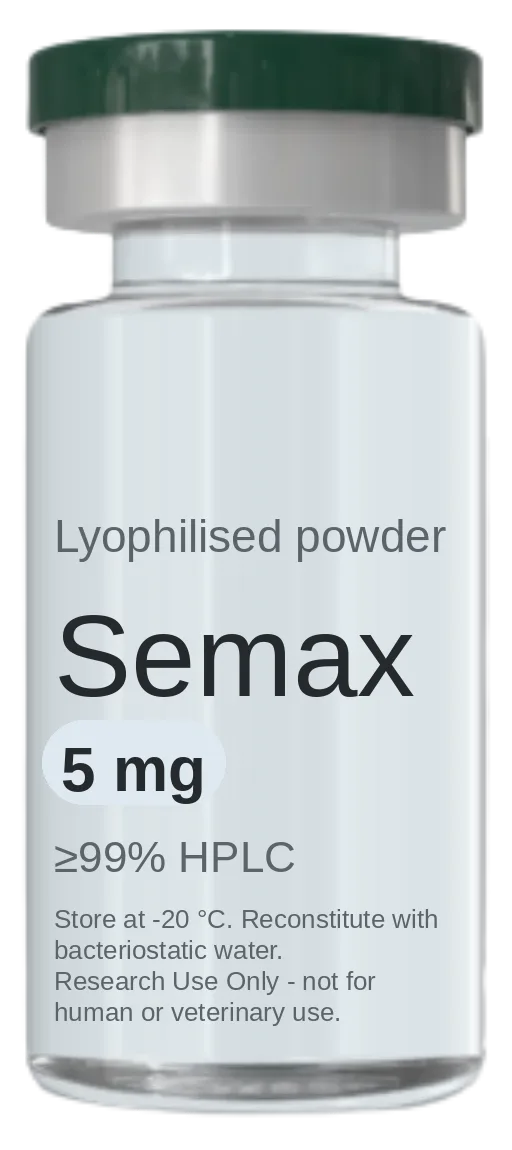
Semax is a synthetic molecule that does not occur as such in the human body: it was designed from a fragment of adrenocorticotropic hormone (ACTH 4-10), modified to extend its stability. Its sequence is Met-Glu-His-Phe-Pro-Gly-Pro, seven amino acids total, which places it among the short peptides.
The literature on Semax studies it primarily along the neurotrophic axis: its relationship to BDNF (brain-derived neurotrophic factor) and to models of cognitive function and neuroprotection. It's one of the most searched compounds in the catalogue of Russian-developed peptides from the 1980s, alongside Selank, with which it shares an academic origin and some design traits.
In PeptoClinic's catalogue Semax is available as research material in vial form, lyophilised powder, quoted per consultation. The Semax product page lists the purity specification and the documentation that ships with the lot. For Argentine research programmes specifically, the Semax page for Argentina covers the same compound with the customs documentation prepared for that destination — though Semax is not one of the country-specific pages currently listed for Argentina, so a program there is quoted through the standard consultation.
What LL-37 is
LL-37 is completely different in nature: it's a peptide the human body produces endogenously, the only member of the cathelicidin family identified in humans. It's released from a precursor protein, hCAP-18, and its active form is a linear 37-amino-acid peptide that folds into an amphipathic alpha-helix on contact with lipid membranes.
That structure is what explains why LL-37 is studied in antimicrobial research: its ability to interact with bacterial membranes is the mechanism the literature describes in the most detail. It also appears in studies on immunomodulation and tissue-repair processes, an area where it's sometimes discussed alongside peptides like BPC-157, even though each has a distinct mechanism of action.
LL-37 is not part of PeptoClinic's current catalogue. If you're specifically looking for that molecule, it isn't a compound we quote today.
The structural difference, in one line
A seven-amino-acid heptapeptide (Semax) and a 37-amino-acid peptide with an alpha-helix structure (LL-37) are so different in size and geometry that they don't even share a molecular-weight range. Semax weighs around 813 Da; LL-37, with more than five times as many amino acids, has a considerably higher molecular weight. That size difference isn't a minor detail — it shapes how each one is synthesised, how it's stored, and what quality controls make sense to ask a supplier for.
Why they get confused in a search
Neither molecule resembles the other in sequence or in function. What puts them side by side in a search engine is that both circulate in the same ecosystem of research-peptide forums and communities, and both get sold under the same generic label of "research peptides." But comparing Semax to LL-37 is, in research terms, like comparing a short hormone fragment to a defense protein: they serve completely different laboratory questions, and there's no meaningful "which one is better" to apply between them.
What governs the quality of a batch, either way
Whether it's Semax, LL-37 or any other peptide, the question that matters before sourcing research material isn't which molecule is "superior" — it's whether the batch you're about to receive has a verifiable certificate of analysis. PeptoClinic publishes reports from independent laboratories, including Janoshik Analytical, with the purity found in each batch tested. The quality page lists the full reports, with the purity figure that corresponds to each verified compound — not a marketing number, but the result the laboratory signed off on.
That's the standard that applies to any peptide, whether or not it's in our catalogue: a compound with no verifiable certificate of analysis has no way of distinguishing itself from any other powder.
Research use only
All material quoted by PeptoClinic is strictly for research use (Research Use Only). It is not a medicine, not a supplement, and not approved for human or veterinary consumption, diagnosis or treatment. Nothing in this article should be read as usage, dosing or protocol guidance: the literature cited refers to laboratory research, not recommendations for people.
Shipping to Argentina
Semax is quoted as reference material for destinations that include Argentina, with customs documentation prepared for entry as laboratory research material. The process starts with a technical consultation: describe the compound and the quantity the research programme needs, and the technical team returns a written quote, normally within one business day.
Frequently asked questions
Can Semax and LL-37 be combined in the same study?
They belong to different molecular families — a short synthetic peptide and a human cathelicidin — so combining them would depend entirely on each laboratory's experimental design. There's no combined-use guideline to mention here, since this article covers structural and research-field differences, not protocols.
Is LL-37 a synthetic peptide like Semax?
Not in origin: LL-37 is the active form of a protein the human body produces naturally (hCAP-18), while Semax is a molecule designed in a laboratory with no endogenous equivalent. That both are synthesised today for research purposes doesn't change the fact that one mimics something the body already makes and the other does not.
Why is Semax derived from ACTH, and what does that mean?
It means its amino acid sequence is based on a specific fragment of adrenocorticotropic hormone (the 4-10 fragment), modified to make it more stable. It's a synthetic molecule that exists because it was designed from that reference point, not a fragment the body naturally releases in that form.
Which of the two has more amino acids?
LL-37, with 37, compared to Semax's 7. It's the simplest difference to verify between the two, and it explains much of what follows: size, molecular weight, storage requirements and synthesis complexity.
Does PeptoClinic supply LL-37?
No, the current catalogue doesn't include LL-37. You can review the available compounds on the [catalogue page](/en/catalog/), where Semax does appear with its product page and associated documentation.
What other peptide is functionally closest to Semax?
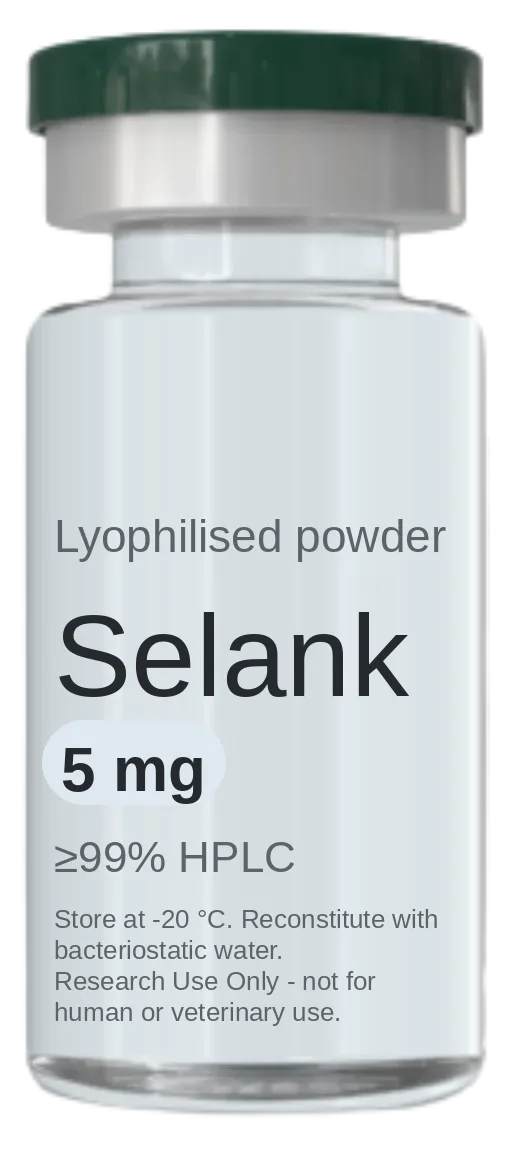
Within the catalogue, [Selank](/en/product/selank/) shares the same research origin (Russian development from the 1980s-1990s) and is also studied in neurological research, though its sequence and mechanism differ from Semax's.
How do I know the Semax batch I'll receive is what it claims to be?
By requesting the certificate of analysis for that specific batch. PeptoClinic publishes reports from independent laboratories on the [quality page](/en/quality/), with the purity each analysis found — that's the document to check before anything else.
Does LL-37 have any relationship to tissue-repair peptides like BPC-157?
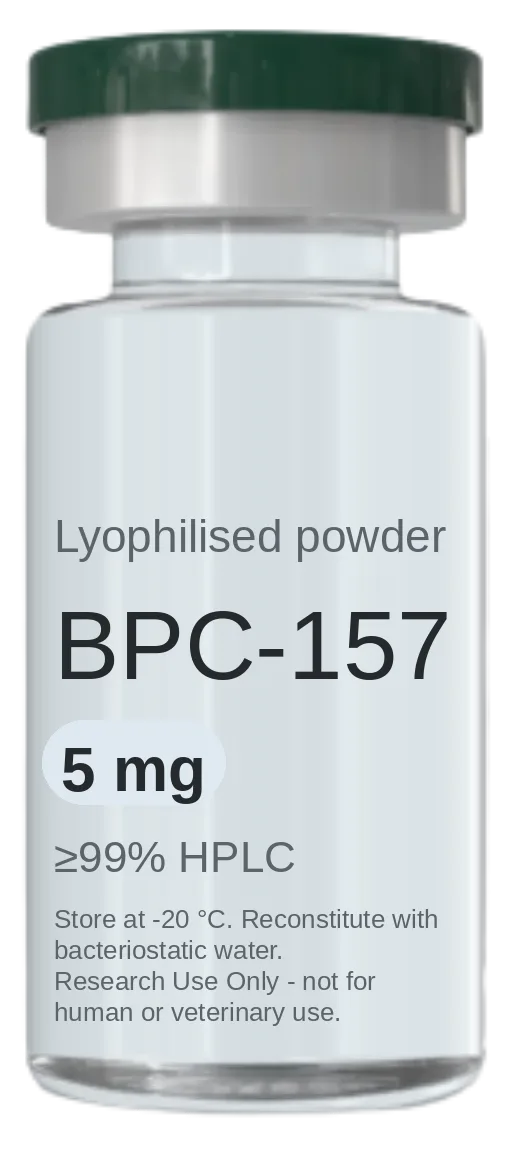
They come up in the same conversation because the literature studies both in processes related to tissue repair, but they're distinct molecules in sequence and mechanism. [BPC-157](/en/product/bpc-157/) is a peptide derived from a gastric protein; LL-37 is a cathelicidin from the immune system. Sharing an area of interest doesn't make them interchangeable.
Compounds mentioned
BPC-157 + TB-500
BPC-157 and TB-500 in a single vial — the pairing most studied together in tissue-repair research.
- Purity:
- ≥99% HPLC
- Sizes available:
- 5 mg + 5 mg
The consultation
One intake that settles goals, history and contraindications alongside compound, quantity, documentation and route — reviewed by a physician before anything ships.
More notes
-
Can You Ship Peptides as a "Sample"?
Why declaring a paid research peptide shipment as a duty-free commercial sample is invalid in Argentina, and what paperwork works instead.
-
Peptide Invoice: What Argentine Customs Wants
What a research peptide invoice needs so Argentine customs releases the shipment instead of holding it in bonded storage.
-
Hexarelin vs CJC-1295: The Differences
Hexarelin is a ghrelin-mimetic GHRP; CJC-1295 is a GHRH analog. What separates the two mechanisms and their documentation.