
Note
Peptide Package Under Someone Else's Name
What happens if a research peptide shipment reaches Argentina labeled to someone other than the declared importer.
If the name on a package label doesn't match the name and ID of the person collecting it, the shipment gets held until that mismatch is resolved. This isn't a penalty — it's an administrative control. The courier or postal service needs the declared recipient of a shipment to be the same person (or the same legal entity) who signs for it, because that identity is what gets tied to the material's entry into the country. If the two don't match, the package doesn't clear on its own.
This applies to any international shipment entering Argentina by courier or post, and a research material order is no exception. PeptoClinic supplies research peptides to [Argentina](/en/argentina/) with the customs file prepared before the package ships, and that preparation includes making sure the recipient name on the paperwork is exactly the same as the person who'll be on the other end when it arrives.
Why the recipient name has to match
When a package crosses a border, the customs system needs an identity to attribute that entry to: who ordered it, who receives it, and in some cases who's responsible for declaring what it is. That identity is built from concrete data — full name, ID number, address — and it has to stay consistent across three places: the commercial invoice that travels with the shipment, the courier's waybill, and the actual person who ultimately collects or signs for the delivery.
If those three points don't line up, the system has no automatic way of knowing whether it's a typo, a gift between colleagues, a purchase made under someone else's name, or something that needs manual review. The default response, in any of those cases, is the same: hold the package until someone clarifies it.
What actually happens when there's a mismatch
The most common outcome is that the courier notifies the declared recipient asking them to confirm their details, or requests additional documentation (a signed note, a copy of an ID) authorizing someone else to collect the shipment on their behalf. Until that's resolved, the package sits in storage.
If nobody responds to that notification, or if the documentation submitted still doesn't match what was declared, the package can end up returned to the sender instead of released. This has nothing to do with what the contents are — the same thing happens with a book, a spare part, or a lab instrument. It's an identity problem with the shipment, not a question of what was imported.
How to avoid this from the start
The way to keep this from happening is simple: the name declared as the order's recipient has to be the real name of the person who will actually be available to receive the package, matched to the ID that person can show if the courier asks for one. Not an alias, not a third party's name "to keep things simple," not a company name that doesn't correspond to whoever is signing for it.
When someone requests a quote from PeptoClinic — for example, retatrutide or BPC-157 for their research program — that detail gets confirmed before the customs file is built, along with the delivery address. Changing it after the shipment has already gone out is far harder than confirming it beforehand: in transit, the courier works with what's already declared, not with a corrected version sent over later.
If you need someone else to receive the package
There's a difference between "the package arrived under a name that isn't mine" and "I declared from the start that someone else would receive it." The second scenario works fine, as long as that person is listed as the recipient from the initial order — with their correct name and ID — and they're the one available when the courier attempts delivery. What causes the problem is the mismatch between what was declared and what shows up at delivery, not the fact that the recipient is a colleague, a lab, or an address different from the buyer's.
If a laboratory or research group will be receiving material on behalf of several people, the simplest approach is to declare, from the order itself, the person or entity that will actually be at that address to sign for it, and keep that same reference consistent across all the paperwork.
What documentation travels with the shipment
An order quoted through PeptoClinic doesn't travel with just the vial. It carries a commercial invoice describing the contents as research material, and the certificate of analysis for the corresponding batch, issued by an independent laboratory — the standard we use is Janoshik Analytical, which on published batches found purity as high as 99.893% and a floor of 99.669% in the worst reported case. That documentation is what supports the customs declaration: it describes what the contents are, in what quantity, and under what specification — which is part of why the recipient's identity has to be just as precise.
The material ships lyophilized, as a powder, inside a sealed vial with desiccant — not in a cold chain, because in that state it stays stable at room temperature. Full details on how it's packaged and what to expect in transit are on the shipping page.
What to do if the package is already held
If the package is already in transit and a data-mismatch notice shows up, the first thing is not to ignore it: the longer the recipient's identity goes unresolved, the closer the package gets to an automatic return. Responding with whatever documentation the courier requests — usually an identity confirmation from whoever will be collecting it — is usually enough to release it. If the order was placed through PeptoClinic, writing to [email protected] with the order number helps quickly reconstruct where the mismatch happened between the invoice, the waybill, and the person on the other end.
For laboratory research use only
Everything PeptoClinic supplies is material strictly for research use only (RUO): in vitro and laboratory research. It is not a drug, not a supplement, not a food. Nothing shipped is approved or intended for human or veterinary consumption, nor for the diagnosis or treatment of any condition. None of these statements has been evaluated by ANMAT, the FDA, or any equivalent authority. PeptoClinic is not a pharmacy, not a clinic, does not offer telehealth, and does not provide dosing, administration, or protocol guidance — it's a technical supply consultancy that quotes research material and prepares the documentation that material needs to cross the border.
Frequently asked questions
What happens if the package arrives with someone else's name on the label?
It gets held until the mismatch between the name declared on the waybill and the person available to receive it is resolved. The courier typically requests an identity confirmation or additional documentation before releasing the delivery.
Can I have the shipment addressed to a colleague or my laboratory?
Yes, as long as that name is declared from the initial order and that same person or entity is the one available to sign for the delivery. The problem isn't that the recipient is someone else — it's a mismatch between what was declared and what's real at the moment of delivery.
Can I change the recipient after placing the order?
It's much simpler to confirm it before the customs file is built than to correct it once the package is already in transit. If a change is needed, notify [email protected] as early as possible to try to adjust it before shipment.
What documentation travels with the package to avoid this kind of delay?
The commercial invoice describing the contents as research material, and the certificate of analysis for the batch, issued by an independent laboratory. That documentation is the basis for the shipment's declared identity.
What happens if the package gets held in transit?
You need to respond to the courier's notice with whatever documentation is requested, usually an identity confirmation from whoever will be collecting the package. If it isn't resolved, the package can end up returned to the sender instead of released.
Is this material approved for human use in Argentina?
No. Everything PeptoClinic supplies is research material (RUO), for in vitro and laboratory use. It is not approved for human or veterinary consumption, nor for diagnosis or treatment, and no regulatory authority has evaluated these statements.
How do I verify that the batch I received matches the certificate?
The certificate of analysis identifies the batch with data that can be cross-checked against what physically arrives. The [quality](/en/quality/) page explains how to read a certificate and what to check before confirming the match between the document and the vial.
Does this same issue apply to any compound in the catalog?
Yes. Recipient identity is a control on the shipment, not on the contents — it applies equally to [MOTS-c](/en/argentina/mots-c/), [GHK-Cu](/en/argentina/ghk-cu/), or any other compound in the [catalog](/en/catalog/).
Compounds mentioned
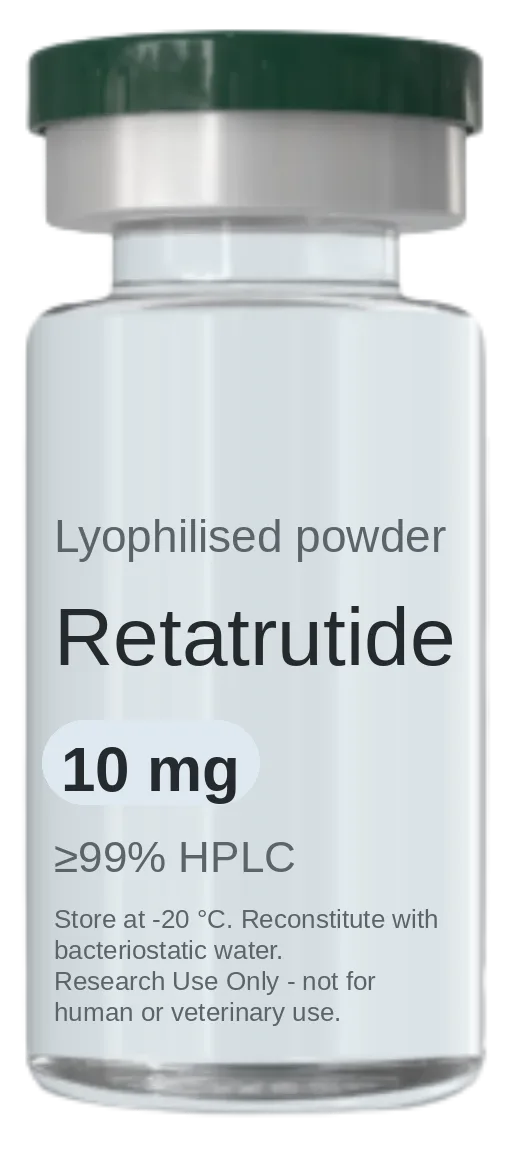
Retatrutide
Triple-agonist metabolic research peptide targeting GLP-1, GIP and glucagon receptors.
- Purity:
- ≥99% HPLC
- Sizes available:
- 10 mg
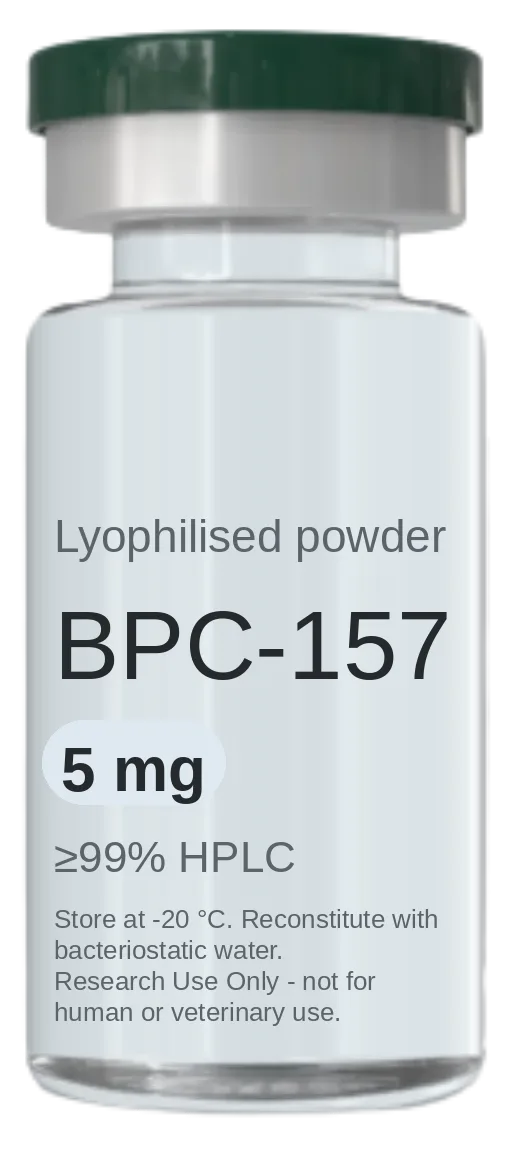
BPC-157 + TB-500
BPC-157 and TB-500 in a single vial — the pairing most studied together in tissue-repair research.
- Purity:
- ≥99% HPLC
- Sizes available:
- 5 mg + 5 mg
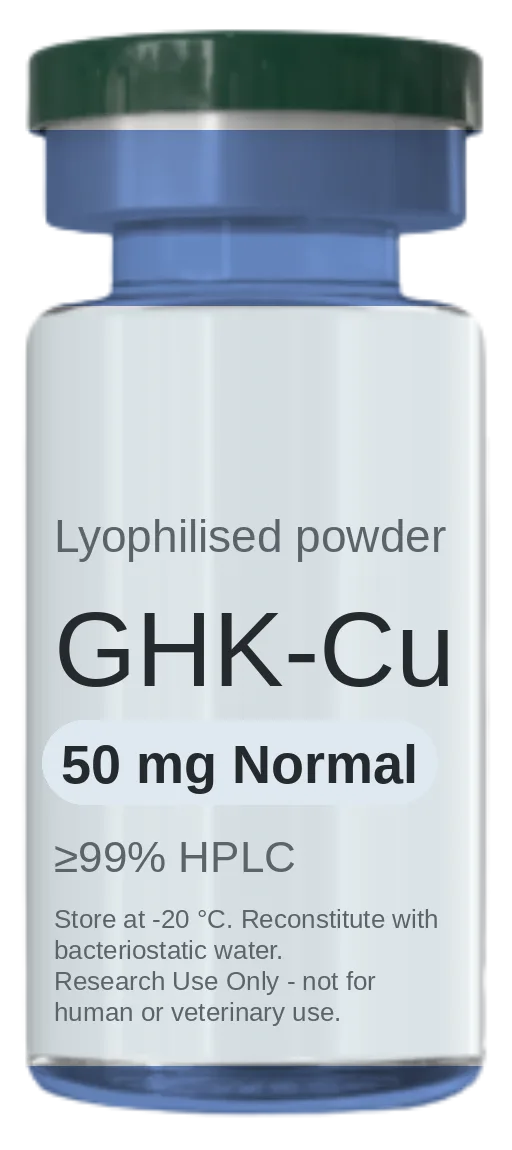
GHK-Cu (Copper Peptide)
Copper-binding tripeptide studied in extracellular matrix and dermal research models.
- Purity:
- ≥99% HPLC
- Sizes available:
- 50 mg Normal – 50 mg Plus
The consultation
One intake that settles goals, history and contraindications alongside compound, quantity, documentation and route — reviewed by a physician before anything ships.
More notes
-
Can You Ship Peptides as a "Sample"?
Why declaring a paid research peptide shipment as a duty-free commercial sample is invalid in Argentina, and what paperwork works instead.
-
Semax vs LL-37: What's the Difference
Semax is a synthetic heptapeptide; LL-37 is a human cathelicidin. Different origin, structure and research field, side by side.
-
Peptide Invoice: What Argentine Customs Wants
What a research peptide invoice needs so Argentine customs releases the shipment instead of holding it in bonded storage.