
Note
LL-37 vs GHK-Cu: What Sets Them Apart
LL-37 is a 37-residue cationic peptide; GHK-Cu is a copper-bound tripeptide. We compare structure, mechanism, and research lines.
LL-37 and GHK-Cu are not variants of the same molecule: they belong to different peptide families and the literature studies them for different reasons. LL-37 is a 37-amino-acid, positively charged peptide from the cathelicidin family, studied for antimicrobial activity and its role in innate immunity. GHK-Cu is a tripeptide — glycine, histidine, lysine — bound to a copper ion, studied mainly in extracellular matrix remodeling and dermal signaling. They share the generic word "peptide" in search queries, but nothing else: not structure, not size, not mechanism.
What is LL-37?
LL-37 is the only cathelicidin family member identified in humans, derived from the precursor protein hCAP18. It is a 37-residue chain that, in solution, folds into an amphipathic alpha-helix — one hydrophobic face, one positively charged face. That geometry is the basis for the two most-cited research lines on the molecule: its interaction with microbial membranes and its modulating effect on innate immune cells, documented in reviews such as those indexed on PubMed on cationic antimicrobial peptides.
Because of its size — 37 residues is large for a research peptide — and its net positive charge, LL-37 behaves very differently in the lab than a short peptide does. It is more sensitive to proteolytic degradation, and its solubility depends heavily on the pH and ionic strength of the buffer used.
What is GHK-Cu?
GHK-Cu is something else entirely: a tripeptide with the sequence Gly-His-Lys that forms a coordination complex with a copper ion (Cu²⁺). It was first described as a natural component of human plasma whose concentration declines with age, and since then the literature has studied it mainly in the context of collagen remodeling and copper-dependent cell signaling in dermal tissue.
Unlike LL-37, GHK-Cu is a small, stable molecule, and its biological activity depends on the copper ion being retained at the histidine-copper coordination site. If that coordination breaks, the peptide no longer behaves the same way in assays — one reason a batch's certificate of analysis matters as much for GHK-Cu as for any other compound in a catalogue. PeptoClinic quotes GHK-Cu as lyophilized research material, with the lab report for the batch (task 204977, analyzed by Janoshik Analytical) available on request.
The structural differences, plainly
- Size: LL-37 has 37 residues; GHK-Cu has 3, plus a coordinated metal ion.
- Charge: LL-37 is cationic along its whole length; GHK-Cu's charge is concentrated at the copper-binding site.
- Conformation: LL-37 depends on folding into an alpha-helix to be active; GHK-Cu needs no secondary folding — its activity depends on copper coordination.
- Stability: the copper-bound tripeptide tends to be more stable against degradation than a 37-residue chain exposed to proteases.
The mechanistic differences the literature studies
Research on LL-37 concentrates on two axes: direct interaction with bacterial lipid membranes (hence the "antimicrobial" interest) and modulation of innate immune response — cell recruitment, surface-receptor signaling. It is a peptide that acts mainly through physical interaction with biological structures and through immune signaling.
Research on GHK-Cu concentrates on copper-dependent signaling: the complex participates as a cofactor in enzymatic processes linked to collagen synthesis and remodeling, and to fibroblast response in tissue-repair models. It does not act by breaking membranes; it acts as part of a metal-dependent signaling cascade.
In other words, these are two research subjects that share the generic label "peptide" but that an immunologist and a dermal biologist would approach with entirely different questions.
Which research lines does each appear in today?
LL-37 appears mostly in studies of antimicrobial resistance, epithelial barrier immunology, and infection models. It is frequently mentioned alongside other endogenous antimicrobial peptides in reviews of innate host defense.
GHK-Cu appears in studies of extracellular matrix, dermal signaling, and tissue-repair models — territory where PeptoClinic's catalogue also carries other compounds of interest for the same kind of research, such as BPC-157 or KPV, each with its own proposed mechanism in the literature and its own purity report.
How purity is documented in each case
PeptoClinic publishes the laboratory report for every batch it distributes, and the lowest purity published so far across those reports is 99.669%, corresponding to the MOTS-c batch analyzed by Janoshik Analytical — that figure is cited deliberately, not the highest one, because it is the real floor a researcher can expect to see, not the best-case scenario. The quality page explains how to read a full certificate of analysis: which columns to check, what the chromatogram area percentage means, and why a report with no date or task number proves nothing.
The framework this operates within
All material PeptoClinic quotes is supplied strictly for Research Use Only (RUO): in vitro and laboratory assays. Nothing on this site is a medicine, a supplement, or a food; nothing is approved or intended for human or veterinary consumption, diagnosis, or treatment, and none of these statements have been evaluated by the FDA, ANMAT, or any equivalent authority. No prescription is written or filled, and questions about administration in people are declined.
Frequently asked questions
Can LL-37 and GHK-Cu be confused by name?
Only if read too quickly: both are peptides cited in biomedical research literature, but the nomenclature — a 37-residue cathelicidin abbreviation versus a three-amino-acid sequence bound to copper — leaves no real room for confusion once the structure is examined.
Which of the two is larger?
LL-37, by a wide margin: 37 amino acids against GHK-Cu's 3 plus the coordinated copper ion. That size difference explains much of their different behavior in solution.
Do both require refrigeration at the same point in the process?
Lyophilized powder, sealed and protected from light, stays stable at room temperature for weeks, with no cold chain required — that applies equally to any lyophilized peptide in the catalogue. Cold becomes relevant only once the material is reconstituted into solution, when storage between 2 and 8 °C is recommended — that point in the process is the same for GHK-Cu as for any other lyophilized compound.
Is GHK-Cu in PeptoClinic's catalogue?
Yes, it is quoted as research material with its corresponding laboratory report. Anyone wanting to review the document can request it along with the quote.
Why does GHK-Cu carry copper and LL-37 does not?
Because they are molecules studied through different mechanisms: GHK-Cu's activity depends on retaining the copper ion at its histidine-copper coordination site, while LL-37's studied activity depends on its amphipathic helix structure and charge, with no metal cofactor required.
How is a batch's purity verified before use in an assay?
By requesting the certificate of analysis for that specific batch, not a generic compound sheet, and checking that it carries an identifiable task number, date, and laboratory. The site's quality page explains the full procedure.
Can they be compared directly in the same assay?
They are different research subjects with different research questions, so a direct "potency" comparison does not have much scientific meaning — what gets compared, in practice, is the available literature on each mechanism and the assay design a given researcher has in mind.
Is Argentina a destination this material can be quoted to?
Yes, Argentina is one of the destinations PeptoClinic quotes research material to, with import documentation prepared for entry as laboratory reference material. The [Argentina page](/en/argentina/) covers how the process works for this market.
Compounds mentioned
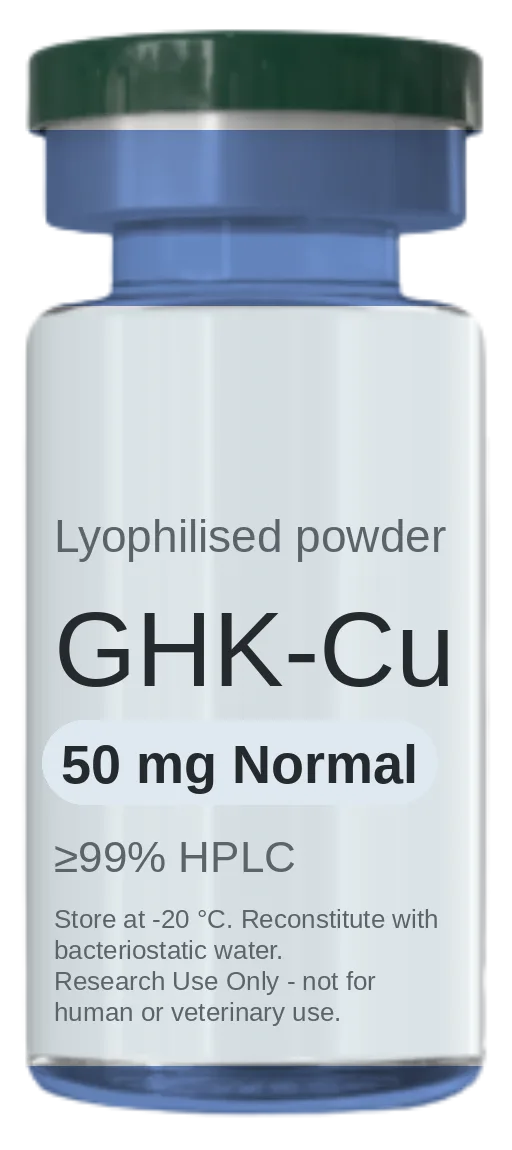
GHK-Cu (Copper Peptide)
Copper-binding tripeptide studied in extracellular matrix and dermal research models.
- Purity:
- ≥99% HPLC
- Sizes available:
- 50 mg Normal – 50 mg Plus
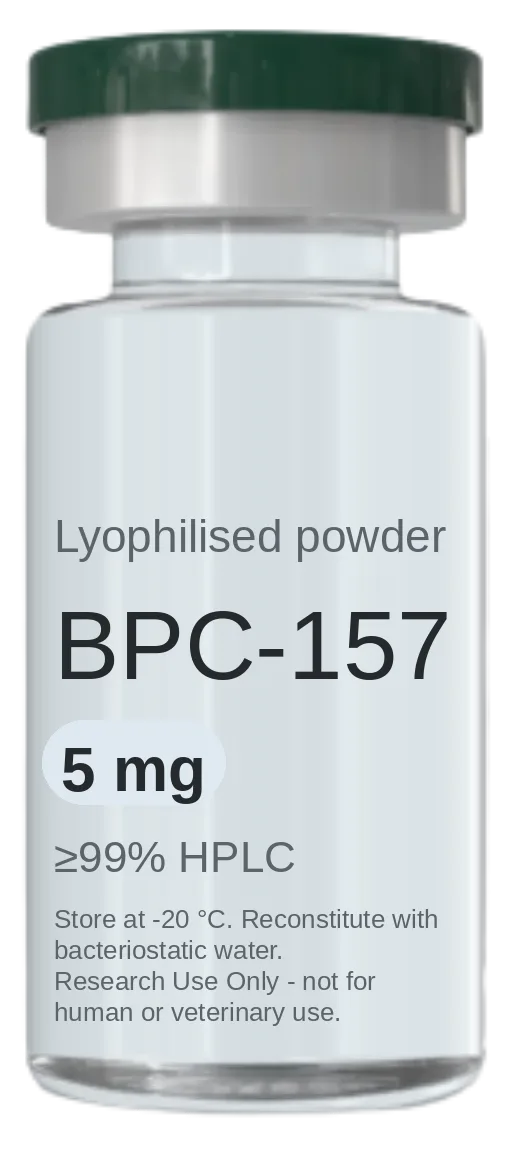
BPC-157 + TB-500
BPC-157 and TB-500 in a single vial — the pairing most studied together in tissue-repair research.
- Purity:
- ≥99% HPLC
- Sizes available:
- 5 mg + 5 mg
The consultation
One intake that settles goals, history and contraindications alongside compound, quantity, documentation and route — reviewed by a physician before anything ships.
More notes
-
No Tax Address on File: Argentine Customs
What Argentine customs does with a research peptide shipment when the recipient has no registered tax address.
-
How Long Does a Peptide Quote Take?
A research peptide quote from PeptoClinic usually arrives within one business day. Here's what happens during that review.
-
Change Recipient After Argentine Customs
Once a research peptide shipment enters Argentine customs, can the recipient be changed? What the process actually allows.