
Note
Local Reseller vs. Direct Peptide Importer
What separates a direct importer from a local reseller when buying research peptides in Argentina: batch documentation, cold chain and traceability.
The difference comes down to documents and whether anyone in the supply chain can account for them. A provider that imports directly holds the certificate of analysis from the laboratory that tested the specific lot in those vials, the customs file recording the material's entry into Argentina, and the temperature logs from the shipper. A local reseller received the material from at least one additional link in the chain and, in most cases, holds none of those documents.
The documentary chain in each case
When a supplier imports directly, they hold the certificate of analysis issued by the laboratory that ran the tests, linked to the specific lot number on those vials. They hold the customs documentation showing how the material entered Argentina — typically classified as laboratory reference material. And they hold the temperature logs from the point of manufacture to the point of arrival.
When you buy from a local reseller, that chain has at least one additional link — generally more than one. The reseller purchased the material from a distributor or from another importer, who may or may not have passed along the original documentation. By the time the vials reach you, the certificate of analysis is sometimes a photograph of a photograph, the lot number on the label may not match the number on the report, and no one in the chain you are dealing with can tell you which laboratory ran the test or on which date.
This is not a failure of good intentions. It is a structural consequence of how supply chains work. Each handoff between suppliers creates a gap in the documentary record, and no one downstream can close a gap they were not present for.
What a certificate of analysis actually proves
A COA from an independent laboratory proves one thing: that a specific lot of material, identified by its lot number, was analyzed on a stated date and found to contain a compound at a declared purity. It does not prove that the vials you have received came from that lot.
That is why the lot number is the load-bearing element. A direct importer that acquired material from the manufacturer can match the lot number on the vial label to the lot number on the COA. A reseller that sourced from multiple distributors often cannot, because the vials may have been repacked or relabeled at some point in the chain.
PeptoClinic publishes the certificates for the four lots it sent for independent analysis at Janoshik Analytical. The lowest purity recorded across those analyses is 99.669 %. The full reports are available on the laboratory analysis page with the task number for each lot, which allows verification directly with the issuing laboratory.
Cold chain: the most commonly overlooked factor
Lyophilized peptides — in powder form — are less sensitive to temperature excursions during transit than prepared solutions, but they are not inert. Most research peptides are stable at ambient temperature for short periods and require cold storage for longer ones. The problem with a multi-link reseller chain is that no one in it can guarantee the complete thermal history of the material.
A direct importer managing cold-chain logistics knows how a shipment traveled, what temperature it maintained at each stage, and whether there were any thermal excursions. A local reseller that purchased from a distributor that purchased from someone else does not have access to that information, because they never had it.
For laboratory research — which is the only intended use of this material — a peptide that was poorly stored can be visually indistinguishable from one that was not. The difference appears in experimental results, not in how the vial looks.
What only a direct importer can provide
There is information a local reseller cannot supply because they do not have it:
- A COA with a verifiable task number. Not a PDF circulating through informal channels, but a report from a named laboratory with a number that permits direct verification with the issuing lab.
- Customs documentation for the import. Material entering Argentina as laboratory reference material requires a specific classification under the customs code. A supplier that can show that documentation has a recorded chain of custody from origin to destination.
- Direct contact with the manufacturer or the testing laboratory. If there is a technical question about a lot — a question about the analytical method, a result that requires clarification — a direct importer has someone to ask. A reseller does not have that relationship to trace.
What to ask before requesting a quote
If you are evaluating research peptide suppliers in Argentina, these are the questions that distinguish a traceable supply chain from one that is not.
Which laboratory analyzed this lot, and when? The answer has to be a named laboratory, a specific date, and a task or report number. Phrases such as "our supplier guarantees quality" do not answer the question.
Does the lot number on the vial match the lot number on the COA? If they do not match, or if no lot number is visible on the vial, the chain of custody is broken at that point and there is no way to verify what was analyzed.
How was the material stored after it entered the country? A supplier that maintains the material under appropriate cold conditions and can inform you of the storage parameters has a real operational difference from one that does not keep that record.
Under what customs classification did this material enter Argentina? Research peptides can enter the country legally as laboratory reference material. A supplier that can answer this question with documentation went through a regulated import process.
Compounds available for Argentina
PeptoClinic quotes research material for destinations across Argentina. Each order includes the documentation for the corresponding lot: a certificate of analysis with a verifiable task number, along with storage and shipping records.
Available compounds include retatrutide and BPC-157, among other research peptides. GHK-Cu and MOTS-c are also in the catalogue for Argentina. Full details of available compounds and quotation conditions are on PeptoClinic's Argentina page.
For laboratory research only
The material PeptoClinic supplies is exclusively for laboratory research — in vitro use and controlled research environments. It is not approved or intended for human or veterinary consumption, diagnosis or treatment of any condition. ANMAT, the FDA and no equivalent authority has evaluated these compounds for human or veterinary use.
PeptoClinic is not a pharmacy, a clinic or a provider of administration guidance for individuals. Inquiries about human-use protocols are not addressed.
Frequently asked questions
Why do local resellers generally not have the original COA?
Because they purchased the material from a distributor or another importer, and in that transfer the manufacturer's documentation is rarely passed on in full. What circulates are copies that do not always allow verification of whether the lot number on the vial matches the lot number in the original analysis report.
Does a COA in PDF format circulating informally prove anything useful?
It proves that the PDF exists. It does not prove that the material you have received came from that lot. For a COA to be verifiable, the lot number on the vial has to match the number on the report, and the report has to include a task number that allows direct verification with the issuing laboratory.
Which laboratory analyzes PeptoClinic's lots?
Janoshik Analytical. The four published reports are available on the [laboratory analysis page](/en/quality/) with the task number for each analysis. The lowest purity recorded across those reports is 99.669 %.
What does it mean for a peptide to enter Argentina as laboratory reference material?
It is the correct customs classification for compounds destined for research use. An import under that classification carries documentation recording what entered, in what quantity, and with what declared destination. That documentation is part of the chain of custody a local reseller cannot provide.
Does lyophilized powder tolerate transit better than a prepared solution?
Yes. Lyophilized powder is less sensitive to temperature variations during transit than a prepared solution. Even so, the complete thermal history of a shipment is relevant to the integrity of the material in a research context, and only a direct importer can document it continuously from the point of origin.
Does the phrase "direct import" guarantee complete documentation?
Not necessarily. The term is used loosely in the market. What matters is not the label but whether the supplier can show a COA with a verifiable task number, a matching lot number on the vial, and customs documentation for the material's entry into the country.
Does PeptoClinic ship throughout Argentina?
PeptoClinic quotes research material for destinations across Argentina, including Buenos Aires and the provinces. Cold-chain logistics and shipment specifics for each order are covered during the quotation process.
How can I contact the technical team before submitting a formal inquiry?
You can write to [email protected]. The team reviews each inquiry and normally responds within one business day with information about the available compound, the lot in stock, and the documentation that accompanies an order.
Compounds mentioned
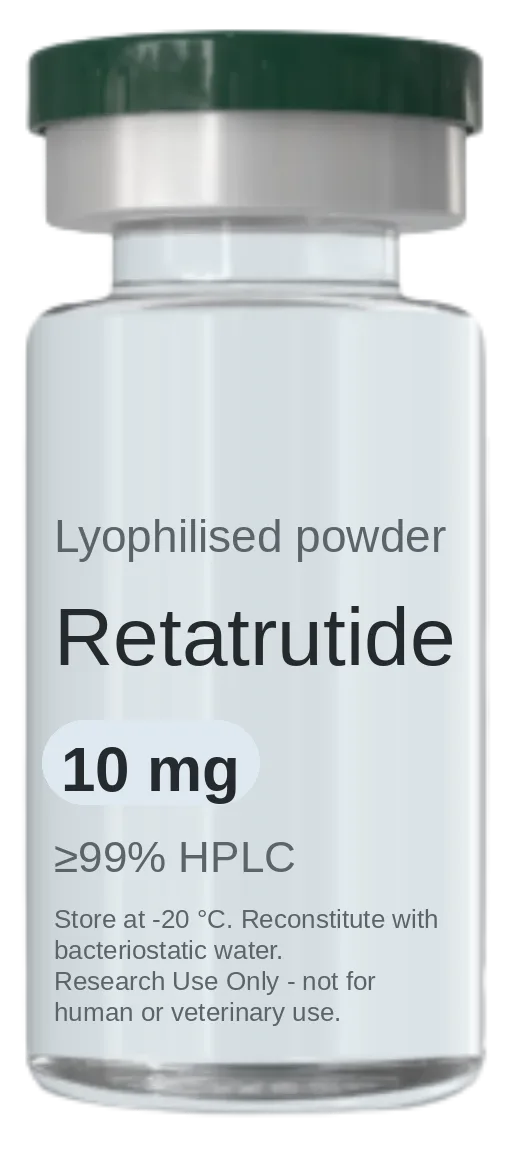
Retatrutide
Triple-agonist metabolic research peptide targeting GLP-1, GIP and glucagon receptors.
- Purity:
- ≥99% HPLC
- Sizes available:
- 10 mg
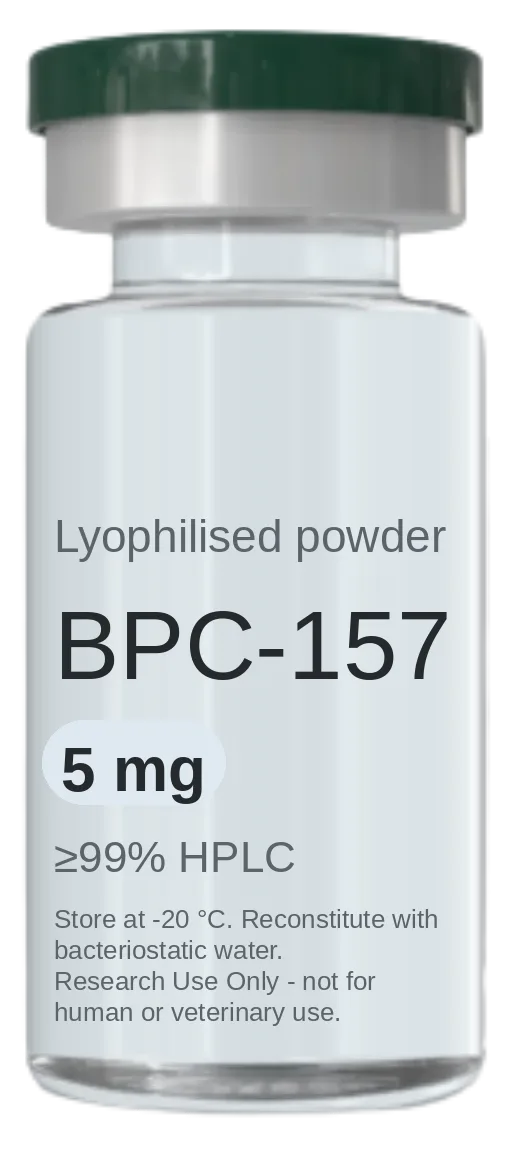
BPC-157 + TB-500
BPC-157 and TB-500 in a single vial — the pairing most studied together in tissue-repair research.
- Purity:
- ≥99% HPLC
- Sizes available:
- 5 mg + 5 mg
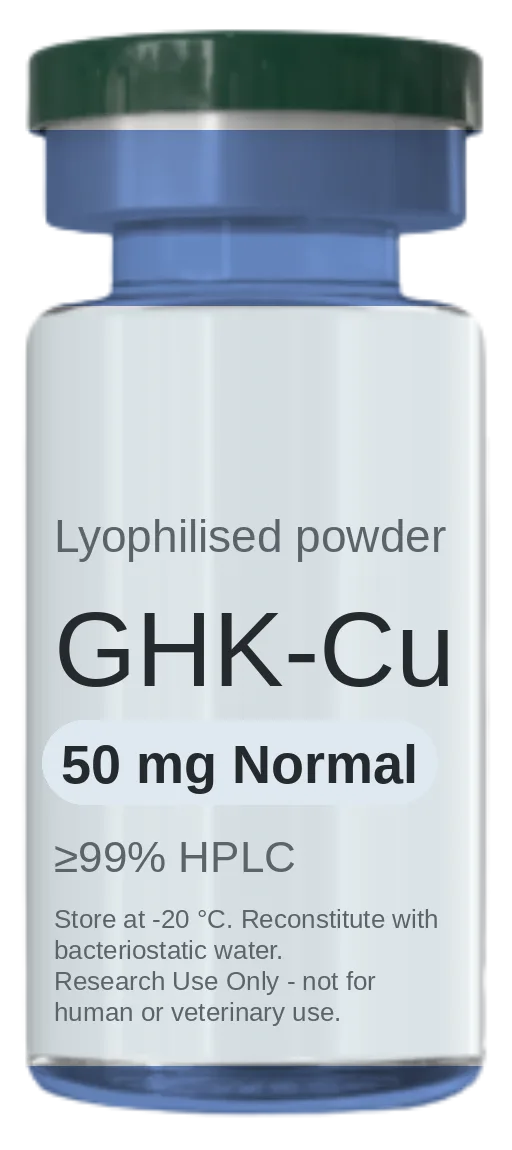
GHK-Cu (Copper Peptide)
Copper-binding tripeptide studied in extracellular matrix and dermal research models.
- Purity:
- ≥99% HPLC
- Sizes available:
- 50 mg Normal – 50 mg Plus
The consultation
One intake that settles goals, history and contraindications alongside compound, quantity, documentation and route — reviewed by a physician before anything ships.
More notes
-
Tesamorelin vs Sermorelin: The Difference
Tesamorelin and sermorelin are both GHRH analogs, but not the same molecule. Here's the structural difference and what the studies on each measure.
-
Peptide Supplier vs. Reseller: What Differs
The real difference is whether someone can name the lab that tested a batch and show the report — or only promise it's pure.
-
MOTS-c or NAD+: What's the Difference
MOTS-c and NAD+ are studied through different mitochondrial pathways; here's what each line of research actually measures.