
Note
Mod GRF 1-29 vs Ipamorelin: Differences
Mod GRF 1-29 and ipamorelin are research peptides with different mechanisms: one activates the GHRH receptor, the other the ghrelin receptor.
Mod GRF 1-29 and ipamorelin differ in the receptor each one activates: Mod GRF 1-29 is a growth hormone-releasing hormone (GHRH) analog that acts on the GHRH receptor, while ipamorelin is a pentapeptide that acts on the ghrelin receptor (GHS-R). They are two separate molecular families that the literature often studies together, precisely because they activate two distinct pathways that converge on the same axis.
What is Mod GRF 1-29
Mod GRF 1-29 is a 29-amino-acid sequence derived from human GHRH, carrying point substitutions that make it more resistant to enzymatic degradation than the native hormone. In practice, this is the same sequence that PeptoClinic catalogs as CJC-1295 without DAC: CJC-1295 is Mod GRF 1-29 with a drug affinity complex (DAC) added to extend its half-life, and without that addition the peptide is left with a short half-life measured in minutes. That is why much of the published literature treats "Mod GRF 1-29" and "CJC-1295 without DAC" as names for the same base molecule.
As a GHRH analog, Mod GRF 1-29 acts on specific receptors in the anterior pituitary, the same pathway studied for the native hormone. It is an agonist of the GHRH receptor, not a peptide from another pharmacological family.
What is ipamorelin
Ipamorelin is a pentapeptide — five amino acids — belonging to the GHRP (growth hormone releasing peptide) family, which mimics ghrelin. Unlike older GHRPs such as GHRP-6 or GHRP-2, the literature describes ipamorelin as selective: it activates the ghrelin receptor without producing, in the models studied, the same magnitude of response in cortisol, prolactin or ACTH observed with other secretagogues in that same family.
That selectivity is why ipamorelin shows up so often in comparative studies: it lets researchers isolate the effect on the growth axis without the cross-hormonal noise that complicates reading other GHRPs.
The core difference: two receptors, two pathways
The difference that actually matters is not size or synthetic origin — it is mechanism:
- Mod GRF 1-29 activates the GHRH receptor in the pituitary. This is the same pathway that growth hormone-releasing hormone activates naturally.
- Ipamorelin activates the ghrelin receptor (GHS-R1a), a parallel pathway that operates through a distinct mechanism, even though it converges on the same gland.
Why they show up combined in study protocols
Because the two peptides activate different receptors on the same population of pituitary cells, several preclinical studies report a synergistic effect when both are administered together in the model, greater than what is observed with either peptide evaluated alone. That is the technical reason the research literature tends to present them as a pair rather than as interchangeable substitutes: they do not compete for the same binding site, so a study designed to understand the full axis needs to examine both pathways, not pick one.
This does not imply equivalence. They are two molecules with completely different structures, molecular weights and mechanisms of action. That the literature combines them in an experimental model is a design decision for that study, not an indication that they serve the same function.
Stability and half-life: the other difference the papers discuss
Mod GRF 1-29 (without DAC) has a short half-life, on the order of minutes, because it degrades quickly once in solution. Ipamorelin, being a simpler pentapeptide, also has a short half-life but for different structural reasons: its short sequence makes it less stable against certain peptidases than a 29-amino-acid chain. No in vitro stability assay substitutes for the certified analysis of a specific batch: both factors — enzymatic degradation and the stability of the lyophilized peptide — are exactly what a laboratory report and a technical data sheet are meant to document before the material reaches a bench.
Purity and documentation: what to request before quoting
Neither molecule is differentiated by "which one is better" — the real question is which one answers the question the experimental design actually needs answered. What is comparable between the two, and between any pair of peptides in the catalog, is the documentation attached to the batch. PeptoClinic works to a purity standard of ≥99% by HPLC on the research peptides it quotes, and the way to verify that standard is not the vial label but the laboratory report for that specific batch.
The criterion for evaluating any supplier — for Mod GRF 1-29, ipamorelin or any other compound — is simple: request the analytical report for the specific batch, not a generic data sheet for the compound, and confirm the laboratory that signed it is identifiable and can be contacted. What to look for in that document, and the reports already published, are on the quality page. The rest of the research peptide catalog follows the same batch-by-batch documentation standard.
Research material only, not for human or veterinary use
Both Mod GRF 1-29 and ipamorelin are supplied strictly as Research Use Only (RUO) material. They are not medicines, not supplements, not approved for human or veterinary consumption, diagnosis or treatment, and none of the statements in this article have been evaluated by the FDA, ANMAT or any equivalent authority. Nothing described here is a use indication, a dose or a protocol: it is a description of what the published literature investigates about these two peptides in laboratory models.
Frequently asked questions
Are Mod GRF 1-29 and CJC-1295 without DAC the same peptide?
Yes, in practice they are the same 29-amino-acid sequence. "CJC-1295 without DAC" is the commercial name given to Mod GRF 1-29 once it started being supplied without the drug affinity complex (DAC) that characterizes full CJC-1295, so both names describe the same base molecule.
Are ipamorelin and GHRP-6 interchangeable?
No. Both are GHRPs and activate the same ghrelin receptor, but the literature describes ipamorelin as more selective: in the models studied it produces a smaller secondary response in cortisol, prolactin and ACTH than what is observed with GHRP-6. They are peptides in the same family, not the same molecule.
Why would a study use both peptides in the same experimental design?
Because they activate different receptors on the same population of pituitary cells. A design aimed at characterizing the full axis — the GHRH pathway and the ghrelin pathway — needs to examine both mechanisms, and several preclinical studies describe a more pronounced effect when the two are combined in the model than when each is evaluated separately.
Which of the two has higher certified purity?
There is no generic answer: purity is certified per batch, not per compound. The standard PeptoClinic applies is ≥99% by HPLC on the research peptides it quotes, and the correct way to verify it is to request the analytical report for the specific batch, not a general technical data sheet for the peptide.
Do Mod GRF 1-29 and ipamorelin have the same half-life in solution?
Not exactly. Both have short half-lives, but for different reasons: Mod GRF 1-29 degrades quickly through enzymatic action once in solution, while ipamorelin, being a chain of only five amino acids, has a different stability profile against the same peptidases. Neither substitutes for reviewing the batch's technical data sheet.
Are these peptides approved for human or veterinary use?
No. Neither Mod GRF 1-29 nor ipamorelin is approved for human or veterinary consumption, diagnosis or treatment in any jurisdiction, and no regulatory authority — FDA, ANMAT or equivalent — has evaluated the statements in this article. They are supplied exclusively as research material.
What documentation should accompany a batch of either peptide?
An identifiable laboratory analytical report, signed by a laboratory that can be independently verified, corresponding to the specific batch being quoted — not a generic data sheet for the compound. That is the baseline for evaluating any research peptide supplier, regardless of which of the two compounds is being analyzed.
Where can I see the full catalog of peptides related to the GHRH and ghrelin axis?
PeptoClinic's full catalog includes, besides ipamorelin and CJC-1295 without DAC, other secretagogues from the same family such as [sermorelin](/en/product/sermorelin/) and [tesamorelin](/en/product/tesamorelin/). The complete listing with its documentation is on the [catalog](/en/catalog/) page.
Compounds mentioned
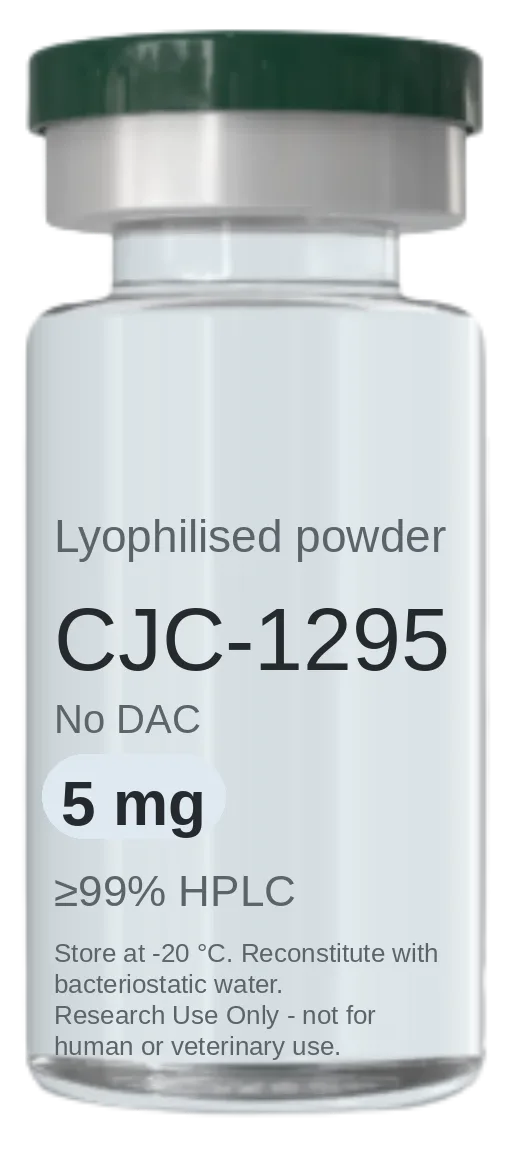
CJC-1295 (sin DAC)
Modified GRF(1-29) tetrasubstituted analogue without drug affinity complex.
- Purity:
- ≥99% HPLC
- Sizes available:
- 5 mg – 20 mg
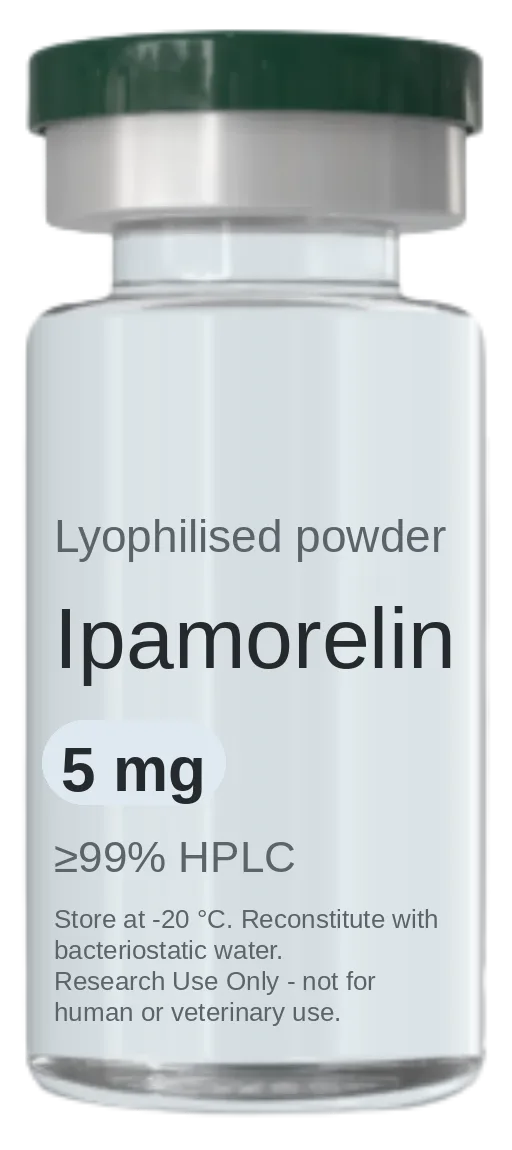
Ipamorelin
Selective ghrelin receptor (GHS-R1a) agonist pentapeptide.
- Purity:
- ≥99% HPLC
- Sizes available:
- 5 mg – 20 mg
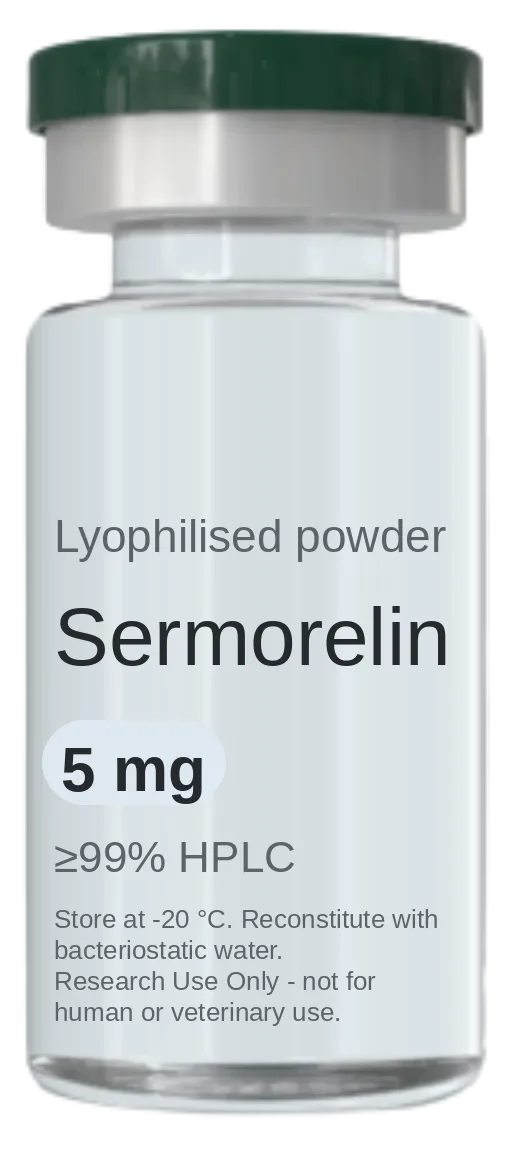
Sermorelin
Growth hormone-releasing hormone analogue used in endocrine signalling research.
- Purity:
- ≥99% HPLC
- Sizes available:
- 5 mg – 20 mg
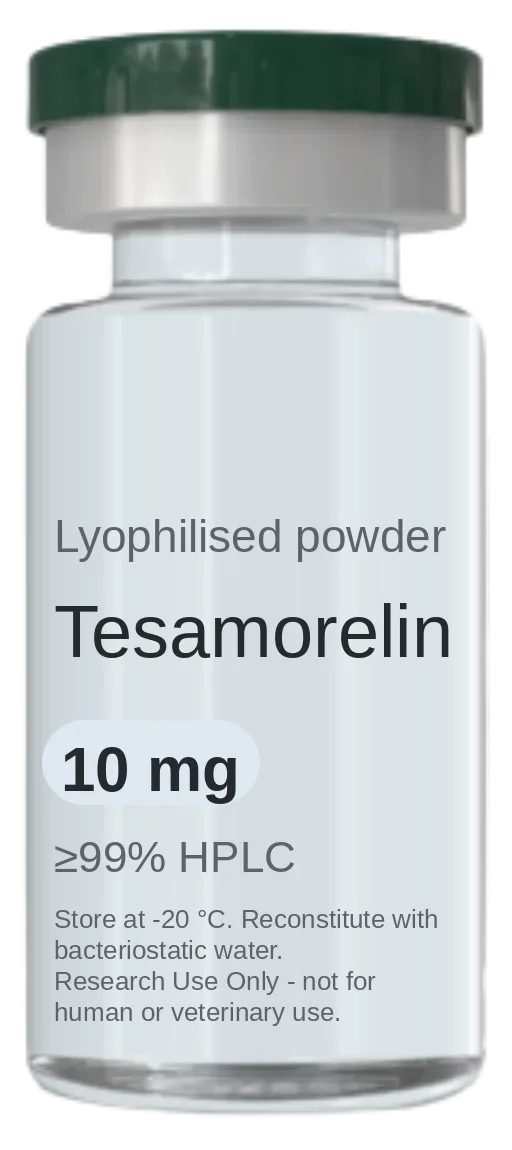
Tesamorelin
Stabilised GHRH(1-44) analogue studied in adipose tissue distribution research.
- Purity:
- ≥99% HPLC
- Sizes available:
- 10 mg – 20 mg
The consultation
One intake that settles goals, history and contraindications alongside compound, quantity, documentation and route — reviewed by a physician before anything ships.
More notes
-
GHK-Cu vs Epithalon: What's the Difference
GHK-Cu and Epithalon are distinct research peptides in structure and in what the literature studies on each. Here's the difference.
-
Freight Forwarder vs Courier to Argentina
Can a freight forwarder replace a courier to import research peptides into Argentina? What changes, and what the practical answer is.
-
No One Home for Your Argentina Shipment?
What happens when a research peptide shipment to Argentina arrives at an address with no one there to sign for it.