
Note
MOTS-C or TB-500: How They Differ
MOTS-c and TB-500 are distinct research peptides; see what each one investigates and what its lab report shows.
MOTS-c and TB-500 are two research peptides that differ in origin, structure, and in what each one is studied for: MOTS-c is a peptide encoded in mitochondrial DNA that is investigated in the field of energy metabolism, while TB-500 is a synthetic fragment of the thymosin beta-4 protein investigated in the field of actin regulation and tissue repair in laboratory models. They are not chemically or functionally interchangeable, and the confusion usually comes from both appearing together in "recovery peptide" lists with no explanation of why.
What MOTS-c Is
MOTS-c (Mitochondrial Open Reading Frame of the 12S rRNA Type-c) is a 16-amino-acid peptide encoded inside the mitochondrial genome, not the nuclear one. That is the underlying structural difference: most research peptides on the market derive from nuclear genes or are synthetic fragments designed in a lab; MOTS-c is one of the few "mitochondrial" peptides identified so far. The literature describes it as a regulator of cellular metabolism under stress, with published work around the AMPK pathway and mitochondria-to-nucleus signaling.
At PeptoClinic, MOTS-c is available as laboratory material, with its corresponding analysis report. The batch analyzed by Janoshik Analytical (task 136923, analysis dated 2026-04-13) returned a purity of 99.669% on a content of 11.31 mg. That is the lowest figure among the four reports PeptoClinic currently publishes, which makes it the one worth citing when discussing purity across the catalogue in general: a better report says nothing about future batches, a worse one marks the real floor.
For researchers specifically looking into sourcing in Argentina, the MOTS-C Argentina page has the quoting and shipping detail for that market.
What TB-500 Is
TB-500 is a synthetic peptide corresponding to an active fragment of thymosin beta-4, a protein that in the cell regulates actin polymerization — the structural protein of the cytoskeleton. Preclinical literature investigates it mainly in relation to cell migration and tissue repair in animal models, for its proposed role in cytoskeletal dynamics during wound-healing processes.
Unlike MOTS-c, TB-500 does not have its own lab report in PeptoClinic's current catalogue: it is presented together with BPC-157 in a single combined vial. The report published for that batch (task 204975, analysis dated 2026-04-13) corresponds to a vial with 10 mg total content, 5 mg of each compound, and that report does not list a purity percentage as a separate figure. Anyone looking specifically for the report on that combined batch finds it on the BPC-157 page, which is where it is documented today.
The Differences That Matter
Placed side by side, the differences between MOTS-c and TB-500 are not a matter of marketing: they come down to biological origin, molecular size, and the research question each one answers.
Origin and structure
- MOTS-c is a 16-amino-acid peptide encoded in human mitochondrial DNA. It is, strictly speaking, a natural gene product, though the material synthesized for research is produced through laboratory chemical synthesis, not extracted from tissue.
- TB-500 is a synthetic 43-amino-acid fragment derived from the sequence of thymosin beta-4, a protein present in practically every mammalian tissue. It is not the full protein: it is the portion that concentrates the activity the literature associates with actin regulation.
What each one is studied for
- MOTS-c is studied in the context of mitochondrial biology and energy metabolism: how the cell responds to metabolic stress, AMPK signaling, and mitochondria-nucleus communication.
- TB-500 is studied in the context of cytoskeletal dynamics: cell migration, angiogenesis, and tissue repair in experimental models, always within the frame of in vitro or animal research.
Catalogue format
- MOTS-c is presented as an individual vial, with its own purity report.
- TB-500 is presented combined with BPC-157 in a single vial, with no separate purity report for the TB-500 fragment on its own.
That last difference is the one that generates the most confusion in searches: someone looks up "TB-500" expecting a standalone product and finds that in this catalogue it ships alongside BPC-157. It is not a cataloguing error: it is how the batch PeptoClinic currently has analyzed is documented.
Why the Certificate of Analysis Matters Before Comparing Anything
Comparing two peptides by name or by what a forum post says tells you nothing about the actual batch you would receive. The detail that matters — which laboratory ran the analysis, what method was used, what purity percentage it found, and over what quantity of content — is in the certificate of analysis (COA) for that specific batch, not in a generic compound datasheet.
PeptoClinic publishes the Janoshik Analytical reports for the batches it has in its catalogue, including cases — like the combined BPC-157 and TB-500 vial — where the report does not break out an individual purity percentage. The quality page explains how to read one of these certificates and what to look for before requesting a quote for any compound.
Research Material, Not for Human Use
Both MOTS-c and TB-500 are supplied strictly as research material (Research Use Only). They are not medicines, supplements, or food, they are not approved for human or veterinary consumption, and none of their properties have been evaluated by the FDA, ANMAT, or any equivalent authority. PeptoClinic is not a pharmacy, a clinic, or a telehealth provider, does not issue or fill prescriptions, and does not provide usage, dosing, or administration guidance for people: any request along those lines is declined. Everything quoted is exclusively for laboratory use.
Frequently asked questions
Can MOTS-c and TB-500 be used together in the same research project?
That depends entirely on the experimental design of each research project and is a decision that belongs to the researcher or laboratory in charge, not something PeptoClinic recommends or directs. What PeptoClinic can provide is the documentation for each batch — origin, purity when it is listed, and lab report — so that decision gets made with verifiable information.
Why doesn't TB-500 have its own purity report in the catalogue?
Because the batch currently available is presented in a combined vial with BPC-157, and the Janoshik Analytical report for that batch (task 204975) documents total content and the split between the two compounds, but does not break out a separate purity percentage for TB-500.
Which of the two has a higher documented purity?
MOTS-c has a purity percentage explicitly listed in its report: 99.669% on 11.31 mg of content, per the Janoshik Analytical analysis dated 2026-04-13. The combined BPC-157 and TB-500 vial does not have that figure broken out in its report, so there is no documented basis to compare the two percentages directly.
Is MOTS-c extracted from human tissue?
No. Although the MOTS-c sequence is naturally encoded in human mitochondrial DNA, the material distributed for research is produced through laboratory chemical synthesis, the same as the rest of the catalogue.
Can TB-500 be requested without BPC-157?
The format PeptoClinic has documented with a lab report today is the combined vial. Any question about a different presentation can be raised when requesting a quote, and the technical team responds based on what is actually available and documented at that time.
Are these peptides approved for use in people?
No. Neither one is approved by the FDA, ANMAT, or any regulatory authority for human or veterinary use. They are supplied exclusively as laboratory research material, with the import paperwork prepared on that basis.
How do I request the lab report for a batch before getting a quote?
The lab report for each compound is available on its [catalog](/en/catalog/) page, and PeptoClinic's technical team also attaches it when preparing a quote. Reviewing it before requesting a price is exactly what the [quality](/en/quality/) page recommends.
What other peptides are studied alongside MOTS-c or TB-500 in metabolic or tissue-repair research?
PeptoClinic's catalogue includes other compounds that appear in related research lines, such as [BPC-157](/en/product/bpc-157/) — which shares a vial with TB-500 — or [GHK-Cu](/en/product/ghk-cu/), also studied in tissue-repair models. Each one has its own lab report and its own catalogue page.
Compounds mentioned
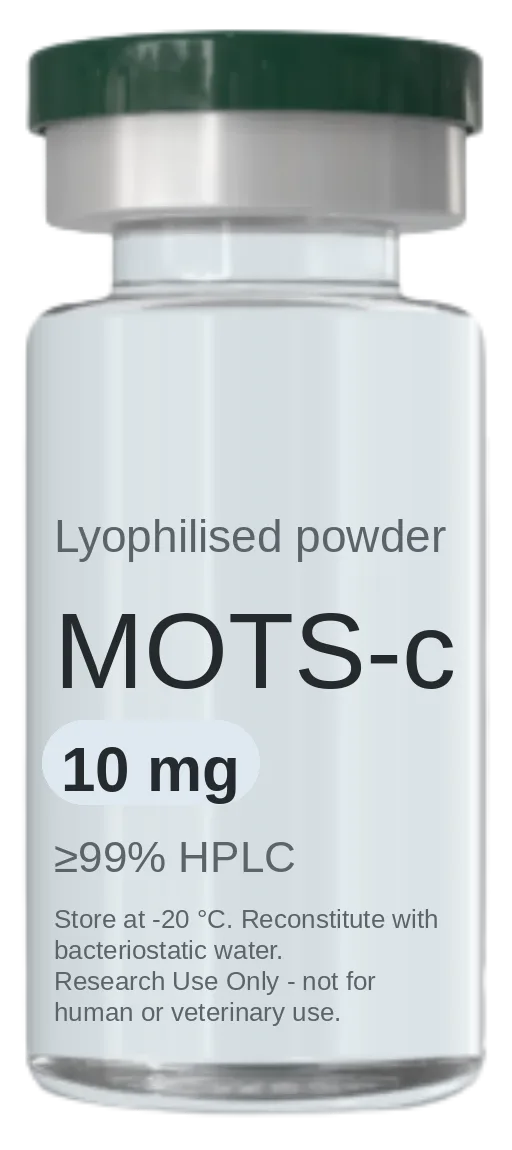
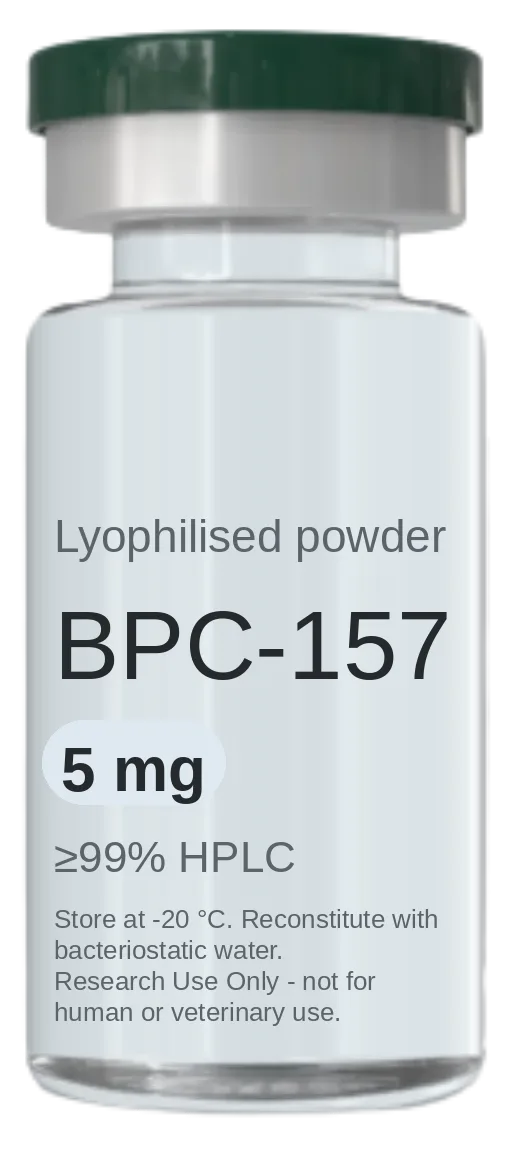
BPC-157 + TB-500
BPC-157 and TB-500 in a single vial — the pairing most studied together in tissue-repair research.
- Purity:
- ≥99% HPLC
- Sizes available:
- 5 mg + 5 mg
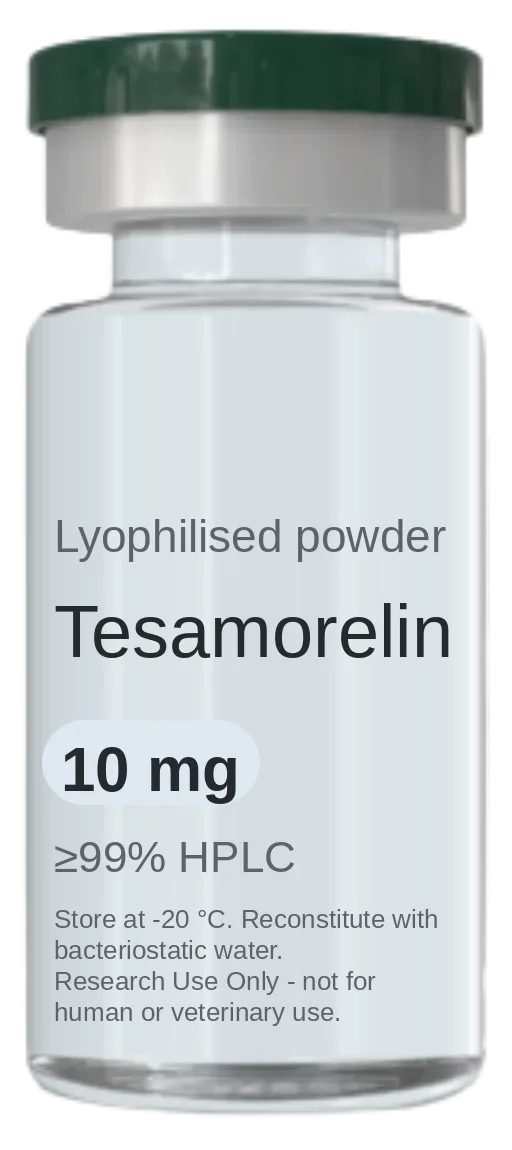
Tesamorelin
Stabilised GHRH(1-44) analogue studied in adipose tissue distribution research.
- Purity:
- ≥99% HPLC
- Sizes available:
- 10 mg – 20 mg
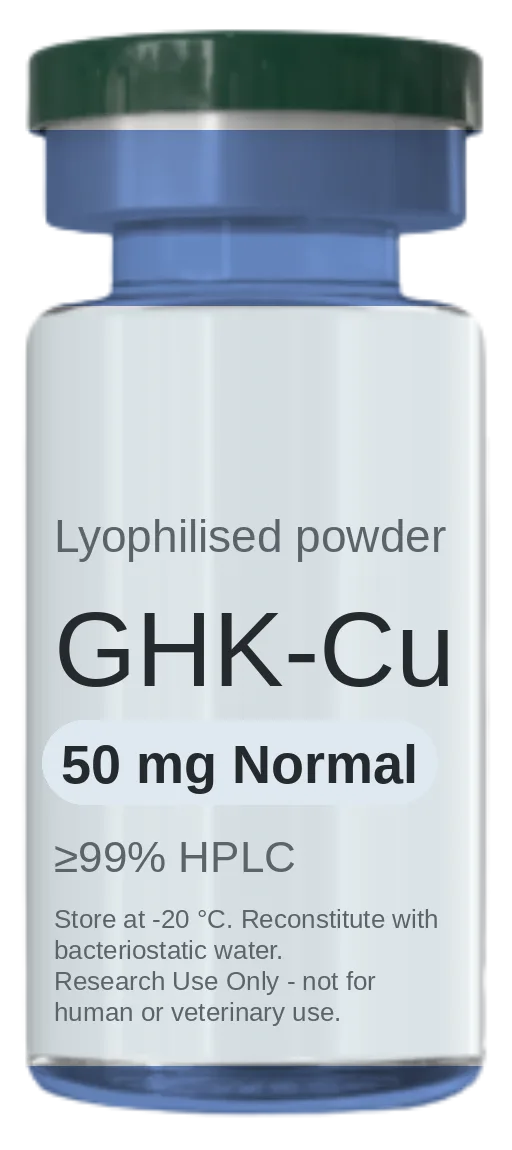
GHK-Cu (Copper Peptide)
Copper-binding tripeptide studied in extracellular matrix and dermal research models.
- Purity:
- ≥99% HPLC
- Sizes available:
- 50 mg Normal – 50 mg Plus
The consultation
One intake that settles goals, history and contraindications alongside compound, quantity, documentation and route — reviewed by a physician before anything ships.
More notes
-
GHK-Cu vs Epithalon: What's the Difference
GHK-Cu and Epithalon are distinct research peptides in structure and in what the literature studies on each. Here's the difference.
-
Freight Forwarder vs Courier to Argentina
Can a freight forwarder replace a courier to import research peptides into Argentina? What changes, and what the practical answer is.
-
No One Home for Your Argentina Shipment?
What happens when a research peptide shipment to Argentina arrives at an address with no one there to sign for it.