
Note
No Commercial Invoice: Argentina Customs
What Argentine customs does when a research peptide shipment arrives without the supplier's commercial invoice, and how to keep it from getting held.
If a research peptide shipment arrives in Argentina without the supplier's commercial invoice, Argentine customs (Aduana) holds the parcel and does not release it until the recipient or the sender provides that document, or a declaration that substitutes for it. It is not an automatic fine and not immediate seizure. It is an administrative pause that resolves in days, or ends in the parcel being returned to the sender, depending on how long the missing paperwork takes to show up.
What Aduana requires to clear a shipment
Every parcel entering the country through the postal import regime or an international courier is cleared against a description of the contents, a declared value, and, in the large majority of cases, a commercial invoice backing up both. That document is what lets the customs agent classify the goods, work out whether any duty applies, and confirm that what the label says matches what's inside.
When the sender doesn't attach the invoice — or attaches one with incomplete data: no legal entity name, no product description, no value — the system has nothing to validate the shipment against. The parcel doesn't move to the next step in the process and sits in a bonded warehouse while the paperwork gets completed.
This isn't specific to peptides. The same thing happens with an electronic component or an imported book. What is specific to this category is that the description of the contents needs to be exact — the compound name, the lyophilized vial format, the research-use-only labeling — because a vague description ("lab sample," "chemical product") tends to generate more questions, not fewer.
What actually happens when the invoice is missing
The usual sequence, when the document isn't there, has three possible outcomes:
- The postal service or courier notifies the recipient and asks that the invoice — or a sworn declaration of value and contents — be uploaded through its platform so the shipment can re-enter the clearance process.
- Aduana holds it in a bonded warehouse for whatever period the agency or the postal operator sets to regularize the situation. That period varies by entry channel; what doesn't vary is that it runs from the moment the system flags the gap, not from the moment the recipient finds out.
- If nobody completes the documentation within that window, the shipment can be declared abandoned and eventually returned to the sender or written off. It never simply "disappears" without a prior notice, but time is lost — and with a cold-chain shipment, time is exactly what a research batch doesn't have to spare.
What does not happen, barring a specific exception, is outright seizure for the sole absence of an invoice. Holding the parcel is the default mechanism; seizure comes in when there's also evidence that the declared description doesn't match the actual contents, or when the goods appear on a restricted-import list without the corresponding authorization.
Why the description matters as much as the price
The commercial invoice isn't only a value document — it's also where it's written down what's being imported and for what purpose. A batch of Retatrutide declared as laboratory reference material for research, with the RUO (Research Use Only) label visible on both the invoice and the vial, is a shipment Aduana can classify without ambiguity. The same batch without that label, or with a vague description, forces the agent to request clarification — and every request for clarification is another day in the warehouse.
This holds for any compound in a research catalogue, not just Retatrutide: MOTS-c, BPC-157, or any other lyophilized compound goes through the same process and depends on the same documentation. PeptoClinic prepares the customs file for each shipment to Argentina before the batch ships, precisely so the invoice, the description and the label say the same thing — see how shipping to Argentina works.
How to keep the parcel from getting stuck
The way to avoid this is for the invoice to travel with the shipment from the point of origin, not to be reconstructed after the parcel is already sitting in a warehouse. Three things a serious supplier settles before dispatch:
- A complete commercial invoice: sender and recipient legal names, a compound-by-compound product description, quantity, declared value, and the research-use-only labeling.
- Consistency between the invoice, the vial label and the courier's waybill: if any one of the three says something different from the other two, that's exactly where the customs agent's question stalls the shipment.
- Verifiable contact details for the recipient, so that the notice from Aduana or the postal service arrives in time instead of landing in an inbox nobody checks.
When a shipment is already in transit and the recipient notices the documentation didn't come through — by email, through the courier's system, or by direct inquiry — the fastest move is usually to ask the sender for a copy of the invoice or an equivalent sworn declaration and upload it to the postal operator's portal before the regularization window closes. Waiting for the system to notify on its own adds days that, with temperature-sensitive material, aren't always available.
Research material, not for human or veterinary use
Everything shipped under this description is, by definition, laboratory reference material: a reagent for in vitro research, not a finished product for human or animal consumption. Nothing PeptoClinic supplies is approved as a medicine, supplement or food, and none of it has been evaluated by ANMAT, the FDA or an equivalent authority. Correct customs documentation — including a commercial invoice carrying the RUO label — is exactly what supports that classification at the border. Without it, the shipment loses the framing that separates it from any other undeclared import. Anyone looking for dosing protocols or guidance on human use won't find that here, because that isn't what this material is.
To understand what accompanies each batch beyond the invoice — lab report, label, cold chain — it's worth reviewing how the quality of each compound is documented before coordinating a shipment.
Frequently asked questions
Does Argentine customs destroy the parcel if there's no invoice?
Not as a first step. The usual outcome is that the parcel is held in a bonded warehouse while the recipient is notified to regularize the documentation. Destruction or return to the sender only comes up if the regularization window expires without a response.
Who has to get the invoice if it didn't arrive with the shipment?
In practice, the recipient is the one who receives the notification and can upload the document through the postal or courier portal, but the document itself has to be issued by the sender. It's worth asking for a copy as soon as the gap is noticed, in parallel with the official notice.
Does a pro forma invoice work instead of a commercial one?
It depends on the judgment of the agent processing the shipment at that moment; a pro forma invoice without the same value and description data a commercial invoice carries tends to trigger the same request for clarification. The safest approach is for the document to state exactly what the product label states.
Does it matter if the shipment comes through postal mail instead of a private courier?
The underlying requirement — a description and value backed by a document — is the same in both channels. What changes is the timeline and the notification channel: a private courier usually notifies faster and through more channels than postal mail.
Does a missing invoice generate an extra duty?
Not on its own. Duty is calculated on the value declared in the invoice; if the shipment arrives without one, what's delayed is the calculation itself, not an added charge for the delay.
Can this happen even with a serious supplier?
It can, through a one-off logistics error — an invoice that didn't get attached to the waybill because of a courier issue, for instance — but a supplier that prepares the customs file before dispatch reduces that probability significantly, because the invoice, the label and the waybill are generated from the same batch of data.
Does declaring a lower value help avoid customs issues?
No, and it's counterproductive: a declared value that doesn't match the actual invoice is exactly the kind of inconsistency that turns a simple hold into a case with more questions, because the customs agent then has reason to doubt the rest of the documentation.
What should I do if my shipment is already held and I don't have the invoice on hand?
Contact the sender to have it resent and, in parallel, check the postal or courier portal: most allow the missing document to be uploaded directly there, without an in-person procedure at customs.
Compounds mentioned
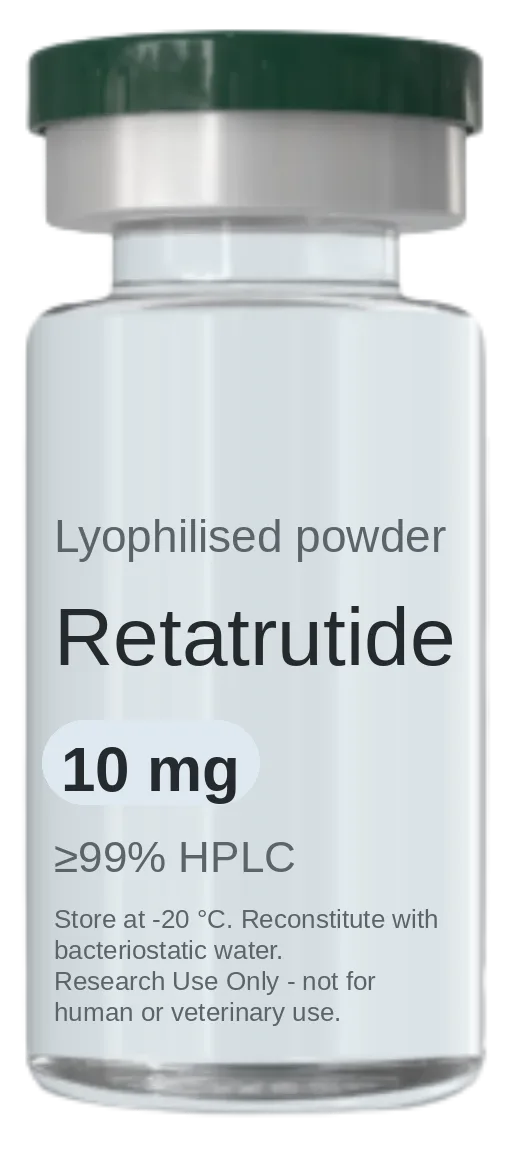
Retatrutide
Triple-agonist metabolic research peptide targeting GLP-1, GIP and glucagon receptors.
- Purity:
- ≥99% HPLC
- Sizes available:
- 10 mg
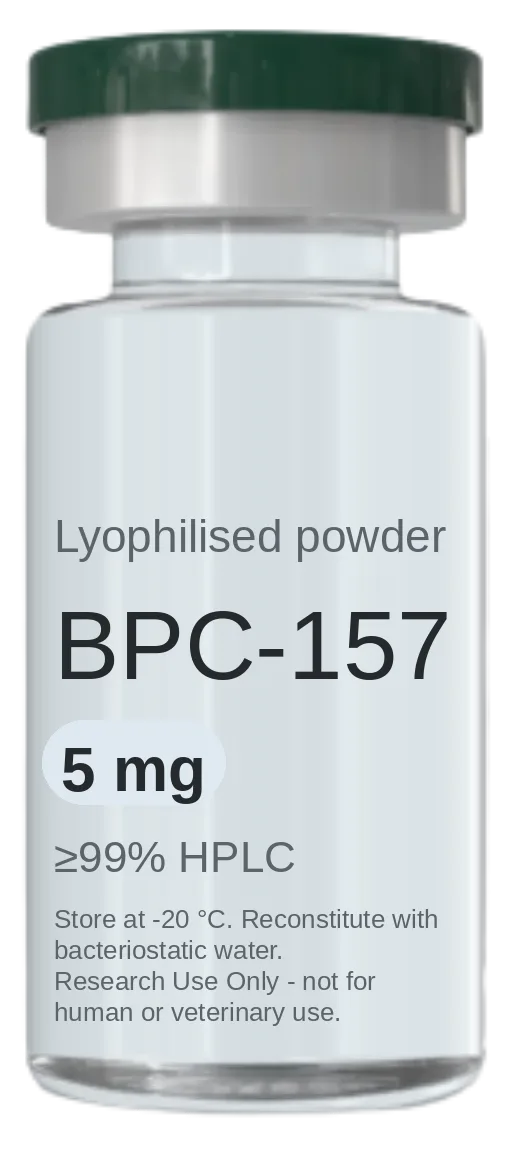
BPC-157 + TB-500
BPC-157 and TB-500 in a single vial — the pairing most studied together in tissue-repair research.
- Purity:
- ≥99% HPLC
- Sizes available:
- 5 mg + 5 mg
The consultation
One intake that settles goals, history and contraindications alongside compound, quantity, documentation and route — reviewed by a physician before anything ships.
More notes
-
What Certificate Does ANMAT Require?
ANMAT doesn't issue a certificate to release research peptides from Argentine customs — here's what documentation actually does.
-
GHRP-6 vs Ipamorelin: Key Differences
GHRP-6 and Ipamorelin activate the same receptor, but published research describes very different selectivity and side-effect profiles.
-
If Argentine Customs Reclassifies a Peptide
If Argentine customs reclassifies a research peptide's tariff code, duties, controls and timelines change until the importer responds.