
Note
Peptide Aggregation: What It Is and Prevention
Peptide aggregation clusters chains into inactive complexes. These are the strategies laboratories use to detect and prevent it.
Peptide aggregation happens when individual chains associate with each other and form higher-order clusters — dimers, oligomers, or fibrils — rather than remaining as independent molecules in solution or as stable lyophilized powder. The practical consequence is a sample whose active monomer concentration no longer matches what the scale shows: part of the material exists as aggregate with different physicochemical properties and, in most biological assays, reduced or absent activity.
Why peptides aggregate
Aggregation tendency is largely encoded in the sequence. Hydrophobic residues — leucine, valine, isoleucine, phenylalanine — are exposed to the aqueous solvent and generate a thermodynamic driving force that pushes chains to associate and minimize that contact. At the level of a single molecule, this is called intramolecular hydrophobic collapse; across a population of molecules, it becomes intermolecular aggregation when concentration rises or the environment shifts.
Three environmental factors accelerate the process:
- pH. Every peptide has an isoelectric point (pI). At that pH, net charge is zero and the electrostatic repulsion that keeps molecules apart disappears. Aggregation is highest near the pI and lowest when pH moves far enough in either direction.
- Temperature. Heat increases the frequency of inter-chain collisions and can denature protective secondary structures, exposing hydrophobic regions that would otherwise remain folded.
- Metal ions. Cu²⁺, Zn²⁺, and Fe²⁺ can act as bridges between histidine, cysteine, or aspartate residues on separate chains. GHK-Cu, a tripeptide that incorporates copper as a structural element, is a well-documented example of this class of metal-mediated interaction.
Concentration amplifies all of these factors: at twice the concentration, the probability of two chains colliding grows nonlinearly.
How labs detect aggregation
The first indicator is visual: a solution that should be clear appears turbid or forms sediment. But some forms of aggregation are invisible to the naked eye.
Size-exclusion chromatography (SEC-HPLC) separates molecules by molecular size. A monomer elutes at its characteristic retention time; dimers and oligomers elute earlier and appear as additional peaks or as a shoulder on the main peak. If the area of those signals exceeds the method's threshold, the lot fails the specification. Dynamic light scattering (DLS) complements SEC by measuring particle size distribution in real time: an unaggregated peptide gives a narrow distribution centered at a hydrodynamic diameter of one to five nanometers for monomers of ten to fifty amino acids. The presence of larger particles shifts and broadens that distribution.
Turbidimetry measures absorbance at 350–400 nm, a range where pure peptides do not absorb but aggregates scatter light. It is fast and useful as an initial screen, though less quantitative than SEC.
Published research on peptide aggregation dynamics is indexed on PubMed, which collects the main biophysics and protein chemistry literature where this topic appears regularly.
The HPLC purity analysis that PeptoClinic includes in every certificate of analysis — issued and signed by Janoshik Analytical — measures the fraction of the chromatogram that corresponds to the compound of interest. A lot at 99.7% purity has at most 0.3% total impurities, which includes both aggregates and degradation products. Details on reading those reports are on the PeptoClinic quality page.
What labs do to prevent aggregation
Lyophilization as the basis of stable storage
Lyophilization removes free water from the product. Without water, molecular mobility drops to levels that make new aggregate formation kinetically unfeasible during storage. The resulting powder can remain stable for months at freezer temperature, provided the vial stays sealed and protected from humidity.
The risk in lyophilization lies in partial rehydration: a vial opened in a humid environment reabsorbs water and can aggregate if reconstitution is not completed in that same step.
pH control during synthesis and processing
Manufacturers working to rigorous specifications adjust solution pH before lyophilizing, choosing a value that maximizes the peptide's net charge and minimizes aggregation tendency. For acidic peptides, a slightly basic pH — between 7.5 and 8.0 — is usually sufficient. For basic peptides, the range is closer to 4.5–5.5.
That adjustment must be documented in the batch synthesis record. Without that traceability there is no way to reproduce the process or diagnose a stability problem in retrospect.
Temperature and protection during storage
Lyophilized peptides are stored at −20 °C as a minimum; some manufacturers prefer −80 °C for peptides with sequences particularly prone to aggregation. Low temperature reduces both the rate of any chemical degradation reaction and the frequency of chain-chain contact in the solid.
UV light exposure accelerates oxidation of tryptophan, tyrosine, and methionine residues. That oxidation alters the chain's charge balance and can promote secondary aggregation. Vials are kept in the dark and sealed until the moment of use.
What to check before opening the vial
When material arrives, before opening it:
- Confirm the vacuum seal is intact: the cap should not be sunken or raised.
- Verify the powder looks as expected — white or off-white, with no unusual coloration or pronounced clumping.
- If the vial came out of a fridge or freezer, allow it to reach room temperature before opening to avoid condensation on the powder.
Peptides with high aggregation tendency
Not all compounds carry the same risk. Some have well-documented challenges in the literature.
[BPC-157](/en/product/bpc-157/) (pentadecapeptide, 15 amino acids) contains a partially hydrophobic sequence that favors intermolecular interactions in aqueous solution. Lyophilization at controlled pH reduces but does not eliminate that risk.
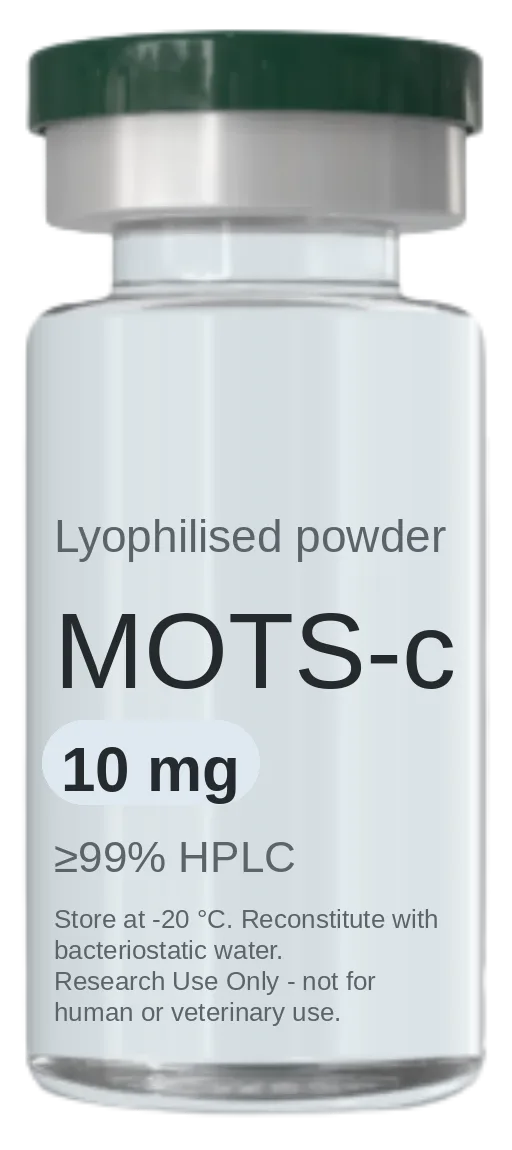
[MOTS-c](/en/product/mots-c/) is a mitochondrial genome-encoded peptide of 16 amino acids with documented tendency to aggregate in high-concentration solutions. Assays that work with it typically set conservative working concentrations and verify size distribution by DLS before each use.
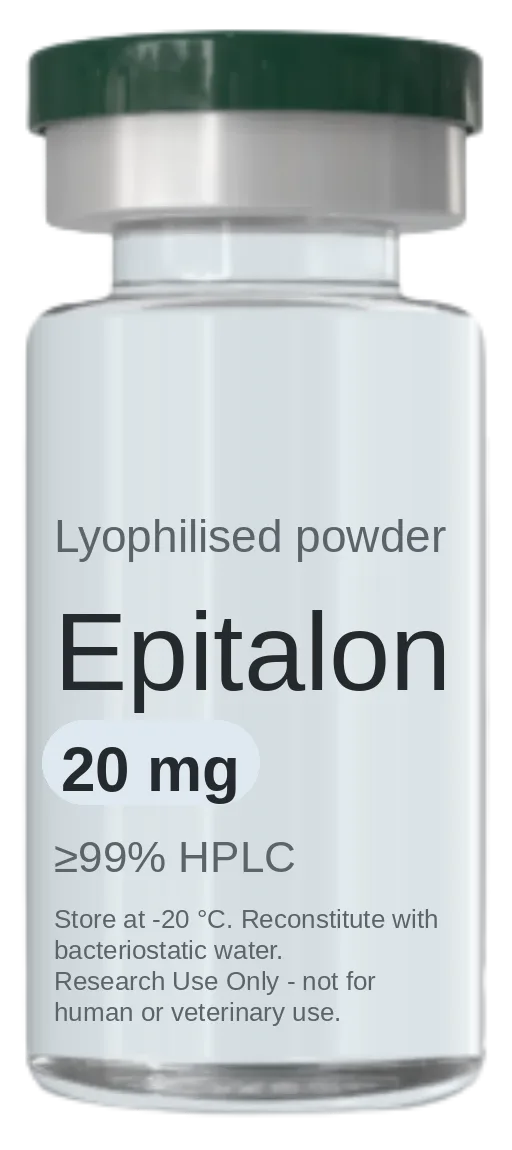
[Epitalon](/en/product/epitalon/) is a tetrapeptide (Ala-Glu-Asp-Gly) and, at its small size, is in principle less prone to aggregation than longer peptides. Its solubility, however, depends strongly on pH: it precipitates readily in acidic solutions.
These differences are why no single reconstitution protocol applies across all peptides: the lab adapts solvent, concentration, and pH to the profile of each specific sequence.
For laboratory research only
All material supplied by PeptoClinic is intended exclusively for in vitro and laboratory research. It is not approved or suitable for human or veterinary consumption, diagnosis, or treatment. No product in the catalog has been evaluated by ANMAT, the FDA, or any equivalent regulatory authority. PeptoClinic is not a pharmacy, a clinic, or a source of guidance on administration to people or animals.
Frequently asked questions
Does an aggregated peptide lose all its biological activity?
Not necessarily, and the answer depends on the type of aggregate and the assay. Reversible aggregates — those that dissolve when the solvent or pH changes — may have reduced but recoverable activity. Irreversible aggregates, such as amyloid fibrils, are typically biologically inactive and in some assays act as impurities that interfere with the signal of interest. What matters to the researcher is that the active monomer concentration in solution no longer matches the amount weighed: any calculation based on that sample carries built-in error.
Does turbidity always indicate peptide aggregation?
Not always. Turbidity can arise from contaminants, high salt concentration, or lipid impurities. The way to confirm a peptide origin is to run SEC-HPLC: if the monomer peak has shrunk and new signals appeared at shorter retention times, the turbidity comes from aggregates of the chain itself.
Does the HPLC purity on a certificate of analysis confirm the absence of aggregates?
Reversed-phase HPLC — the technique that determines purity in standard certificates — separates by polarity, not by size. A soluble aggregate may co-elute with the monomer if its polarity characteristics are similar, and be masked inside the main peak. Purity by RP-HPLC and the absence of aggregates are therefore distinct properties: the first does not certify the second. A lab that wants to confirm both runs the two techniques separately.
Do freeze-thaw cycles affect aggregation?
They do. Each cycle concentrates the solute in the non-frozen phase during cooling and dilutes it during thawing. That transient local concentration increases the probability of chain-chain collision. For sensitive peptides, the standard recommendation in the literature is to prepare single-use aliquots and thaw each one only once.
How does the reconstitution solvent affect aggregation tendency?
The solvent determines the chain's immediate environment. Pure water favors hydrophobic collapse in peptides with many nonpolar residues. Adding a miscible organic co-solvent — acetonitrile or DMSO in small proportion — reduces that tendency by modifying the dielectric constant of the mixture. The pH of the solvent has the greatest influence for peptides with many ionizable residues: working far from the isoelectric point maintains electrostatic repulsion between chains and slows the rate of aggregation.
How common is it to receive an already-aggregated lot from a supplier?
It depends on the supplier and the peptide. Suppliers who do not control the cold chain may ship material at ambient temperature in vials without a vacuum seal — two conditions that favor both oxidation and aggregation. A certificate of analysis with a recent analysis date signed by the analytical laboratory — as Janoshik Analytical issues for PeptoClinic lots — provides evidence that the material was pure monomer at the time of measurement. That allows a researcher to establish whether an aggregation problem originated at the manufacturer or in subsequent handling.
Can an unopened vial contain already-aggregated material?
In dry lyophilized powder stored at freezer temperature, the kinetics of any reaction — including aggregation — are very slow. The real risk appears when a vial has been partially opened, partially reconstituted, and re-frozen: that cycle introduces water and creates favorable conditions. An unopened vial correctly stored within the parameters specified in the certificate remains within specification for the period stated in the analysis.
Are there peptides with no practical water solubility?
Yes. Some long hydrophobic peptides cannot reach the concentrations assays require in pure aqueous buffers. In those cases the lab prepares concentrated stock solutions in DMSO and dilutes into the assay buffer at time of use, keeping the co-solvent percentage below the threshold that affects cell viability — typically under 0.1% DMSO for cells in culture — according to the biological system under study.
Compounds mentioned
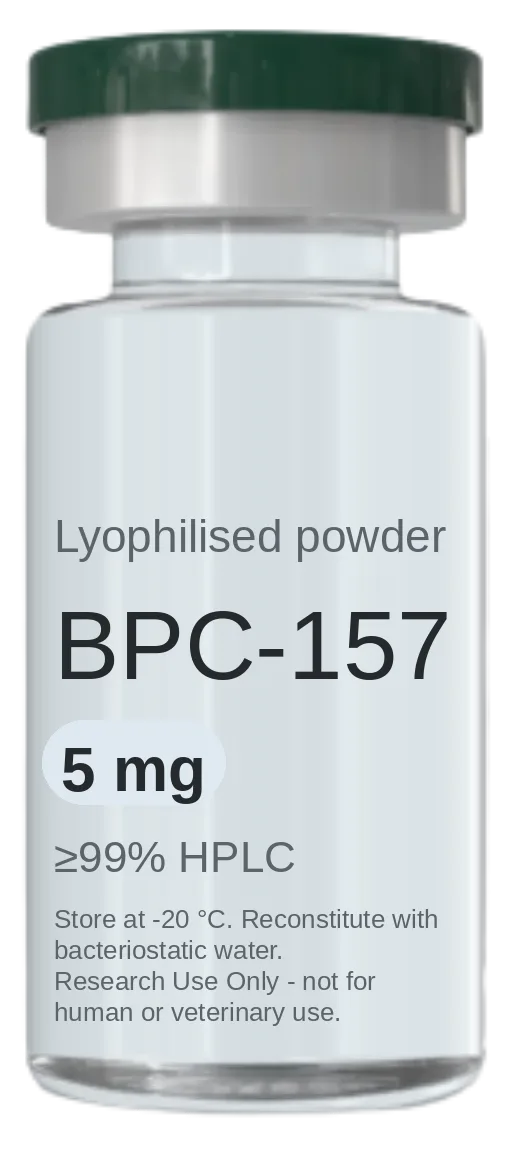
BPC-157 + TB-500
BPC-157 and TB-500 in a single vial — the pairing most studied together in tissue-repair research.
- Purity:
- ≥99% HPLC
- Sizes available:
- 5 mg + 5 mg
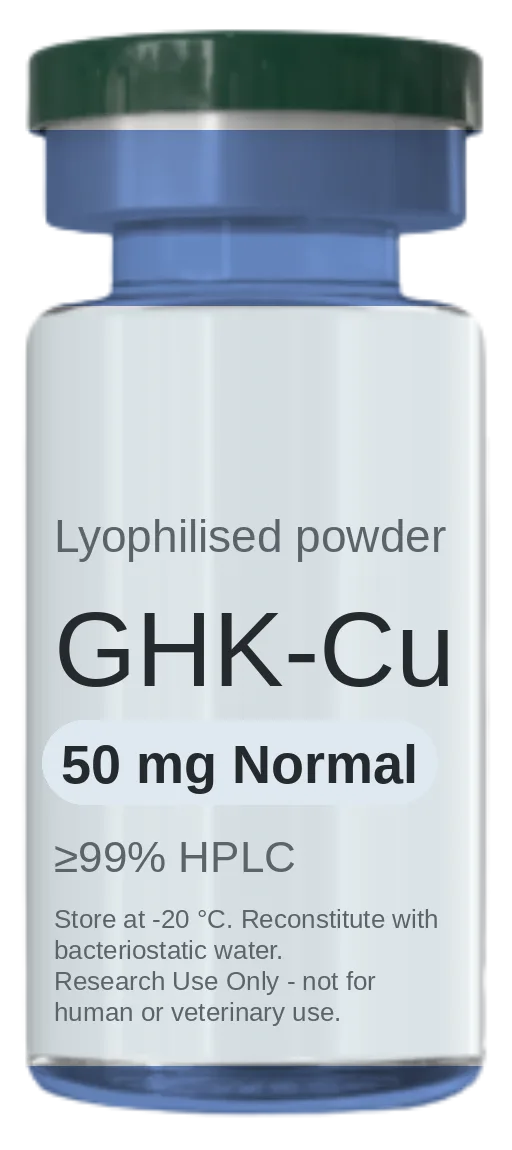
GHK-Cu (Copper Peptide)
Copper-binding tripeptide studied in extracellular matrix and dermal research models.
- Purity:
- ≥99% HPLC
- Sizes available:
- 50 mg Normal – 50 mg Plus
The consultation
One intake that settles goals, history and contraindications alongside compound, quantity, documentation and route — reviewed by a physician before anything ships.
More notes
-
No Certificate of Analysis, No Peptides
What it means when a research peptide supplier can't produce the batch-specific certificate of analysis, and why that gap alone is disqualifying.
-
Bonded Warehouse Deadline Before Abandonment
Argentine customs gives importers roughly 90 days to clear research peptides from bonded storage before the lot is declared abandoned.
-
What Is Argentina's Statistics Fee?
Argentina's statistics fee adds to the cost of importing a research peptide: what it taxes, how it's calculated, and what paperwork matters.