
Note
Peptide Hydrophobicity: What It Is and Why
Hydrophobicity determines how a peptide dissolves, elutes by RP-HPLC, and degrades in storage — a foundational property for laboratory work.
Peptide hydrophobicity measures the tendency of the amino acid residues in a sequence to avoid contact with water. It is a physical property derived directly from sequence composition, and it has concrete consequences for how a compound dissolves, how it is analysed by chromatography, how it behaves in aqueous solution, and what storage conditions preserve its integrity. In the laboratory, ignoring hydrophobicity is one of the most common reasons results look inconsistent when the compound itself is perfectly fine.
What determines sequence hydrophobicity
Each amino acid has a different affinity for water. Residues with non-polar aliphatic or aromatic side chains — leucine, isoleucine, valine, phenylalanine, tryptophan, methionine — prefer the interior of folded structures or the company of organic solvents. Charged residues such as aspartic acid, glutamic acid, lysine and arginine, along with hydrophilic residues such as serine and threonine, orient naturally toward water.
The scale published by Kyte and Doolittle in 1982 — still the standard reference in the literature — assigns a numerical value to each amino acid according to this affinity. A peptide carrying many residues with positive values on that scale is hydrophobic; one with predominantly negative values is hydrophilic. Most research peptides fall somewhere between the two extremes, but that position has measurable effects on daily laboratory work. The original method and scale are documented in the PubMed record for the paper.
Hydrophobicity is not binary. It is a gradient, and that gradient has consequences that must be addressed before any analysis is meaningful.
Why it matters in the laboratory
Solubility and sample handling
A highly hydrophobic peptide does not dissolve readily in water. A cloudy suspension, a pellet at the bottom of the tube, or unexplained material loss during sample preparation are often hydrophobicity problems, not purity problems. The compound may be analytically pure and still resist aqueous dissolution entirely.
Standard laboratory practice for hydrophobic peptides is to dissolve the material first in a water-miscible organic solvent — DMSO, acetonitrile or methanol — and then dilute into aqueous buffer. The ratio and the order of addition both matter. Reversing the sequence can precipitate the compound before it ever enters true solution. For some compounds, additional factors modify aqueous behaviour: in GHK-Cu, the copper ion alters the solution properties relative to the free peptide and improves aqueous dispersion.
Knowing the hydrophobic profile of a compound before beginning sample preparation prevents material losses that are afterwards difficult to distinguish from weighing errors or degraded lots.
Reversed-phase HPLC: the method that uses hydrophobicity directly
Purity analysis by reversed-phase high-performance liquid chromatography (RP-HPLC) works because hydrophobicity exists. The column carries a non-polar stationary phase — typically C18 — and the mobile phase is an aqueous-organic gradient. More hydrophobic compounds interact more strongly with the column and elute later. More hydrophilic compounds elute first.
The retention time of the main peak is therefore an analytical data point alongside the purity percentage. Two peptides of different sequence can share a similar molecular weight and yet resolve cleanly by RP-HPLC because their hydrophobic profiles differ. This makes retention time an identity marker as well as a purity marker.
All four Janoshik Analytical reports available for review — covering retatrutide, MOTS-c, GHK-Cu and BPC-157 + TB-500 — were produced by RP-HPLC. Those documents are viewable at the PeptoClinic quality page, and Janoshik Analytical publishes online verifiers for reports that carry a verification key.
Hydrophobicity also governs optimal method parameters. A highly hydrophobic peptide requires a greater proportion of organic solvent to elute in a reasonable run time. Running the same gradient designed for a hydrophilic compound will produce broad, poorly resolved peaks, or no elution within the run window at all. Matching gradient conditions to the compound's hydrophobic character is a basic method-development step that is easy to skip when a new compound arrives without characterisation data.
Stability and storage conditions
Hydrophobicity is one of the factors that determines how a peptide ages. Hydrophobic compounds tend to be more stable in lyophilised form — dry powder — than in aqueous solution. In solution, continuous water contact can facilitate hydrolysis at susceptible peptide bonds, particularly near asparagine or glutamine residues.
Storage temperature and the choice of working solvent are selected with the stability profile in mind, and hydrophobicity is part of that profile. PeptoClinic supplies compounds from the research catalogue in lyophilised form, the format that preserves analytical integrity during shipping and prior to laboratory use.
Aggregation: the problem that is invisible until it has already occurred
Peptides with extended hydrophobic stretches, or with conformations that expose those regions to aqueous solvent, tend to aggregate. Molecules associate with one another to minimise water contact, forming oligomers or amorphous aggregates. The practical result is a loss of free monomer in solution, which affects any assay whose outcome depends on a known compound concentration.
Aggregation is distinct from poor solubility, though the two are frequently confused. A peptide that dissolved correctly can aggregate when temperature drops, when pH shifts, or simply over time in solution. In acylated peptides such as retatrutide — where a fatty acid modification is used in receptor-interaction studies — the acyl chain substantially alters the hydrophobic profile relative to the native sequence and can influence solution behaviour accordingly.
Membrane permeability in cell-based assays
In cell culture research, hydrophobicity is one of the parameters that determines whether a compound can cross a lipid bilayer by passive diffusion. More hydrophobic peptides generally exhibit greater membrane permeability, which is relevant when designing assays intended to detect intracellular effects.
This is not an absolute rule. Hydrophilic peptides can cross membranes via active transport mechanisms, and many compounds studied in basic research require receptor-mediated internalisation. The hydrophobic profile is nonetheless the first parameter consulted when designing a permeability experiment, before other molecular descriptors are evaluated.
Hydrophobicity in a certificate of analysis
An RP-HPLC certificate of analysis records the retention time of the main peak. That figure is implicitly a hydrophobicity datum: at fixed column chemistry and gradient conditions, retention time reflects the degree of interaction between the compound and the non-polar stationary phase.
Comparing retention times across lots of the same compound is a practical way to verify structural consistency beyond the stated purity percentage. A meaningful shift in retention time can indicate sequence changes, the presence of isomers, or differences in the conformational state of the material — none of which necessarily alter the UV absorbance profile that drives the purity calculation.
The log P — the logarithm of the octanol-water partition coefficient — is the standard hydrophobicity descriptor for small molecules. For peptides, the calculation is more involved because it depends on the ionisation state of charged residues and on three-dimensional conformation. Computational tools provide reference estimates, and those estimates are useful for anticipating solution behaviour before working physically with a compound.
For laboratory research only
The compounds PeptoClinic supplies to research destinations including Argentina are classified strictly as research-use-only material for in vitro and laboratory programmes. They are not medicines, supplements or food products, and they are not approved or intended for human or veterinary use, diagnosis or treatment. PeptoClinic does not issue administration protocols, dosing guidance or therapeutic recommendations of any kind. Requests for human-use protocols are declined.
Frequently asked questions
What is peptide hydrophobicity?
Hydrophobicity is the tendency of a peptide's amino acid residues to repel water contact. It arises from the physicochemical properties of each residue's side chain. Scales such as the Kyte-Doolittle scale assign a numerical value to each amino acid, allowing the hydrophobic profile of a complete sequence to be estimated from its composition alone.
Which amino acids make a peptide more hydrophobic?
Residues with non-polar aliphatic or aromatic side chains are the primary contributors: leucine, isoleucine, valine, phenylalanine, tryptophan and methionine. The position of these residues within the sequence also matters. Five consecutive hydrophobic residues behave differently from the same five residues distributed across the full chain.
How does hydrophobicity affect solubility in the laboratory?
A highly hydrophobic peptide does not dissolve readily in water and may form a cloudy suspension or settle as a pellet. Standard practice is to dissolve the material first in a water-miscible organic solvent before diluting into aqueous buffer. This is a physical consequence of sequence composition, not a sign of impurity.
Why does reversed-phase HPLC use hydrophobicity to separate peptides?
The reversed-phase column presents a non-polar surface that retains compounds in proportion to their hydrophobicity. An organic-aqueous solvent gradient releases them in order, from least to most hydrophobic. This separates compounds that might share molecular weight but differ in sequence or modification, making retention time a marker of both purity and identity.
What does retention time in an HPLC report say about hydrophobicity?
Retention time records how long the main peak took to elute from the column. At fixed column and gradient conditions, a longer retention time indicates stronger interaction with the non-polar stationary phase — that is, greater relative hydrophobicity. Comparing retention times between lots of the same compound is a practical structural consistency check that goes beyond the purity percentage.
What is peptide aggregation and when does it cause problems?
Aggregation is the association of multiple peptide molecules with one another to minimise water contact. It can occur with temperature changes, pH shifts, concentration increases, or simply over time in solution. The practical result is a reduction in free monomer concentration, which affects any assay that depends on a known quantity of compound. Aggregation can be confused with poor initial solubility, but they are distinct phenomena with different remedies.
Does high hydrophobicity mean lower purity?
No. Hydrophobicity and purity are independent properties. A compound can be highly hydrophobic and analytically pure at 99.8 % by HPLC. What hydrophobicity affects is handling: incorrect solvent choice, working temperature or order of addition can cause material loss through precipitation or aggregation, reducing the effective concentration in solution without changing the composition of what remains.
How does hydrophobicity influence the storage of lyophilised peptides?
Hydrophobic peptides are generally more stable in lyophilised form than in aqueous solution because water contact can facilitate hydrolysis at susceptible peptide bonds over time. Storing dry powder at low temperature and away from humidity preserves analytical integrity over longer periods than storage in solution, regardless of hydrophobicity class.
Compounds mentioned
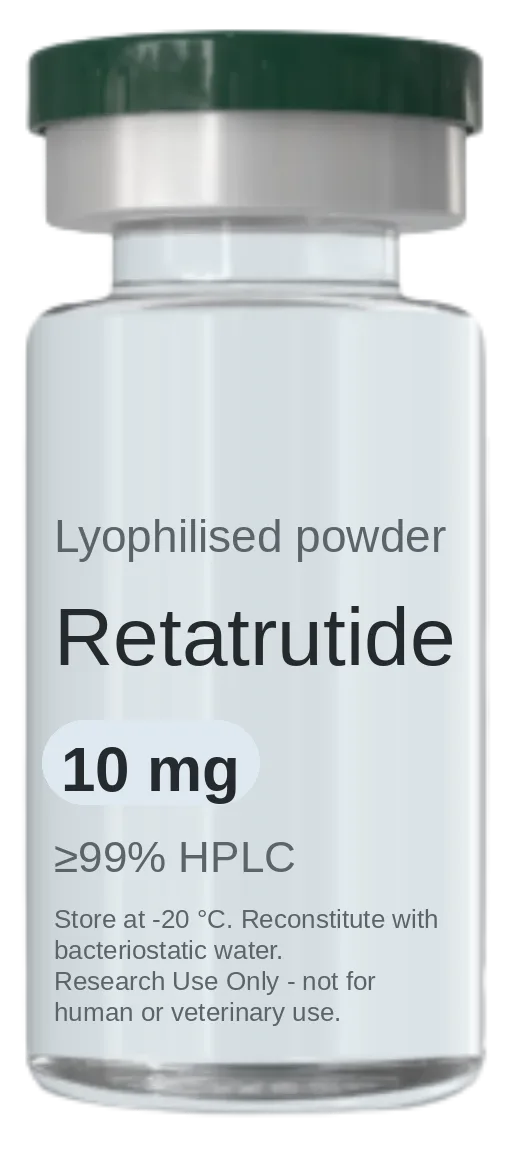
Retatrutide
Triple-agonist metabolic research peptide targeting GLP-1, GIP and glucagon receptors.
- Purity:
- ≥99% HPLC
- Sizes available:
- 10 mg
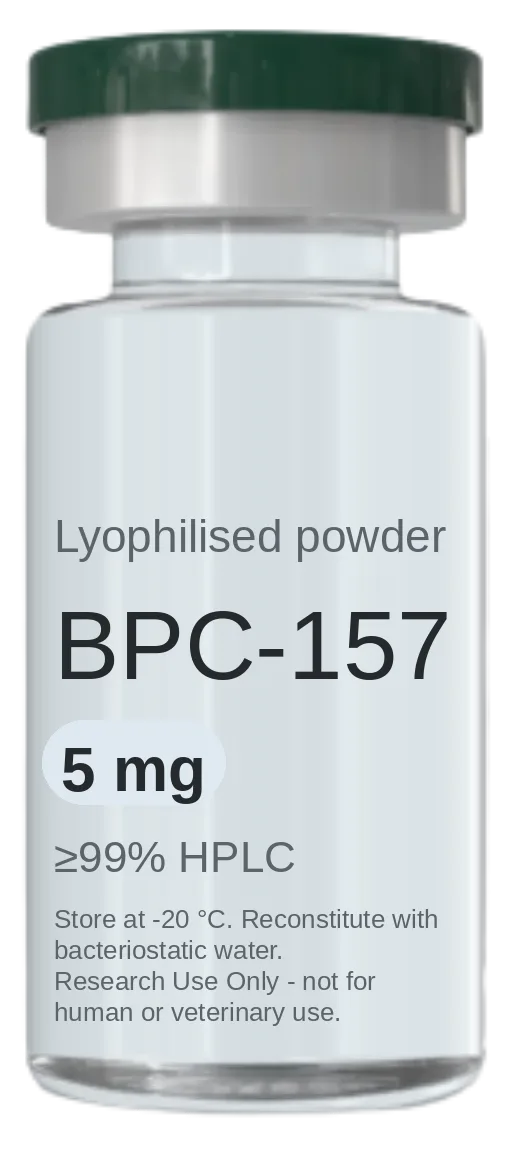
BPC-157 + TB-500
BPC-157 and TB-500 in a single vial — the pairing most studied together in tissue-repair research.
- Purity:
- ≥99% HPLC
- Sizes available:
- 5 mg + 5 mg
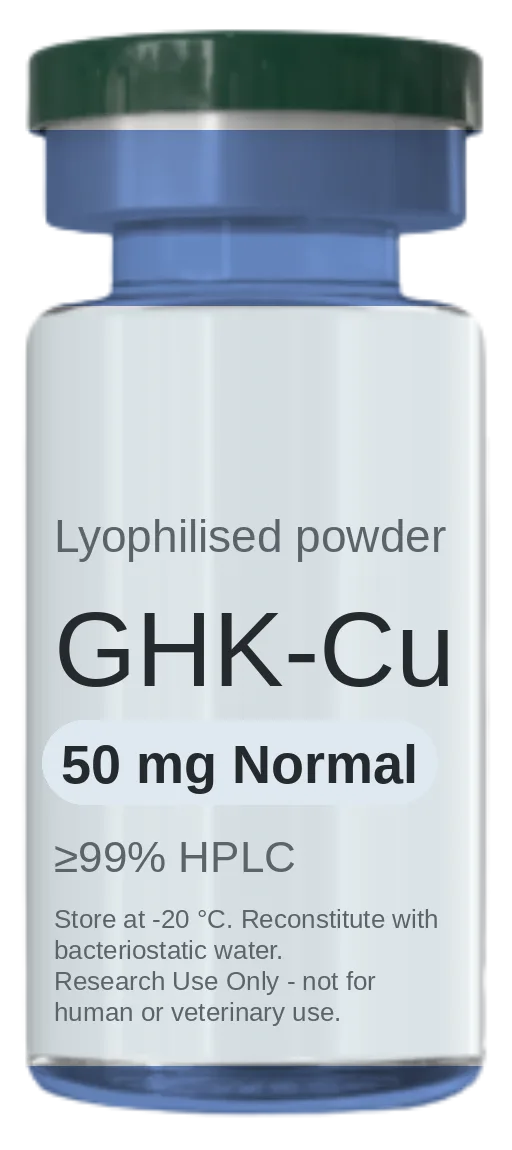
GHK-Cu (Copper Peptide)
Copper-binding tripeptide studied in extracellular matrix and dermal research models.
- Purity:
- ≥99% HPLC
- Sizes available:
- 50 mg Normal – 50 mg Plus
The consultation
One intake that settles goals, history and contraindications alongside compound, quantity, documentation and route — reviewed by a physician before anything ships.
More notes
-
Tesamorelin vs Sermorelin: The Difference
Tesamorelin and sermorelin are both GHRH analogs, but not the same molecule. Here's the structural difference and what the studies on each measure.
-
Peptide Supplier vs. Reseller: What Differs
The real difference is whether someone can name the lab that tested a batch and show the report — or only promise it's pure.
-
MOTS-c or NAD+: What's the Difference
MOTS-c and NAD+ are studied through different mitochondrial pathways; here's what each line of research actually measures.