
Note
What is peptide stability and how it's tested
Peptide stability: what it is, what breaks it down, and how HPLC and mass spectrometry measure it. With COA data from Janoshik Analytical.
Peptide stability is the ability of a molecule to retain its chemical structure without degrading over time and under the conditions of its storage. A stable peptide maintains its amino acid sequence, its purity, and the properties it had at synthesis. The primary measurement tool is high-performance liquid chromatography (HPLC), which quantifies what fraction of the compound remains intact after a defined period or a stress condition.
Why stability matters in peptide research
A degraded peptide is not the compound described in the research protocol. If the molecule breaks down between synthesis and laboratory use, the experiment runs on a mixture of fragments — not the compound of interest. Any data generated cannot be attributed to the intended material.
The problem is often invisible. A vial with 15% degradation impurities looks identical to one with 0.5%: a white powder in a sealed container. The chromatographic profile tells the story; the physical appearance tells nothing. This is why a certificate of analysis is a reference document, not a formality.
Stability also defines what shipping and storage conditions a lot requires. A compound that degrades rapidly at ambient temperature needs cold-chain transit and low-temperature storage on arrival. A more robust compound may tolerate a wider range without meaningful purity loss.
What degrades a peptide
Temperature
Heat accelerates every chemical reaction, including the ones that cleave a peptide molecule. In lyophilized form — dried powder — most research peptides are stable at refrigerator temperature (2–8°C) for months and at freezer temperature (−20°C or −80°C) for longer periods. Once reconstituted in solution, stability falls considerably: molecules in aqueous media move faster, collide more often, and react more readily.
Moisture
Water is the reagent for hydrolysis, the most common degradation pathway for peptides. A hydrolyzed peptide bond is a broken bond: the molecule splits into two fragments. This is why research peptides are lyophilized — removing water from the finished product dramatically extends useful life. Vials must remain sealed and in a dry environment; each opening exposes the contents to ambient humidity.
pH
Hydrolysis rate depends strongly on pH. At the extremes — strongly acidic or strongly basic — peptide bonds break much faster. Most peptides have a zone of minimum degradation, typically between pH 4 and 6, though this varies by amino acid sequence. Research formulations target this range when the compound will be in solution.
Light and oxidation
Residues of tryptophan, methionine, and cysteine are susceptible to oxidation. Exposure to UV light or ambient oxygen can generate oxidation products that alter the effective structure of the peptide. Amber glass vials and storage under inert atmosphere reduce this degradation vector.
Proteolysis
In experiments involving biological media — serum, plasma, cell lysates — proteases present in those media can cleave the peptide within minutes. Proteolytic stability is a separate parameter from chemical stability in clean aqueous solution: it measures how long a compound survives in an enzyme-active environment. It is assessed by incubating the compound in the biological medium of interest and sampling at defined time points to quantify intact compound remaining.
How stability is measured
HPLC: the reference method
High-performance liquid chromatography separates the components of a sample by their physicochemical properties and quantifies them by UV absorbance. In a purity assay, the area under the main peak — the compound of interest — divided by the total area of all peaks gives the purity percentage.
To measure stability, a sample is taken at time zero, the remainder is subjected to a stress condition (elevated temperature, humidity, light cycling) for a defined period, and the measurement is repeated. The difference between the two readings is the degradation that occurred under those conditions.
Certificates of analysis that accompany research lots document this. Janoshik Analytical analyzed the PeptoClinic lots and reported retatrutide at 99.893% purity and MOTS-c at 99.669% on April 13, 2026. Those figures represent the state of the compound at the moment of analysis; storage conditions from that point forward determine whether that state holds.
Mass spectrometry
Mass spectrometry identifies molecules by their mass-to-charge ratio. In stability work, it identifies exactly which fragments or oxidation products form when a peptide degrades. HPLC states how much of the original compound remains; mass spectrometry states what the missing fraction became.
In a complete analytical report the two techniques appear together: HPLC gives the purity percentage, and MS confirms that the main peak corresponds to the declared molecular weight — not an isomer or fragment with a similar retention time. The combination is the most informative result a certificate of analysis can present, because it gives both the percentage and confirmed molecular identity.
Accelerated stability studies
Real-time stability studies are slow by definition. Accelerated studies compress that window by exposing the compound to more extreme conditions — higher temperature, higher humidity — for a short period, then applying acceleration factors derived from Arrhenius kinetics. The result is an estimate, not a direct measurement of shelf life, but it is the industry standard for establishing expiration dates before sufficient real time has elapsed to measure them directly.
In vitro plasma stability
For peptides investigated in pharmacological contexts, plasma stability is a standard characterization experiment: the compound is incubated in human or animal plasma at 37°C, aliquots are taken at 0, 5, 15, 30, 60, and 120 minutes, and intact peptide concentration is measured by LC-MS at each point. The result is a half-life curve that informs experimental design. Methodological detail for these assays is available in the literature indexed at PubMed.
The certificate of analysis as stability evidence
A certificate of analysis records what the laboratory found in a specific lot at the time of analysis. To be useful, it must include the compound name, lot number, analysis date, method, and a numerical result. A CoA that reads "purity: high" without a number or method is not verifiable.
PeptoClinic publishes the Janoshik Analytical CoAs with task numbers on the quality page. Two of the four current reports carry a direct verification link to the laboratory; the other two have a task number but the online verifier does not consistently respond. The downloadable report is the reference document in those cases.
What the CoA cannot guarantee is stability after the analysis date. If a lot was stored outside recommended conditions between the laboratory and its destination — or once at the destination — the compound may have degraded. Shipping and storage conditions are part of total quality control, not an independent variable.
Lots in the PeptoClinic catalog are supplied in lyophilized vials, the most stable format for transport and long-term storage. Diluents are USP grade.
Research use only
All material supplied by PeptoClinic Research Supply is intended strictly for laboratory research: in vitro studies and scientific research applications. It is not a medicine, a supplement, or a food product. Nothing supplied has been approved or evaluated for human or veterinary use by the FDA, ANMAT, or any equivalent regulatory authority. PeptoClinic is not a pharmacy, a clinic, or a source of dosing, administration, or protocol guidance. Requests about use in people fall outside the scope of this operation.
Researchers working with peptide reference material can review documentation and request a quote through the about page.
Frequently asked questions
What is the difference between purity and stability in a peptide?
Purity is a snapshot: it states what fraction of a material is the declared compound at one point in time. Stability is the trajectory: it describes how that fraction changes over time and under different conditions. A compound can measure at 99.8% purity on the date of analysis and fall to 90% six months later if storage conditions are inadequate. The purity figure on the CoA does not guarantee anything about future state — what determines how fast purity falls is how consistently the compound is kept under appropriate conditions.
Why are research peptides sold as lyophilized powder rather than in solution?
Lyophilization removes water from the finished product. Without water there is no hydrolysis, which is the primary degradation pathway. A well-stored lyophilized peptide can maintain its purity for years; the same peptide in solution may degrade significantly within days or weeks depending on pH, temperature, and the presence of metal ions. Lyophilized format is the standard for research peptides because of this difference in stability.
Which analytical methods are most reliable for measuring peptide purity?
HPLC with UV detection is the standard for quantifying purity. HPLC coupled with mass spectrometry (LC-MS) adds structural identification, confirming that the main peak corresponds to the correct compound and not an isomer or fragment with a similar retention time. The combination of both is the most informative result a CoA can present: it gives both the percentage and confirmed molecular identity.
What does a CoA showing 99.7% purity mean?
It means 99.7% of the material analyzed corresponded to the compound of interest according to the stated method — typically HPLC-UV. The remaining 0.3% is impurities: these may be degradation fragments, secondary synthesis products, or residues from the purification process. A rigorous CoA identifies the detected impurities rather than reporting only the main peak percentage, so the researcher can assess their relevance to the experiment.
Does a degraded peptide look different from an intact one?
Generally not. A peptide with 15% degradation impurities typically presents as the same white powder it was with 1%. Physical appearance is irrelevant for assessing purity — only chromatographic analysis states it with precision. This is one of the reasons the CoA is the reference document for a lot, not visual inspection of the vial.
What is an accelerated stability study?
An accelerated stability study exposes a compound to conditions more extreme than normal storage — higher temperature, higher humidity — for a short period. Using the Arrhenius equation, degradation under normal conditions over a longer period is estimated from the observed results. It is an approximation, not a direct measurement, but it is the standard method for establishing expiration dates before enough real time has elapsed to measure them directly.
How is peptide stability measured in biological media?
The compound is incubated in the medium of interest — plasma, serum, cell homogenate — at physiological temperature. Aliquots are taken at defined time points, each precipitated to stop enzymatic activity, centrifuged, and analyzed by HPLC-MS. The result is intact peptide concentration as a function of time, from which a half-life in that medium is calculated. This assay is a standard step in preclinical pharmacological research for characterizing the proteolytic susceptibility of a compound.
Do shipping conditions affect the stability of a lyophilized peptide?
Extreme, sustained heat can degrade a lyophilized vial even if the packaging is intact, but the range dry powder tolerates is wide: sealed, it stays stable at ambient temperature for weeks. That is why shipping lyophilized peptides calls for a sealed vial with desiccant and protection from light rather than refrigerant gel or dry ice. Cold chain is essential for solution-phase material, which behaves differently. The integrity of the compound on arrival depends on both the lot analysis and the conditions maintained throughout shipping.
Compounds mentioned
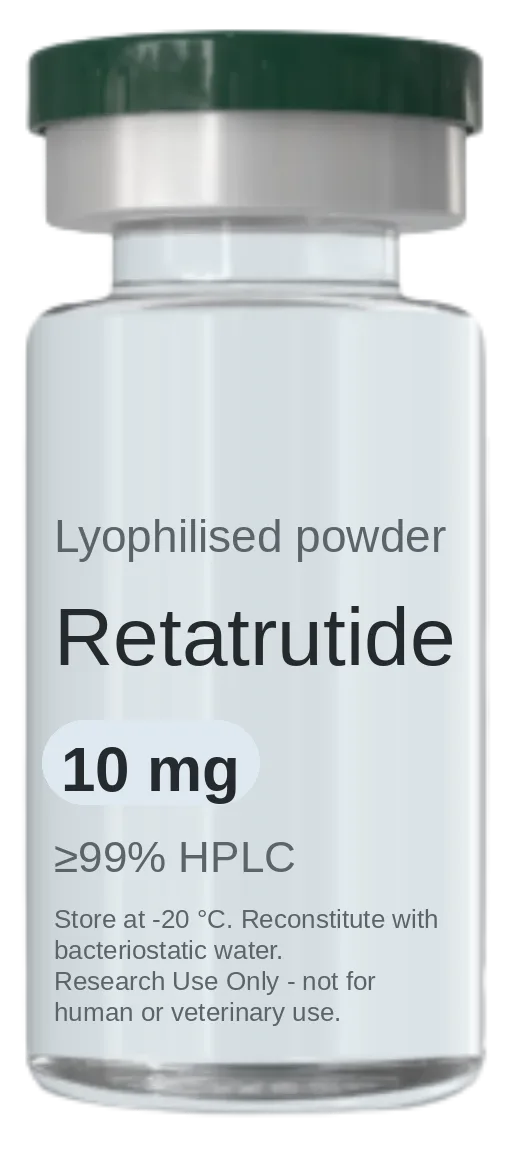
Retatrutide
Triple-agonist metabolic research peptide targeting GLP-1, GIP and glucagon receptors.
- Purity:
- ≥99% HPLC
- Sizes available:
- 10 mg
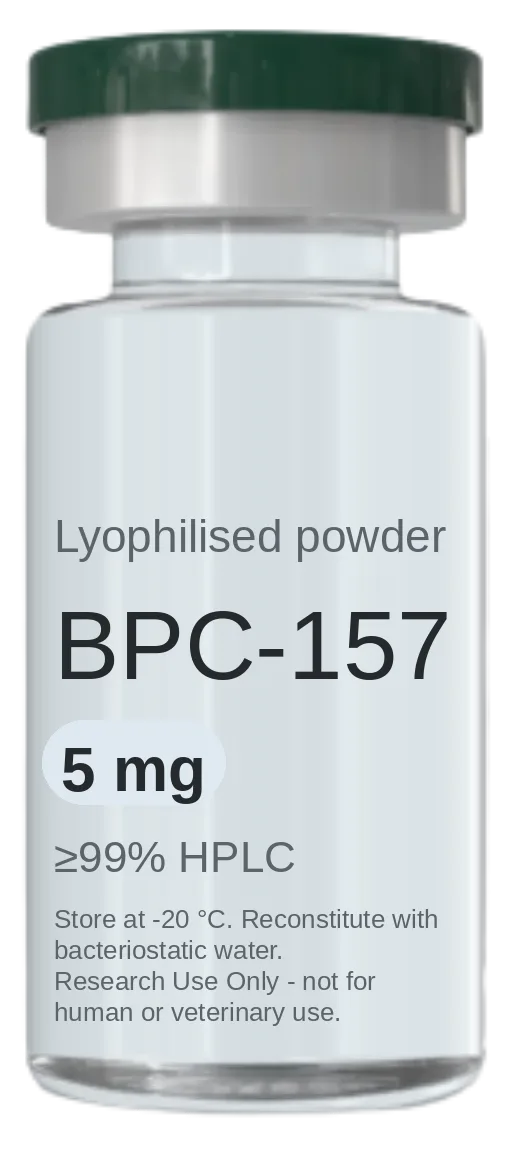
BPC-157 + TB-500
BPC-157 and TB-500 in a single vial — the pairing most studied together in tissue-repair research.
- Purity:
- ≥99% HPLC
- Sizes available:
- 5 mg + 5 mg
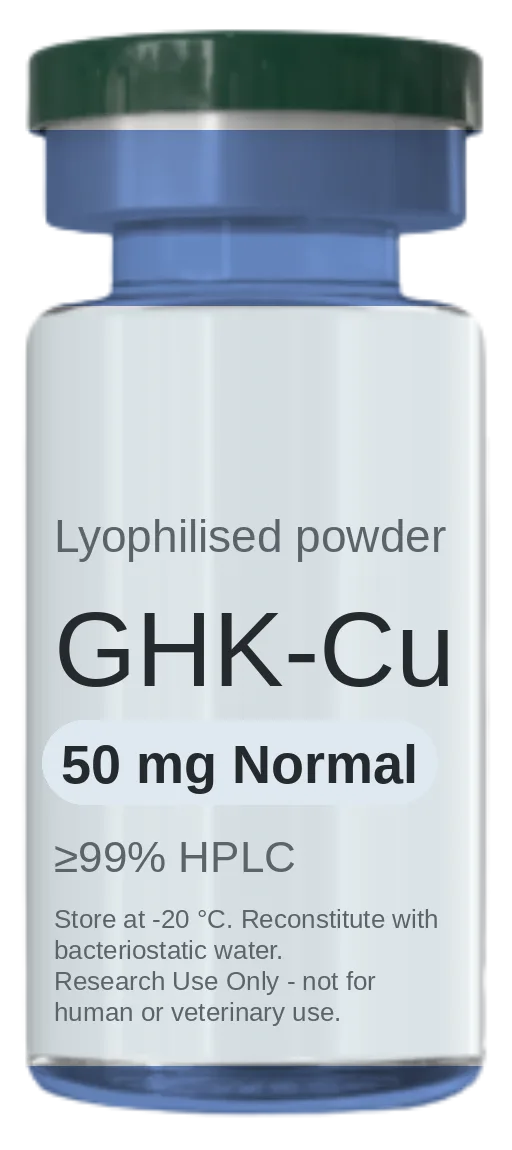
GHK-Cu (Copper Peptide)
Copper-binding tripeptide studied in extracellular matrix and dermal research models.
- Purity:
- ≥99% HPLC
- Sizes available:
- 50 mg Normal – 50 mg Plus
The consultation
One intake that settles goals, history and contraindications alongside compound, quantity, documentation and route — reviewed by a physician before anything ships.
More notes
-
No Tax Address on File: Argentine Customs
What Argentine customs does with a research peptide shipment when the recipient has no registered tax address.
-
How Long Does a Peptide Quote Take?
A research peptide quote from PeptoClinic usually arrives within one business day. Here's what happens during that review.
-
Retatrutide vs CJC-1295: Key Differences
Retatrutide and CJC-1295 no DAC are different research peptide classes, with different mechanisms and different purity reports behind them.