
Note
Argentine Customs Wait for Research Reagents
How long Argentine customs takes to clear a research reagent, what documentation determines the timeline, and which factors add weeks to the process.
Argentine customs clearance for a research reagent is not a fixed timeline. With a complete documentation file and a straightforward tariff code assignment, a formal import can resolve within a few business days of submission. If the file gets flagged for manual review, triggers ANMAT oversight, or arrives with gaps in paperwork, the same shipment can sit for weeks. The variable that both importer and exporter control most directly is the customs file itself — an incomplete one can stall indefinitely; a complete one moves without interruption.
How Argentina classifies research reagents at the border
Argentina uses the Nomenclatura Común del Mercosur (NCM), the harmonised tariff system shared by Argentina, Brazil, Uruguay and Paraguay. The NCM code the customs broker assigns to a compound determines two things: the applicable import duty rate and which government agencies must sign off on the clearance.
Synthetic peptides typically fall under Chapter 29 of the NCM (organic chemicals) or, depending on the declared description, into positions within Chapter 30 (pharmaceutical products). If the assigned code triggers oversight by ANMAT (the national medicines and food authority) or SENASA (the agriculture and veterinary authority), the file routes through those windows in addition to the Dirección General de Aduanas (DGA), which operates under AFIP. Each additional agency adds its own resolution timeline.
Postal and courier shipments
Shipments arriving via Correo Argentino or international couriers — FedEx, DHL, UPS — pass through the DGA's postal channel. The system may hold a package while it determines the correct tariff code and whether the contents require additional agency review. For chemical reagents, that hold extends when the NCM code cannot be assigned automatically, or when the declared value crosses thresholds that activate further checks.
Formal import through a licensed broker
A formal import — filed through a licensed customs broker as a Destinación Definitiva de Consumo with AFIP — follows a more predictable path. The file carries a tracking number, the parties are identified, and each stage is queryable. When documentation is complete and the material does not trigger special controls, clearance can happen within the business days following submission. When the file is placed under manual review, the timeline extends by weeks.
What documentation determines clearance time
The customs file is the most directly controllable variable for both importer and exporter. A complete file moves; an incomplete one stalls at the window.
For research reagents, the documentation the DGA generally requires includes:
- Commercial invoice with a detailed chemical description: compound name, CAS number where applicable, quantity in units of mass, and sale value.
- Packing list that matches exactly what is physically in the shipment.
- Batch certificate of analysis issued by an analytical laboratory. The COA must identify the batch number, the analytical method used, and the purity result. Certificates from independent laboratories such as Janoshik Analytical carry more weight than unilateral supplier declarations, because a third party has signed the document and can be contacted to verify the report.
- Airway bill or other international transport document.
- Declaration of use stating that the material is for laboratory research and is not intended for human consumption, veterinary use or resale to the public.
PeptoClinic prepares documentation for each shipment to Argentina that includes the batch certificate of analysis and a declaration of use as laboratory reference material. The structure of that documentation is described at the quality section of the site.
What extends the process beyond the baseline
Several factors push clearance past the minimum estimate.
Ambiguous tariff classification. If the NCM code cannot be assigned without manually reviewing the compound's description, the file goes to a verifier. This happens more often with recently synthesised peptides whose names do not appear in published nomenclature tables.
Activation of ANMAT oversight. If the assigned tariff position falls within one that triggers ANMAT authority, the authorisation passes through that window. Resolution time depends on the import regime under which the permit is processed.
Physical inspection. The DGA can open a shipment to verify the contents match the declaration. For lyophilised materials requiring cold-chain handling, that inspection interrupts preservation for however long the review takes.
Observations for insufficient documentation. If the invoice does not describe the material precisely, or if the COA does not match what is declared, the file gets flagged and the importer must submit supplementary documentation — a process that can take weeks.
Foreign exchange controls. Argentina's Sistema Integral de Monitoreo de Importaciones (SIMI), managed by AFIP, governs authorisation for external payments on imports. The status of that authorisation can affect customs timing, particularly for entities importing in a given tariff position for the first time, since initial filings tend to take longer than subsequent ones.
For laboratory research only
All material PeptoClinic supplies to Argentina is intended exclusively for laboratory research — in vitro and in analytical reference models.
These compounds are not medicines, supplements or foods. None has been evaluated or approved by ANMAT, the FDA or any equivalent authority for use in humans or animals. PeptoClinic does not provide administration protocols, dosing guidance or clinical use instructions. Requests for material outside a laboratory research context are declined.
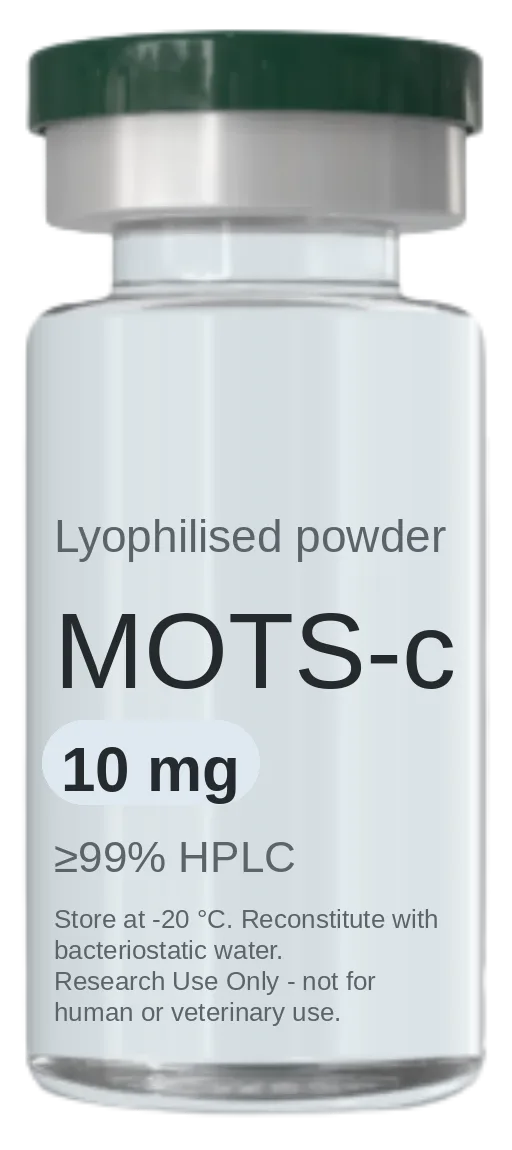
The documentation accompanying each shipment — including the declaration of use as laboratory reference material — reflects that framing and is prepared to satisfy DGA requirements under that classification. Compounds PeptoClinic supplies to Argentina include BPC-157, retatrutide and MOTS-c.
Steps to take before a first import
If this is your first import of a research reagent into Argentina, several steps reduce the risk of delays.
Consult a licensed customs broker before the shipment leaves. The NCM code assignment determines which agencies will be involved and whether a prior import permit is required. That question must be answered for the specific compound, because two compounds in the same chemical family can fall under different tariff positions.
Request the batch certificate of analysis from the supplier before dispatch. A COA from an independent analytical laboratory is the document that answers the most questions at the customs window, because it attests to composition and purity over a third-party signature. The reports for compounds PeptoClinic supplies are available for review before a quote is requested.
Confirm whether your institution needs prior authorisation based on the tariff position of the material. In some cases that process can be initiated while the shipment is in transit.
For an overview of how research peptides enter Argentina and what the accompanying documentation covers, see the Argentina supply page.
Frequently asked questions
How long does Argentine customs typically take to clear a research reagent?
There is no fixed timeline. With complete documentation and a tariff code assigned without ambiguity, a formal import can resolve within a few business days of submission. If the file is placed under manual review, activates ANMAT oversight, or contains gaps in documentation, the process can extend by weeks. The status of the file is queryable through the customs broker at every stage of the process.
What NCM tariff code applies to a synthetic peptide?
It depends on the chemical composition and the declared description. Synthetic peptides typically fall under Chapter 29 or Chapter 30 of the NCM. The classification is determined by the customs broker at the time of filing. An incorrect code can activate controls the material does not require, or can leave the file flagged because the code does not match the declared description — both outcomes extend the timeline.
What is a certificate of analysis and why does it matter for customs clearance?
A certificate of analysis (COA) is the document attesting to the composition and purity of a specific batch, issued by the laboratory that performed the analysis. For the DGA, the COA is the evidence that what is declared on the invoice matches the physical contents of the shipment. A COA from an independent analytical laboratory carries more weight than a supplier's own declaration, because a third party signed it and can be contacted to verify the report directly.
Does ANMAT become involved in importing research peptides?
It depends on the NCM code the customs broker assigns to the compound. If that code falls within positions that trigger ANMAT authority, the authorisation passes through that window and the timeline extends. A pre-shipment consultation with a customs broker — specifically about the code that applies to the compound being imported — is the step that clarifies whether ANMAT will be involved before the shipment leaves the origin.
Do Argentina's foreign exchange controls affect reagent imports?
Yes. AFIP's SIMI system governs authorisations for external payments on imports, and the status of that authorisation can affect the customs timeline. This is particularly relevant for entities with no prior import history in the tariff position of the material, since initial filings in a new position tend to take longer than subsequent ones as the importer establishes a track record with the system.
What happens if customs physically inspects the shipment?
The DGA can open a shipment to verify that the contents match the declaration. For lyophilised materials that require cold-chain handling, that inspection interrupts preservation for as long as the review takes. A well-prepared file reduces the probability of a physical inspection but does not eliminate it. Consistency between the invoice description and the COA is what most contributes to automatic classification that does not require manual verification.
Can a private laboratory import research reagents into Argentina?
Import of laboratory reagents is typically carried out by a legal entity authorised for that type of operation. The specific requirements — regarding which permits apply to a given material and tariff position — are determined by the DGA and, where triggered, by ANMAT. A customs broker consultation before the first filing is the step that establishes what is needed for the specific compound being imported.
Where can I review the batch certificates of analysis for PeptoClinic's compounds?
The certificates of analysis for published batches are available at the quality section of the site, with the laboratory task number and purity results by compound. The reports were issued by Janoshik Analytical and are available for review before a quote is requested.
Compounds mentioned
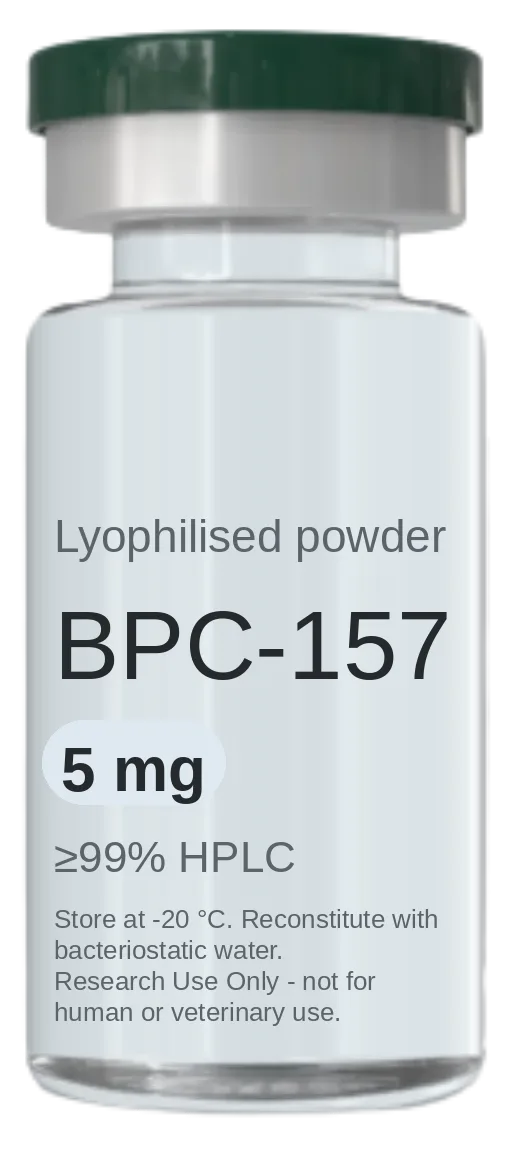
BPC-157 + TB-500
BPC-157 and TB-500 in a single vial — the pairing most studied together in tissue-repair research.
- Purity:
- ≥99% HPLC
- Sizes available:
- 5 mg + 5 mg
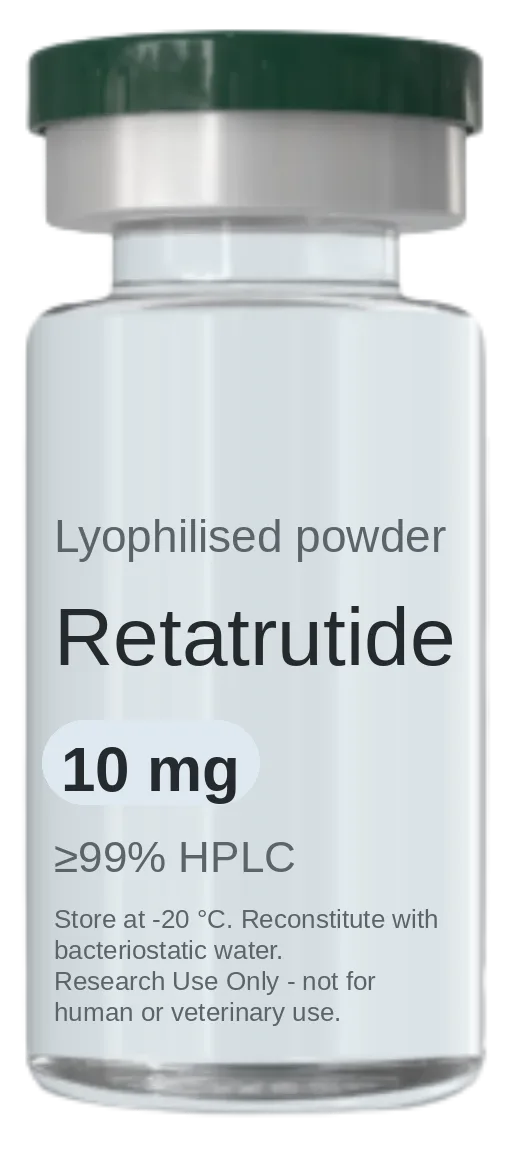
Retatrutide
Triple-agonist metabolic research peptide targeting GLP-1, GIP and glucagon receptors.
- Purity:
- ≥99% HPLC
- Sizes available:
- 10 mg
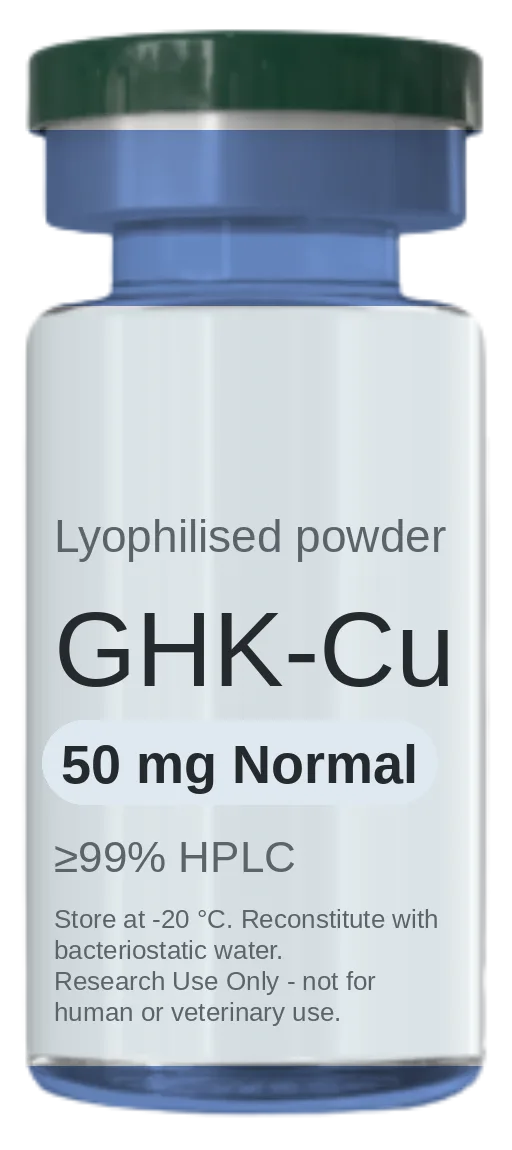
GHK-Cu (Copper Peptide)
Copper-binding tripeptide studied in extracellular matrix and dermal research models.
- Purity:
- ≥99% HPLC
- Sizes available:
- 50 mg Normal – 50 mg Plus
The consultation
One intake that settles goals, history and contraindications alongside compound, quantity, documentation and route — reviewed by a physician before anything ships.
More notes
-
Tesamorelin vs Sermorelin: The Difference
Tesamorelin and sermorelin are both GHRH analogs, but not the same molecule. Here's the structural difference and what the studies on each measure.
-
Peptide Supplier vs. Reseller: What Differs
The real difference is whether someone can name the lab that tested a batch and show the report — or only promise it's pure.
-
MOTS-c or NAD+: What's the Difference
MOTS-c and NAD+ are studied through different mitochondrial pathways; here's what each line of research actually measures.