
Note
Research Reagent vs Diagnostic Supply
A research reagent (RUO) and an in vitro diagnostic supply differ in clinical validation, regulatory registration, and authorized use.
A research reagent labeled RUO (Research Use Only) is material produced and documented for laboratory work: investigating a mechanism, reproducing a published result, or characterizing a compound's properties. It carries no regulatory approval for clinical use, and its label explicitly prohibits that use. An in vitro diagnostic (IVD) supply is a product that has been validated, registered, and authorized to generate results a healthcare professional uses to make decisions about a specific patient. The difference is not chemical — the same molecule can appear in both categories with identical composition — but regulatory and documentary: what validation was performed, who verified it, and what the registration authorizes.
What defines a research reagent (RUO)
Documentation of identity and purity, not clinical performance. A responsible supplier delivers a Certificate of Analysis (CoA) specifying compound identity, the analytical method used (HPLC, for example), lot purity, and the laboratory that performed the analysis. That document contains no clinical validation because clinical use is not the material's intended purpose.
A mandatory label. The FDA requires RUO materials to carry "For Research Use Only. Not for use in diagnostic procedures" on the label. This is a legal requirement, not a suggestion.
No premarket clearance required. An RUO material does not need the regulatory clearance an IVD must obtain before reaching the market. That does not make it technically inferior: the applicable framework is different because the intended use is different. An RUO reagent can be analytically rigorous and still be inappropriate — and legally prohibited — for diagnostic use.
Use by trained personnel in a research setting. The material is designed for users who understand its analytical limitations and will not interpret results as equivalent to a validated clinical assay.
What defines an in vitro diagnostic supply
Documented analytical and clinical validation. The manufacturer must demonstrate that the product measures what it claims to measure: sensitivity and specificity against a real clinical population, linear range, and reproducibility across lots and operators. This evidence comes from formal clinical and analytical studies, not only basic laboratory testing.
Registration with a regulatory authority. In the United States, the FDA regulates IVD products under 21 CFR Part 809 and requires a 510(k) notification or premarket approval (PMA) depending on device class. Without that filing, a product cannot legally be sold as an IVD. Other jurisdictions have equivalent requirements: ANMAT in Argentina, CE marking under the EU IVDR in Europe.
An audited quality management system. IVD manufacturers must maintain formal controls covering process documentation, material traceability, and per-lot review procedures. The international reference standard for this segment is ISO 13485. PeptoClinic does not hold that certification because PeptoClinic operates in the research materials segment, not in medical devices.
Lot-to-lot traceability for clinical decisions. An IVD on the market must guarantee equivalent performance across lots. Variation acceptable in research may not be acceptable in clinical diagnosis, where a result directs a treatment decision.
How to tell them apart in practice
The product label. If it reads "Research Use Only," "For Investigational Use Only," or any equivalent variant, the material is not approved for diagnostic use. That label is a legal requirement, not a style choice.
The registration number. A cleared IVD carries a regulatory identifier on the label — an FDA 510(k) number, a CE-IVDR reference, or an equivalent inscription from the applicable national authority. An RUO reagent has none, because it does not need one. The absence of a registration number is not an irregularity for an RUO material; it would be an irregularity for an IVD.
The CoA contents. The CoA of an RUO material documents lot purity, compound identity, and the analytical method applied. It does not include clinical sensitivity, diagnostic specificity, or comparison with clinical reference standards — those parameters belong to IVD validation, not to batch release testing.
The nature of the material. A chemically synthesized lyophilized peptide supplied by a research-supply consultancy is RUO by nature and intended use. Converting it into an IVD would require a complete independent clinical validation program, regardless of the analytical purity of the starting compound.
Why the distinction has real consequences
Using an RUO reagent to inform a diagnostic decision about a patient is not only a regulatory violation — it is a methodological error. The clinical validation that an IVD requires exists because without it, a result can be technically correct in the research laboratory and entirely unreliable for the medical question at hand.
An RUO antibody may detect a target protein in a cell model with high specificity in that experimental system. That same antibody, without clinical validation, cannot diagnose a disease in a patient even if the molecule is chemically identical. What is missing is not the antibody: it is evidence that in that specific clinical context, with the sample types used in real diagnosis, the result is reliable, repeatable, and interpretable.
The distinction also runs the other way. A registered IVD has a delimited intended use; applying it outside that use can invalidate results because the validation does not cover that scenario.
Where research peptides fit
The chemically synthesized peptides that PeptoClinic supplies are RUO materials. They are not registered as medical devices or medicinal products. They are reagents for laboratory research programs.
Each lot ships with a Certificate of Analysis from Janoshik Analytical, an independent laboratory with an online verification portal. Lots analyzed on 2026-04-13 include retatrutide (task 136921, purity 99.893%), MOTS-c (task 136923, purity 99.669%), GHK-Cu, and BPC-157. The lowest published purity across those four lots is 99.669%.
Those reports are available for review and independent verification on the PeptoClinic quality page, where each analysis links to the Janoshik Analytical portal for direct confirmation. The full catalogue covers 19 research peptides in lyophilized powder vials.
PeptoClinic handles inquiries and quotations for shipments to the United States and other research destinations, with documentation prepared under the framework of laboratory reference material. PeptoClinic does not supply in vitro diagnostic reagents and does not operate under that regulatory framework.
For laboratory research only
All material supplied by PeptoClinic is for in vitro and laboratory research exclusively. None of it has received approval from the FDA, ANMAT, or any equivalent authority for use in the diagnosis, treatment, or prevention of disease in humans or animals. It is not a medicine, does not substitute for one, and is not supplied with any indication of clinical use.
Inquiries about administration protocols, dosing, or therapeutic applications fall outside the scope of this operation and are not answered.
Frequently asked questions
Can an RUO reagent become an IVD?
Not automatically. For a material to acquire IVD status, the manufacturer or whoever intends to market it as such must complete an independent clinical validation program and obtain the corresponding registration from the relevant regulatory authority. Analytical purity does not substitute for clinical validation — they address different questions and require different categories of evidence.
Is importing an RUO reagent regulated the same way as an IVD?
No. An RUO reagent is not regulated as a medicinal product or as a clinical-use medical device, so its import for research purposes does not require the clearances an IVD needs. What regulation prohibits is using it in patient diagnosis or treatment, not its movement in the laboratory supply market. Applicable rules vary by jurisdiction and should be confirmed with a customs specialist before shipment.
What must a valid RUO CoA contain?
A valid CoA for RUO material identifies the compound by name and CAS number, specifies the analytical method, reports purity with its value and unit, states the actual lot content, and carries the identifying data of the testing laboratory. A laboratory independent from the manufacturer generates more credible evidence than one that analyzes its own product.
Can a synthetic peptide be classified as an IVD?
In principle, a peptide could be the active component of an IVD — for example, as an antigen in an antibody detection kit. In that case the IVD is the validated and registered kit, not the peptide alone. A synthetic peptide in a lyophilized vial, without clinical validation or regulatory registration, is RUO material by definition regardless of its analytical purity.
What happens if a laboratory uses RUO material for clinical diagnosis?
Beyond regulatory consequences, there is a methodological problem: a result generated with clinically unvalidated material is not reliable for the intended medical decision. Regulatory authorities can sanction the practice, and the results are not recognized as valid for official clinical purposes.
Why do some suppliers sell the same compound as both RUO and IVD?
Because they are different products even when the base molecule is identical. The IVD version has undergone clinical validation, meets lot-to-lot consistency requirements for diagnostic use, and carries regulatory registration. The RUO version has not. Manufacturing controls, documentation requirements, and cost structure differ even when the compound name is the same.
What is the difference between a CoA and a clinical validation study?
A CoA documents what was in the vial at the time of analysis: compound identity, lot purity, and analytical method. A clinical validation study documents how a product performs against the biological question it is designed to answer, in samples drawn from patients under defined clinical conditions. The two serve different purposes and cannot substitute for each other. A high-purity CoA does not imply clinical validation, and the absence of a CoA does not mean a product was clinically validated.
Does PeptoClinic supply in vitro diagnostic reagents?
No. PeptoClinic supplies chemically synthesized peptides for in vitro and laboratory research. PeptoClinic does not operate in the in vitro diagnostic segment and holds no registration as an IVD supplier with any regulatory authority. The intended use of all material in the PeptoClinic catalogue is exclusively research.
Compounds mentioned
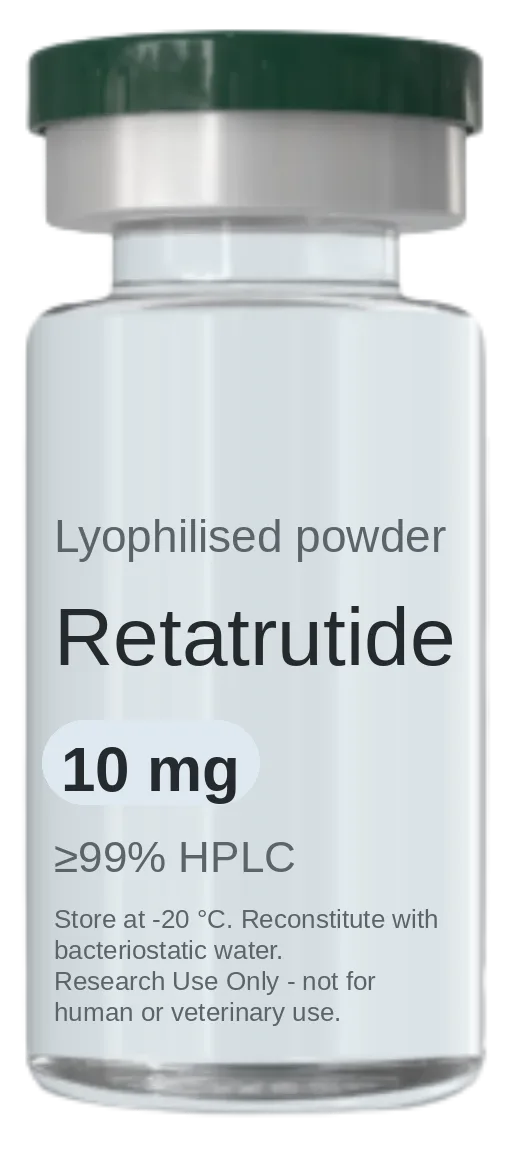
Retatrutide
Triple-agonist metabolic research peptide targeting GLP-1, GIP and glucagon receptors.
- Purity:
- ≥99% HPLC
- Sizes available:
- 10 mg
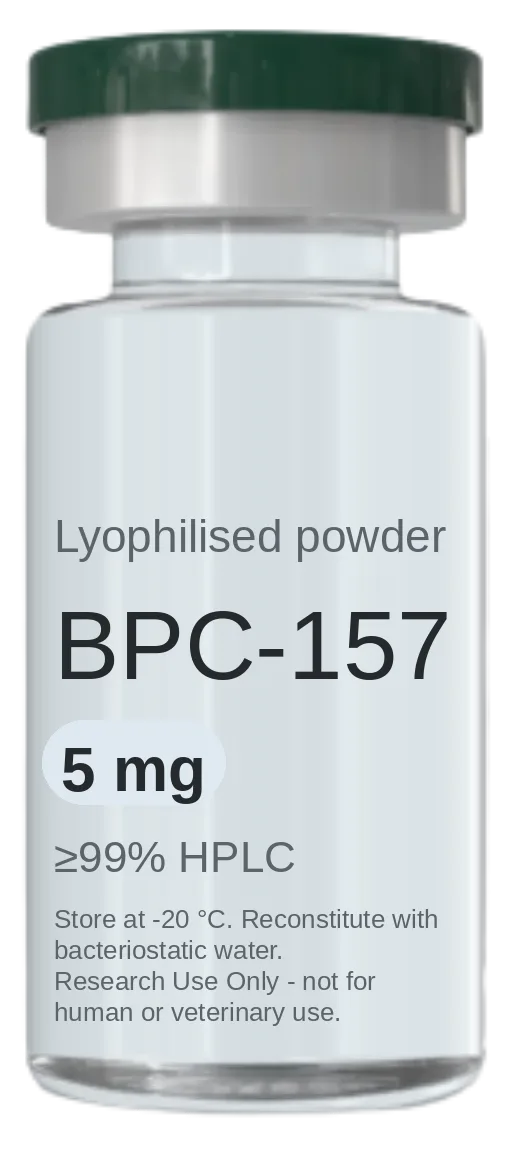
BPC-157 + TB-500
BPC-157 and TB-500 in a single vial — the pairing most studied together in tissue-repair research.
- Purity:
- ≥99% HPLC
- Sizes available:
- 5 mg + 5 mg
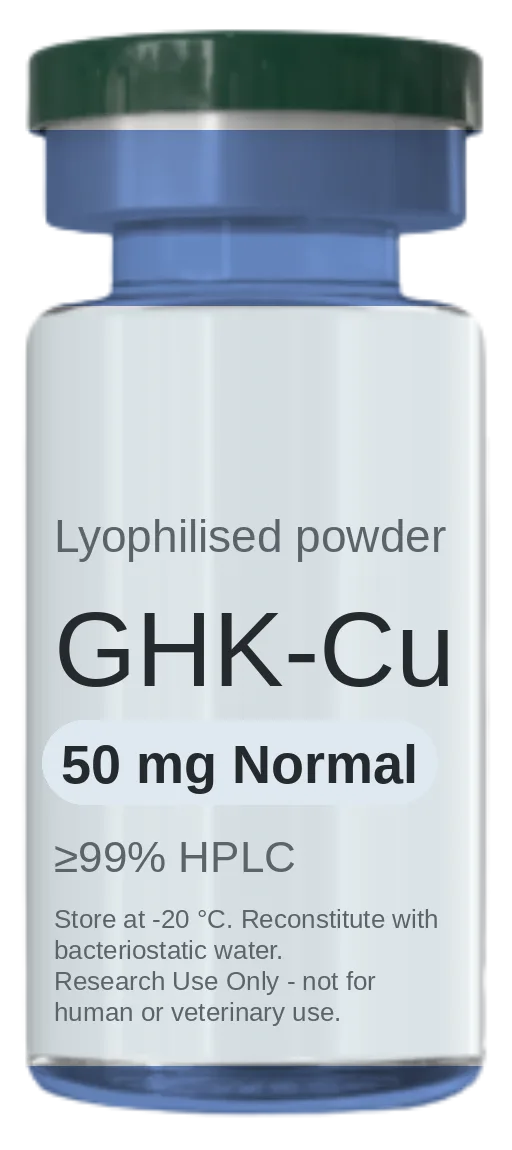
GHK-Cu (Copper Peptide)
Copper-binding tripeptide studied in extracellular matrix and dermal research models.
- Purity:
- ≥99% HPLC
- Sizes available:
- 50 mg Normal – 50 mg Plus
The consultation
One intake that settles goals, history and contraindications alongside compound, quantity, documentation and route — reviewed by a physician before anything ships.
More notes
-
Tesamorelin vs Sermorelin: The Difference
Tesamorelin and sermorelin are both GHRH analogs, but not the same molecule. Here's the structural difference and what the studies on each measure.
-
Peptide Supplier vs. Reseller: What Differs
The real difference is whether someone can name the lab that tested a batch and show the report — or only promise it's pure.
-
MOTS-c or NAD+: What's the Difference
MOTS-c and NAD+ are studied through different mitochondrial pathways; here's what each line of research actually measures.