
Note
Peptide Consigned to a Company in Argentina
What changes at Argentine customs when a research peptide is consigned to a company instead of an individual, and what paperwork ships with it.
When a research peptide arrives in Argentina consigned to a company rather than an individual, what changes is the customs paperwork, not the nature of the shipment. It is still a batch of laboratory material with its invoice and origin documentation attached — the recipient listed on the declaration simply carries a CUIT (tax ID) instead of a DNI (national ID). The practical difference is in who signs which form, not in whether the entry is legitimate.
What does it mean for a shipment to be "consigned" to a company?
"Consigned to" is the field on the customs declaration that identifies who the package is addressed to: name, address and tax identification number. When that recipient is an individual, the number is their DNI, or their CUIT/CUIL if they already have one. When the recipient is a company, the number is the entity's CUIT, and whoever physically receives the package — an employee, a warehouse, a reception desk — acts on behalf of that entity, not in a personal capacity.
That alone does not turn the shipment into a "commercial import." An international courier processes a package addressed to an individual the same way it processes one addressed to a company, as long as the content and declared value fit the postal shipment regime. What changes is the handling if something gets complicated: a company with an active CUIT generally has an easier time resolving a customs query than an individual with no import experience, simply because it already has a point of contact — a customs broker or an administrative department used to this kind of paperwork.
Does a company need to be registered as an importer to receive a research batch?
That depends on volume and entry channel, not on the fact of being a company. For a small quantity entering through the postal or courier shipment regime — the usual channel for a batch of research peptide — the process is generally resolved with the documentation that travels with the package (invoice, content description, declared purpose), and it does not require the recipient to be registered as a formal importer. Formal importer registration only becomes relevant once volume or frequency pushes the shipment into the general import regime, something a laboratory buying for its own research use rarely reaches with a single purchase.
Put differently: the fact that the recipient holds a company CUIT does not by itself trigger a registration requirement that would not exist if the same package arrived addressed to an individual researcher. What does help, if a company expects to receive these shipments on a recurring basis, is for whoever handles reception to know in advance what documentation will be attached, so there is no need to improvise a response if customs asks for clarification.
Does customs treat an individual differently from a company?
Customs evaluates the content, the declared value and the supporting documentation of the shipment — not the recipient's legal status as an admissibility filter. A research peptide correctly declared as such, with its invoice and certificate of analysis available on request, enters under the same criteria whether the recipient is a person or an entity. What can vary is response time if a query comes up: an individual may need to explain from scratch what the product is and what it is used for, while a company that has already gone through this process has the workflow in place.
PeptoClinic is a technical supply consultancy, not a customs broker, but it prepares the documentation for each batch — invoice, content description and the declaration of use as laboratory reference material — the same way regardless of whether the "recipient" field on that shipment carries a DNI or a CUIT.
What documentation ships with the package in either case?
What travels with the package is independent of who receives it:
- Commercial invoice with content description and declared value.
- Identification of the compound and quantity per vial.
- A declaration that the material is for laboratory research use (RUO) only, not for human or veterinary consumption.
- Access to the batch's certificate of analysis, which reports the purity found by the laboratory that analyzed it — Janoshik Analytical is the lab behind PeptoClinic's published reports.
That same documentation resolves most of the queries a customs officer might raise about a package declared as laboratory material. How the batch physically travels — a sealed, lyophilised vial, with no cold chain because the powder does not need one — is another detail that appears in that documentation, and it explains why the box carries no coolant.
Can a shipment addressed to a company take longer than one addressed to an individual?
There is no fixed rule saying one takes longer than the other. Delays on these shipments tend to originate in the same place regardless of who the recipient is: an ambiguous content description, a declared value that does not match the invoice, or a routine query asking to confirm what the product is. A company with import experience sometimes resolves that query faster because it already has a contact channel set up with the courier or broker; an individual who has never received this kind of shipment before may take longer simply from not knowing who to respond to. Neither scenario is, by itself, a reason for additional delay.
What happens if the shipment gets held up at customs?
A held shipment almost always asks for the same thing regardless of the recipient's legal status: a clarification about the content, backed by the invoice and, if requested, the batch's certificate of analysis. Having that documentation on hand — rather than having to request it urgently — is what shortens resolution time. This is exactly what PeptoClinic provides with every quote: the customs file already assembled alongside the order, so that query, if it arrives, gets answered with the right paper in hand rather than an improvised explanation.
Material for laboratory research, not for human or veterinary use
Everything PeptoClinic quotes is supplied strictly for research use (Research Use Only). It is not a medicine, a supplement or a food. It is not approved or evaluated by the FDA, ANMAT or any equivalent authority for human or veterinary use, and nothing in this post should be read as guidance on use, dosing or administration in people. If a company or an individual receives a batch declared as laboratory reference material, that is also the only purpose it is intended for.
PeptoClinic supplies Argentina along with nine other markets, under the same research-material framing in all of them. Compounds like retatrutide, BPC-157, MOTS-c or GHK-Cu travel with the same documentation whether the declared recipient is a company or an individual.
Frequently asked questions
¿Hace falta ser una empresa para recibir un péptido de investigación en la Argentina?
No. PeptoClinic cotiza tanto a personas físicas como a empresas o instituciones de investigación; lo que cambia según quién recibe es el número de identificación tributaria que figura como destinatario en la documentación del envío, no la posibilidad de recibirlo.
¿El CUIT de la empresa queda expuesto en algún documento público?
El CUIT del destinatario aparece en la documentación aduanera del envío, que es un trámite administrativo entre el remitente, el courier y la aduana, no un documento público que se publique en ningún lado.
¿Un empleado puede firmar la recepción en nombre de la empresa?
Sí, la recepción física del paquete suele quedar a cargo de quien esté disponible en el domicilio declarado por la empresa; lo relevante para la aduana es que el domicilio y el CUIT del destinatario coincidan con lo declarado en la documentación, no quién firma el acuse de recibo puntual.
¿Cambia el certificado de análisis si el comprador es una empresa?
No. El [certificado de análisis](/en/quality/) corresponde al lote, lo emite el laboratorio que lo analizó, y es el mismo documento sea quien sea el destinatario del envío.
¿Se puede pedir que el envío quede a nombre de la empresa pero con otro domicilio de entrega?
Eso depende de las opciones que ofrezca el courier en cada caso puntual; lo que PeptoClinic controla es la documentación del lote (factura, descripción, declaración de uso), no la logística de entrega del transportista.
¿Qué pasa si la empresa no tiene experiencia previa importando material de laboratorio?
La documentación que acompaña al lote está pensada para que la consulta, si la aduana la hace, se resuelva con el papel correcto en la mano, sin necesidad de experiencia previa en comercio exterior por parte de quien recibe.
¿El hecho de ser empresa obliga a declarar el péptido como insumo productivo?
No necesariamente. La declaración depende de la finalidad real del envío, investigación de laboratorio, y es esa finalidad, no la figura jurídica del destinatario, la que determina cómo se describe el contenido en la documentación.
¿PeptoClinic gestiona el trámite de aduana en nombre del destinatario?
PeptoClinic es una consultoría de suministro técnico: prepara y entrega la documentación del lote (factura, descripción de contenido, certificado de análisis) junto con la cotización, pero la gestión aduanera final en destino queda del lado del destinatario y del courier o despachante que intervenga.
Compounds mentioned
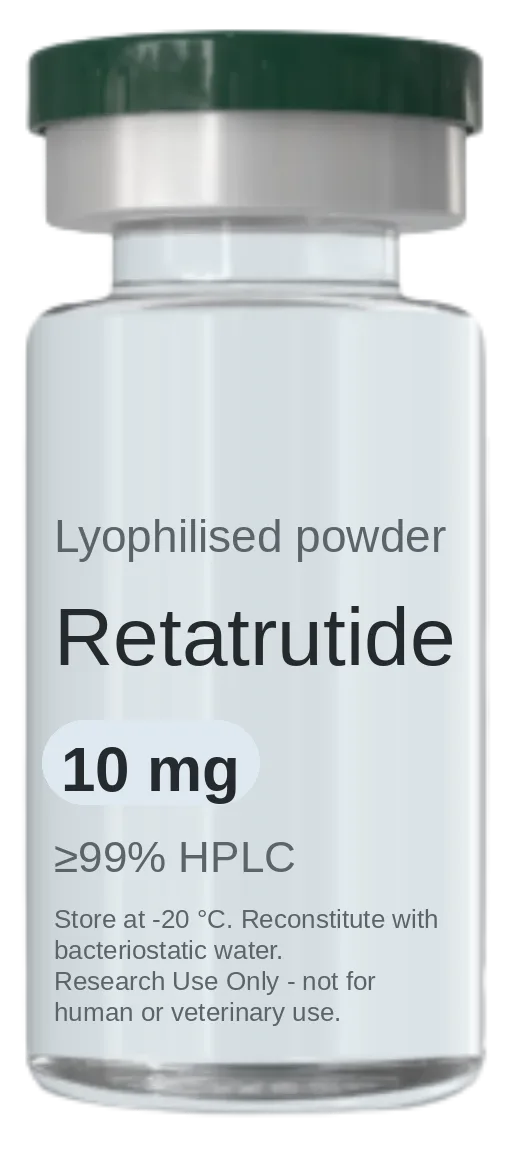
Retatrutide
Triple-agonist metabolic research peptide targeting GLP-1, GIP and glucagon receptors.
- Purity:
- ≥99% HPLC
- Sizes available:
- 10 mg
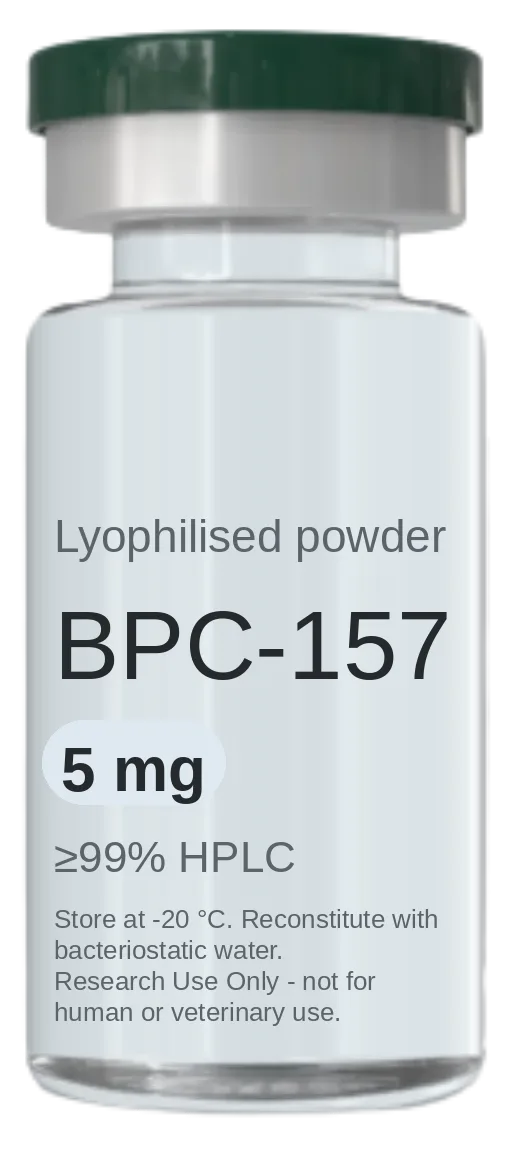
BPC-157 + TB-500
BPC-157 and TB-500 in a single vial — the pairing most studied together in tissue-repair research.
- Purity:
- ≥99% HPLC
- Sizes available:
- 5 mg + 5 mg
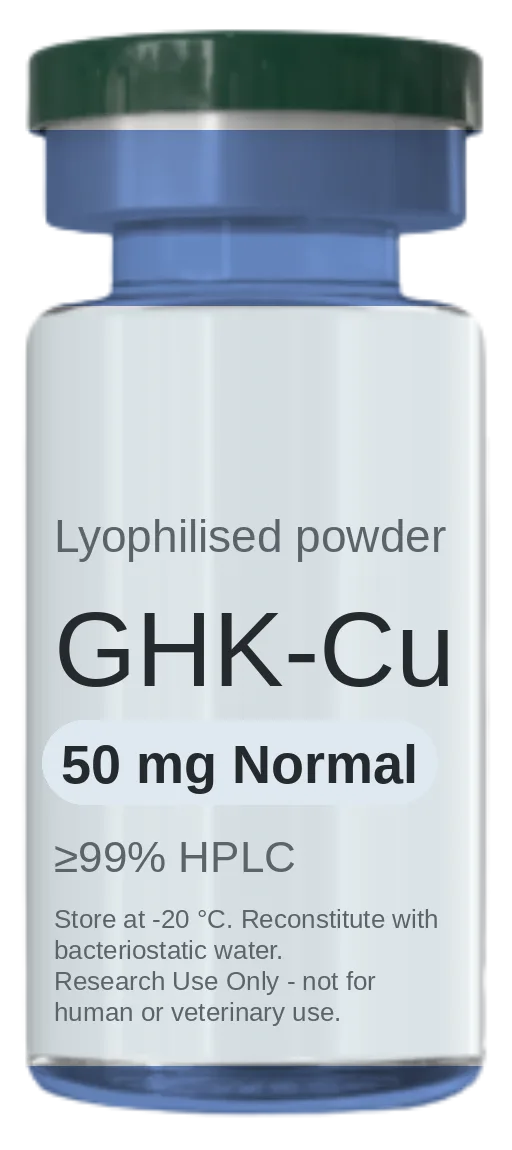
GHK-Cu (Copper Peptide)
Copper-binding tripeptide studied in extracellular matrix and dermal research models.
- Purity:
- ≥99% HPLC
- Sizes available:
- 50 mg Normal – 50 mg Plus
The consultation
One intake that settles goals, history and contraindications alongside compound, quantity, documentation and route — reviewed by a physician before anything ships.
More notes
-
Retatrutide vs. Tirzepatide: Differences
Retatrutide adds a third receptor that tirzepatide doesn't activate — here's how the two differ in structure, mechanism, and published research.
-
NAD+ vs Selank: What's the Difference?
NAD+ is a cellular coenzyme; Selank is a synthetic peptide derived from tuftsin. Structure, mechanism, and what each one is studied for.
-
Peptide Customs Clearance Cost in Argentina
What determines customs clearance cost for a research peptide shipment to Argentina, and what documentation PeptoClinic prepares for it.