
Note
Retatrutide vs BPC-157: Key Differences
Retatrutide and BPC-157 are research peptides with different mechanisms, families, and study objectives. Here's why they're not interchangeable.
Retatrutide and BPC-157 are not competing options because they do not do the same thing: retatrutide is a triple agonist peptide studied in metabolic research models, and BPC-157 is a 15-amino-acid peptide studied in tissue repair and intestinal barrier models. The difference isn't "which is better" — it's chemical family, mechanism of action, and research line. They share exactly one thing: both are supplied strictly as research material (RUO), not as a product for human consumption.
What retatrutide is
Retatrutide is a synthetic peptide that acts as an agonist at three distinct receptors: GLP-1, GIP, and the glucagon receptor. That triple activity is what sets it apart from single-pathway peptides (like simple GLP-1 agonists), and it's why it shows up repeatedly in literature on metabolic and energy-balance models. The molecule is studied in preclinical designs that observe hormonal signaling — not in human-use protocols.
In PeptoClinic's catalog, retatrutide is quoted as a lyophilized vial, with the corresponding batch documentation. The most recent laboratory report on this compound — task 136921 from Janoshik Analytical, analyzed April 13, 2026 — reported 99.893% purity on 11.96 mg content in a vial labeled 10 mg. That kind of report is what separates a verifiable supplier from one that only makes promises.
What BPC-157 is
BPC-157 is a pentadecapeptide (15 amino acids) derived from a partial sequence of a gastric protein. It is investigated mainly in models of tissue repair, angiogenesis, and gastrointestinal mucosa protection. It has no structural or functional relationship to retatrutide: it doesn't act on incretin receptors or intervene in metabolic pathways, but rather in cell-signaling processes linked to wound healing in animal models.
PeptoClinic also supplies a combined batch of BPC-157 with TB-500 (laboratory report 204975, 10 mg total, 5 mg of each compound), intended for research lines that study both peptides together — not to replace one with the other.
The mechanism difference, in one sentence
Retatrutide activates hormone receptors (GLP-1, GIP, glucagon) and is studied on the metabolic axis; BPC-157 does not activate those receptors and is studied on the tissue-repair axis. These are two peptide families investigated for different reasons, with different scientific literature, and they are not interchangeable in any experimental design.
Molecule size and structure
Another concrete difference is chain length. BPC-157 is a short 15-amino-acid sequence. Retatrutide is a more complex molecule, modified with a lipid chain (similar to other incretin agonists) that extends its persistence in the assays where it's studied. That structural difference explains why research protocols using each one differ in design, controls, and readouts.
What each one is used for in research
No use described here is human: both compounds are supplied strictly as scientific research material, for study in vitro or in laboratory settings.
- Retatrutide appears in research lines on incretin signaling, appetite regulation in animal models, and comparisons of single vs. triple agonism at metabolic receptors.
- BPC-157 appears in research lines on connective tissue repair, gastric ulcer models, angiogenesis, and intestinal barrier protection.
There is no real overlap between these two lines, which explains why a researcher working with one rarely needs the other for the same experimental design.
Documentation: what to ask for on each one
The right way to compare two research peptides isn't their "reputation" on forums — it's the laboratory report that accompanies the batch. Each compound should have:
- An identifiable task or batch number on the report.
- The laboratory that performed the analysis, named explicitly.
- The method used (HPLC is the standard for peptide purity).
- Content measured in milligrams, not just an isolated percentage.
PeptoClinic publishes this information on its quality control page, with the Janoshik Analytical reports backing each compound in the catalog. If a supplier can't produce that document with a task number, there's no way to verify what actually arrived in the vial.
Format and shipping: where they're alike
Here they do coincide: both are supplied as lyophilized powder in a sealed vial, with no cold chain. Lyophilized powder is stable at room temperature for weeks, so the package carries no refrigerant gel or dry ice — it carries a vial with desiccant, protected from light. Cold only becomes relevant after the material is reconstituted at the destination lab, not during transit. Full packaging detail and the destinations PeptoClinic ships to are on the shipping page.
Argentina is one of the served destinations, and both retatrutide and BPC-157 are quoted with customs documentation prepared for entry as research reference material.
Research use only — not for human or veterinary use
All material described in this article is supplied strictly for research use (Research Use Only). It is not a medicine, a supplement, or a food. It is not approved or evaluated by ANMAT, the FDA, or any equivalent regulatory authority for human or veterinary consumption, diagnosis, or treatment. PeptoClinic is not a pharmacy, a clinic, or a telehealth provider, and does not provide or suggest administration protocols for people.
How to choose between the two for a research project
The choice doesn't depend on preference — it depends on the study's objective. If the experimental design targets metabolic signaling, incretin agonism, or comparison with other GLP-1 agonists, retatrutide is the relevant compound. If the design targets tissue repair, ulcer models, or angiogenesis, BPC-157 is the one that fits. Reviewing the full catalog also helps locate related compounds — like those in the growth hormone family — that are sometimes combined in broader research protocols.
Frequently asked questions
Do retatrutide and BPC-157 belong to the same peptide family?
No. Retatrutide is a triple incretin-receptor agonist (GLP-1, GIP, glucagon), while BPC-157 is a pentadecapeptide with no activity at those receptors. They are distinct families with distinct mechanisms of action.
Can they be studied together in the same experimental design?
It depends on the study's objective. Since they act on different biological pathways, some research designs include both in parallel to compare effects across distinct axes (metabolic vs. tissue repair), but they are not combined as if they were interchangeable.
Which of the two has more published scientific literature?
Both have publications in databases like PubMed, but on different topics: retatrutide concentrates studies on metabolic signaling and incretin agonism, while BPC-157 concentrates studies on tissue repair and gastric protection in animal models.
Do both come with a laboratory report?
Yes. PeptoClinic publishes Janoshik Analytical reports for the compounds in its catalog, including the retatrutide batch (task 136921, 99.893% purity) and the combined BPC-157 with TB-500 batch (task 204975). Full detail is on the [quality control](/en/quality/) page.
Is either one approved for human use?
No. Neither compound is approved by ANMAT, the FDA, or any equivalent authority for human or veterinary use. Both are supplied exclusively as laboratory research material.
How are they shipped to Argentina?
Both ship as lyophilized powder in a sealed vial, at room temperature, with no cold chain, with customs documentation prepared for entry as research reference material. Full detail is on the [shipping](/en/shipping/) page.
What does it mean that retatrutide is a "triple" agonist?
It means the molecule binds and activates three distinct receptors — GLP-1, GIP, and glucagon — instead of just one, unlike other research peptides that act on a single signaling pathway.
Is BPC-157 supplied alone or combined?
PeptoClinic supplies it both as an individual compound and in a combined batch with TB-500, depending on what the research design requires. Each presentation has its own laboratory report.
Compounds mentioned
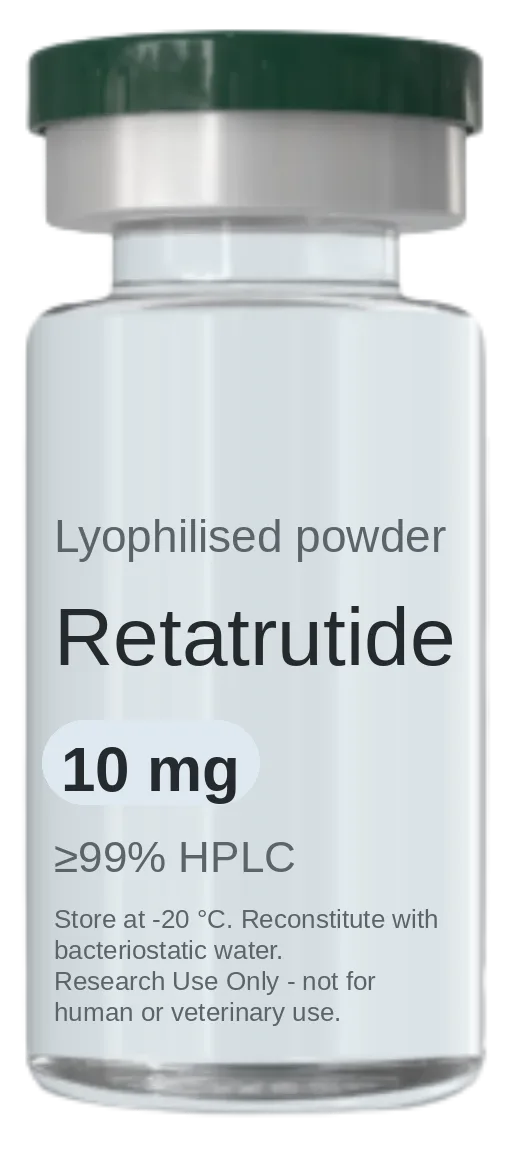
Retatrutide
Triple-agonist metabolic research peptide targeting GLP-1, GIP and glucagon receptors.
- Purity:
- ≥99% HPLC
- Sizes available:
- 10 mg
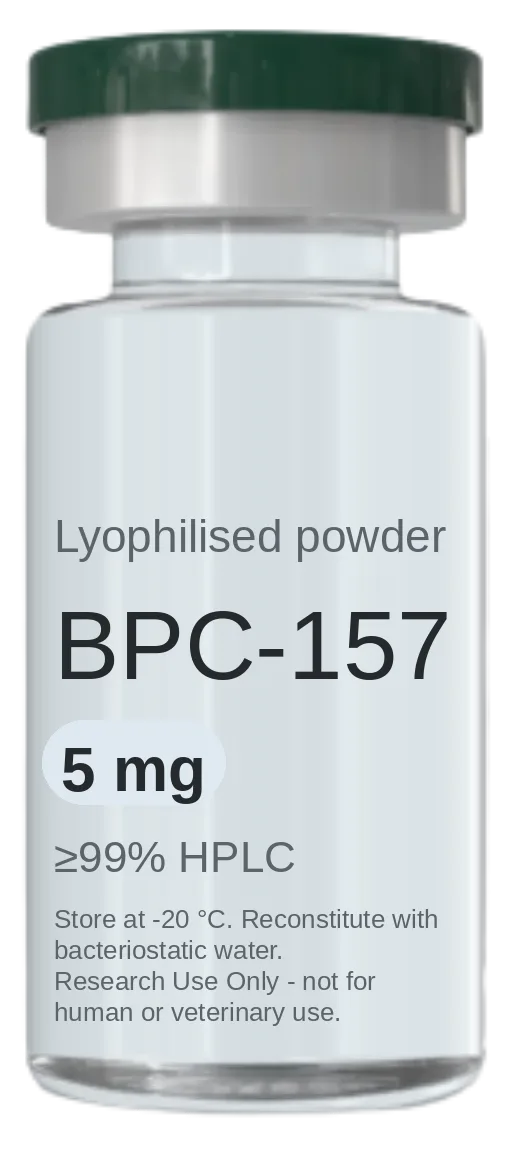
BPC-157 + TB-500
BPC-157 and TB-500 in a single vial — the pairing most studied together in tissue-repair research.
- Purity:
- ≥99% HPLC
- Sizes available:
- 5 mg + 5 mg
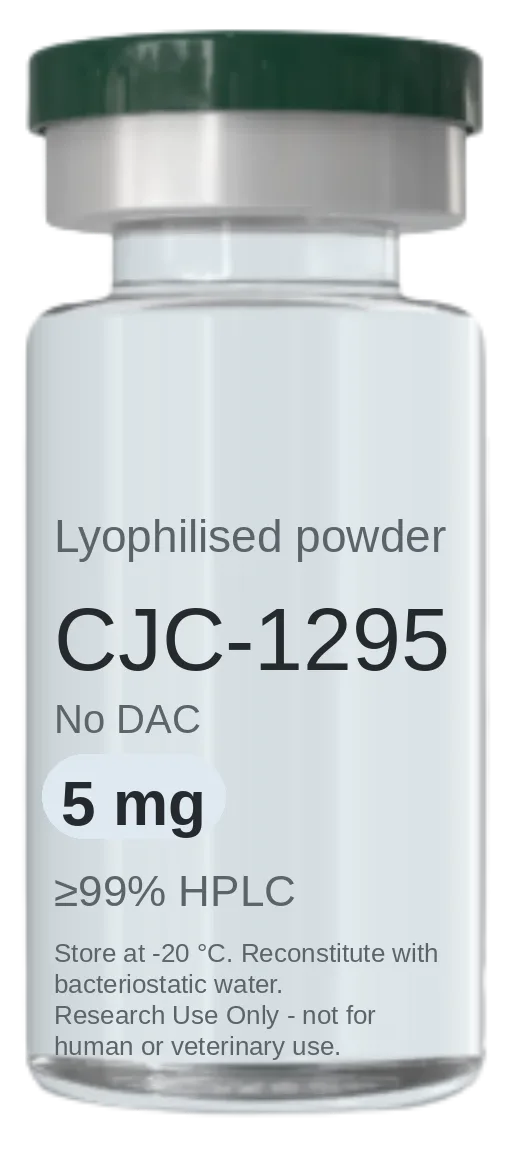
CJC-1295 (sin DAC)
Modified GRF(1-29) tetrasubstituted analogue without drug affinity complex.
- Purity:
- ≥99% HPLC
- Sizes available:
- 5 mg – 20 mg
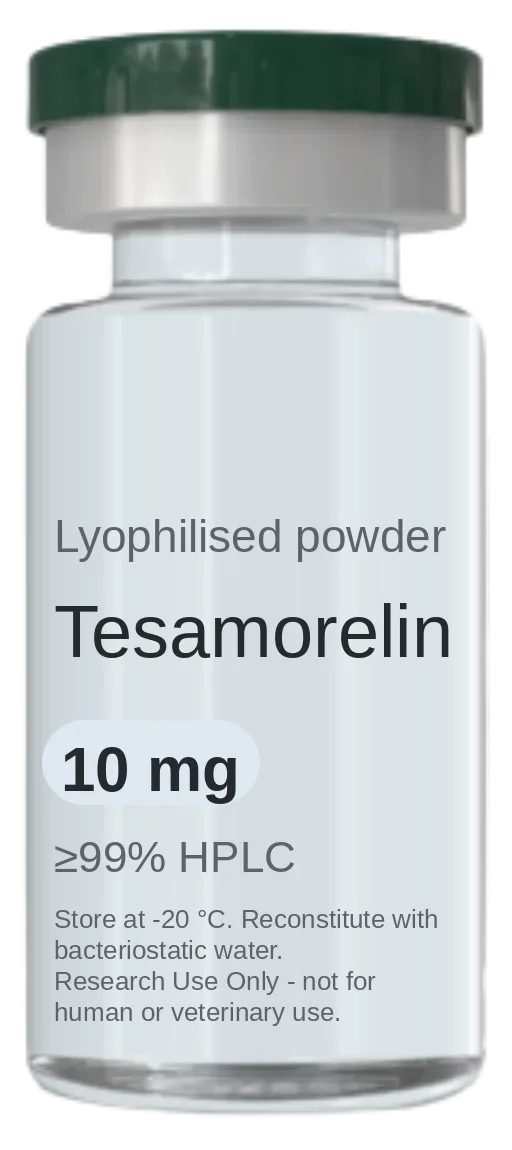
Tesamorelin
Stabilised GHRH(1-44) analogue studied in adipose tissue distribution research.
- Purity:
- ≥99% HPLC
- Sizes available:
- 10 mg – 20 mg
The consultation
One intake that settles goals, history and contraindications alongside compound, quantity, documentation and route — reviewed by a physician before anything ships.
More notes
-
Paying Argentina's Customs Duty on Peptides
How the import duty on a research peptide shipment is paid when it arrives in Argentina, and who actually collects it.
-
No Batch Number on the Invoice: Customs
If a peptide shipment's invoice skips the batch number, Argentine customs can hold it and request supporting documents.
-
Real Peptide Stock or Catalog?
How to tell if a research peptide supplier holds real stock or is just quoting from a generic catalog, before you pay anything.