
Note
TFA in Peptides and How It Affects Purity
The TFA left after HPLC purification is invisible to the UV detector. What that means for the real purity of a peptide lot.
TFA (trifluoroacetic acid) is the ion-pairing reagent used in reversed-phase HPLC purification of synthetic peptides. The critical detail: TFA binds to the peptide chain as a counterion, and the UV detector in the chromatograph barely registers it. That means an HPLC purity figure does not directly tell you how much peptide is present in a given mass of powder.
Why TFA ends up in the vial
Peptide synthesis produces a mixture: the target compound alongside truncated sequences, coupling byproducts, and protected-chain fragments. Separating them is done by RP-HPLC, and that is where TFA enters the process.
TFA is added as an acid modifier to the mobile phase. It drives pH down to around 2 and improves peak resolution across a wide range of sequences. The result is efficient purification, with one direct consequence: TFA forms a stable salt with the amine groups along the peptide chain. The binding sites are the N-terminal amine, lysine residues, arginine residues, and histidine residues. When the product is lyophilized, that salt is preserved.
What arrives at the laboratory is the peptide-TFA complex. How much TFA is retained depends on how many basic residues the sequence carries. A peptide with several lysines holds on to more trifluoroacetate than one whose residues are mostly acidic or neutral.
What the HPLC detector measures — and what it does not
The UV detector in a chromatograph operates at 214 nm or 220 nm. At those wavelengths, the peptide amide backbone absorbs strongly; trifluoroacetate absorbs very little by comparison. The chromatogram calculates relative purity among organic peaks: what percentage of the total peak area belongs to the target compound versus truncated or mis-sequenced peptides.
That is the meaning of "99% HPLC purity": fewer than 1% of the chromatographic area comes from detectable organic impurities. It does not state that 99% of each milligram weighed is peptide.
A vial reporting 99% chromatographic purity may have 10% to 20% of its weight as trifluoroacetate. The convention is valid and is the field standard. What matters is understanding which question it answers.
Peptide content as a complementary figure
Peptide content expresses how much compound is present per unit of mass. Measuring it requires methods outside standard HPLC: amino acid analysis (AAA), UV quantification calibrated against a known standard, or quantitative mass spectrometry. Not every certificate of analysis includes it.
For experiments where exact concentration is an independent variable — dose-response curves, cross-batch comparisons, protocols requiring reproducibility across laboratories — peptide content is as relevant as chromatographic purity.
Practical effects in the laboratory
Quantification
If a batch carries 80% real peptide content and the protocol assumes 100%, every point on a dose-response curve contains 20% less compound than estimated. The experiment is not invalidated, but the error is systematic. Knowing the real content allows correction; ignoring it makes results unreproducible when another laboratory uses a batch with a different content figure.
Cell culture
Published literature indexed on PubMed documents that trifluoroacetate can affect viability in certain cell lines when peptides are used at relatively high concentrations in culture medium. At nanomolar or low micromolar concentrations the effect is negligible. It becomes relevant when the assay requires high concentrations or when the cell system is sensitive to pH shifts or fluoride presence in the medium.
Formulation
In some systems the counterion influences solubility or the rate of compound degradation. Peptides in acetate salt form tend to be more hydrophilic. If the protocol involves solvents or buffers where solubility is critical, the salt form matters.
How to read a certificate of analysis
A certificate issued by a laboratory with analytical traceability states the result, the method, and the date. The items to locate:
- Purity method: it should name RP-HPLC and the detection wavelength. That defines what is being measured.
- Peptide content (if listed): the complementary figure, expressed as a percentage by mass or in µmol/mg, with the method used to determine it.
- Task number or verification code: allows checking the result directly on the laboratory's platform.
- Mass spectrometry (if listed): confirms molecular identity, does not quantify TFA.
Janoshik Analytical — the laboratory that analyzed the four batches PeptoClinic publishes with open documentation — includes a task number on each certificate. The MOTS-c batch 136923 closed at 99.669% HPLC purity; the Retatrutide batch 136921 at 99.893%: both are chromatographic purity figures under the conditions of the analysis. If a certificate does not list peptide content separately, the number is chromatographic.
Alternative salt forms
Some manufacturers supply peptides converted to a different salt to reduce residual TFA.
- Acetate: obtained by repeated lyophilization with dilute acetic acid. The most common form after TFA and the one that interferes least in most cell-culture systems.
- Hydrochloride (HCl): produced by ion exchange. More stable under certain conditions, though the process can affect peptides with cysteines or other sensitive residues.
Conversion adds a step and requires independent analytical verification: the certificate for the converted batch must cover that specific lot, not just the original TFA form. A supplier offering acetate salt on a batch that only has TFA-form analysis is not supplying complete documentation.
The right choice depends on the protocol. If the assay tolerates TFA at the concentrations used, conversion adds no benefit. If the system is sensitive, requesting it is reasonable. That decision belongs to the researcher based on experimental design.
For laboratory research only
PeptoClinic supplies peptides exclusively as Research Use Only (RUO) material: for in vitro and laboratory research. Nothing described on this page corresponds to a medicine, a supplement, or a food. No compound in the PeptoClinic catalog is approved or intended for human or veterinary use, diagnosis, or treatment. PeptoClinic does not write prescriptions or provide guidance on administration protocols in people.
Frequently asked questions
Does TFA make a peptide impure?
Not in the chromatographic sense. TFA is the counterion left over from the purification process, not a synthesis impurity. A peptide can carry 99% chromatographic purity while containing a meaningful proportion of TFA by mass. The two figures are compatible: HPLC purity measures the absence of incorrect or truncated peptides; real peptide content measures how much compound is present per milligram.
Why doesn't standard HPLC detect TFA?
The UV detector operates at 214 nm or 220 nm, where the amide backbone absorbs strongly. Trifluoroacetate absorbs very little at those wavelengths by comparison. The chromatogram calculates the ratio among organic peaks; the counterion falls outside that count.
How do you tell whether a certificate reports real peptide content?
Look for "peptide content" listed explicitly as a figure separate from the HPLC purity percentage, accompanied by the method used to measure it — amino acid analysis, calibrated UV quantification, or similar. If the certificate shows only a chromatogram and a main-peak area percentage, the number is chromatographic purity, not content by mass.
What does mass spectrometry confirm on a peptide CoA?
It confirms that the peptide has the expected molecular mass and that the sequence is correct. It does not quantify TFA or peptide content by mass. A correct MS result alongside high HPLC purity is the field's standard documentation package for identity and purity; determining real content requires additional methods such as AAA.
In which experiments does knowing peptide content matter most?
In any experiment where exact compound concentration is the independent variable: dose-response curves, comparisons between different batches of the same compound, or protocols that require reproducibility across laboratories. In early-stage screening or qualitative assays, chromatographic purity is generally sufficient.
Do all peptides retain the same amount of TFA?
No. The proportion retained depends on how many basic residues the sequence carries — lysine, arginine, histidine, and the N-terminal amine. A sequence with several of those residues retains more trifluoroacetate than one with mostly acidic or neutral residues. Chain length and lyophilization conditions also play a role.
Why do laboratories still use TFA if it has this effect?
Because it delivers the best chromatographic resolution for most peptide sequences. Alternative mobile-phase systems — TEAP, acetic acid, modified buffers — are more complex and do not consistently improve separation. Standard practice is to purify in TFA and convert to another salt only when the protocol specifically requires it. That keeps cost and turnaround time down without affecting quality when the TFA form is adequate for the experiment.
Where can I verify the certificates for lots in stock?
PeptoClinic publishes [Janoshik Analytical reports for lots currently available](/en/quality/), each including the laboratory task number that allows direct verification of the result. Certificates cover the chromatogram, purity percentage, vial content mass, and the data for the analyzed lot.
Compounds mentioned
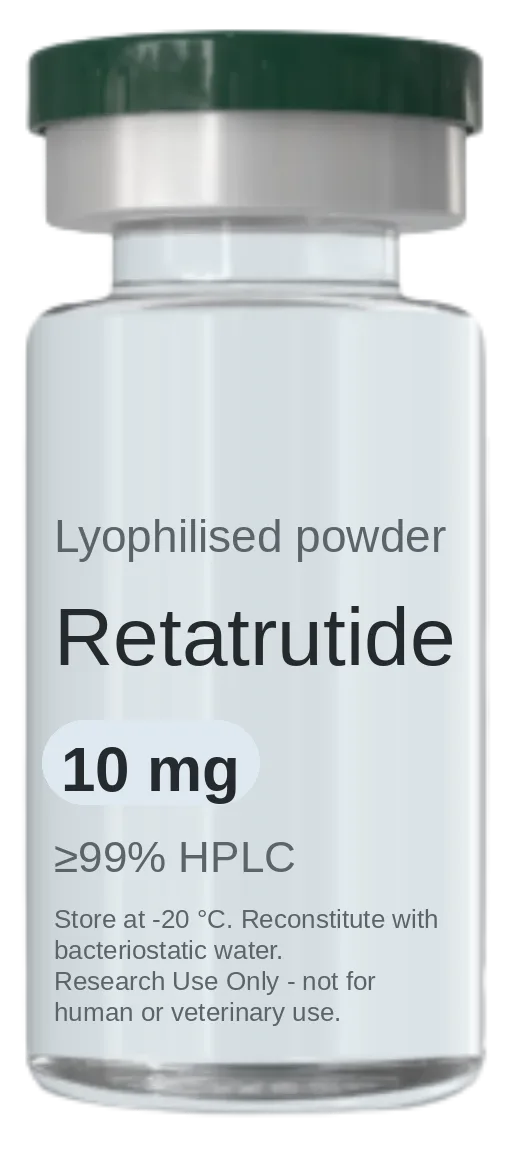
Retatrutide
Triple-agonist metabolic research peptide targeting GLP-1, GIP and glucagon receptors.
- Purity:
- ≥99% HPLC
- Sizes available:
- 10 mg
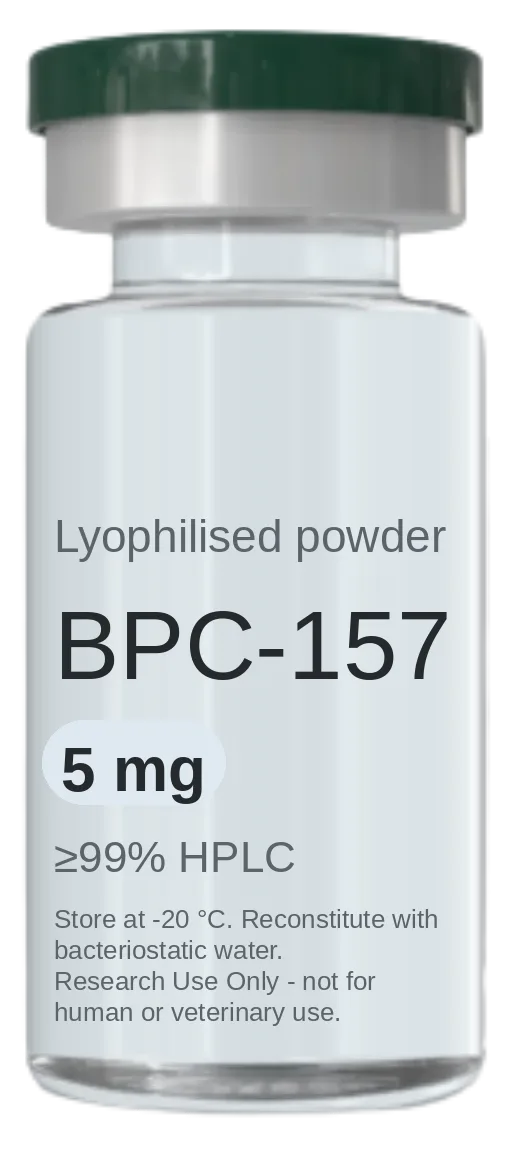
BPC-157 + TB-500
BPC-157 and TB-500 in a single vial — the pairing most studied together in tissue-repair research.
- Purity:
- ≥99% HPLC
- Sizes available:
- 5 mg + 5 mg
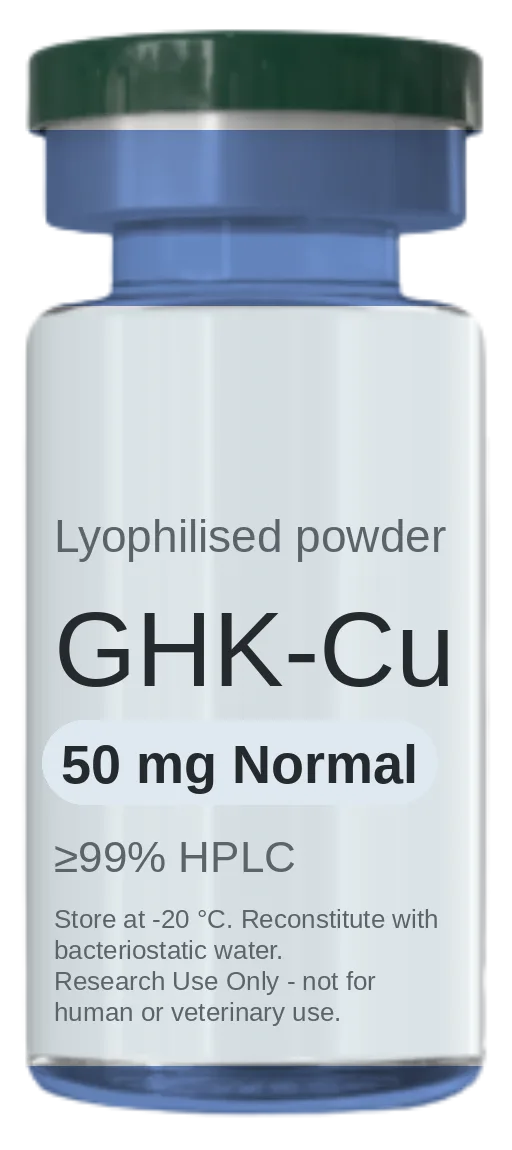
GHK-Cu (Copper Peptide)
Copper-binding tripeptide studied in extracellular matrix and dermal research models.
- Purity:
- ≥99% HPLC
- Sizes available:
- 50 mg Normal – 50 mg Plus
The consultation
One intake that settles goals, history and contraindications alongside compound, quantity, documentation and route — reviewed by a physician before anything ships.
More notes
-
No Tax Address on File: Argentine Customs
What Argentine customs does with a research peptide shipment when the recipient has no registered tax address.
-
LL-37 vs GHK-Cu: What Sets Them Apart
LL-37 is a 37-residue cationic peptide; GHK-Cu is a copper-bound tripeptide. We compare structure, mechanism, and research lines.
-
How Long Does a Peptide Quote Take?
A research peptide quote from PeptoClinic usually arrives within one business day. Here's what happens during that review.