
Note
Thymosin Alpha 1 vs BPC-157: Differences
Thymosin Alpha 1 and BPC-157 study different pathways — immune modulation vs tissue repair. RUO material with a verifiable COA.
Thymosin Alpha 1 and BPC-157 differ in the pathway each molecule is studied for: Thymosin Alpha 1 is a 28-amino-acid peptide derived from a thymic protein, studied in immune-modulation models, while BPC-157 is a synthetic 15-amino-acid fragment derived from a gastric protein, studied in tissue-repair models. They share a form factor — lyophilized vial, intended for laboratory assay — but they share neither mechanism, nor origin, nor the body of literature that describes them.
What is Thymosin Alpha 1
Thymosin Alpha 1 (Tα1) is a 28-amino-acid peptide corresponding to a fragment of prothymosin alpha, a protein present in the thymus. The molecule was first identified as part of thymic extract and was purified in the mid-1970s. Since then, the literature indexed on PubMed describes it mainly in the context of immune response: dendritic cell activation, T-lymphocyte modulation, and its role in chronic-infection models.
Tα1's structure is a linear chain with no disulfide bridges, which makes it relatively stable in lyophilized form but sensitive to degradation once reconstituted in solution. It is one of the better-characterized molecules in the thymosin family, alongside Thymosin Beta-4, with which it should not be confused — these are distinct peptides, with different sequences and different mechanisms under study.
What is BPC-157
BPC-157 (Body Protection Compound-157) is a synthetic 15-amino-acid peptide derived from a partial sequence found in human gastric juice. Unlike Tα1, it is not a fragment of a circulating protein but a stable sequence, designed to resist degradation under laboratory conditions that replicate the gastric environment.
The available literature on BPC-157 concentrates on tissue-repair models: in vitro and in vivo studies on angiogenesis, tendon- and muscle-injury models, and models of gastrointestinal mucosal integrity. You can review the full listing for BPC-157 and the dedicated page for BPC-157 in Argentina, which details the documentation that accompanies each batch.
The core difference: which pathway each one investigates
The underlying question is not which peptide is "better," but which biological system each one is studied against:
- Thymosin Alpha 1 is studied on the immune axis: dendritic-cell maturation, T-lymphocyte signaling, and response to infectious stimuli in experimental models.
- BPC-157 is studied on the tissue-repair axis: new blood-vessel formation, connective-tissue healing models, and protection of the digestive mucosa in laboratory assays.
There is no direct overlap between the two bodies of literature. These are molecules a research protocol could combine if the experimental design justifies it — not because they "do the same thing," but because they investigate distinct biological processes that sometimes correlate within the same animal model.
Origin and structure: where they're alike and where they aren't
Both are short-chain peptides, water-soluble after reconstitution, and stable in lyophilized form when stored protected from light. That is where the structural resemblance ends.
Tα1 has 28 residues and preserves the natural sequence of human prothymosin alpha. BPC-157 has 15 residues and is a synthetic partial sequence, not a complete protein purified from tissue. This difference in size and origin also explains why their relative stability in solution varies: the literature on BPC-157 reports greater resistance to enzymatic degradation in in vitro assays that simulate the digestive tract, a property that was itself part of what motivated its initial study.
Documentation and batch verification
Any peptide acquired for research should arrive with a certificate of analysis (COA) from an independent laboratory, not just the supplier's word. PeptoClinic publishes reports from Janoshik Analytical, the laboratory that analyzes the catalog's batches. The lowest report published to date corresponds to MOTS-c, at 99.669% purity — that is the reference figure, not the best one on record, because a batch can vary between runs, and it's worth looking at the worst documented case before assuming a number.
Before evaluating any supplier, it's worth reading the site's quality page, which explains how to read a COA and what to look for in one: batch number, method (HPLC), analysis date, and, where it exists, a direct verification link with the laboratory.
Research-use-only, exclusively
Thymosin Alpha 1 and BPC-157 are supplied strictly as research material (Research Use Only). Neither is approved for human or veterinary use, neither is a drug or a supplement, and neither has been evaluated by the FDA, ANMAT or any equivalent regulatory authority. Nothing on this page constitutes guidance on dosing, administration route or protocol: both peptides are dispatched as lyophilized powder for the researcher to incorporate into their own experimental design, under their own professional judgment and regulatory framework.
Catalog and dispatch to Argentina
Both peptides are available to researchers in Argentina, within the full listing you can review in the catalog. Customs documentation is prepared declaring the material as laboratory reference material, and shipping is quoted according to destination and quantity — see the shipping page for the detail. If a project needs a quote for more than one compound, PeptoClinic's technical team reviews purity, quantity and dispatch route before responding, normally within one business day.
Frequently asked questions
Are Thymosin Alpha 1 and Thymosin Beta-4 the same peptide?
No. They are two distinct peptides within the thymosin family, with different amino-acid sequences and separate research literature. Thymosin Alpha 1 has 28 residues and is associated with immune-system studies; Thymosin Beta-4 has 43 residues and is studied in a different area of cell biology. They should not be confused when reviewing literature or requesting a COA.
Can BPC-157 and Thymosin Alpha 1 be requested together in the same batch?
Yes, as separate compounds within a single quote. These are two distinct vials, each with its own certificate of analysis; there is no standard combined formulation of the two in the catalog.
Which of the two has more published literature?
BPC-157 has a larger volume of preclinical studies published over the last fifteen years, particularly on tissue-repair models. Thymosin Alpha 1 has older literature, more centered on immunology, with decades of study since its original purification.
Do both peptides come in the same format?
Yes, both are dispatched as a vial of lyophilized powder, the only format currently available in the catalog. A pen format has been announced but is not yet orderable; it can only be added to a waitlist.
Do they need a cold chain to be shipped?
No. Lyophilized powder is stable at room temperature for weeks, so the shipment carries no coolant, no dry ice and no temperature logger. Cold becomes relevant only after the peptide is reconstituted into solution, when it should be kept between 2 and 8 °C.
What minimum purity does PeptoClinic state for its catalog?
The stated standard for the catalog is ≥99% by HPLC. The lowest independent report published so far, for MOTS-c, documented 99.669% purity — that is the figure worth using as a real-world floor, not an average or the best result seen.
Can a batch be verified with the laboratory that ran the analysis?
For reports that include a working direct verification link, yes: the result can be confirmed directly on the Janoshik Analytical site using the report's task number. Not every published report includes a working link for this, and the site's quality page clarifies which ones do.
Does PeptoClinic supply these peptides for human consumption?
No. The entire catalog, including Thymosin Alpha 1 and BPC-157, is supplied exclusively as laboratory research material (RUO). There is no indication for human or veterinary use, it is neither a drug nor a supplement, and no quote implies a prescription or medical advice.
Compounds mentioned
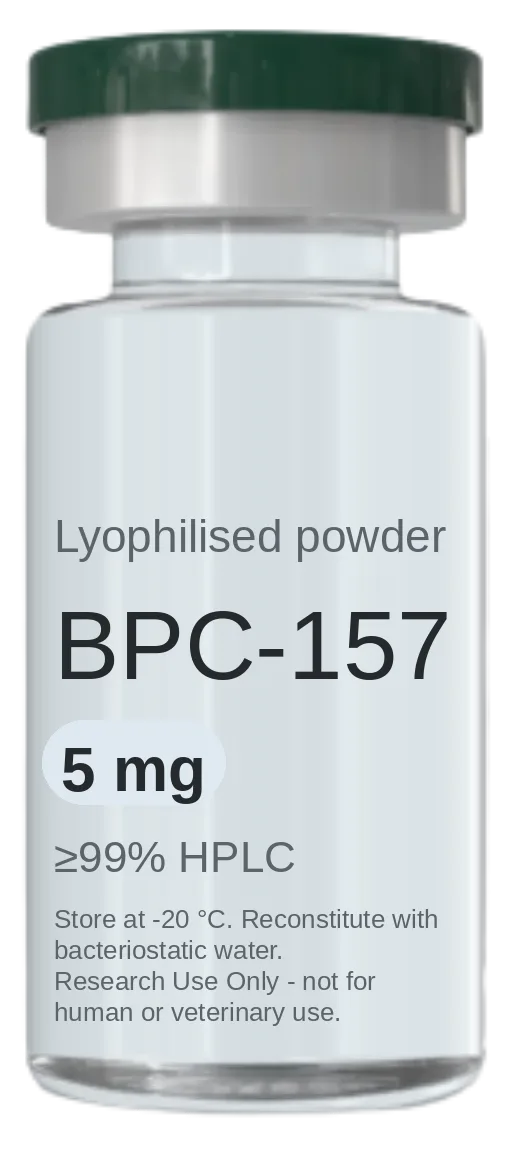
BPC-157 + TB-500
BPC-157 and TB-500 in a single vial — the pairing most studied together in tissue-repair research.
- Purity:
- ≥99% HPLC
- Sizes available:
- 5 mg + 5 mg
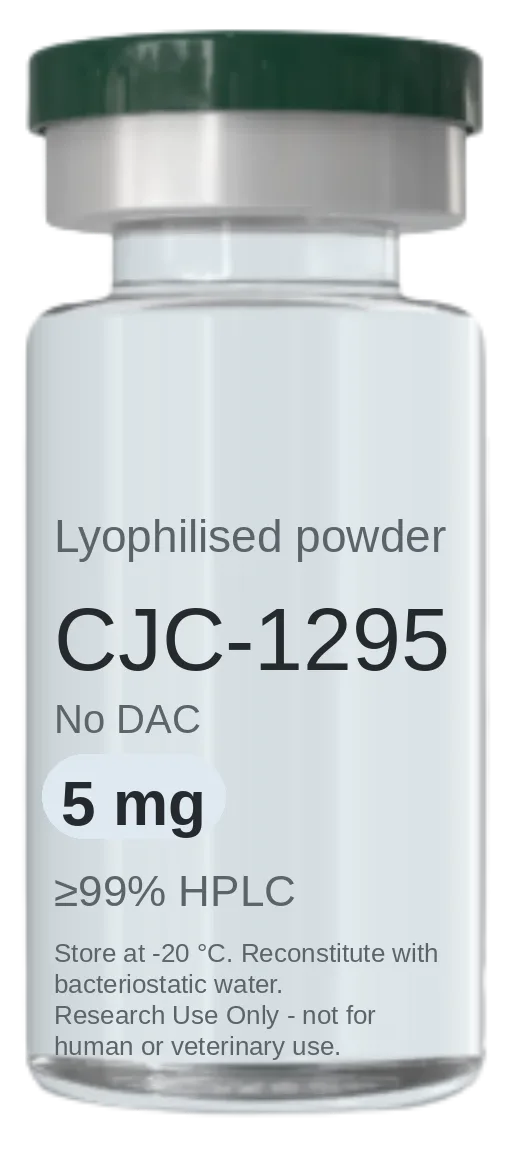
CJC-1295 (sin DAC)
Modified GRF(1-29) tetrasubstituted analogue without drug affinity complex.
- Purity:
- ≥99% HPLC
- Sizes available:
- 5 mg – 20 mg
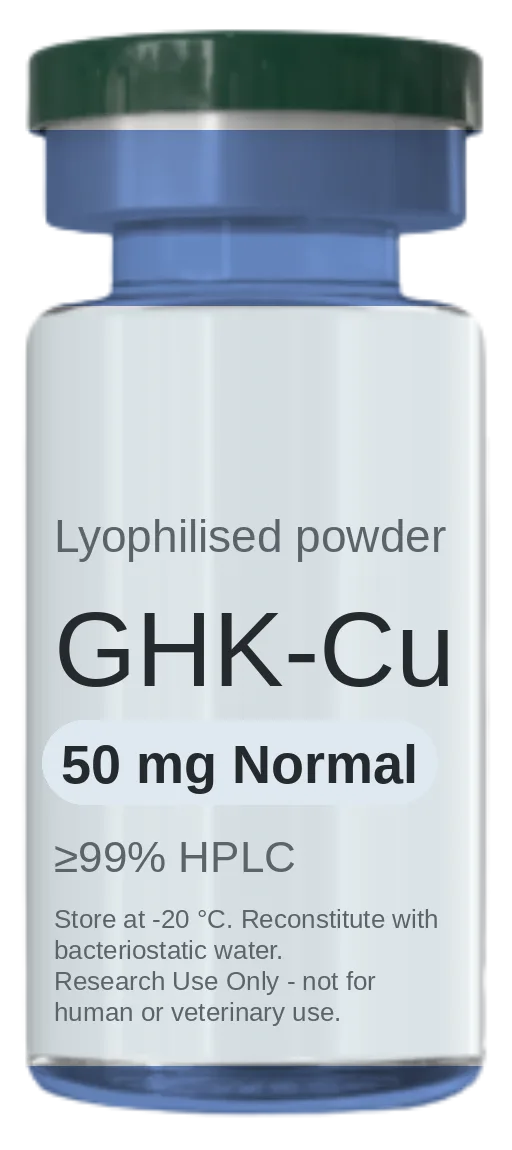
GHK-Cu (Copper Peptide)
Copper-binding tripeptide studied in extracellular matrix and dermal research models.
- Purity:
- ≥99% HPLC
- Sizes available:
- 50 mg Normal – 50 mg Plus
The consultation
One intake that settles goals, history and contraindications alongside compound, quantity, documentation and route — reviewed by a physician before anything ships.
More notes
-
Peptide Shipments to Argentina: Annual Limit
What Argentina's postal shipment regime says about how many research peptide packages you can receive per year.
-
Retatrutide vs Epithalon: Key Differences
Retatrutide and Epithalon are research peptides from different classes, studied in different fields. Here's how they differ.
-
MOTS-c vs CJC-1295: What's the Difference
MOTS-c and CJC-1295 are research peptides with different mechanisms — one works in the mitochondria, the other in the GH axis.