
Note
Retatrutide vs Epithalon: Key Differences
Retatrutide and Epithalon are research peptides from different classes, studied in different fields. Here's how they differ.
Retatrutide and Epithalon don't differ on "which one is better" — they're two peptides from different molecular classes, studied in separate research fields, comparable only in that both are molecules PeptoClinic quotes as laboratory research material. Retatrutide is a long-chain peptide designed to act on three metabolic receptors at once. Epithalon is a short tetrapeptide, just four amino acids, studied in an entirely different area: cellular aging biology. They don't compete with each other because they don't investigate the same thing.
What is retatrutide and what does the literature study
Retatrutide is a triple agonist peptide: it acts on GLP-1, GIP and glucagon receptors simultaneously. That three-target combination is what distinguishes it from the single- or dual-receptor agonists already circulating in metabolic research literature. Published trials on the molecule — including one that appeared in a leading medical journal in 2023 — study it in research models of body weight and glucose metabolism, not as a consumer product.
It's a long-chain peptide, which technically places it in a different category from many of the shorter peptides also carried in the catalogue. That has practical consequences for anyone working with it in the lab: the molecule is larger, the synthesis process is more demanding, and there's more room for quality control to slip along the way. That's why the analysis report matters more for this compound than for a short, simple one.
PeptoClinic has published an independent laboratory report on this compound: Janoshik Analytical analyzed a batch of retatrutide (task 136921) on April 13, 2026, and found a purity of 99.893%, against a 10 mg label and an actual content of 11.96 mg. That's the report to request and read before assuming anything about a retatrutide batch, from any supplier. If you're specifically sourcing this compound for Argentina, the retatrutide Argentina page has the quoting and dispatch detail for that market.
What is Epithalon and what does the literature study
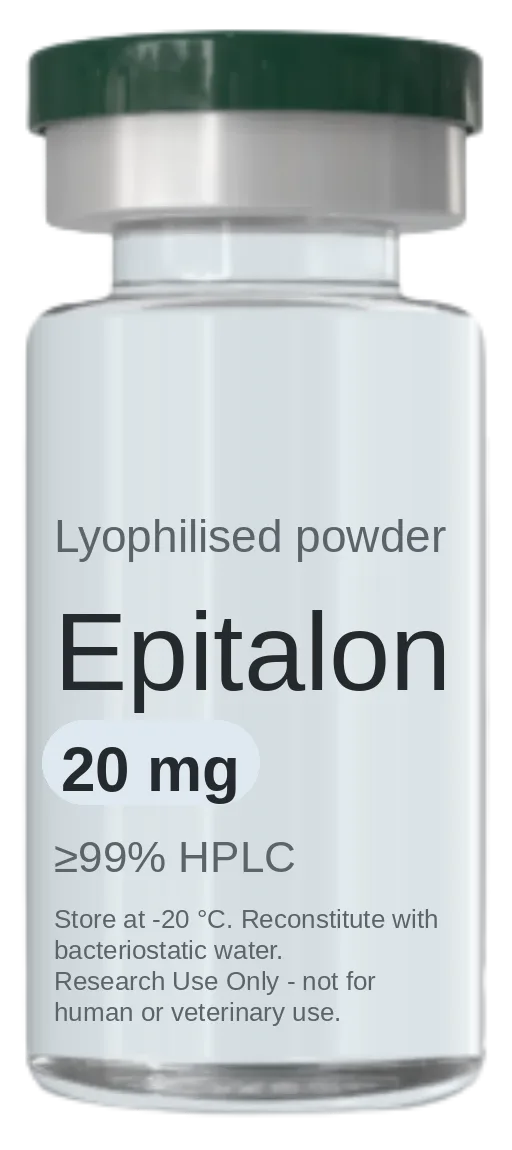
Epithalon (also spelled Epitalon) is a synthetic four-amino-acid peptide — alanine, glutamate, aspartate and glycine, in that order — with no structural relationship to retatrutide. It's one of the shortest molecules in the broader research peptide catalogue.
The literature on Epithalon comes from a research line entirely separate from retatrutide's: gerontology studies linking it to telomerase activity and pineal gland function in laboratory models. This is research on cellular longevity and biological rhythms, a field with no point of contact with the metabolic research where retatrutide is studied. Comparing the two molecules on "which one works better" doesn't make sense, because they aren't designed to investigate the same thing, nor do they act on the same system.
You can see the full profile of this compound on the Epithalon product page, with the purity specification and the format it ships in.
The underlying difference: molecular size and mechanism
The simplest way to remember the difference is this: Epithalon is small and retatrutide is large, and that size difference isn't a minor technical detail — it's the reason they sit in separate research categories.
- Retatrutide: long-chain peptide, triple receptor agonist (GLP-1, GIP, glucagon), studied in metabolic research models.
- Epithalon: short four-amino-acid peptide, studied in research models of cellular senescence and pineal regulation.
That size difference also defines how each one is synthesized. A tetrapeptide like Epithalon is relatively straightforward to produce at high purity and with batch-to-batch consistency. A long peptide like retatrutide involves more synthesis steps and more opportunities for purity to drop if the supplier doesn't control the process — which is exactly why an independent lab report, like the Janoshik one on retatrutide, matters more as the molecule gets bigger.
How quality is verified for each one
No purity figure means anything unless it's backed by a report from an independent laboratory the buyer can actually read. PeptoClinic requires a purity standard of 99% or higher by HPLC across the catalogue, and what separates a trustworthy batch from one that isn't is whether that number is backed by a signed, verifiable document — not a label.
The lowest purity of any report PeptoClinic has published — not the best case, the worst — is 99.669%, on a batch of MOTS-c also analyzed by Janoshik Analytical on April 13, 2026. That figure, not the more flattering one, is the realistic benchmark for what "high purity" means in practice: not a round marketing number, but what an outside lab actually measured.
To understand what to look for in a certificate of analysis before accepting any batch — of retatrutide, Epithalon or any other peptide — the quality page explains what a valid report contains and how to tell it apart from one that says nothing.
Are they used together in the same research protocol?
This comes up often because both appear in longevity and metabolism research catalogues, but it's worth separating the experimental-design question from the usage question. Retatrutide and Epithalon investigate different biological systems (metabolic receptors versus telomerase and the pineal axis), so the decision to include one, the other, or both in a protocol depends entirely on the study's objective and the design the researcher has defined — it isn't a decision PeptoClinic makes for the buyer, nor guidance this site can offer.
What PeptoClinic can handle is the sourcing side: quoting each compound separately, with its batch documentation, and coordinating joint dispatch if the research protocol calls for it. You can review the full catalogue to see what other peptides sit in research lines adjacent to each of these two.
For laboratory research use only
Both retatrutide and Epithalon are supplied strictly as research material (Research Use Only): for in vitro and laboratory research use. Neither is a medicine, a supplement or a food, neither is approved or intended for human or veterinary consumption, diagnosis or treatment of any condition, and no regulatory body — not the FDA, not ANMAT, not any equivalent — has evaluated the claims of the scientific literature referenced on this page. PeptoClinic is not a pharmacy, a clinic or a telehealth provider, and it does not issue or require a prescription: it's a technical supply consultancy for researchers and laboratories. You can read more about the scope of the operation on the about PeptoClinic page.
Frequently asked questions
Can retatrutide and Epithalon be compared on purity?
Comparing them directly on purity doesn't make much sense, since they're molecules of very different size and synthesis complexity, but you can compare each one against its own lab report: what matters is whether the specific batch you're evaluating has a verifiable certificate of analysis, not an isolated number.
Why is retatrutide a more complex peptide than Epithalon?
Because retatrutide is a much longer chain, designed to act on three distinct receptors at once (GLP-1, GIP and glucagon), while Epithalon is a tetrapeptide of only four amino acids. A longer chain means more synthesis steps and more quality control needed to hold purity steady.
Is there a published lab report for Epithalon?
PeptoClinic publishes independent laboratory reports for specific compounds in the catalogue, retatrutide among them. Before accepting any batch, including one of Epithalon, it's worth requesting the certificate of analysis for that specific batch and checking that it's signed by an identifiable laboratory.
Which laboratory analyzed the retatrutide batch cited on this page?
Janoshik Analytical, on April 13, 2026, on a batch labeled 10 mg with an actual content of 11.96 mg, finding a purity of 99.893%.
Are Epithalon and retatrutide studied in the same field?
No. Retatrutide is studied in metabolic research, on body weight and glucose. Epithalon is studied in gerontology, linked to telomerase activity and pineal gland function in laboratory models. These are separate research lines.
Does PeptoClinic ship these peptides to Argentina?
Yes, Argentina is one of the destinations PeptoClinic quotes research material to, with customs documentation prepared for its entry as laboratory reference material. Shipping detail is on the [shipping page](/en/shipping/).
Are these peptides medicines or supplements?
No. Neither one is approved or intended for human or veterinary consumption, diagnosis or treatment of any condition. Both are supplied exclusively as laboratory research material.
How do you verify a batch of either peptide is what it claims to be?
By requesting the certificate of analysis for that specific batch, with the name of the laboratory that issued it, the date of analysis, and, if the laboratory offers one, its own verification link. A purity number without that documentary backing says nothing about the actual batch you'll receive.
Compounds mentioned
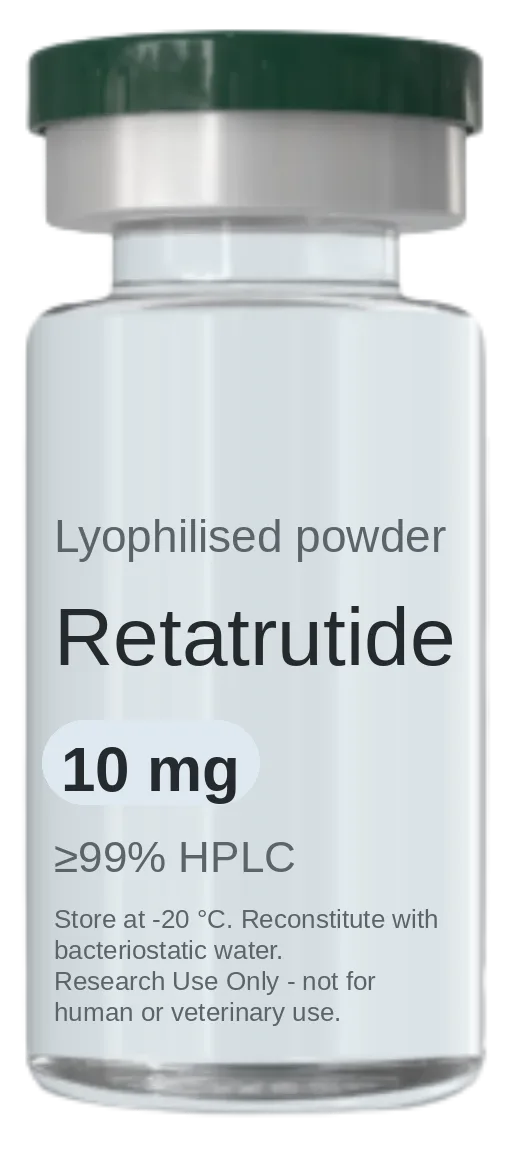
Retatrutide
Triple-agonist metabolic research peptide targeting GLP-1, GIP and glucagon receptors.
- Purity:
- ≥99% HPLC
- Sizes available:
- 10 mg
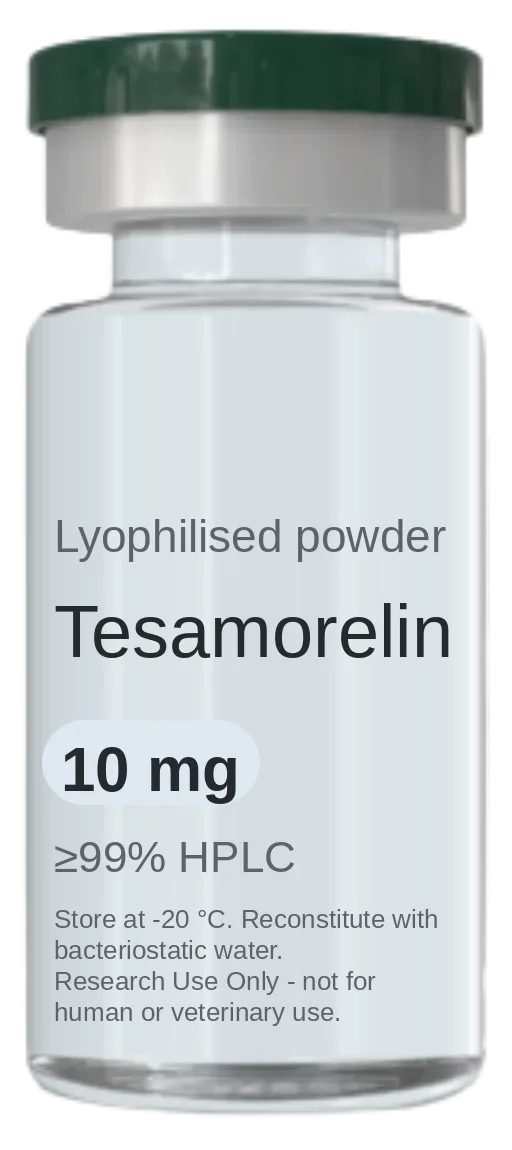
Tesamorelin
Stabilised GHRH(1-44) analogue studied in adipose tissue distribution research.
- Purity:
- ≥99% HPLC
- Sizes available:
- 10 mg – 20 mg
The consultation
One intake that settles goals, history and contraindications alongside compound, quantity, documentation and route — reviewed by a physician before anything ships.
More notes
-
Peptide Shipments to Argentina: Annual Limit
What Argentina's postal shipment regime says about how many research peptide packages you can receive per year.
-
No Tax Address on File: Argentine Customs
What Argentine customs does with a research peptide shipment when the recipient has no registered tax address.
-
LL-37 vs GHK-Cu: What Sets Them Apart
LL-37 is a 37-residue cationic peptide; GHK-Cu is a copper-bound tripeptide. We compare structure, mechanism, and research lines.