
Note
What 'Not for Human Consumption' Really Means
The 'not for human consumption' label on a research peptide is a regulatory classification, not a purity rating or a toxicity warning.
The "not for human consumption" label — and its variant "not for human use" — is a regulatory classification, not a warning about purity and not an indication of toxicity. It appears on any material catalogued as RUO (Research Use Only): it means the compound has not completed the clinical approval processes that a regulatory body requires before classifying a molecule as a medicine. The label describes the product's legal framework, not its physicochemical properties.
Why that label exists
Research peptides and approved medicines operate under different regulatory frameworks. For a molecule to be sold as a drug — in the United States, Argentina or any comparable jurisdiction — it must complete a long cycle of preclinical and clinical trials, undergo review by a regulatory authority, and receive explicit approval for each therapeutic indication. That process typically takes ten to fifteen years.
RUO materials occupy a different category: molecules of scientific interest available to laboratories and researchers working at stages before that approval, or for whom an approved drug is not the end goal. The "not for human consumption" label marks that distinction. It tells the buyer that the material was not evaluated by the FDA, ANMAT or any equivalent authority for use in people.
What the label does not say — and this is where the most common misunderstanding lives — is anything about the compound's quality.
Purity and regulatory classification are separate variables
The confusion arises because the label sounds like a health warning. It is not.
A research peptide can reach 99.893 % purity by HPLC — the result that Janoshik Analytical returned for the retatrutide lot analysed on 13 April 2026, available in PeptoClinic's quality section — and still carry "not for human consumption." That figure tells you what fraction of the vial's contents is the declared compound, measured by a precise analytical technique. The label tells you under which legal framework that vial is sold.
An approved medicine can, by contrast, meet looser purity specifications and circulate legally for clinical use because it completed the required registration processes.
The two variables are independent. A researcher evaluating a lot reviews both: the certificate of analysis to verify purity and compound identity, and the regulatory framework to understand in which context they can work with the material. Neither replaces the other.
What a well-documented RUO material includes
The document that distinguishes a serious supplier from one that is not is not the vial label: it is the Certificate of Analysis (COA). This is a report signed by the analytical laboratory that performed the measurement, and it contains information no label can carry.
A legitimate COA states:
- The compound name and its task number in the issuing laboratory's system.
- The technique used for the analysis, typically reverse-phase HPLC.
- The purity result as a percentage.
- The declared content on the label versus the actual content found in the analysis.
- The date of the analysis.
- The laboratory name and the signature of the person certifying the result.
The four reports published by PeptoClinic correspond to analyses performed by Janoshik Analytical. Two of them allow direct verification on the laboratory's platform using the task number. The full detail for each compound — result, task number and verification method — is in PeptoClinic's quality section.
The task number is the most important field in a COA for a researcher: it lets you open the original report in the laboratory's system and confirm that the document in hand has not been altered.
What RUO classification means in practice
A material catalogued as RUO is appropriate for in vitro research — cell culture assays, receptor binding studies, biochemical characterisation — for work in animal models under the applicable ethical protocols at each institution, and for synthesis projects, comparative analysis and development of analytical methods.
It has not been evaluated for any use in humans or companion animals. That evaluation does not exist because it was never performed, not because it was performed and failed. The distinction matters for reading the label correctly — and for understanding what it does not say.
The PeptoClinic catalogue lists the compounds available under that classification. Each is quoted as reference material for research, accompanied by the corresponding lot documentation. Shipment to Argentina and other regional destinations is available; details are in the shipping section.
For laboratory research only
PeptoClinic Research Supply provides research peptides exclusively for laboratory use, in vitro research and preclinical studies. The materials available are not approved and are not suitable for human or veterinary consumption, are not medicines, are not dietary supplements, and have not been evaluated by any health authority — not ANMAT, not the FDA, and not any equivalent — for diagnosing, treating or preventing any condition. Enquiries about administration protocols for people are declined.
Why the label matters when choosing a supplier
That a supplier includes the label correctly says something about how they understand the framework they operate in. Its absence — or its presence alongside therapeutic indications for people — is a more meaningful warning sign than the label itself: it indicates the supplier is not working within the legal framework that protects both the buyer and the activity.
What does allow objective evaluation of a supplier are the questions a COA makes answerable:
- Did the supplier publish laboratory reports with a task number verifiable on the issuing laboratory's site?
- Is the laboratory that issued the COA independent of the supplier?
- Does the date on the analysis correspond to the lot being dispatched?
Those three questions have verifiable answers. PeptoClinic's quality documentation explains what accompanies each shipment and how to confirm each report directly in Janoshik Analytical's system.
Frequently asked questions
Does "not for human consumption" mean the peptide is dangerous?
No. The label describes the material's regulatory status, not its toxicological properties. A research peptide can have an analytical purity of 99.8 % by HPLC and still carry that classification because it has not received regulatory approval for use in people. The hazard profile of any compound is assessed from specific toxicological data — information entirely separate from what a regulatory label communicates.
What is the difference between "not for human consumption" and "not for human use"?
The two phrases are equivalent and used interchangeably in the research peptide sector. Both indicate the material is classified as RUO and has not been evaluated by any health authority for administration in people. Which phrasing appears on the label is a supplier choice, not a property of the compound.
Is a COA enough to verify the quality of a lot?
A COA is the most relevant document available, but its value depends on who issued it and whether the task number is verifiable in the laboratory's system. A report from an independent analytical laboratory — with an identifiable task number, date and signature — provides objective evidence of identity and purity. A PDF without a task number, or from a laboratory without a verifiable presence, proves nothing.
Should every research peptide carry this label?
Any material catalogued as RUO should include it. Its absence does not indicate the compound obtained approval as a medicine: it may indicate the supplier is not acknowledging the applicable regulatory framework, which is a more serious warning signal than the label itself.
Does the declared purity change because the peptide carries this label?
No. The regulatory classification and the purity analysis results are independent. A compound can reach 99.9 % by HPLC and remain RUO if it has not completed health authority approval processes. Conversely, an approved medicine can have purity specifications lower than those routinely achieved by reference research peptides.
How do I verify that a COA task number is authentic?
The task number is the identifier of the analysis in the issuing laboratory's internal system. For Janoshik Analytical, verifiable reports can be confirmed directly on their platform using that number. If a supplier delivers a COA without a task number, or that number returns no results on the laboratory's site, the document is unverifiable and has no evidentiary value.
Does PeptoClinic ship research material to Argentina?
Yes. PeptoClinic Research Supply ships to Argentina under the classification of laboratory reference material. Documentation details and available regional destinations are in the [shipping section](/en/shipping/).
Where can I see the reports PeptoClinic has published?
The four published reports — for retatrutide, MOTS-c, GHK-Cu and BPC-157 + TB-500, all issued by Janoshik Analytical on 13 April 2026 — are in the [quality section](/en/quality/) with task number, result and, in two cases, a direct verification link on the laboratory's platform.
Compounds mentioned
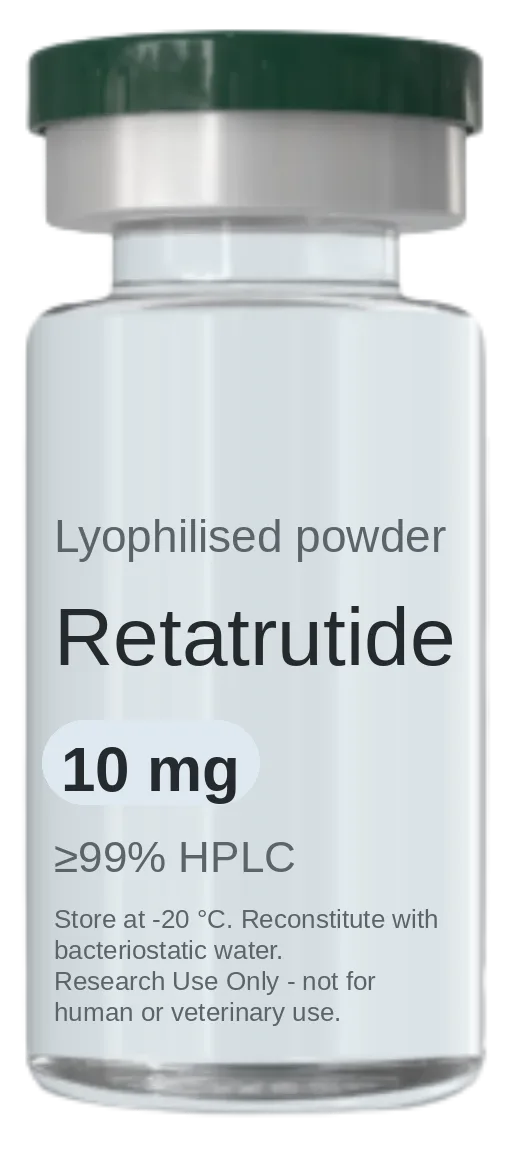
Retatrutide
Triple-agonist metabolic research peptide targeting GLP-1, GIP and glucagon receptors.
- Purity:
- ≥99% HPLC
- Sizes available:
- 10 mg
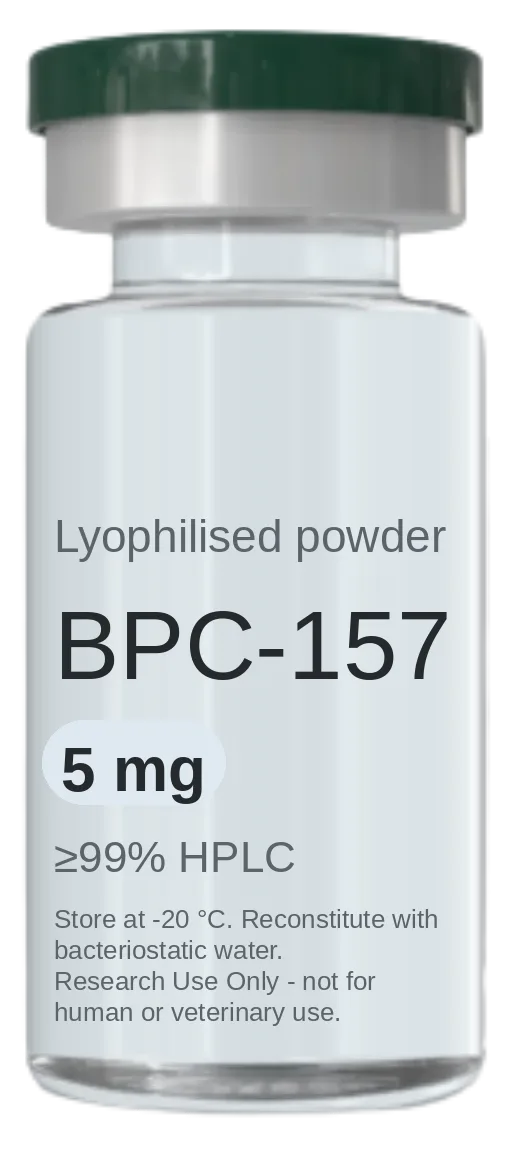
BPC-157 + TB-500
BPC-157 and TB-500 in a single vial — the pairing most studied together in tissue-repair research.
- Purity:
- ≥99% HPLC
- Sizes available:
- 5 mg + 5 mg
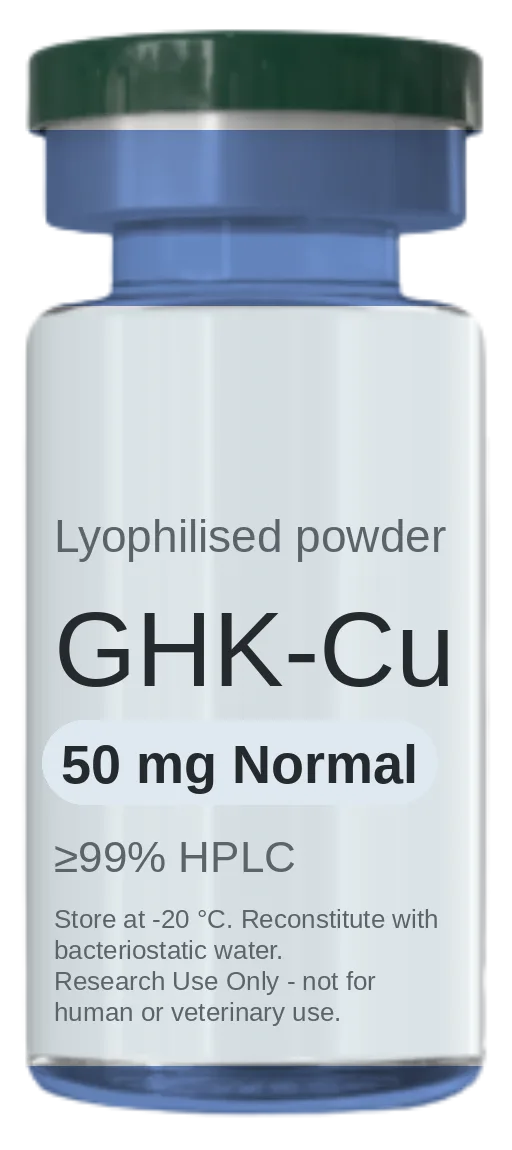
GHK-Cu (Copper Peptide)
Copper-binding tripeptide studied in extracellular matrix and dermal research models.
- Purity:
- ≥99% HPLC
- Sizes available:
- 50 mg Normal – 50 mg Plus
The consultation
One intake that settles goals, history and contraindications alongside compound, quantity, documentation and route — reviewed by a physician before anything ships.
More notes
-
Tesamorelin vs Sermorelin: The Difference
Tesamorelin and sermorelin are both GHRH analogs, but not the same molecule. Here's the structural difference and what the studies on each measure.
-
Peptide Supplier vs. Reseller: What Differs
The real difference is whether someone can name the lab that tested a batch and show the report — or only promise it's pure.
-
MOTS-c or NAD+: What's the Difference
MOTS-c and NAD+ are studied through different mitochondrial pathways; here's what each line of research actually measures.