
Note
Certificate of analysis: how to read one
A certificate of analysis documents purity, identity, and lab results for a peptide lot. What it contains and how to verify it.
A certificate of analysis (CoA) is a document issued by an independent analytical laboratory that records test results for a specific batch of a compound. It names the compound, the laboratory's own task number, the analysis date, the methods used, and the values measured — purity by HPLC, identity confirmation by mass spectrometry, and in many cases moisture content and physical appearance. Without that document, signed by a laboratory with a verifiable name and address, any purity claim is an assertion without a foundation.
What tests a CoA documents
The most consequential test in a research peptide CoA is HPLC purity — high-performance liquid chromatography. The result is expressed as a percentage: the area of the compound's peak divided by the total integrated area in the chromatogram. A result of 99.7% means that 99.7% of the material detected corresponds to the declared compound. The remaining fraction may be degradation products, synthesis impurities, or residual solvents.
The second standard test is identity confirmation, most commonly by mass spectrometry (MS) or amino acid analysis. This confirms that the molecule analyzed is actually the one on the label — not an analog, not a structurally similar compound with a different sequence.
Other fields that appear in a complete CoA:
- Appearance: whether the lyophilized powder has the expected color and texture.
- Moisture content: relevant to batch stability during storage.
- Actual content versus label claim: some laboratories weigh the vial contents and compare against the stated amount. Small discrepancies within ±10–15% are within normal tolerances for lyophilized peptides.
That last point appears in the reports PeptoClinic publishes for its lots. The Janoshik Analytical report for Retatrutide (task 136921) declared 10 mg on the label; the laboratory recorded 11.96 mg of actual content.
Why the issuing laboratory defines the document's value
A CoA is worth exactly as much as the laboratory that signs it. A PDF with no laboratory name, no physical address, and no verifiable task number is not a certificate — it is a document formatted to look like one.
Three elements make a CoA verifiable:
The laboratory name and address. An analytical laboratory that works for third parties has a public presence. It appears in search results, it has a website with contact information, and in many cases it holds accreditation from an external body. Search "Janoshik Analytical" and you find the laboratory, its services, and its contact details — that is traceable.
The laboratory's task number. Every analysis a laboratory runs is recorded under a unique identifier. That number is what enables external verification: if the laboratory has a public lookup portal, entering the task number returns the original report. Without that number, there is no way to distinguish a genuine CoA from an edited copy.
The date of analysis. A CoA does not expire, but it does have a reference date. If material was analyzed in 2024 and you receive it in 2026, the CoA documents the batch's condition at the time of analysis — not its current condition. Storage conditions during that interval are a separate variable.
PeptoClinic publishes four reports issued by Janoshik Analytical, all dated 2026-04-13, all with verifiable task numbers. You can review them on the quality page.
How to read the numbers in a CoA
The HPLC purity figure most commonly cited in research peptide documentation is the area percentage. To interpret it correctly:
The percentage reflects the relative area of peaks in the chromatogram. A result of 99.893% means that the signal for the compound of interest occupies 99.893% of the total integrated area. What remains may be synthesis impurities or minor degradation products — the identity of those impurities is rarely detailed in a standard CoA.
The threshold generally applied to reference research peptides is above 98%. The four lots published by PeptoClinic have a floor of 99.669% — the lowest result recorded, for MOTS-c (task 136923). The highest is 99.893% for Retatrutide (task 136921). Reporting the floor rather than the ceiling is the honest way to represent a catalogue's quality standard.
If a supplier publishes only the best result from its analyses without disclosing the rest of the catalogue, that is selective reporting, not a representation of the lot range.
How to verify a CoA before working with a supplier
Step 1: find the laboratory. Confirm it exists, has a public presence, and is a real analytical facility — not a generic name that returns no results in any sectoral directory or accreditation registry.
Step 2: locate the laboratory's task number. If the CoA shows only the supplier's internal batch number — not the laboratory's own identifier — it is not externally verifiable. These are two distinct identifiers: the laboratory task number enables a query in the external portal; the supplier batch number is the supplier's internal nomenclature.
Step 3: use the laboratory's verification portal if one exists. Janoshik Analytical has an online verification system. Two of the four reports that PeptoClinic publishes carry a working verification link; the other two have a registered task number but the portal returns an error at that specific URL. That is documented as-is in the catalog — without representing a broken link as functional.
Step 4: cross-reference the report against the vial. The compound name, the label quantity, and the lot number on the vial should match those on the report. If anything does not align, request clarification before accepting the lot.
A supplier that cannot provide a CoA with a task number from a named laboratory is asking for trust without any basis for verification. For research material, that is not a sufficient basis.
What documentation ships with a PeptoClinic order
PeptoClinic supplies research peptides with the lot's CoA included with each shipment. The available reports cover Janoshik Analytical analyses for Retatrutide, MOTS-c, GHK-Cu, and BPC-157 + TB-500, all analyzed on 2026-04-13.
For documentation on other compounds or additional documentation requirements for a specific research program, contact [email protected]. Pricing and shipping inquiries for Argentina are handled through the quote form — no prices are published. The Argentina shipping page covers import conditions for laboratory reference material.
How this material is supplied
All material supplied by PeptoClinic is released only after an intake that a physician reviews individually.
No compound in the catalogue is an approved medicine, a supplement, or a food. None has been approved by the FDA, ANMAT, or any equivalent regulatory authority for the use it is requested for, and no claim on this site has been evaluated by one.
Guidance on administration belongs to the reviewing physician and to the intake he reviews, not to this page. Nothing written here is a protocol, and nothing here replaces an examination or the care of your own doctor.
Frequently asked questions
What is the difference between a CoA and a purity percentage posted on a supplier's website?
A CoA is the complete report issued by the laboratory that performed the analysis: it includes the methodology, the date, the task number, the analyst's signature, and all measured values. A purity percentage posted on a supplier's website without an attached CoA is the supplier's claim about itself, with no possibility of external verification that the original document provides.
What does 99.7% HPLC purity actually mean?
It means that in the analysis chromatogram, the peak area corresponding to the compound of interest represents 99.7% of the total integrated area. The remaining 0.3% corresponds to other signals — synthesis impurities, degradation products, or other molecules present in the sample. The identity of those impurities is rarely detailed in a standard CoA.
Can I view the CoA before requesting a quote?
The Janoshik Analytical reports for the four published lots are available on the [quality page](/en/quality/) without any prior quote request. For other compounds, available documentation is provided by writing to [email protected].
Which laboratory analyzes PeptoClinic lots?
The four published reports were issued by Janoshik Analytical, with analyses dated 2026-04-13. Janoshik Analytical is an independent analytical laboratory specializing in research peptides, with a verifiable online presence and a public lookup portal for its tasks.
Why do some CoAs have a working verification link and others do not?
It depends on whether the report was loaded into the laboratory's public portal. In the reports published by PeptoClinic, two of the four carry a verification link that is functional at the time of publication; the other two have a registered task number but the Janoshik portal returns an error at that URL. That is documented as-is — the information is not suppressed and the link is not represented as functional when it is not.
Does a CoA guarantee the material did not degrade during storage or shipping?
No. The CoA documents the batch's condition on the date of analysis. Subsequent storage conditions — temperature, humidity, light exposure — are separate variables that affect stability. Cold-chain handling during shipping and storage conditions at the receiving laboratory are part of the research program's protocol, not a guarantee the CoA can extend to.
What is the difference between the laboratory task number and the vial lot number?
The task number is the laboratory's internal identifier for the analysis performed — it is the one that enables verification in the external portal. The lot number is the supplier's internal identifier for that production batch. In a properly issued CoA, both numbers appear and the correspondence between the vial received and the specific analysis certifying it is traceable.
Does PeptoClinic publish CoAs for every compound in the catalogue?
The reports currently public are four: Retatrutide, MOTS-c, GHK-Cu, and BPC-157 + TB-500, all from Janoshik Analytical. For other compounds in the [catalog](/en/catalog/), available documentation is provided on request — not every lot has a report published on the site at this time.
Compounds mentioned
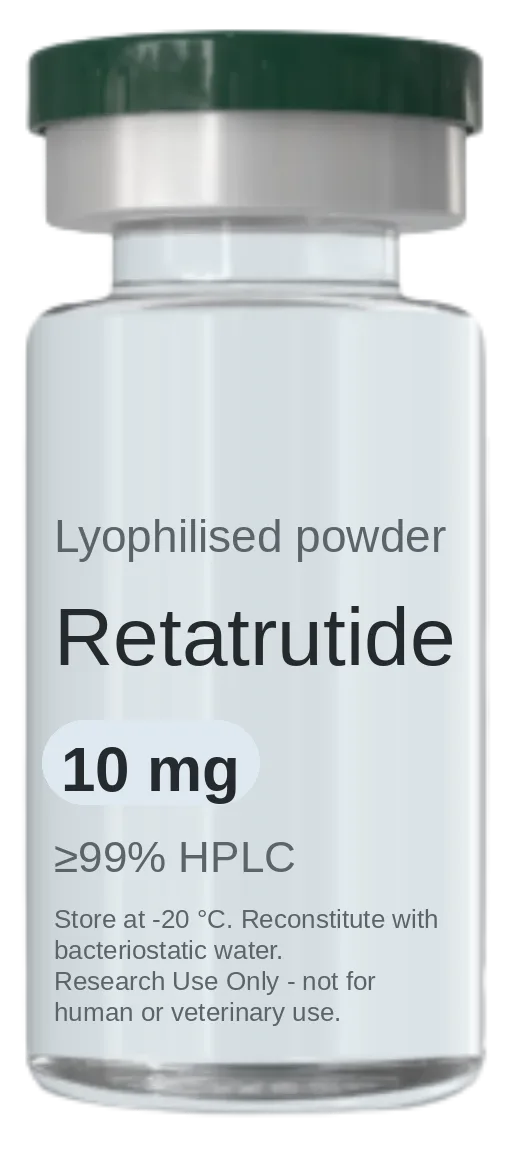
Retatrutide
Triple-agonist metabolic research peptide targeting GLP-1, GIP and glucagon receptors.
- Purity:
- ≥99% HPLC
- Sizes available:
- 10 mg
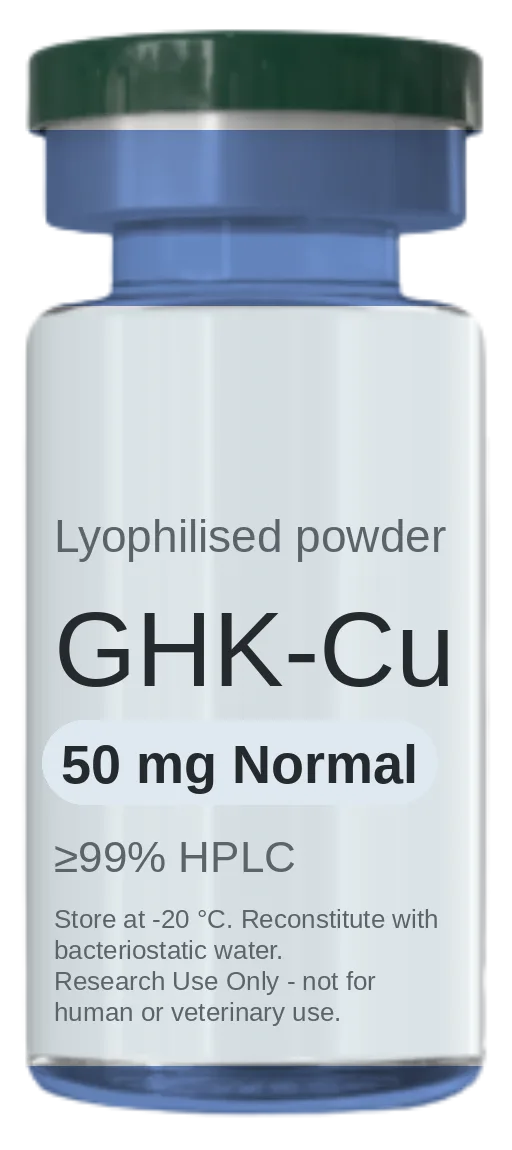
GHK-Cu (Copper Peptide)
Copper-binding tripeptide studied in extracellular matrix and dermal research models.
- Purity:
- ≥99% HPLC
- Sizes available:
- 50 mg Normal – 50 mg Plus
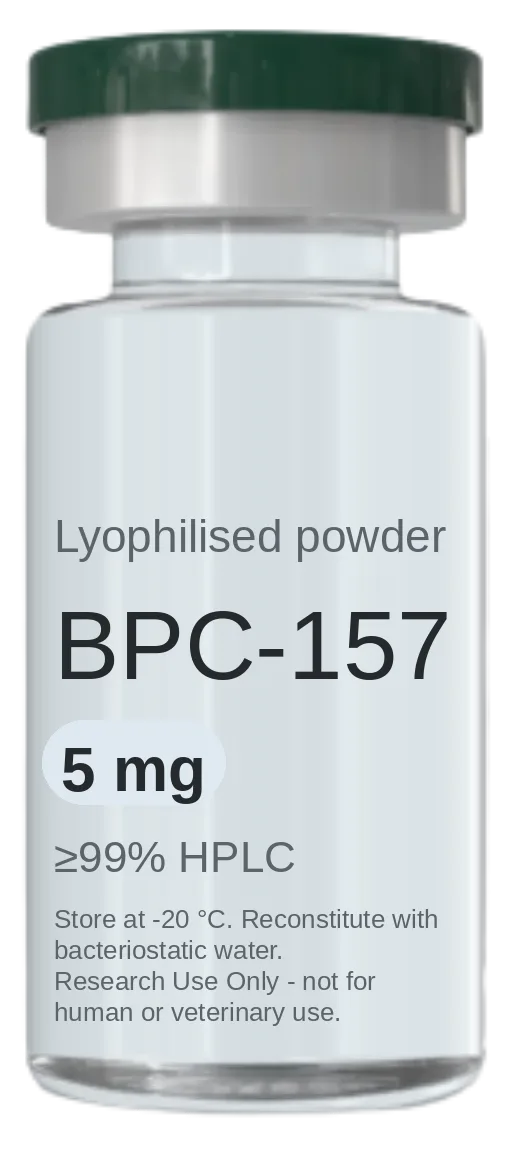
BPC-157 + TB-500
BPC-157 and TB-500 in a single vial — the pairing most studied together in tissue-repair research.
- Purity:
- ≥99% HPLC
- Sizes available:
- 5 mg + 5 mg
The consultation
One intake that settles goals, history and contraindications alongside compound, quantity, documentation and route — reviewed by a physician before anything ships.
More notes
-
Hexarelin vs GHRP-6: Key Differences
Hexarelin and GHRP-6 are both GHRP hexapeptides, but differ in receptor affinity, appetite effect, and cardiovascular research findings.
-
Do You Need a Customs Broker for Peptides?
Customs broker to import research peptides into Argentina: when one is required and when the courier already handles it.
-
Argentina Customs Penalty for Bad Declarations
What happens when a research peptide shipment is misdeclared to Argentine customs: fines, smuggling charges, and seizure.