
Note
What Is BPC-157 Used For?
What the scientific literature investigates about BPC-157, a synthetic pentadecapeptide, and how PeptoClinic documents it for laboratory research.
BPC-157 is a synthetic pentadecapeptide of fifteen amino acids, derived from a sequence identified in the gastric protein BPC found in human gastric juice. The scientific literature investigates it primarily as a cytoprotective agent: animal-model studies explore its action on gastrointestinal mucosa, tendons, ligaments, and nerve tissue. PeptoClinic Research Supply provides BPC-157 exclusively as laboratory research material.
What BPC-157 Is
The name stands for Body Protection Compound 157, assigned by Croatian pharmacologist Predrag Sikiric's group to the synthetic fifteen-amino-acid fragment they derived from a sequence in the gastric protein BPC. The sequence is reproducible in a laboratory setting with high precision, which enabled its incorporation into experimental protocols starting in the 1990s.
One property that appears consistently in the literature is its stability in aqueous solution. BPC-157 retains experimental activity without rapid degradation, unlike other peptides that require more restrictive storage conditions or cofactors to preserve their structure. That stability simplifies the design of laboratory assays with extended time windows.
The compound is not a hormone, an enzyme, or a known signaling protein fragment prior to Sikiric's work. It is a research peptide with no identified natural analog beyond its sequence of origin.
What the Scientific Literature Investigates
The majority of published research on BPC-157 comes from rodent models. PubMed lists publications on BPC-157 spanning experimental gastritis to peripheral nerve injury, and most share a common design: induce an injury in an animal model, administer the compound to a treatment group, and compare histology, biochemical markers, or function against a control group.
The absence of completed clinical trials in humans is a relevant data point for any researcher evaluating the compound. Mechanisms observed in rats do not automatically translate to humans, and no regulatory authority has reviewed BPC-157 for therapeutic use in humans or animals.
Gastrointestinal Mucosa
The largest and most established body of work investigates BPC-157's effect on gastric and intestinal mucosal injuries. Models include alcohol-induced ulcer, indomethacin-induced damage, cysteamine inflammation, and intestinal anastomosis lesions in rats. In those models, investigators documented differences in lesion area, local inflammatory markers, and histological parameters between BPC-157-treated groups and controls.
Proposed mechanisms include modulation of the nitric oxide system, interaction with gastrointestinal dopamine receptors, and stimulation of local growth factors. Which of those pathways is dominant is not settled in the literature. Sikiric's group also reviewed BPC-157's effect in models of injury induced by commonly used clinical drugs, including non-steroidal anti-inflammatory agents and systemically administered corticosteroids. That context has accumulated the most citations and drawn attention from laboratories outside Croatia.
Musculoskeletal Tissue
A second line of research studies tendons, ligaments, and skeletal muscle. The most cited models are Achilles tendon transection and anterior cruciate ligament injury in rats. In those experiments, published studies on BPC-157 and tendon repair reported histological differences between groups: collagen fiber organization, vascular density at the injury site, and functional scores measured at various postoperative time points.
Vascularization is a consistent element in that line. Several studies documented that BPC-157 stimulates VEGF (vascular endothelial growth factor) expression in cell cultures and animal tissue. Angiogenesis — the formation of new blood vessels — is relevant to wound healing, which explains why the compound appears in studies of tissues that are otherwise structurally quite different.
Nerve Tissue and Systemic Effects
A more recent area of research explores effects on the central and peripheral nervous system. Models include spinal cord injury, peripheral nerve damage, and rodent behavioral assays. Published results in this line are more variable than in the gastrointestinal and musculoskeletal work, and experimental designs differ considerably between laboratories.
BPC-157 also appears in skin wound-healing studies and corneal damage models. That spread reflects a broader research hypothesis: that the observed effects respond to a mechanism related to cellular repair that is not confined to any single tissue type.
BPC-157 Combined with TB-500
The literature includes studies using BPC-157 and TB-500 (Thymosin Beta-4) together. These are distinct peptides with different mechanisms. TB-500 is a synthetic fragment of Thymosin Beta-4, investigated in the context of cellular migration and actin cytoskeleton regulation. The hypothesis behind combination studies is that they operate in parallel on distinct phases of the tissue repair process — not that they are equivalent or redundant.
The lot analyzed by Janoshik Analytical (task 204975, April 13, 2026) is precisely this combination: 5 mg of BPC-157 and 5 mg of TB-500 in a 10 mg vial. PeptoClinic offers TB-500 as a separate product in addition to the combined vial documented in that certificate.
Analytical Documentation
The BPC-157 lot in PeptoClinic's catalogue was analyzed by Janoshik Analytical under task 204975. The certificate documents compound identity and content per vial: 5 mg of BPC-157 from a 10 mg sample labeled as the BPC-157 + TB-500 combination. The declared purity standard for PeptoClinic's research peptides is ≥99% HPLC.
The lot certificate is accessible from the product page in the catalogue. The analytical verification methodology and laboratory selection criteria are explained in the quality section.
For Laboratory Research Only
The BPC-157 supplied by PeptoClinic Research Supply is material strictly for Research Use Only (RUO): in vitro assays and controlled laboratory research.
It is not a medicine, a supplement, or a food. No regulatory authority — the FDA, ANMAT, or any international equivalent — has evaluated or approved BPC-157 for therapeutic use in humans or animals. PeptoClinic Research Supply is not a pharmacy, a clinic, or a healthcare provider. No prescriptions are written or filled, and no guidance on administration to people is provided. Requests for human-use protocols are declined.
Researchers and laboratories in Argentina that need this material can initiate the quotation process from the Argentina shipping page.
Frequently asked questions
What does "pentadecapeptide" mean?
The molecule is composed of fifteen amino acids linked in a specific sequence. The prefix penta (five) combined with deca (ten) gives fifteen. Sikiric et al. identified that sequence in the gastric protein BPC and synthesized it for research use. The specificity of the sequence determines its behavior in experimental models.
Which experimental models have been used to study BPC-157?
Most studies used rats or mice with injuries induced surgically or through chemical agents: gastric ulcer by alcohol or indomethacin, Achilles tendon transection, anterior cruciate ligament injury, peripheral nerve damage, and behavioral assays. No completed clinical trials in humans have been published at the scale the compound would need to advance through regulatory review.
What is the difference between BPC-157 and TB-500?
They are distinct peptides. BPC-157 is a pentadecapeptide investigated primarily in gastrointestinal and musculoskeletal tissues. TB-500 is a synthetic fragment of Thymosin Beta-4, investigated in the context of cellular migration and actin cytoskeleton regulation. Some studies combine them because their mechanisms appear to act on different phases of the repair process — not because they are equivalent or interchangeable.
How does PeptoClinic verify the identity and content of its BPC-157 lot?
Through independent third-party analysis. The lot was analyzed by Janoshik Analytical (task 204975) on April 13, 2026. The certificate documents compound identity and quantified content per vial. That certificate is accessible from the product page in PeptoClinic's catalogue.
Is BPC-157 approved by any regulatory authority?
No. No regulatory authority has approved BPC-157 for therapeutic use in humans or animals. Its status is that of a research compound with no recognized clinical indication. The only legitimate use is in controlled laboratory settings, under documented research conditions.
Why is most BPC-157 research conducted in animals rather than humans?
Human clinical trials require a regulatory process that begins with toxicology studies and scales through multiple efficacy phases. For BPC-157, that pipeline has not advanced to human trial stages at scale, so published evidence comes almost entirely from preclinical rodent models.
Does PeptoClinic ship BPC-157 to Argentina?
Yes. Argentina is among the destinations to which PeptoClinic ships research material, documented for import as laboratory reference material. The process is by quotation: PeptoClinic's technical team reviews the request, the compound, the specification, and customs logistics, and returns a written proposal normally within one business day.
How do I know the BPC-157 I receive is the correct compound and not a substitution?
Through the lot's certificate of analysis. The Janoshik Analytical certificate for task 204975 documents identity using analytical techniques and quantified vial content. That is the difference between a supplier that delivers verifiable documentation from an independent laboratory and one that only states purity on its own site. The criteria for reading a certificate of analysis are explained in the quality section of PeptoClinic.
Compounds mentioned
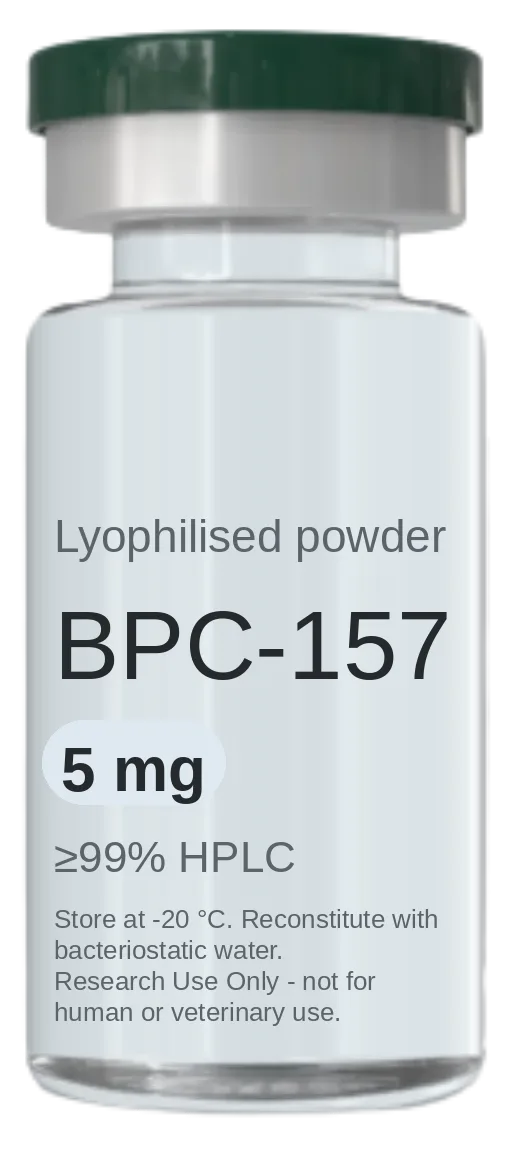
BPC-157 + TB-500
BPC-157 and TB-500 in a single vial — the pairing most studied together in tissue-repair research.
- Purity:
- ≥99% HPLC
- Sizes available:
- 5 mg + 5 mg
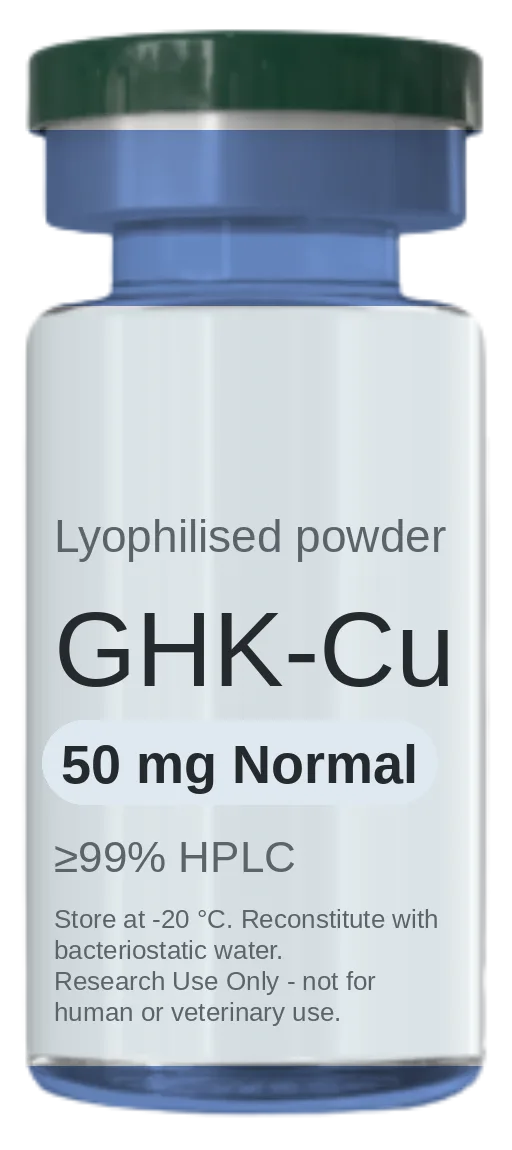
GHK-Cu (Copper Peptide)
Copper-binding tripeptide studied in extracellular matrix and dermal research models.
- Purity:
- ≥99% HPLC
- Sizes available:
- 50 mg Normal – 50 mg Plus
The consultation
One intake that settles goals, history and contraindications alongside compound, quantity, documentation and route — reviewed by a physician before anything ships.
More notes
-
Temporary Import Regime & Peptides
Temporary import covers goods that leave the country again; a research peptide shipment stays and gets used up.
-
Retatrutide vs GHK-Cu: What's the Difference
Retatrutide and GHK-Cu are different molecules studied for different reasons. Here's what each investigates and what documentation backs a batch.
-
Invoiced vs. Unbilled Peptide Suppliers
What changes when a research peptide supplier invoices the transaction versus one that takes payment and leaves no paper trail.