
Note
What Is Sermorelin and How Is It Classified
Sermorelin is the 29-amino-acid N-terminal fragment of human GHRH. What the published research investigates and how to quote it for laboratory use.
Sermorelin is a 29-amino-acid peptide that reproduces the N-terminal sequence of human growth hormone-releasing hormone (GHRH). The complete GHRH molecule has 44 residues; research published in the early 1980s established that the 1-29 fragment retains the ability to bind the GHRH receptor (GHRH-R) on pituitary somatotrophs and stimulate GH secretion. That finding was the starting point for sermorelin's use as a research compound.
Molecular structure
Sermorelin carries the CAS number 86168-78-7. Its molecular mass is approximately 3,357 Da and its molecular formula is C₁₄₉H₂₄₆N₄₄O₄₂S. It is produced by solid-phase synthesis and supplied for research as lyophilised powder — the most stable form for ambient-temperature handling and the one that allows controlled reconstitution in the laboratory.
Human GHRH was first characterised in 1982 from a pancreatic tumour overproducing the peptide in a patient presenting with acromegaly. The work — published nearly simultaneously by the groups of Guillemin and Rivier — identified the full 44-residue sequence. The 1-29 fragment was the portion that demonstrated biological activity comparable to the complete molecule in the initial assays on animal models, and it became the structural basis for subsequent research on GHRH-R agonism.
How sermorelin differs from other GHRH analogs
Several molecules in the research catalogue act on the same receptor as sermorelin but differ in structure and pharmacokinetics.
CJC-1295 without DAC adds modifications at lysine residues that extend plasma half-life relative to the native fragment. Tesamorelin is a trans-3-hexenoic acid conjugate of the complete GHRH(1-44); it holds an FDA approval for a specific indication in HIV-positive adults, making it a useful regulatory reference in comparative studies. Sermorelin, as the shortest unmodified fragment with documented GHRH-R activity, functions as the historical reference compound in most of the first-generation literature on GH secretagogues. Its shorter plasma half-life makes it appropriate for studies designed to observe GH release kinetics over narrow time windows, where a longer-acting analog would obscure the pulse boundaries the experiment is meant to capture.
Ipamorelin shares the downstream effect — stimulating GH secretion — but acts through the ghrelin receptor GHS-R1a, a mechanistically distinct pathway. In experimental designs that want to isolate the contribution of each route, the two compounds serve as independent tools, used separately or in combination with selective receptor blockade to attribute observed effects to one pathway or the other.
What the published literature investigates
Searches for "sermorelin" and "GHRH(1-29)" on PubMed return more than 200 papers. Three research lines account for most of that output.
GH secretion and ageing
The hypothesis behind this line is that the decline in GH secretion accompanying ageing reflects, at least in part, a reduction in hypothalamic GHRH tone rather than a primary loss of pituitary capacity. If the pituitary remains capable of responding to an appropriate stimulus, an exogenous GHRH-R agonist might restore the amplitude and frequency of GH pulses that diminish with age.
Studies from the 1990s documented changes in nocturnal GH pulse amplitude and in body composition parameters in older adults receiving GHRH(1-29). Sample sizes were small and results are not uniform across studies; more recent review literature treats these findings as hypothesis-generating rather than settled, and subsequent work has sought to disentangle GHRH tone from other factors that modulate somatotrophic output across the lifespan.
The GH axis and slow-wave sleep
The relationship between the GHRH-GH axis and slow-wave sleep is one of the most thoroughly published areas in the sermorelin literature. The proposed mechanism involves the interaction between GHRH and corticotropin-releasing hormone (CRH): the balance between the two systems is thought to regulate sleep architecture, with GHRH signalling favouring slow-wave sleep and CRH working in opposition. Axel Steiger and collaborators documented these effects across in vivo studies and laboratory models over two decades; their papers are the most cited body of work in that line, and the mechanistic framework they described continues to inform research on sleep-endocrine interactions.
Assessment of pituitary reserve
Before other protocols displaced it, GHRH(1-29) was used in diagnostic tests to measure pituitary secretory reserve: a gland that responds to the secretagogue with a GH rise has intact secretory capacity; absence of response suggests a deficit at the hypothalamic level rather than the pituitary. This framework continues to appear in basic research on regulation of the somatotropic axis and in laboratory models of pituitary injury, where establishing a baseline secretory response is part of characterising the model.
Purity and analytical documentation
For an experiment using sermorelin as an independent variable, lot purity is not incidental. A compound carrying undisclosed impurities can produce effects that originate from synthesis by-products rather than from sermorelin, which renders the experimental result uninterpretable and unreproducible.
The minimum accepted standard for research-grade peptides is ≥ 99% by HPLC. Documentation accompanying a credible lot includes the full HPLC chromatogram, a confirmatory mass spectrum and a certificate of analysis signed by the analysing laboratory. Janoshik Analytical is the laboratory that analyses PeptoClinic Research Supply's lots; the certificates published on the quality page are verifiable directly on the laboratory's website, task number by task number.
Research use only
The sermorelin supplied by PeptoClinic Research Supply is strictly for Research Use Only (RUO): in vitro studies and laboratory work. It is not a medicine, supplement or food product. No regulatory authority — the FDA, ANMAT or any equivalent body — has evaluated this material for a therapeutic indication in the context of PeptoClinic Research Supply.
PeptoClinic Research Supply is not a pharmacy, clinic or telehealth provider. No prescriptions are written or required. Requests for guidance on use in humans are declined.
How to request a quote
There is no published price and no shopping cart. If a laboratory programme requires sermorelin, the process is to describe the compound, the required quantity, the purity specification and the destination; the technical team returns a written quote with the available lot and its accompanying documentation. PeptoClinic Research Supply quotes research peptides for Argentina and other destinations as laboratory reference material, with the customs file prepared for import.
The full catalogue is at /en/catalog/.
Frequently asked questions
What is sermorelin?
Sermorelin is the 29-amino-acid N-terminal fragment of human growth hormone-releasing hormone (GHRH). It is produced by chemical synthesis and used as a research tool to study the hypothalamic-pituitary GH axis. Its CAS number is 86168-78-7.
How many amino acids does sermorelin have?
29 amino acids, corresponding to the 1-29 sequence of human GHRH. The complete endogenous molecule has 44 residues; the truncated fragment retains GHRH-R binding activity as reported in the literature and represents the documented minimum active sequence.
How does sermorelin differ from CJC-1295?
Both act on the GHRH receptor, but they differ in structure and plasma half-life. Sermorelin is the unmodified 1-29 fragment; CJC-1295 without DAC adds modifications at lysine residues that extend plasma stability. The choice between them in an experimental design depends on the time window and pharmacokinetic profile the study is built to characterise.
What is the difference between sermorelin and ipamorelin?
The difference is mechanistic. Sermorelin acts on the GHRH receptor (GHRH-R); ipamorelin acts on the ghrelin receptor GHS-R1a. Both stimulate GH secretion but through distinct pathways. Designs that need to attribute an observed effect to one pathway or the other use them as cross-controls or with selective blockade of one receptor.
What purity does PeptoClinic's sermorelin carry?
PeptoClinic Research Supply specifies ≥ 99% by HPLC for its research peptides. Each lot is accompanied by a certificate of analysis from Janoshik Analytical including the corresponding chromatogram, verifiable directly on the laboratory's website by task number.
Can sermorelin be quoted for delivery to Argentina?
Yes. PeptoClinic Research Supply quotes sermorelin for destinations in Argentina as laboratory reference material (RUO). The process is by consultation; no price is published. Material ships with the customs file prepared for import as laboratory reference material.
Is sermorelin the same as GHRH?
Not exactly. Endogenous GHRH has 44 amino acids; sermorelin is the first 29. The two share the same N-terminal sequence and the same mechanism of action at GHRH-R, but differ in molecular mass, plasma half-life and the full receptor-binding profile.
Where can I read the research on sermorelin?
PubMed is the most complete starting point. A search for "sermorelin GHRH aging" or "GHRH(1-29) somatotroph sleep" covers the principal research lines. The work of Axel Steiger on GHRH and slow-wave sleep and the clinical trials from the 1990s on GH reserve in older adults are the most cited references in the literature.
Compounds mentioned
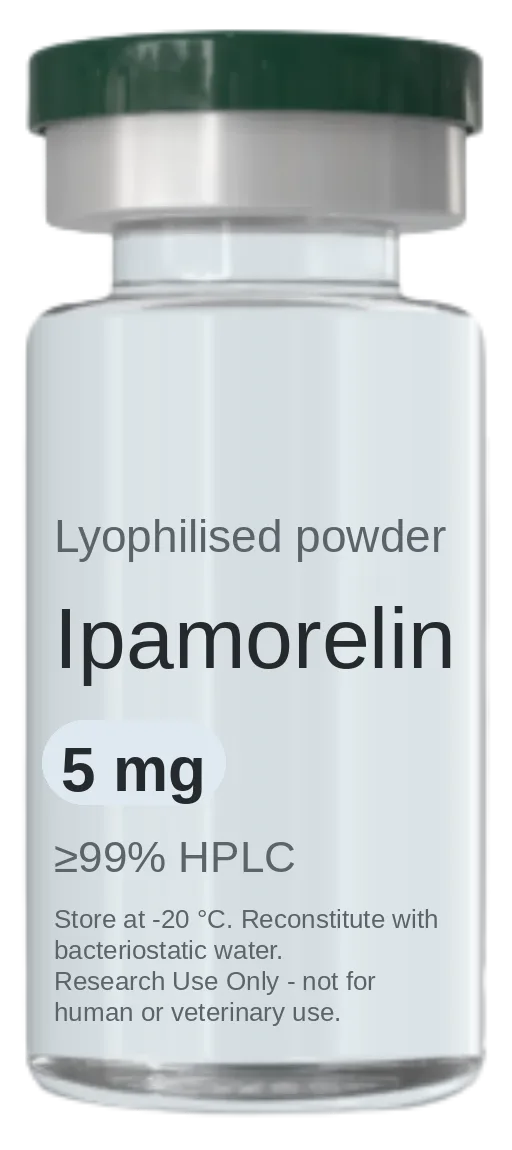
Ipamorelin
Selective ghrelin receptor (GHS-R1a) agonist pentapeptide.
- Purity:
- ≥99% HPLC
- Sizes available:
- 5 mg – 20 mg
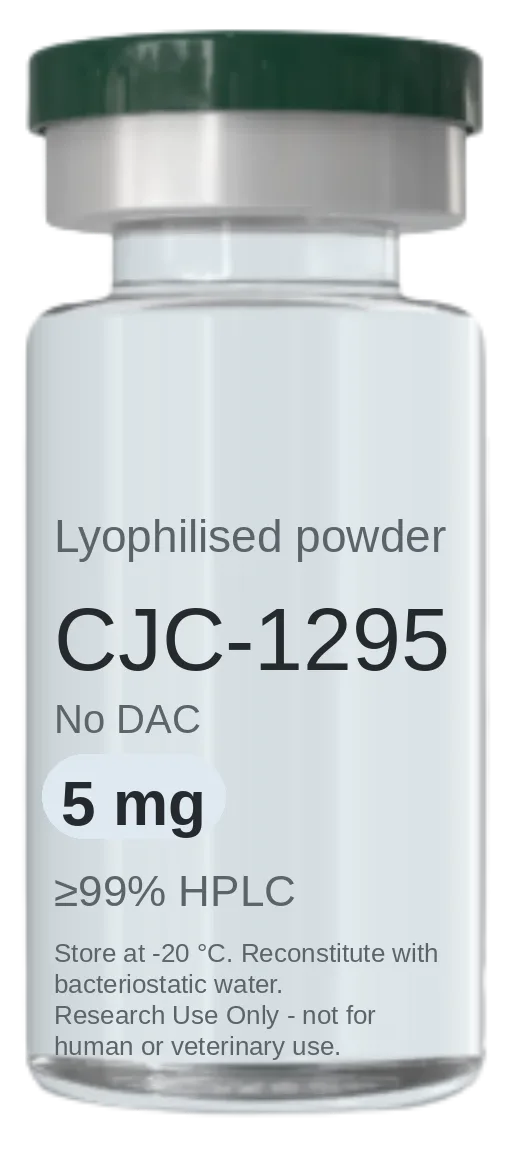
CJC-1295 (sin DAC)
Modified GRF(1-29) tetrasubstituted analogue without drug affinity complex.
- Purity:
- ≥99% HPLC
- Sizes available:
- 5 mg – 20 mg
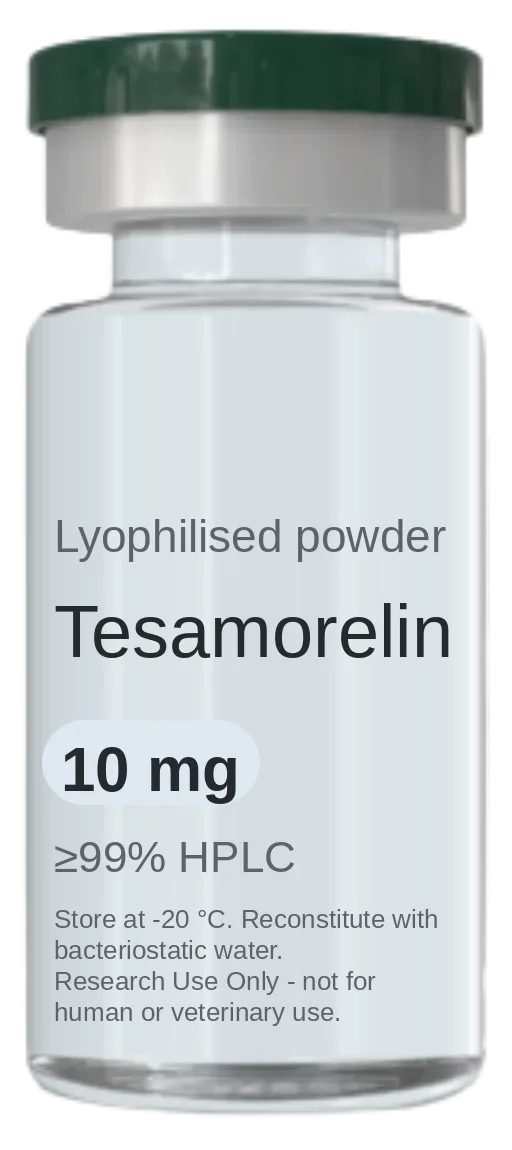
Tesamorelin
Stabilised GHRH(1-44) analogue studied in adipose tissue distribution research.
- Purity:
- ≥99% HPLC
- Sizes available:
- 10 mg – 20 mg
The consultation
One intake that settles goals, history and contraindications alongside compound, quantity, documentation and route — reviewed by a physician before anything ships.
More notes
-
No Batch Number on the Invoice: Customs
If a peptide shipment's invoice skips the batch number, Argentine customs can hold it and request supporting documents.
-
How to Verify a Janoshik COA
What to check on a Janoshik Analytical certificate to confirm a research peptide matches its stated batch.
-
Do You Need ANMAT Approval for Peptides?
Research peptides enter Argentina as lab reference material, not as medicine, and that distinction changes the whole import process.